Moral lesson understanding Building Vocabulary Worksheets for Ages 6-8
3 filtered results
-
From - To
Enhance your child's reading skills with our engaging "Moral Lesson Understanding Building Vocabulary Worksheets" designed for ages 6-8. These interactive worksheets focus on helping young learners grasp essential moral lessons while expanding their vocabulary. Featuring age-appropriate themes and examples, each worksheet encourages critical thinking and comprehension as students relate vocabulary words to important life lessons. Fun activities, such as fill-in-the-blanks and matching exercises, stimulate creativity and reinforce learning. Perfect for homeschooling or classroom use, these worksheets not only enrich language skills but also promote values like kindness, honesty, and empathy. Start your child’s journey to understanding morals today!
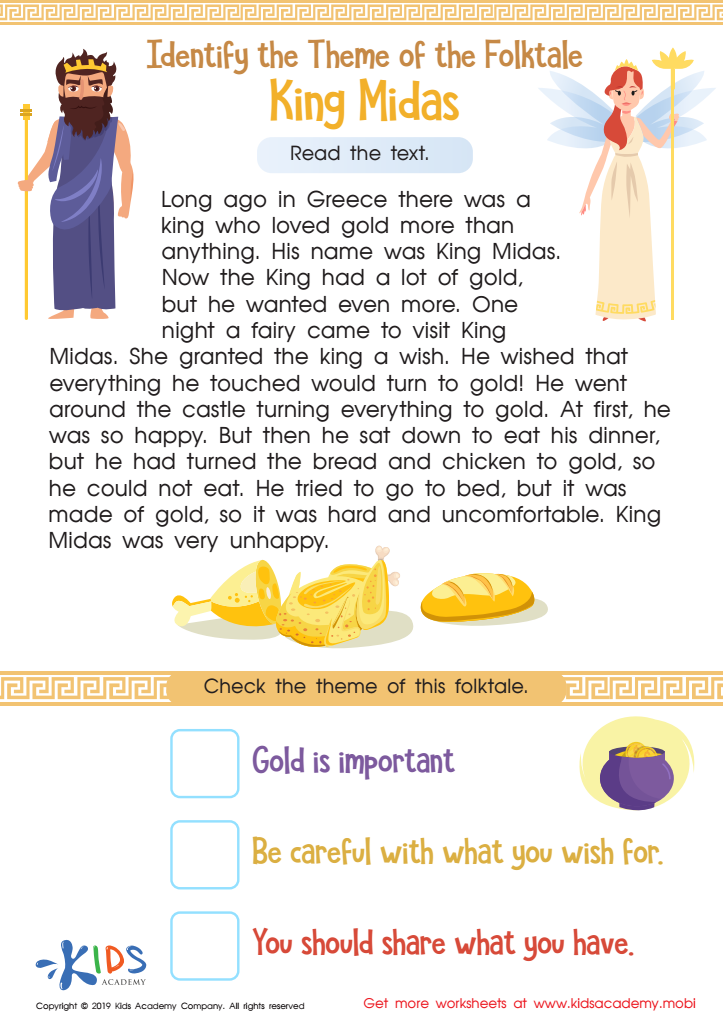
King Midas Worksheet
 Assign to My Students











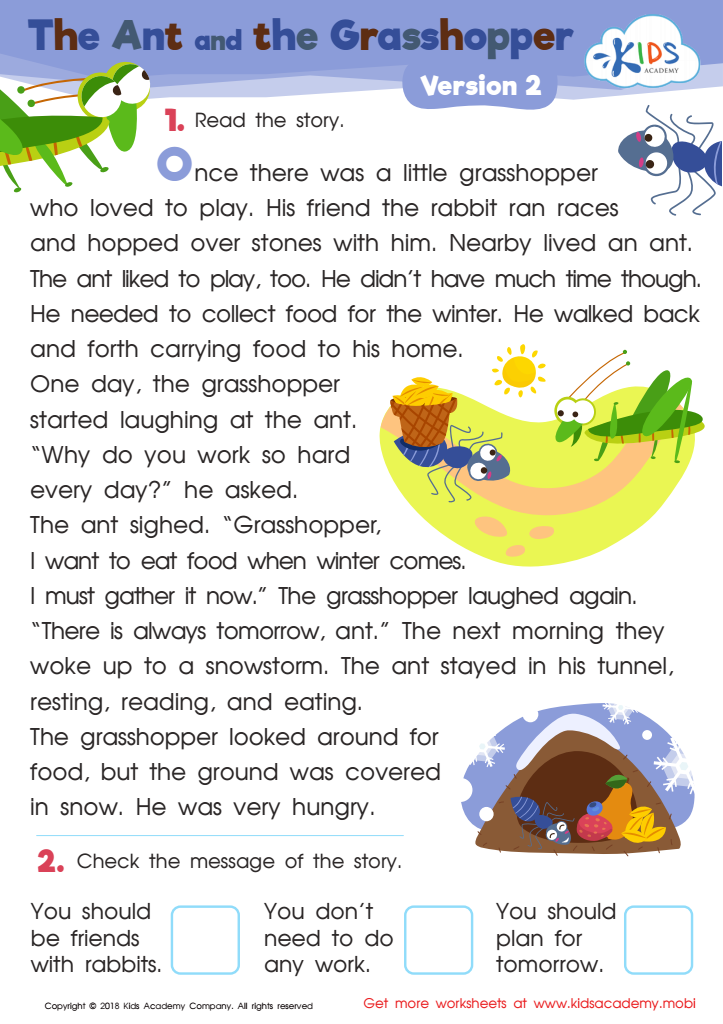
The Ant and The Grasshopper Version 2 Worksheet
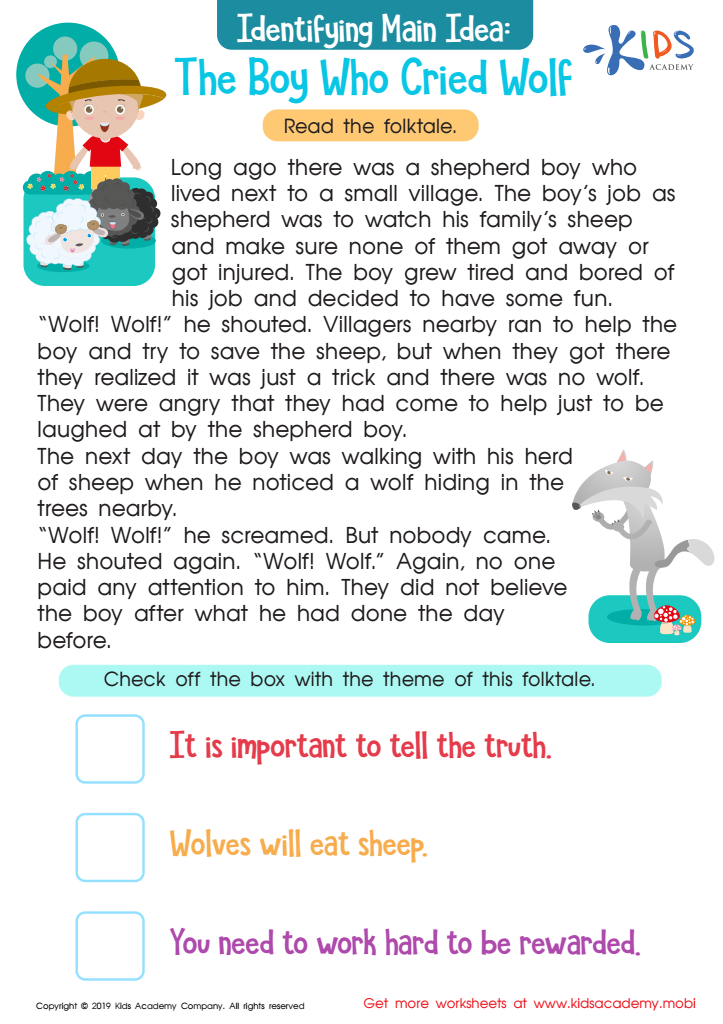
The Boy Who Cried Wolf Part 2 Worksheet







Parents and teachers should prioritize moral lesson understanding and vocabulary building for children aged 6 to 8 because these skills form the foundation of a well-rounded education and character development. At this crucial age, children are starting to navigate social interactions and develop their sense of right and wrong. By discussing moral lessons, they learn empathy, respect, and responsibility, essential qualities for becoming compassionate, socially-aware individuals.
In addition, building vocabulary is key for comprehension and communication. A rich vocabulary enables children to articulate their thoughts and feelings, participate in conversations effectively, and navigate through complex texts and ideas as they progress in their education. Introducing age-appropriate moral lessons combined with new vocabulary not only enhances their language skills but also embeds significant values into their everyday understanding.
Fostering strong moral understandings alongside vocabulary growth nurtures critical thinking and encourages children to express themselves clearly and confidently. This dual focus prepares them for future academic challenges and equips them with the social skills necessary for dealing with moral dilemmas in a diverse society. Ultimately, investing in these areas leads to the development of thoughtful, articulate, and ethically-minded individuals.








