Motor skills development Building Vocabulary Worksheets for Ages 6-8
3 filtered results
-
From - To
Enhance your child's learning experience with our "Motor Skills Development Building Vocabulary Worksheets" designed specifically for ages 6-8. These engaging worksheets not only focus on expanding vocabulary but also help develop essential motor skills through fun and interactive activities. Children will practice writing, cutting, and pasting, ensuring a holistic approach to their education. The worksheets incorporate vibrant illustrations and age-appropriate words that captivate young learners' attention, promoting curiosity and joy in learning. Perfect for classroom or home use, these resources support cognitive development while making vocabulary building an enjoyable adventure. Unlock your child's potential today with our creative worksheets!
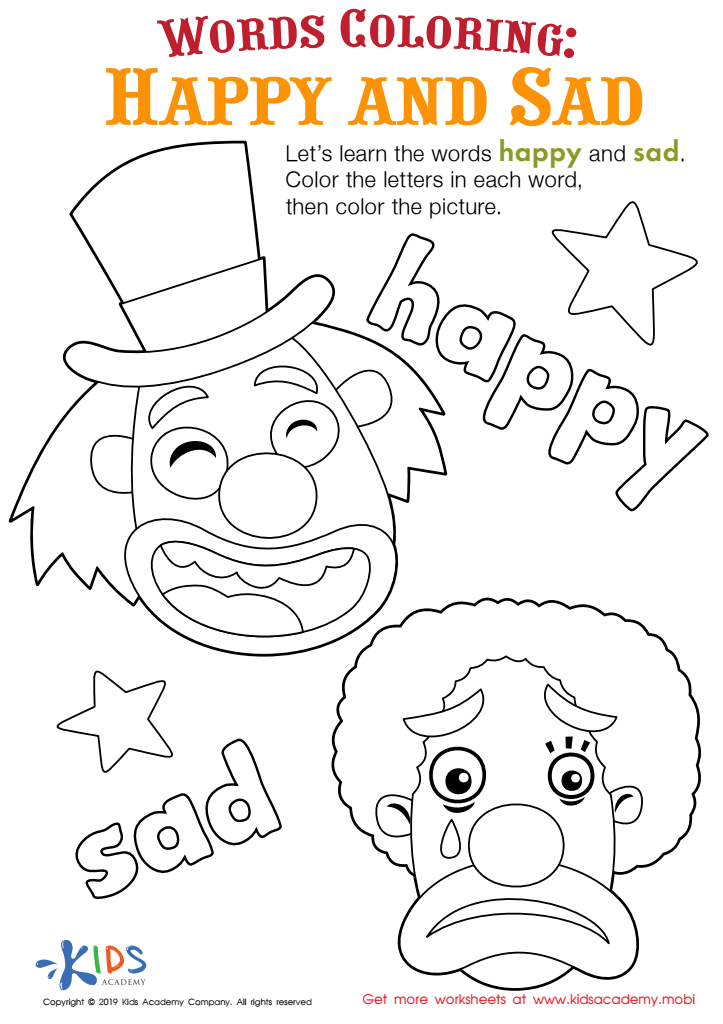
Happy and Sad Words Coloring Worksheet
 Assign to My Students











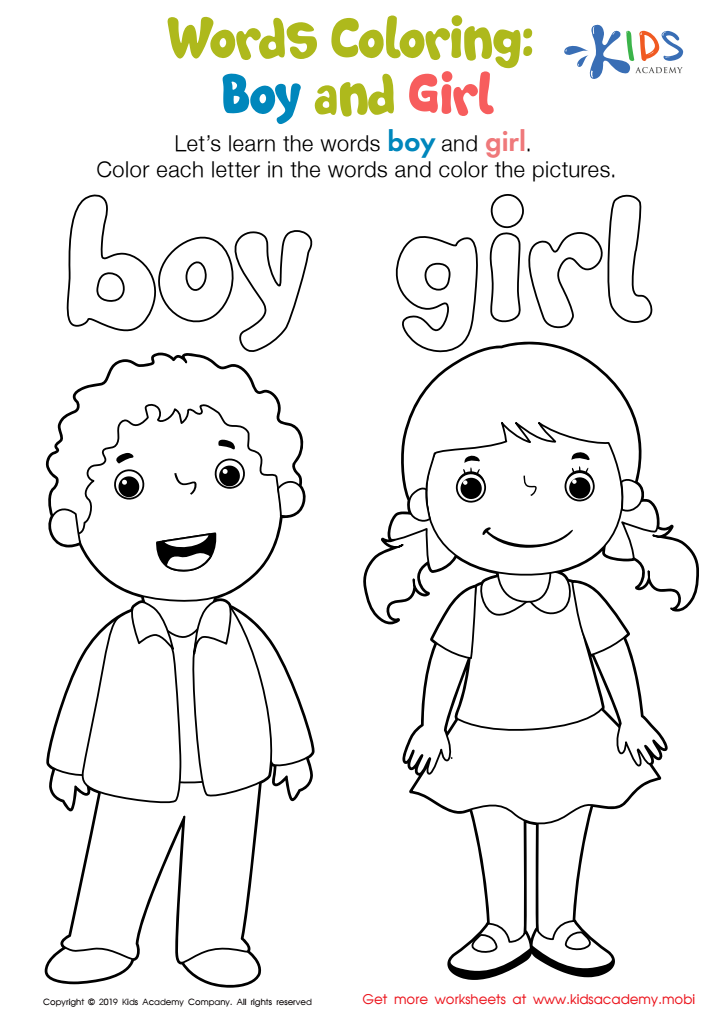
Boy and Girl Words Coloring Worksheet
Assign to My Students








Motor skills development and building vocabulary are crucial for children aged 6-8, as they significantly influence overall growth and academic success. Motor skills—comprising fine and gross motor skills—are essential for daily activities and support learning experiences. Fine motor skills, such as grasping a pencil or cutting with scissors, are foundational for writing and crafting, while gross motor skills, like running and jumping, foster coordination and physical confidence. When children engage in activities that enhance motor skills, they boost their focus, persistence, and resilience, crucial traits for learning environments.
Simultaneously, vocabulary acquisition at this age lays the groundwork for effective communication and reading comprehension. A rich vocabulary enhances children's ability to express their thoughts and understand others, promoting social interactions and academic excellence. It encourages curiosity and exploration while stimulating cognitive development through connections and associations in language.
For parents and teachers, nurturing motor skills and vocabulary is an investment in a child's future, facilitating self-expression, creativity, and learning across subjects. Integrating activities that foster both areas—like storytelling that involves physical play—ensures holistic development, setting children up for success in school and beyond, while also strengthening the parent-child and teacher-student relationships through engaging learning experiences.








