Word identification Building Vocabulary Worksheets for Ages 6-8
5 filtered results
-
From - To
Explore our engaging "Word Identification Building Vocabulary Worksheets" designed for ages 6-8! These interactive worksheets focus on enhancing reading skills while promoting vocabulary growth through fun activities like matching words, fill-in-the-blanks, and visual aids. Ideal for young learners, each worksheet fosters critical thinking and word recognition abilities, equipping children with essential tools for literacy development. With our carefully crafted exercises, educators and parents can easily track progress while making learning enjoyable. Perfect for classroom use or at-home practice, our resources are designed to engage youngsters and ignite their passion for reading. Discover a variety of worksheets to make learning exciting today!
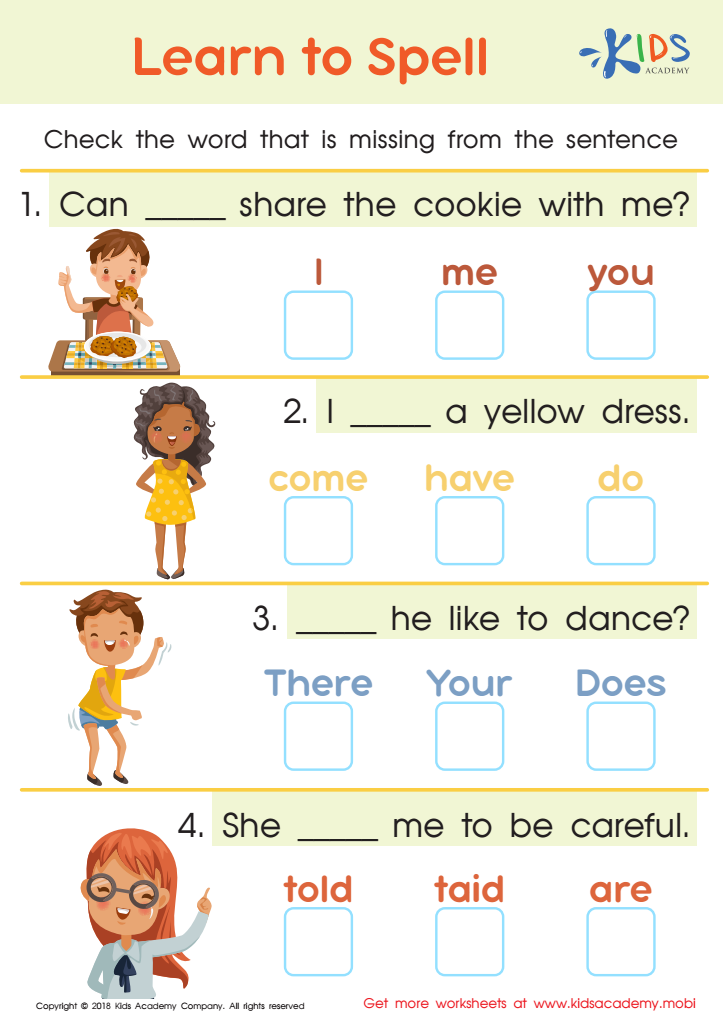
Learn to Spell Worksheet
 Assign to My Students











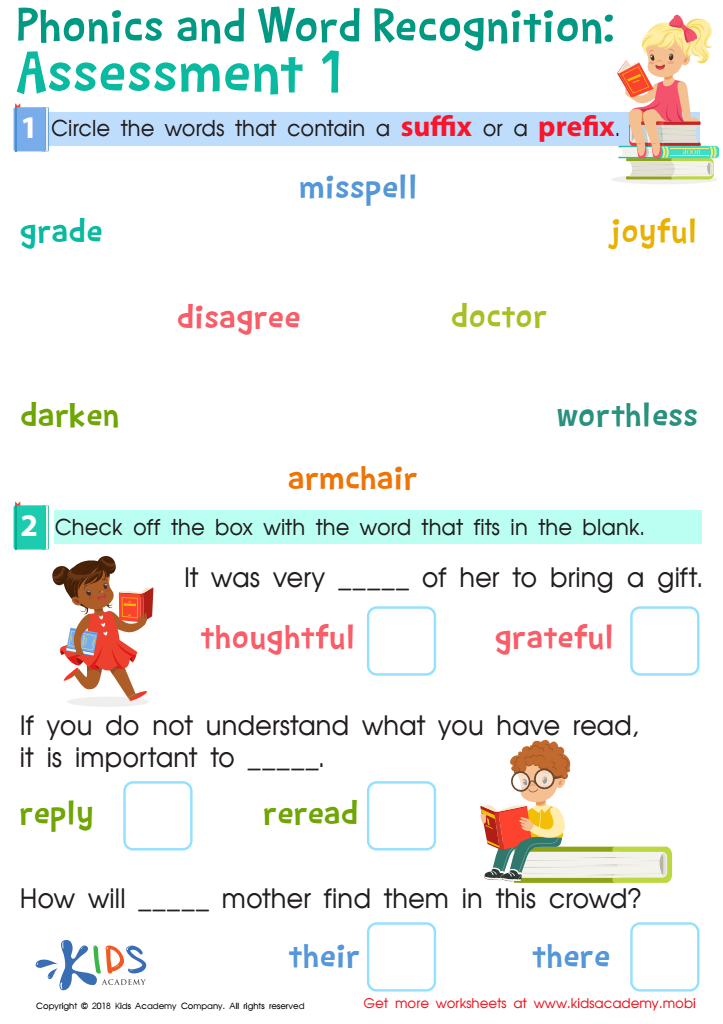
Phonics and Word Recognition: Assessment 1 Worksheet
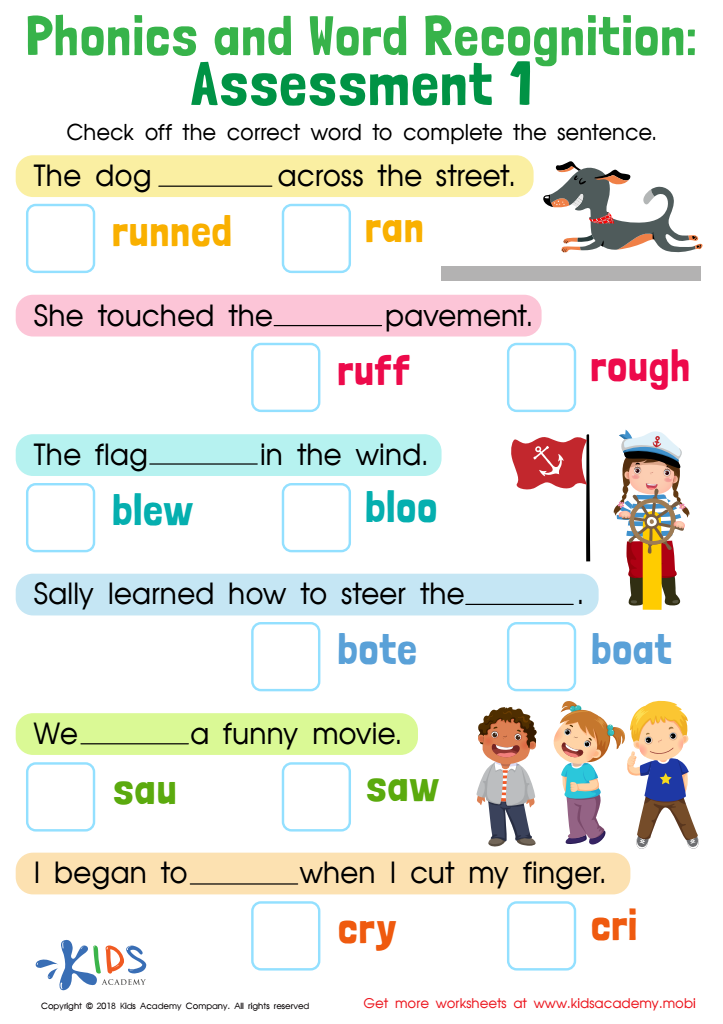
Phonics and Word Recognition: Assessment 1 Worksheet
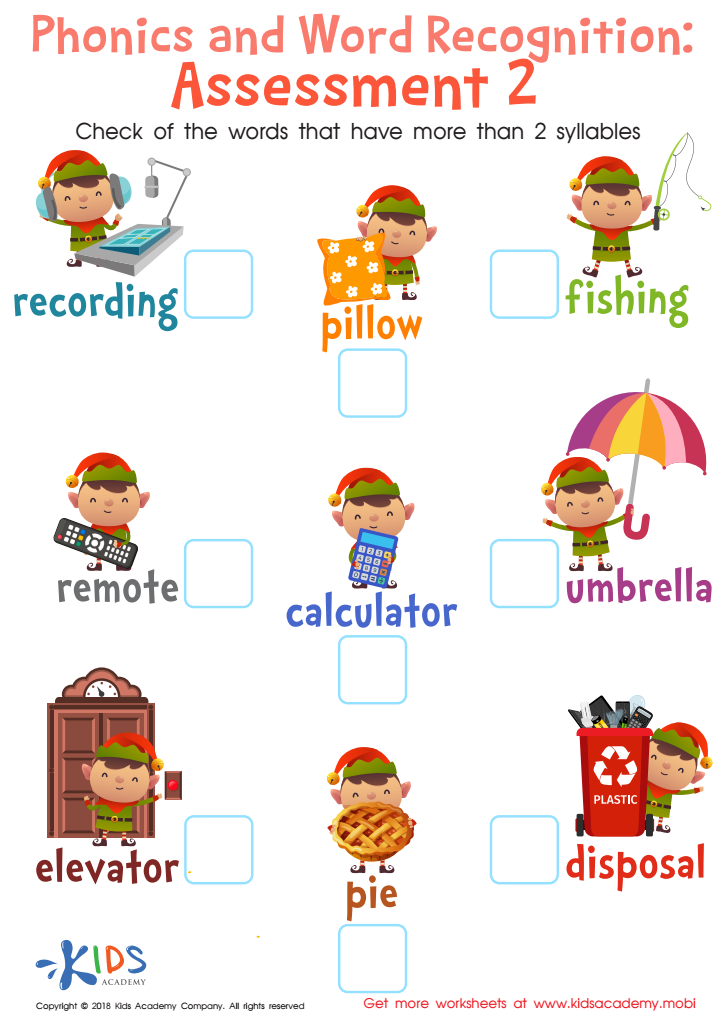
Phonics and Word Recognition: Assessment 2 Worksheet
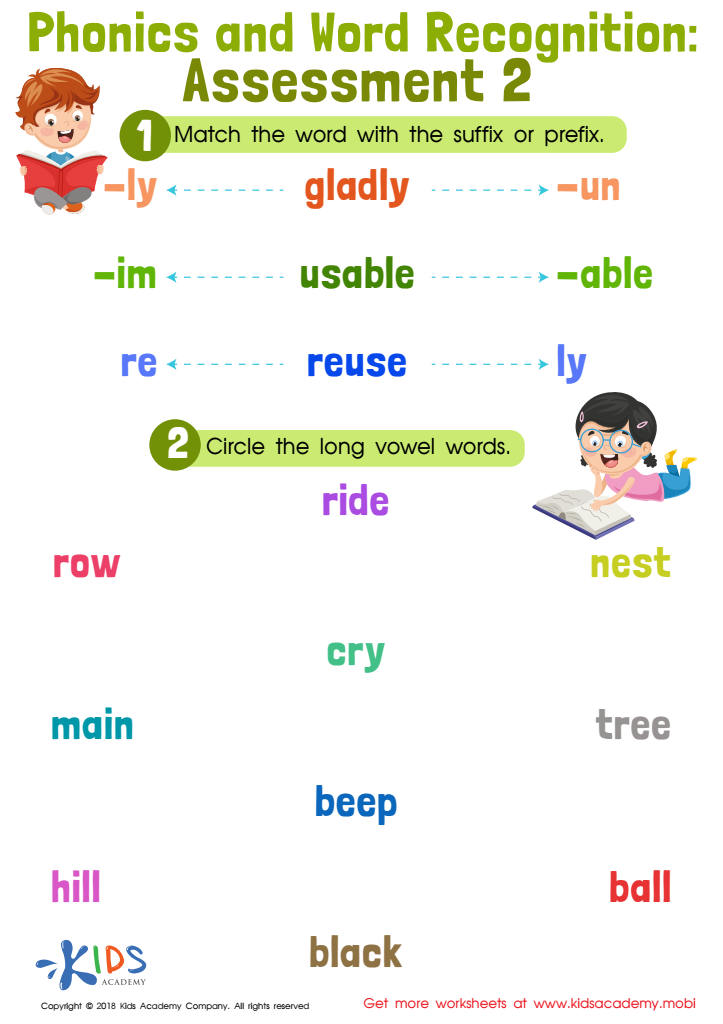
Phonics and Word Recognition: Assessment 2







.jpg)
Word identification and vocabulary building are crucial components of early literacy, particularly for children ages 6-8. At this developmental stage, children are transitioning from learning to read to reading to learn. Strong word identification skills enable them to effortlessly decode and understand text, fostering confidence and motivation to explore reading further. When children can identify words quickly and accurately, they can focus on comprehension, which is essential for academic success.
Additionally, a rich vocabulary enhances communication skills. Children with a robust vocabulary can express their thoughts, emotions, and ideas more effectively, leading to better social interactions and academic discussions. Vocabulary building also contains social and cultural implications, rooting children in the language-rich environment of their community.
Moreover, the connection between a limited vocabulary and future academic struggles cannot be understated. By emphasizing word identification and vocabulary growth, parents and teachers can provide children with essential tools to succeed not just in school, but in life. Engaging children in enriching vocabulary activities—such as reading diverse texts, playing word games, or involving them in discussions—can ignite a lifelong love for learning and literacy invaluable throughout their educational journey.








