Critical thinking development Reading Worksheets for Ages 6-8
3 filtered results
-
From - To
Explore our engaging Critical Thinking Development Reading Worksheets for ages 6-8, designed to nurture essential skills in young learners. These worksheets encourage children to think critically about the stories they read, enabling them to analyze content, make inferences, and draw conclusions. With a variety of fun and interactive activities, your child will develop valuable reasoning skills that extend beyond the classroom. Each worksheet aligns with educational standards, making learning both enjoyable and purposeful. Promote a love for reading while enhancing critical thinking abilities—perfect for enhancing literacy skills at home or in school. Download now and watch your child thrive!
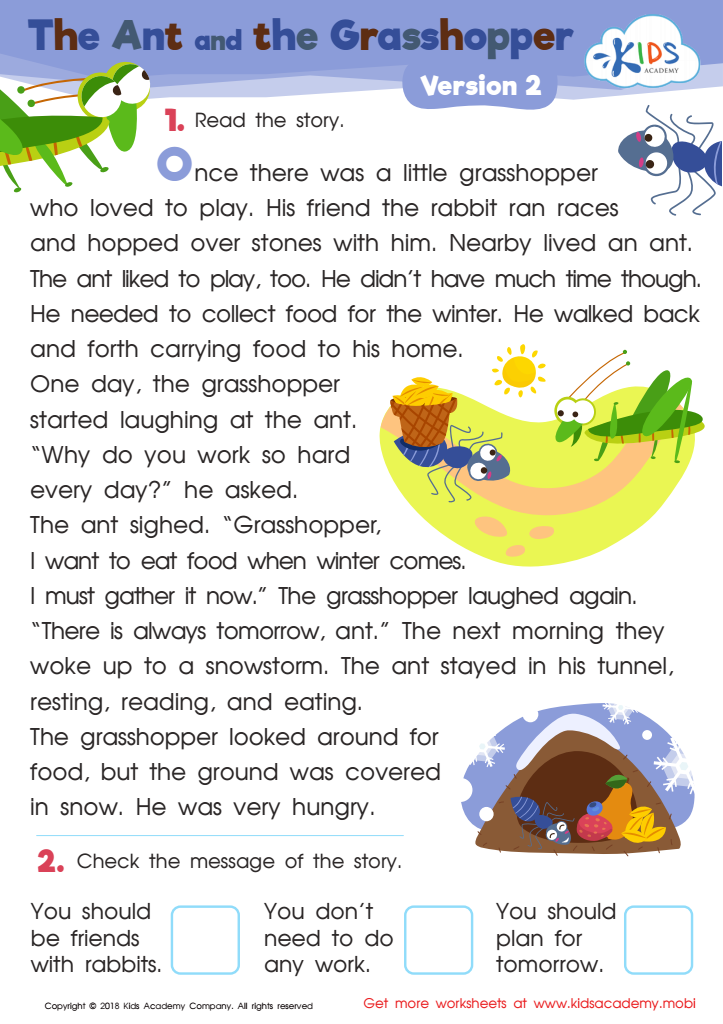
The Ant and The Grasshopper Version 2 Worksheet
 Assign to My Students
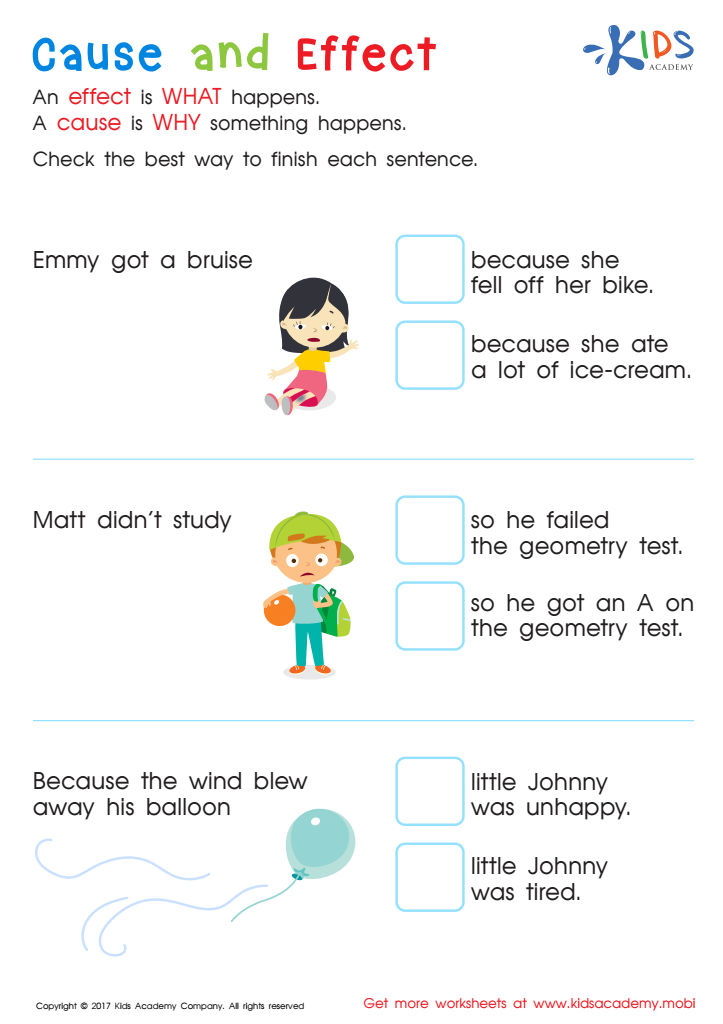
Cause and Effect Worksheet
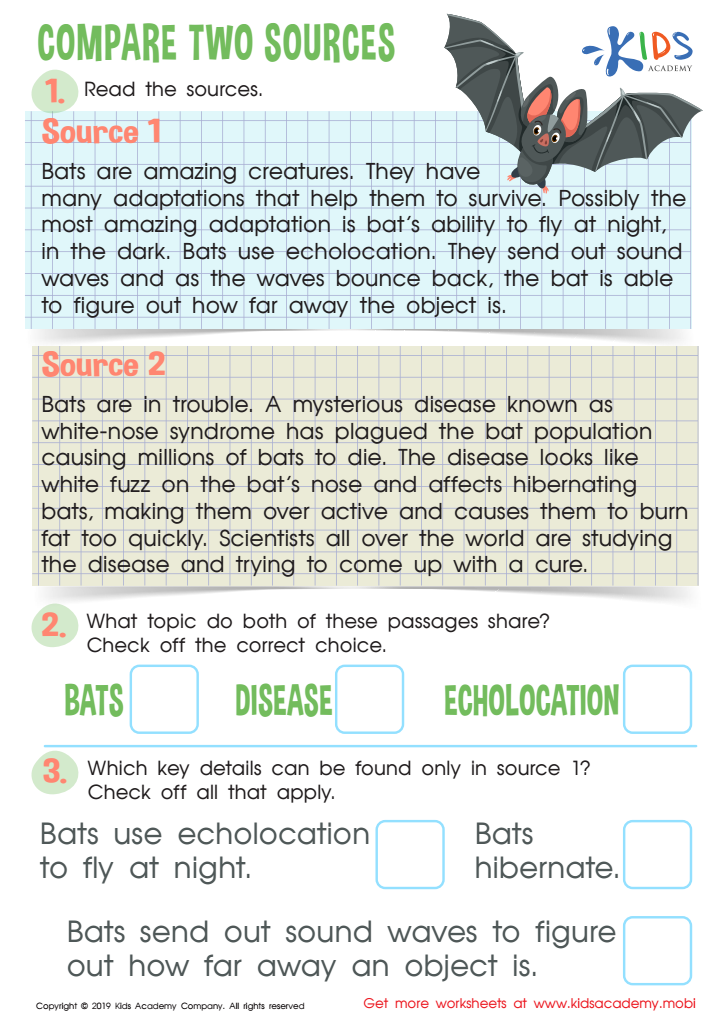
Compare Two Sources Worksheet








Critical thinking development through reading is essential for children aged 6-8, as it lays the foundation for their future learning and decision-making abilities. At this early stage, children are naturally curious and eager to explore their world. Encouraging them to think critically fosters independence, creativity, and problem-solving skills. When parents and teachers prioritize critical thinking in reading, they help children not just consume information but analyze, question, and reflect on it.
Reading empowers children to engage with diverse perspectives, understand complex characters and scenarios, and make connections between the text and their own lives. By asking open-ended questions about stories, encouraging predictions, and discussing themes, educators and parents can stimulate deeper thinking. This approach also enhances comprehension skills, enabling children to extract meaning and apply knowledge practically.
Moreover, critical thinking nurtures a sense of empathy as children learn to see things from different viewpoints. This developmental milestone not only prepares them for academic challenges but also equips them for social interactions and future responsibilities. Ultimately, fostering critical thinking through reading empowers children to become thoughtful, informed, and active contributors to society, making involvement from parents and teachers crucial in this developmental phase.








