Understanding life cycles Reading Worksheets for Ages 6-8
3 filtered results
-
From - To
Our "Understanding Life Cycles" reading worksheets cater to children ages 6-8, offering immersive exploration into the fascinating world of living organisms. These engaging, educational printables help young learners grasp the sequential stages of various life cycles, from plants to animals. Designed to enhance reading comprehension and scientific curiosity, our worksheets include captivating texts, vibrant illustrations, and thought-provoking questions. Perfect for classroom or home learning, each activity underscores essential literacy skills while fostering a deeper understanding of nature. Equip your child with the tools to discover, learn, and grow with Kids Academy's dynamic life cycles worksheets.
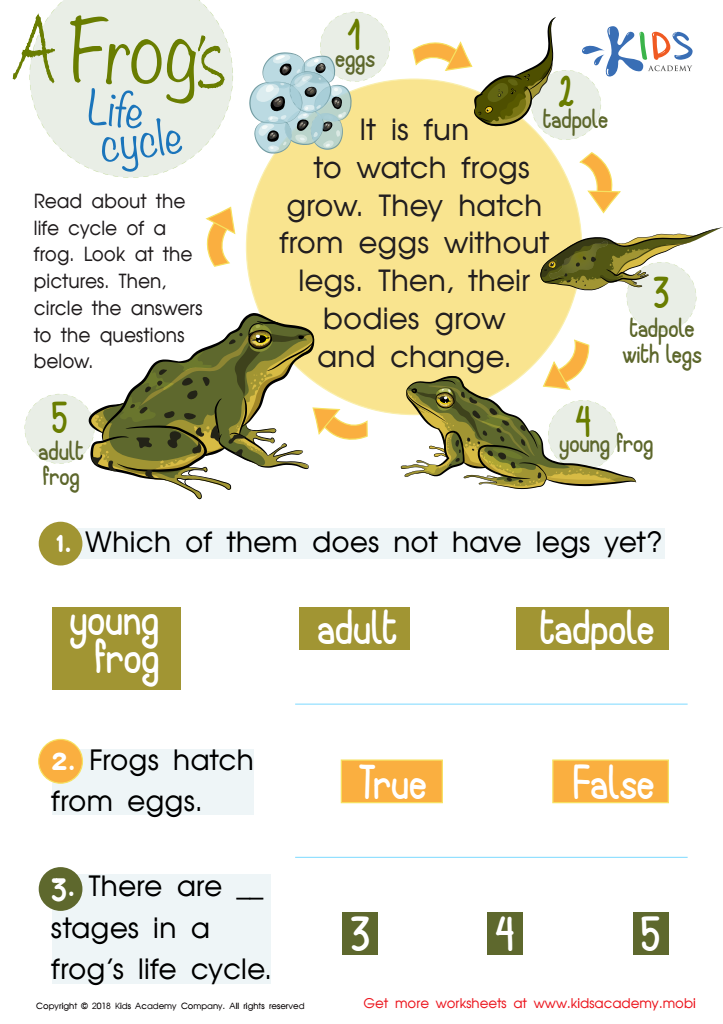
A Frog’s Life Cycle Worksheet
 Assign to My Students
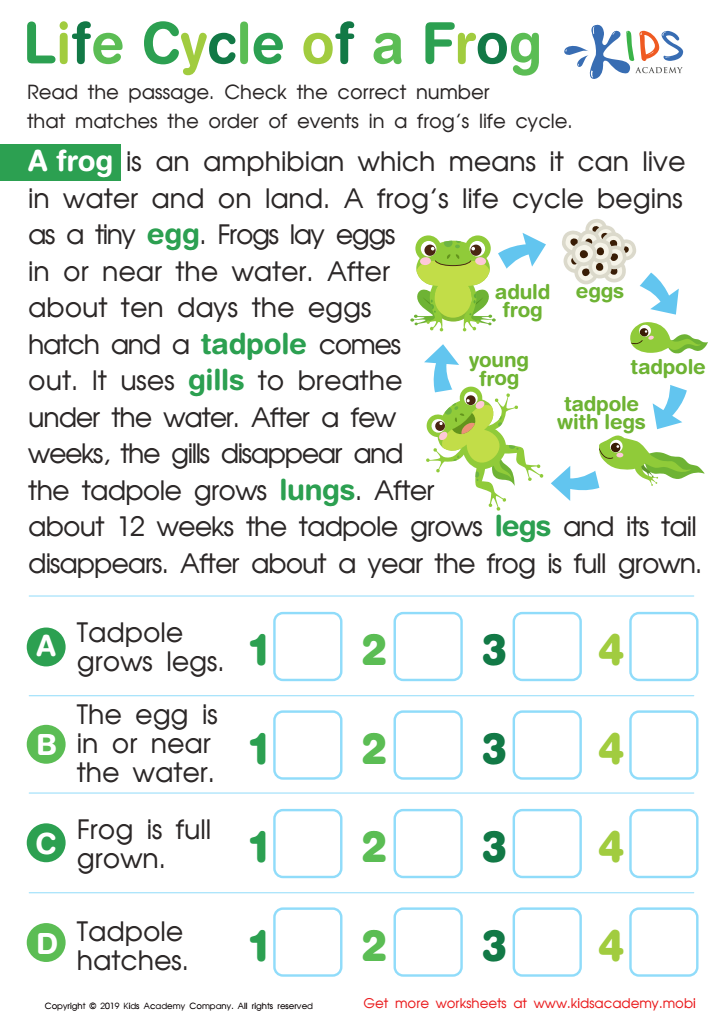
Life Cycle of a Frog Worksheet
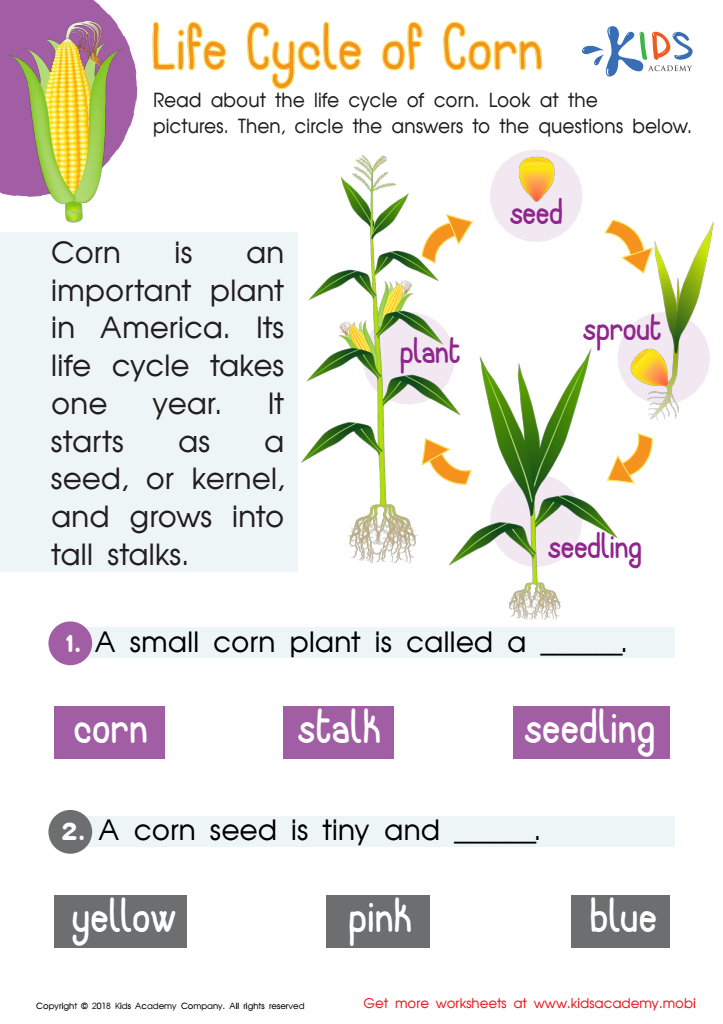
Life Cycle of Corn Worksheet







.jpg)
Understanding life cycles is crucial for young children aged 6-8 because it lays a strong foundation for scientific literacy and critical thinking. At this developmental stage, children are naturally curious and eager to explore the world around them. Introducing them to life cycles—such as those of plants, animals, and insects—can satisfy this curiosity and encourage a lifelong interest in science and nature.
For parents and teachers, promoting an understanding of life cycles supports various educational goals. It enhances children’s observational skills as they learn to notice changes and sequences in the environment. This awareness fosters an appreciation for the complexity and sustainability of ecosystems, encouraging responsible environmental stewardship from a young age.
Moreover, learning about life cycles helps children grasp fundamental biological concepts such as growth, reproduction, and adaptation. This understanding also aids in learning interconnected topics, including food chains, habitats, and the balance of natural systems. Additionally, reading about life cycles improves literacy skills by expanding vocabulary and comprehension through engaging, real-world topics.
In sum, ensuring children aged 6-8 understand life cycles is vital for their cognitive development, instilling essential knowledge that transcends academic subjects. This foundational learning encourages a broader appreciation and respect for living organisms and their roles within our planet's delicate ecosystems.








