Understanding sequencing Reading Worksheets for Ages 6-8
3 filtered results
-
From - To
Explore our "Understanding Sequencing" reading worksheets, specifically designed for ages 6-8. These interactive resources help young learners grasp the concept of sequencing in stories, enhancing their comprehension and critical thinking skills. With engaging activities, children will practice identifying the correct order of events, improving their ability to retell tales and understand narrative structure. Our worksheets cater to various learning styles and promote a fun, educational experience. Ideal for classroom use or at-home learning, these worksheets make sequencing concepts accessible and enjoyable for early readers. Start your child’s journey towards stronger reading skills today!
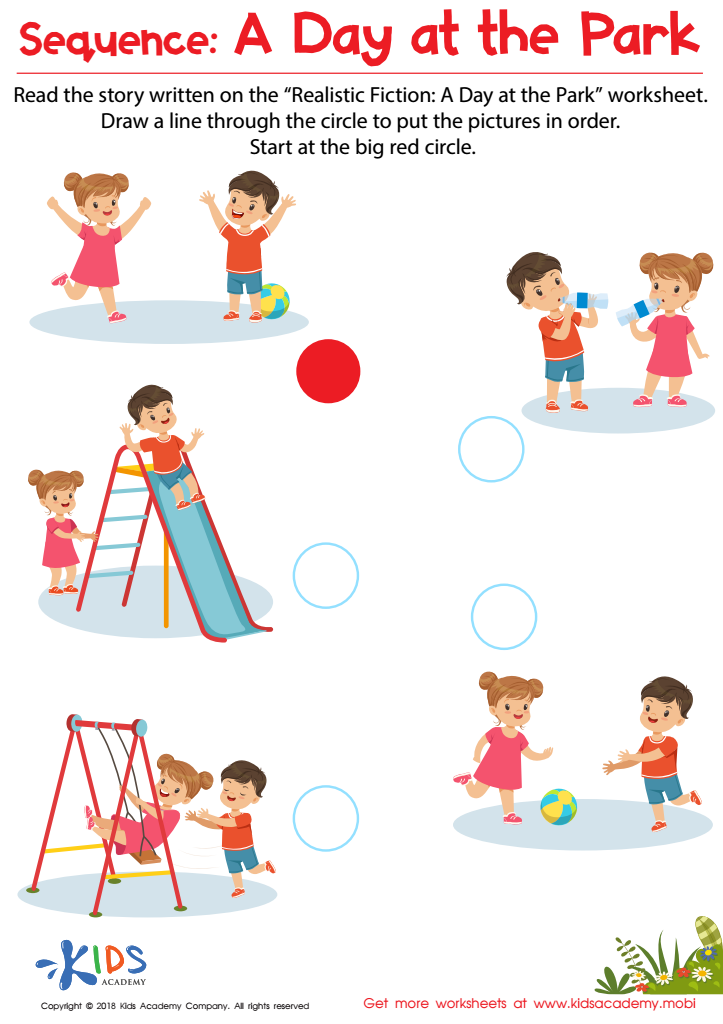
Sequence: A Day at the Park Worksheet
 Assign to My Students
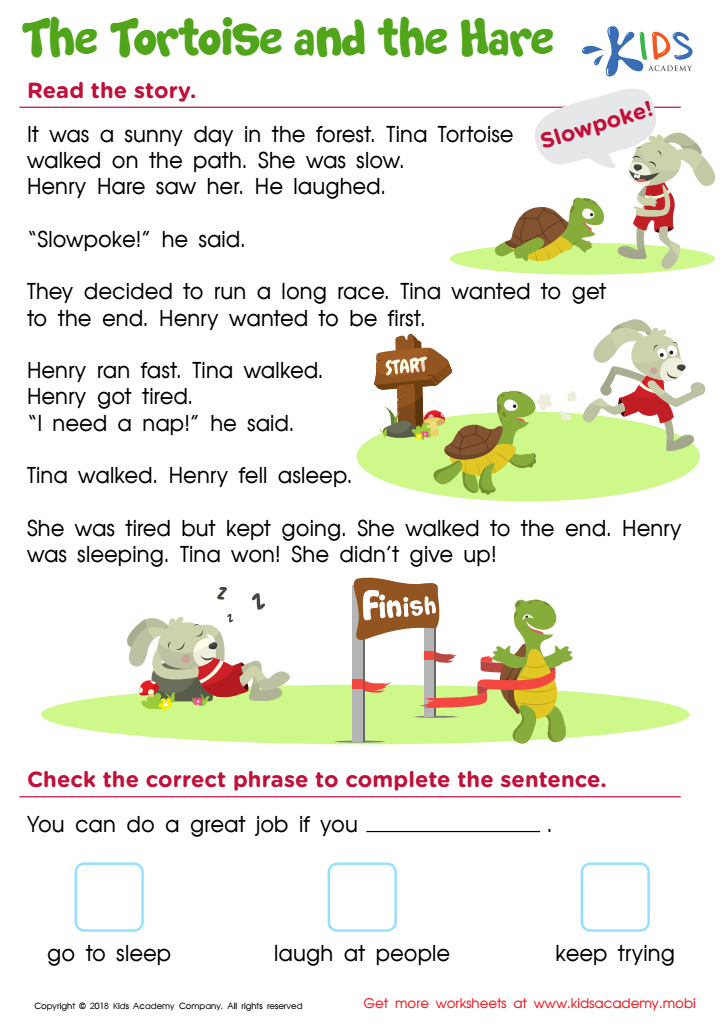
The Tortoise and the Hare Worksheet
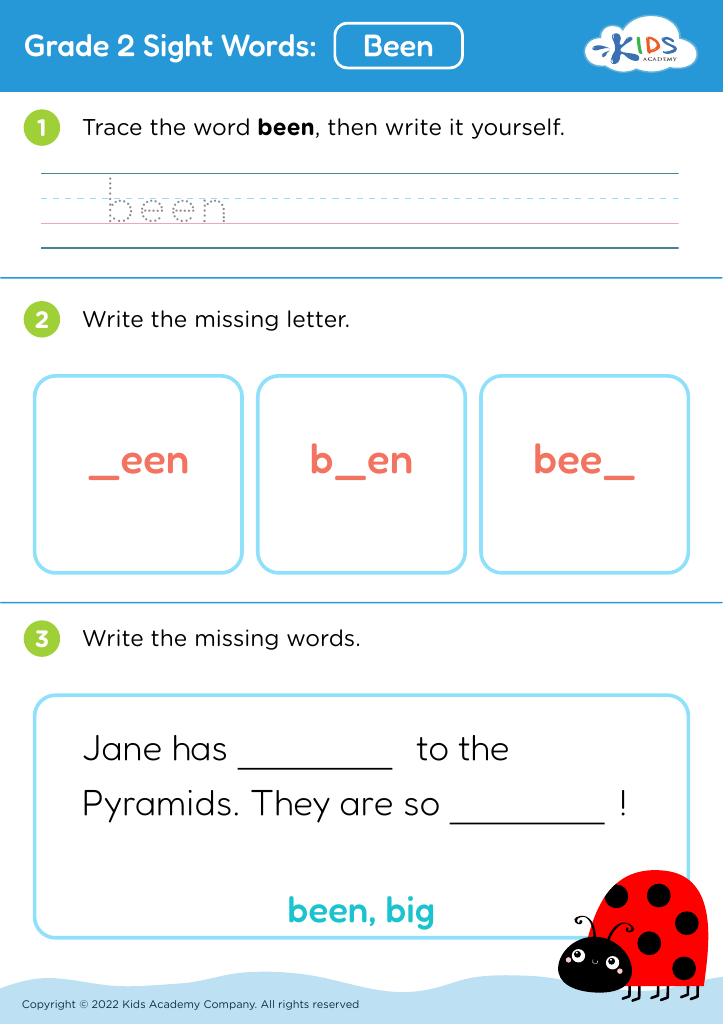






Understanding sequencing in reading is crucial for children aged 6-8, as it lays the foundation for effective comprehension and critical thinking skills. Sequencing refers to the arrangement of events or ideas in a logical order, which is essential for young readers to grasp the narrative structure of stories. This skill helps them connect cause and effect, identify relationships between parts of a text, and summarize content accurately.
For parents and teachers, fostering sequencing abilities can significantly enhance a child's reading experience and academic performance. Children who master sequencing can better retell stories, answer questions about texts, and engage in discussions, thereby boosting their confidence and motivation in reading. Additionally, understanding sequencing aids children in organizing their thoughts and ideas, which is valuable for writing skills as they progress in their education.
Moreover, these skills are not limited to language arts; they permeate other subjects like math and science, where understanding processes or timelines is critical. By supporting children in developing sequencing skills, parents and teachers equip them with essential tools for lifelong learning, enabling them to approach complex information with understanding and clarity. In essence, prioritizing sequencing in reading is an investment in a child’s overall cognitive development and academic success.








