Information recall Reading Comprehension Worksheets for Ages 6-8
3 filtered results
-
From - To
Boost your child's reading skills with our Information Recall Reading Comprehension Worksheets for ages 6-8. Designed to enhance understanding and memory, these worksheets focus on key details from stories, aiding in the retention of information. Kids will practice answering questions about text specifics, ensuring they grasp essential narrative elements. Perfect for first and second graders, these engaging activities will build a solid foundation in comprehension, preparing young learners for more advanced reading tasks. Download and print today to transform reading time into a fun, educational experience that bolsters both comprehension and recall abilities!
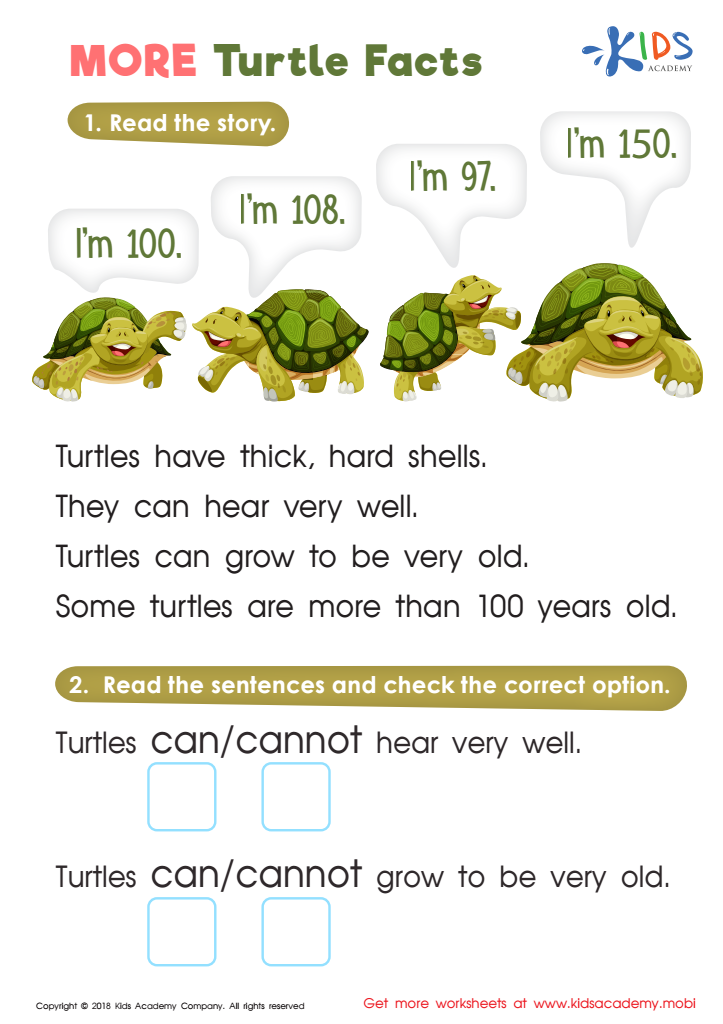
More Turtle Facts Worksheet
 Assign to My Students
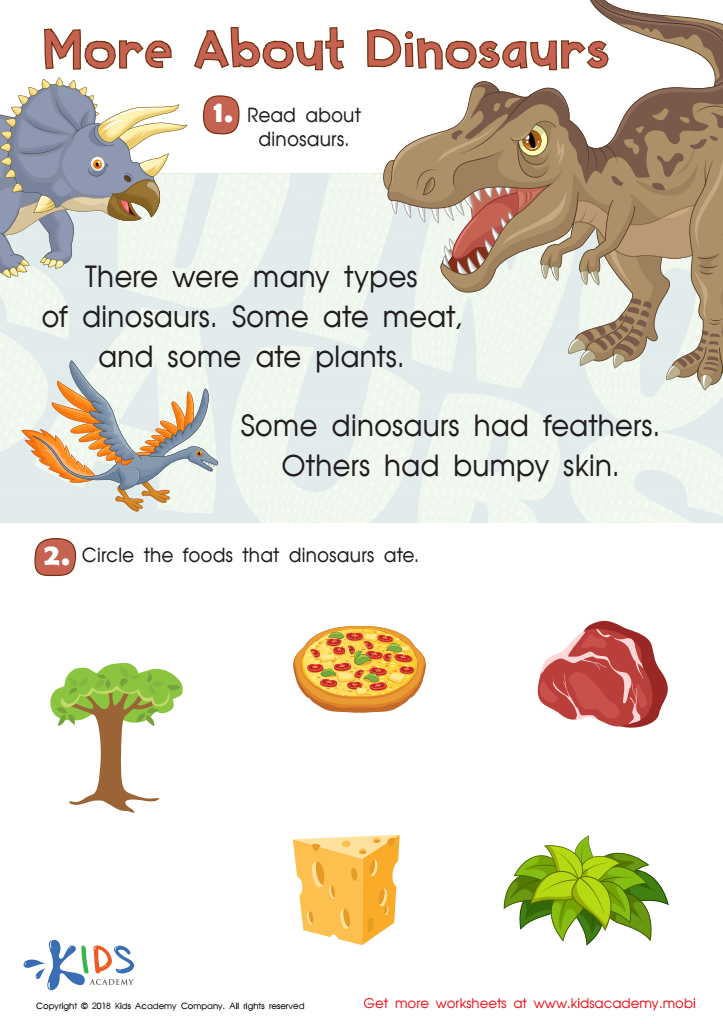
More About Dinosaurs Worksheet
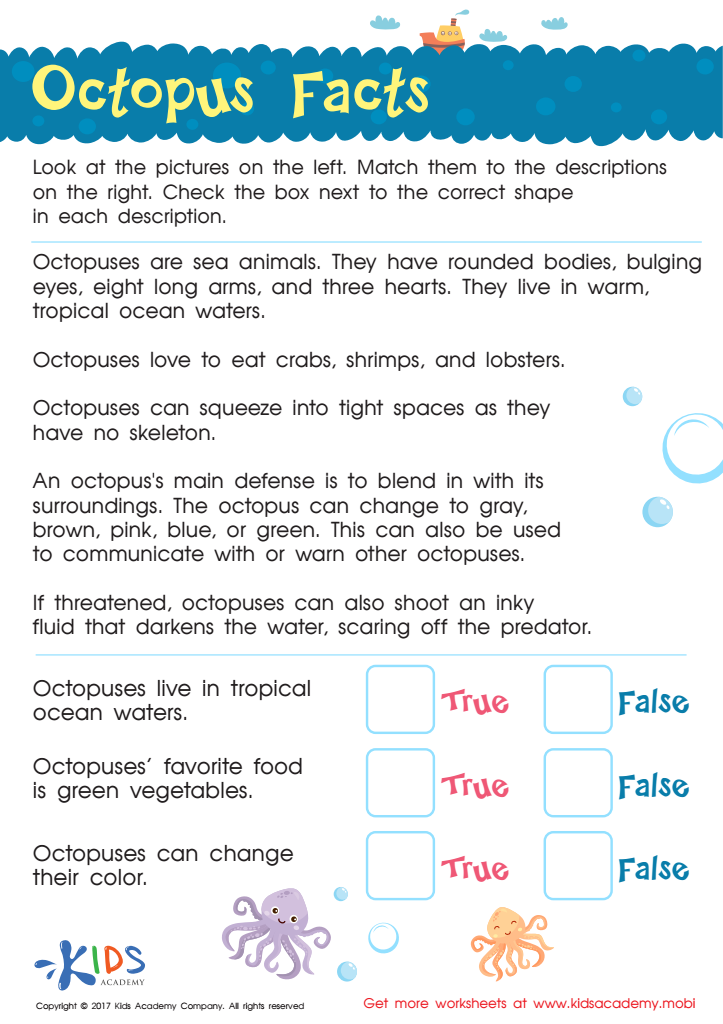
Octopus Facts Worksheet For Kids


.jpg)



.jpg)

Parents and teachers should prioritize information recall and reading comprehension for children aged 6-8 because these skills lay the foundational stones for successful lifelong learning and cognitive development. During these formative years, kids are not just learning to read—they are reading to learn. Strong information recall ensures that children can retain and integrate new knowledge, enabling them to build on previous learning experiences. It supports their ability to connect concepts, understand sequences, and engage in critical thinking.
Reading comprehension, on the other hand, allows children to make sense of the text, understand nuances, and interpret meaning beyond the literal word. It's the gateway to acquiring new vocabulary, enhancing communication skills, and fostering an inborn love of reading. When children comprehend what they read, they are more likely to engage enthusiastically in academic tasks, leading to improved academic performance.
Moreover, robust information recall and comprehension skills are crucial not just academically but also in social contexts, as they help children follow instructions, share stories, and initiate dialogues. Investing time and effort in nurturing these abilities sets the stage for more advanced literacy skills, creating resilient and versatile learners who can navigate complex materials in future educational endeavors. Ultimately, prioritizing these areas equips young children with tools essential for overall success and lifelong learning.








