Analytical thinking Reading Fiction Worksheets for Ages 6-8
4 filtered results
-
From - To
Discover our uniquely crafted Analytical Thinking Reading Fiction Worksheets designed for ages 6-8. These engaging activities are tailored to enhance young readers' comprehension and critical thinking skills, fostering a deeper understanding of narratives. Our worksheets encourage children to analyze characters, identify main ideas, and explore themes in a fun, interactive way. Perfect for both classroom and home use, these resources are ideal for nurturing a lifelong love of reading while strengthening analytical skills from an early age. Help your child excel in reading and beyond with our expertly designed worksheets!
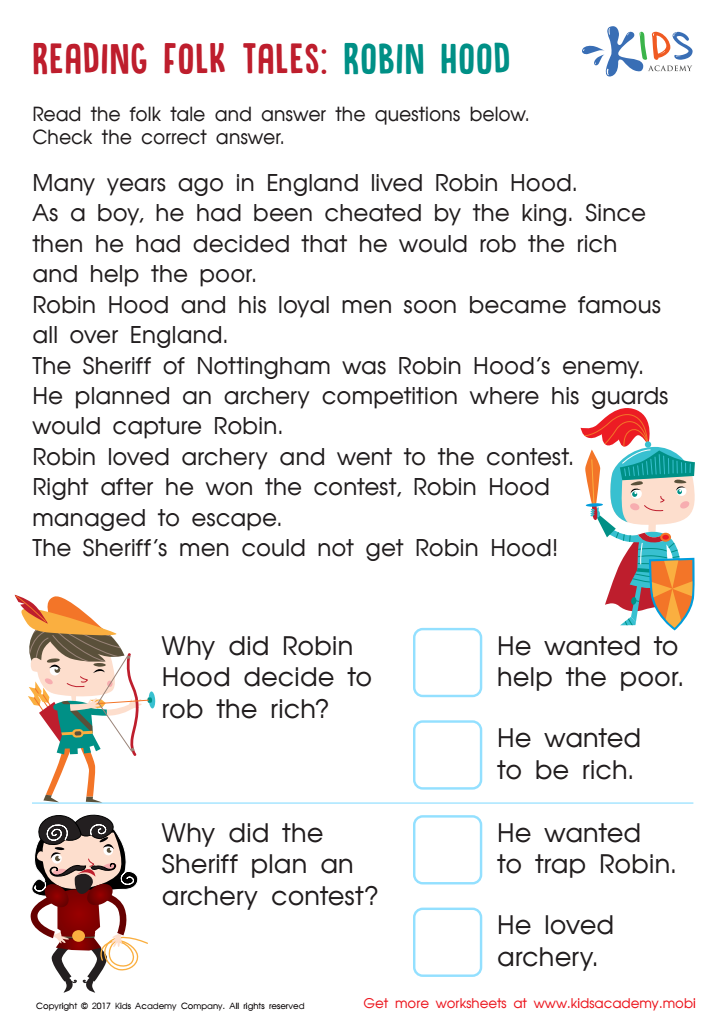
Robin Hood Folktale Worksheet
 Assign to My Students
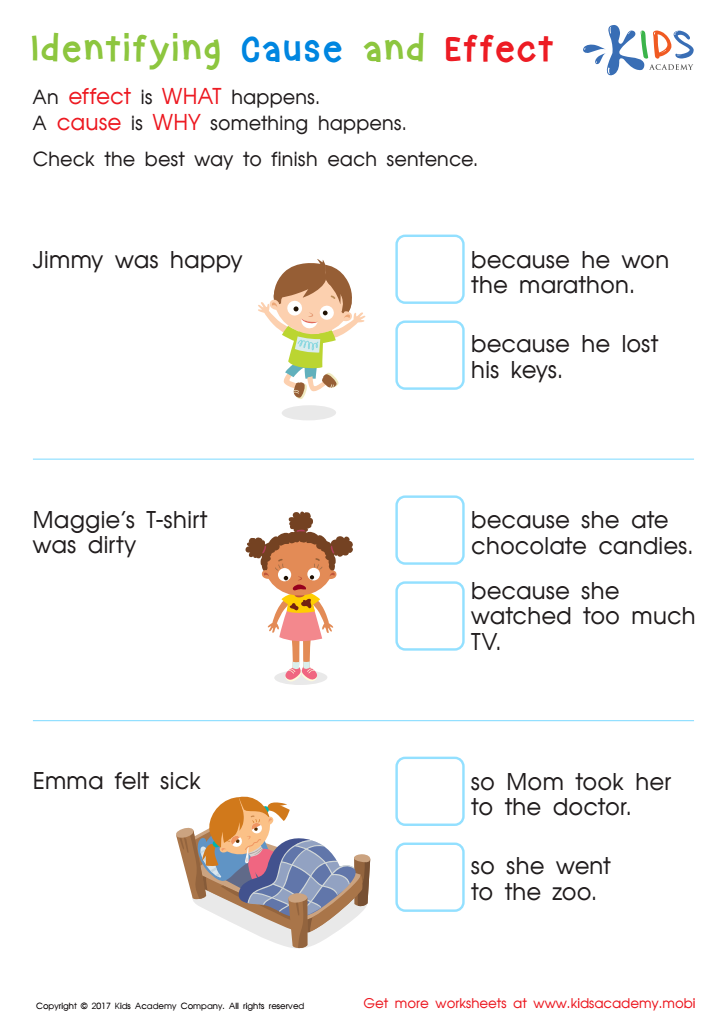
Indentifying Cause and Effect Worksheet
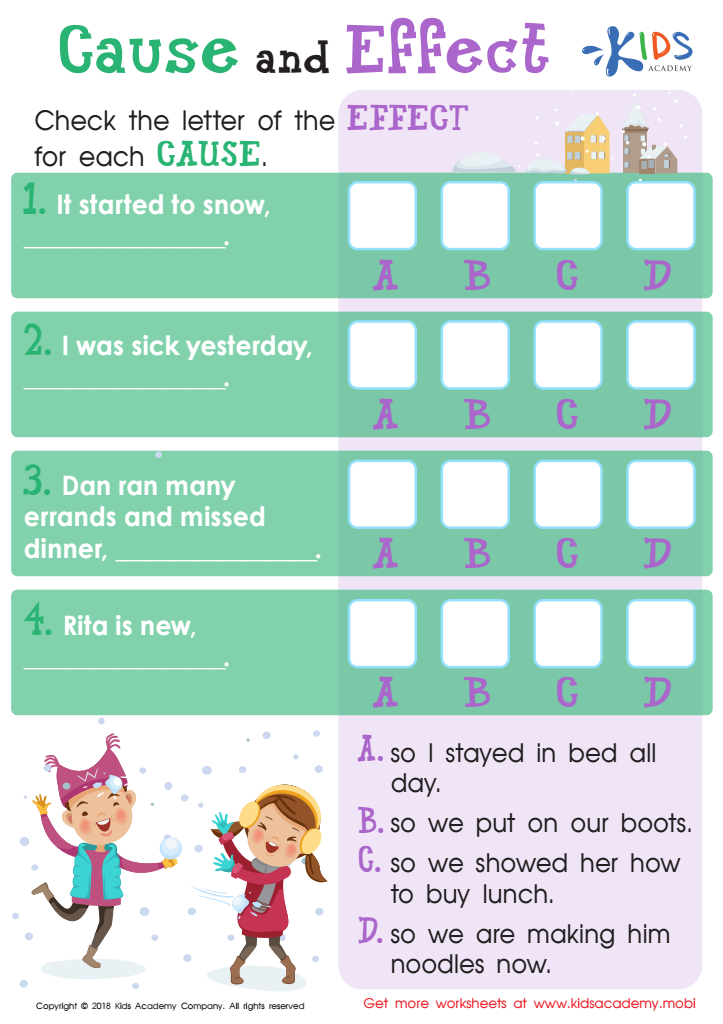
Cause and Effect Worksheet
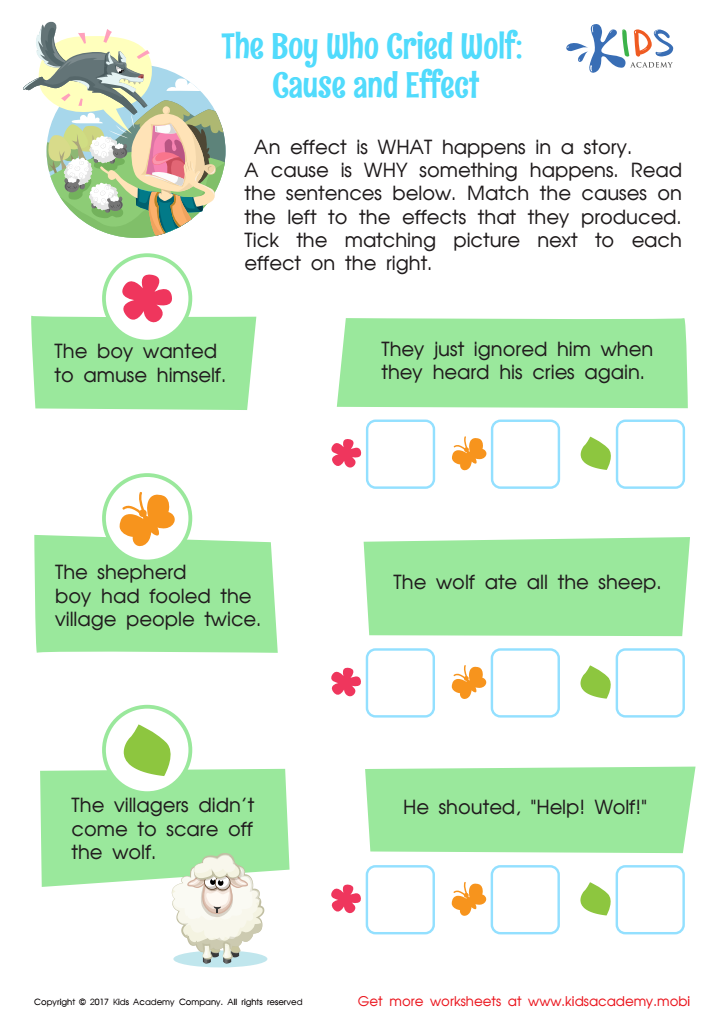
The Boy Who Cried Wolf: Cause and Effect Worksheet




.jpg)


Parents and teachers should prioritize analytical thinking in reading fiction for children ages 6-8 because it develops essential cognitive and emotional skills that form the foundation for lifelong learning. At this developmental stage, children are expanding their comprehension and reasoning abilities. Analytical thinking, when cultivated through fiction, encourages children to ask questions, make predictions, and understand cause and effect within stories. This analytical practice strengthens their critical thinking skills which are crucial across all academic subjects and various real-life situations.
Furthermore, reading fiction enhances vocabulary and language skills, while engaging their imagination and empathy. When children analyze characters' motives, feelings, and outcomes, they gain a deeper understanding of different perspectives and complex emotions. This awareness can boost their social skills and emotional intelligence, enabling them to navigate interpersonal relationships with greater ease.
Fostering an environment where analytical thinking is applied to fiction also helps children develop a love for reading, turning it into an enjoyable and intellectually stimulating activity rather than a mere academic obligation. This love for reading early on can lead to a lifelong habit of seeking knowledge and exploration through books. Thus, incorporating analytical thinking in reading fiction equips children with valuable skills that transcend the classroom, preparing them for future academic and personal success.








