
Logical Reasoning Reading Fiction Worksheets for Ages 6-8
6 filtered results
Difficulty Level
Grade
Age
-
From - To
Subject
Activity
Standards
Explore our engaging Logical Reasoning Reading Fiction Worksheets designed for children aged 6-8! These worksheets merge storytelling with critical thinking, enhancing young learners' comprehension and reasoning skills. Each activity encourages kids to analyze characters, plot, and settings, fostering a deeper understanding of fiction. Our resources aim to ignite imagination while building essential logical thinking abilities, aligning with developmental milestones for early learners. Ideal for both classroom and home settings, these worksheets promote interactive learning and discussion, making reading fun and educational. Unlock the world of stories and nurture your child's critical thinking with our thoughtfully crafted exercises today!
Favorites
With answer key
Interactive
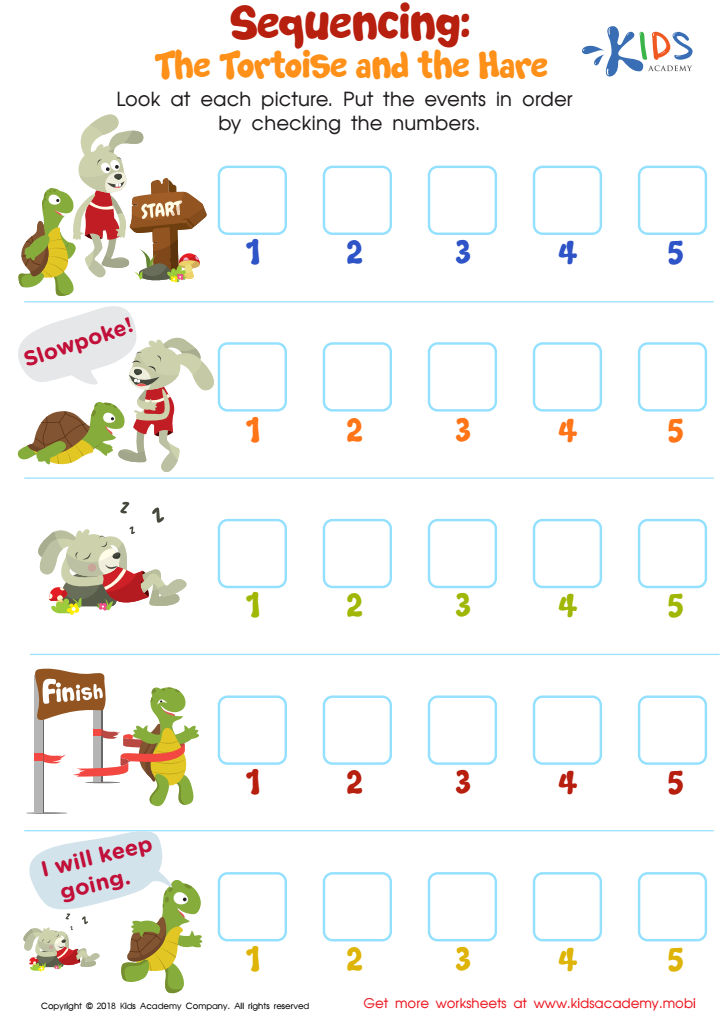
Sequencing: The Tortoise and the Hare Worksheet
Help your child become an independent reader and critical thinker with a sequencing worksheet from Kids Academy! Have them read the classic tale of the tortoise and the hare and use the accompanying worksheet to check their understanding of the story's sequence of events. Have kids identify the correct order of events by selecting the box next to the correct number for each image!
 Assign to My Students
Sequencing: The Tortoise and the Hare Worksheet
Worksheet
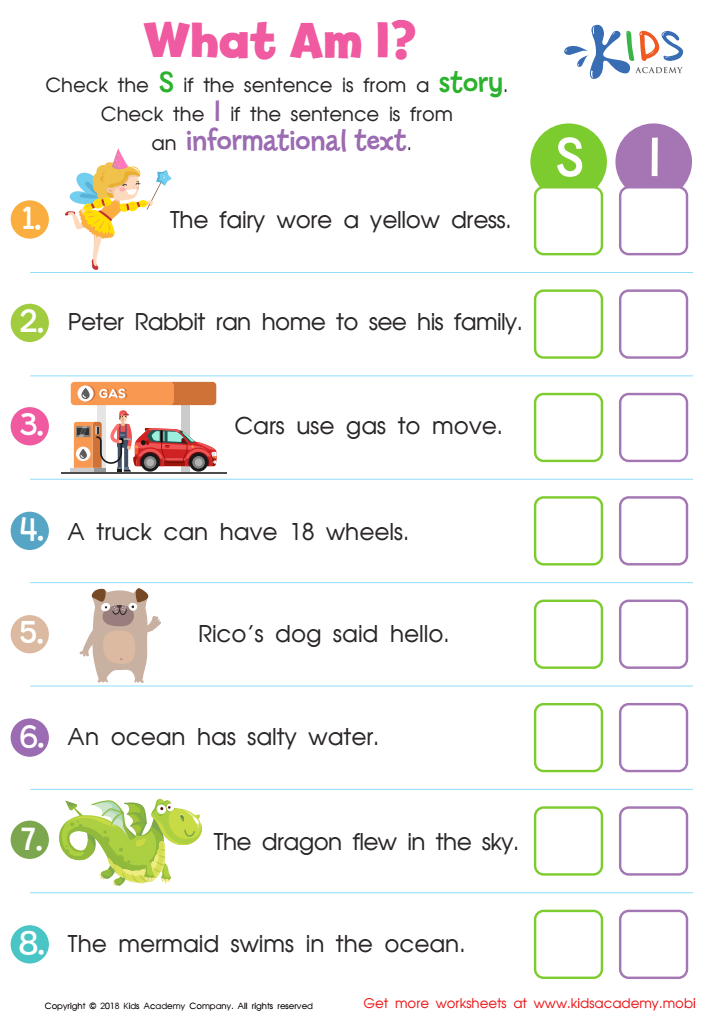
What Am I? Worksheet
This worksheet assesses students' ability to differentiate between stories and texts they read for facts. Students learn to distinguish between reading for pleasure and reading for information. It includes statements from both a story and an informational text, and students must decide what type of text it is.
What Am I? Worksheet
Worksheet
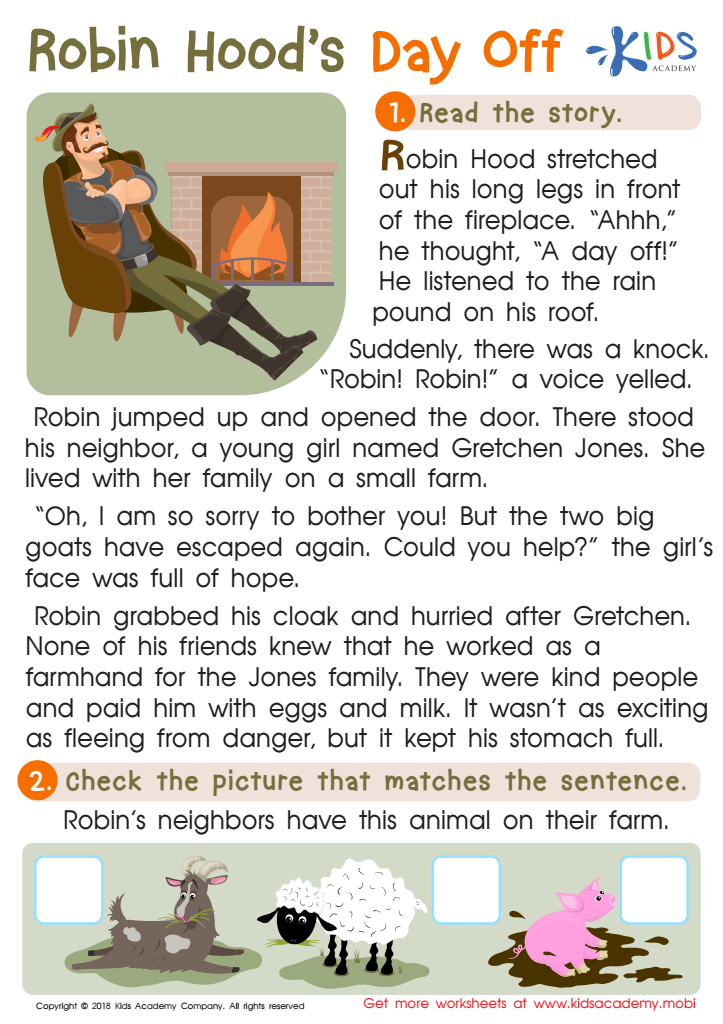
Robin Hood's Day Off Worksheet
Encourage your child to express their personality by writing stories. Show them this worksheet's short story about Robin Hood and read it slowly and carefully. Read it again if needed and ask the question below the story. This will help your child use their knowledge to answer it.
Robin Hood's Day Off Worksheet
Worksheet
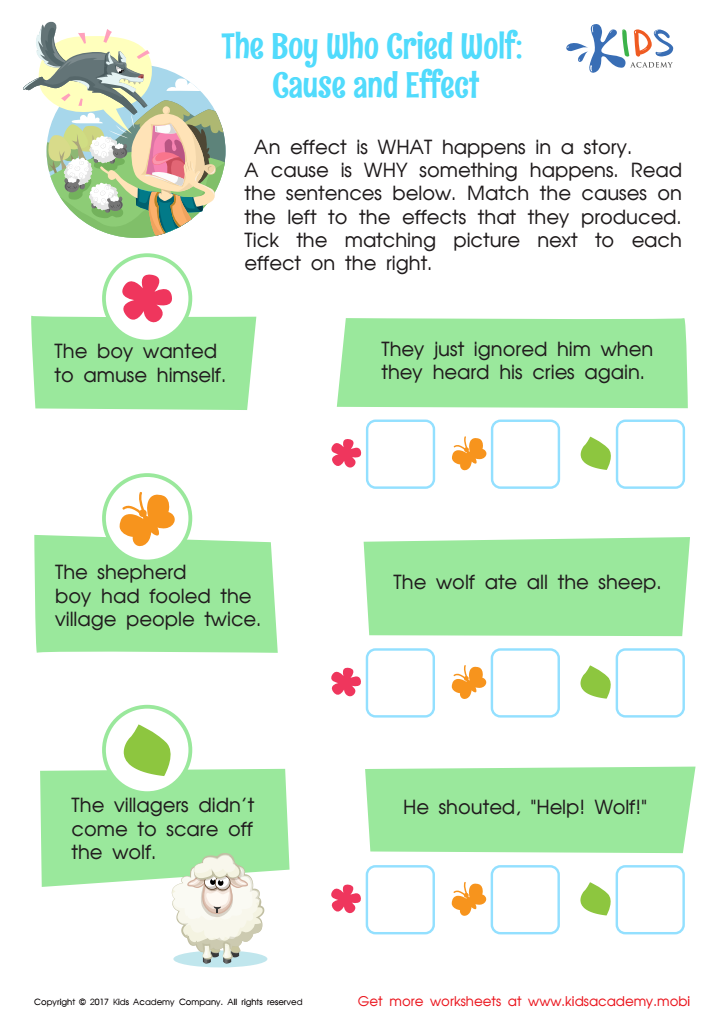
The Boy Who Cried Wolf: Cause and Effect Worksheet
With classic stories and fables, learning reading comprehension is easy - and fun!
The Boy Who Cried Wolf: Cause and Effect Worksheet
Worksheet
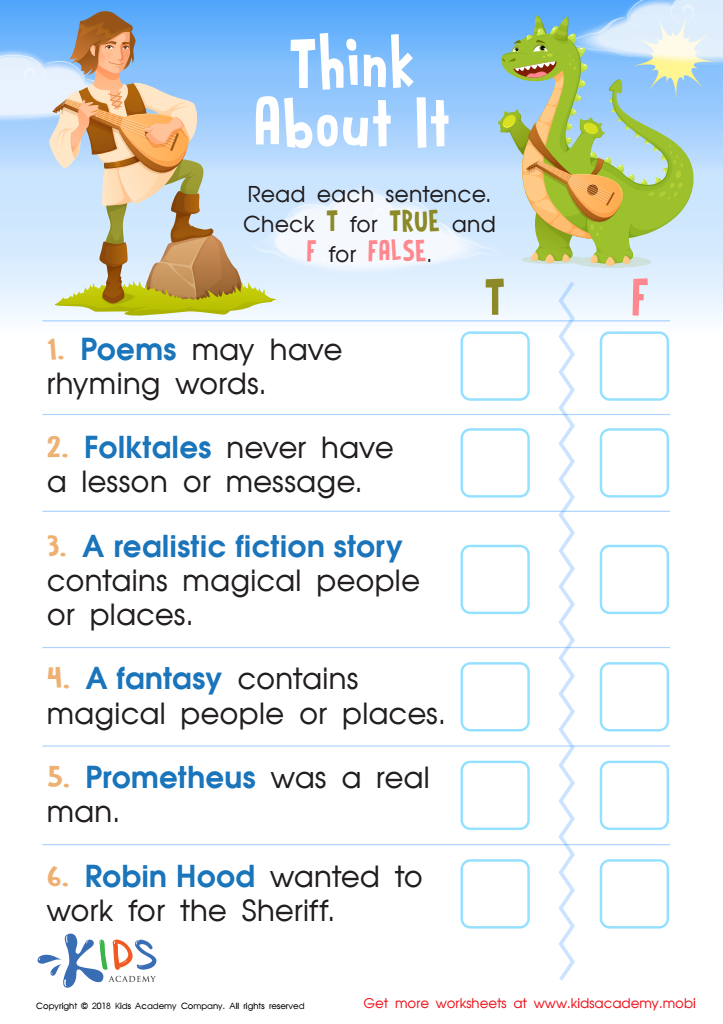
Think About It: Assessment Worksheet
Reading is a fun and important way to learn. Help your students become better readers with this simple yet colorful worksheet. Read each sentence aloud, then have them read it by themselves. Ask them to check T for True and F for False. It's a great way to practice their reading skills!
Think About It: Assessment Worksheet
Worksheet
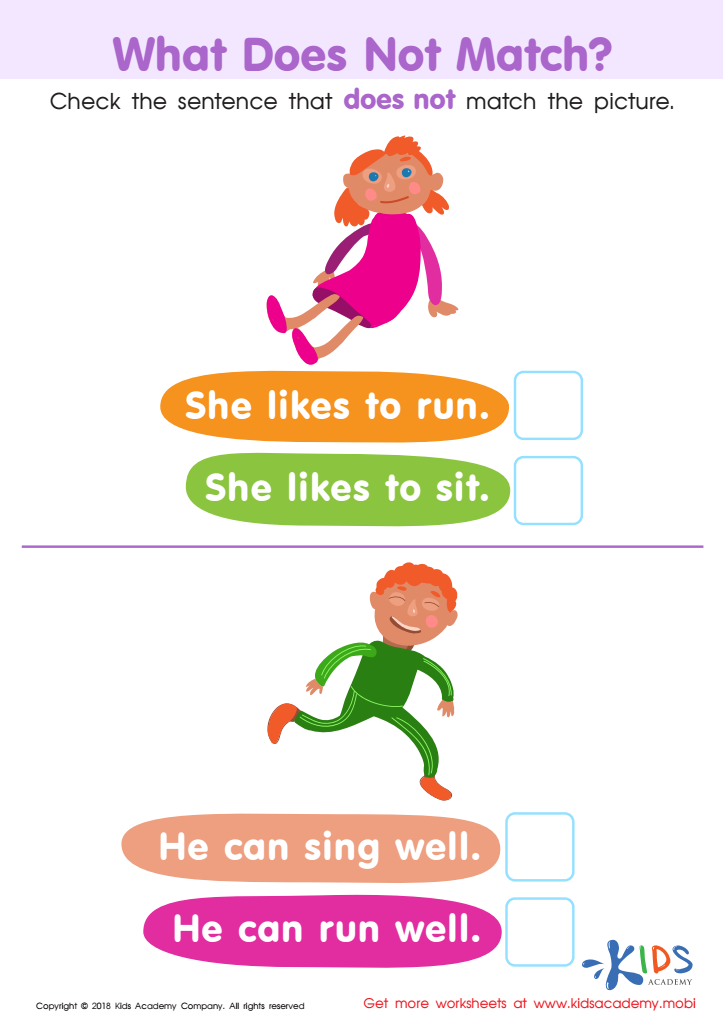
What Does Not Match? Worksheet
Emerging readers need to practice using visual cues and repetitive text. This colorful PDF provides them with an opportunity to look at pictures, use discrimination and discern which phrase does not match. It also enables them to gain familiarity with high-frequency words to aid decoding longer sentences.
What Does Not Match? Worksheet
Worksheet
Join Kids Academy for Free
Who is primarily going to use this learning content?




.jpg)



Parents and teachers should prioritize logical reasoning in reading fiction for ages 6-8 because it fosters critical thinking skills essential for academic success and everyday problem-solving. At this developmental stage, children are naturally curious and imaginative. Engaging them with fiction allows for explorations of complex plots, character motivations, and ethical dilemmas. Through these narratives, children learn to ask questions, make predictions, and draw conclusions based on textual evidence.
Logical reasoning helps children to analyze how characters might respond to various situations, enhancing empathy and social understanding. By evaluating the consequences of actions within stories, young readers become equipped to navigate their real-world challenges more thoughtfully. Additionally, this skill is foundational across all subjects, supporting proficiency in math, science, and even social studies.
Furthermore, discussing the logical flow of stories can improve children's communication skills and vocabulary as they articulate their reasoning. Encouraging this type of critical engagement not only enriches their reading experience but also cultivates a lifelong love for literature. Ultimately, promoting logical reasoning through fiction empowers children to become more adept thinkers, better readers, and more empathetic individuals, paving the way for their future intellectual and personal growth.








