Sequencing Skills Reading Fiction Worksheets for Ages 6-8
4 filtered results
-
From - To
Enhance your child’s comprehension and storytelling abilities with our Sequencing Skills Reading Fiction Worksheets, designed specifically for ages 6-8. These engaging, colorful worksheets guide young readers to arrange events in order, promoting critical thinking and narrative understanding. Kids will enjoy activities that challenge them to identify the beginning, middle, and end of stories, fostering a strong foundation in reading fiction. Perfect for at-home learning or classroom practice, our worksheets encourage active participation and support literacy development. Boost your child's reading confidence and skills with these fun, educational tools from Kids Academy.
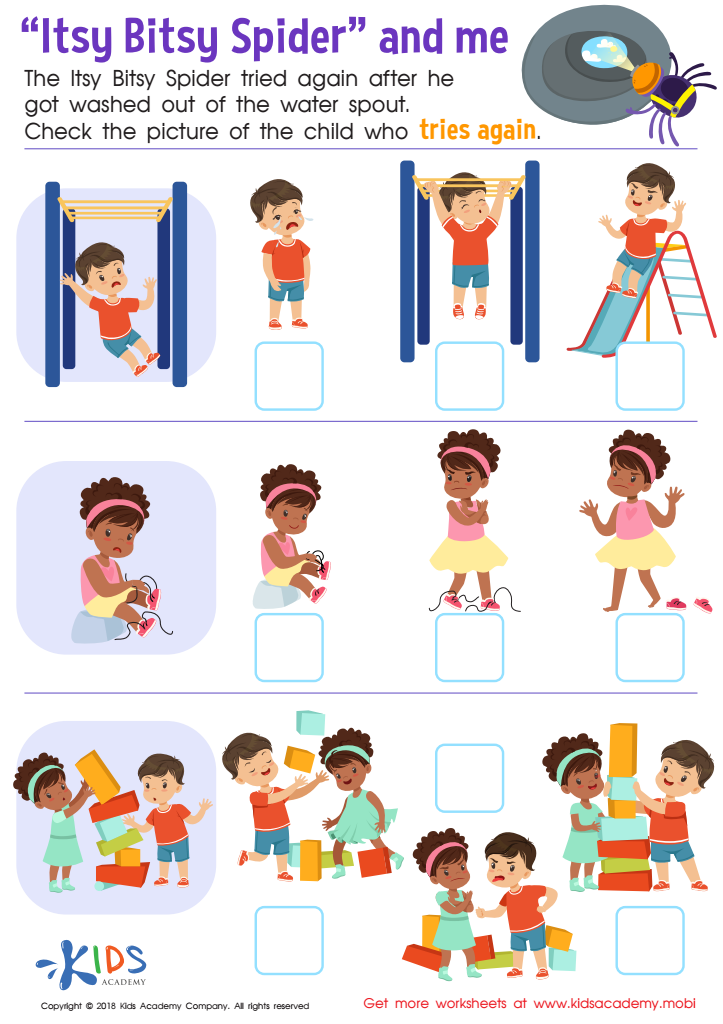
Itsy Bitsy Spider and Me Worksheet
 Assign to My Students
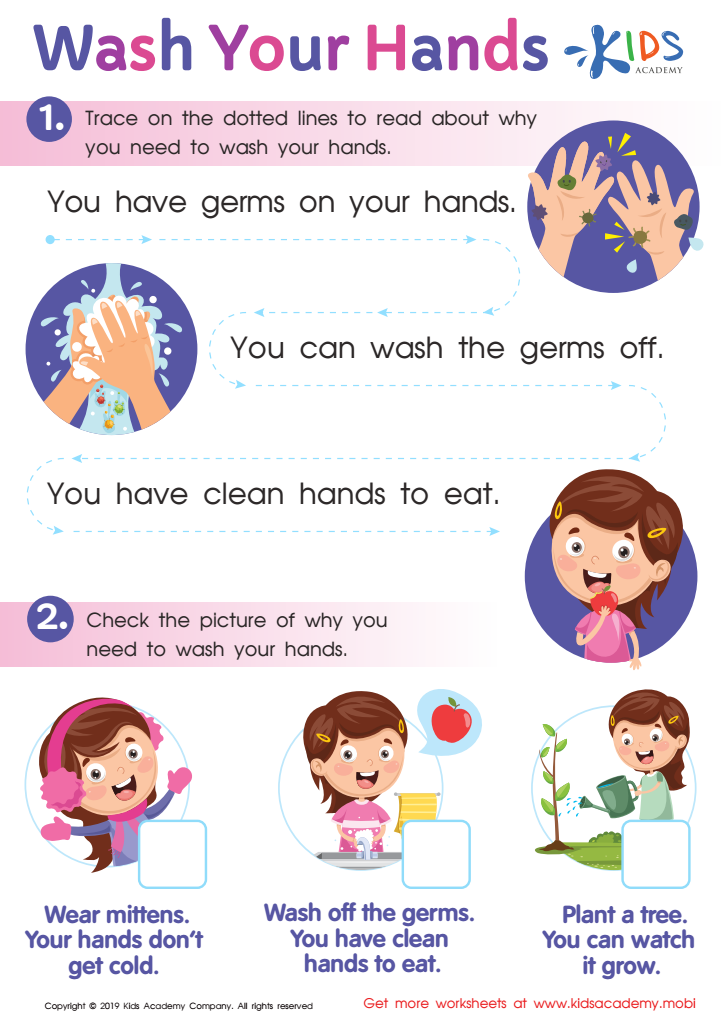
Wash Your Hands Worksheet
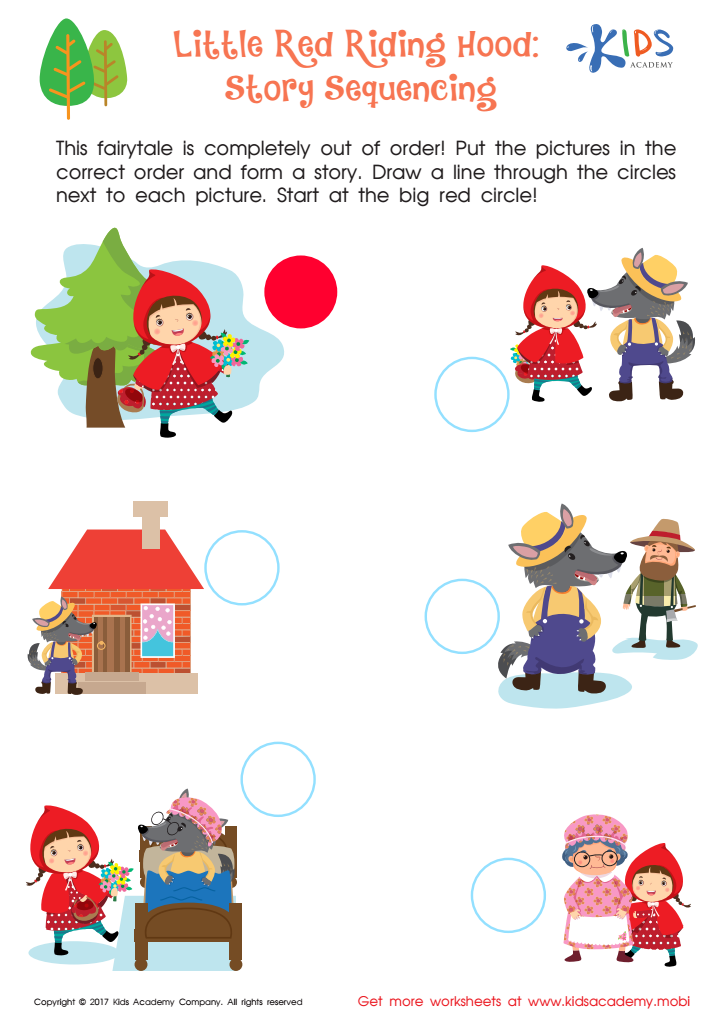
Story Sequencing Printable
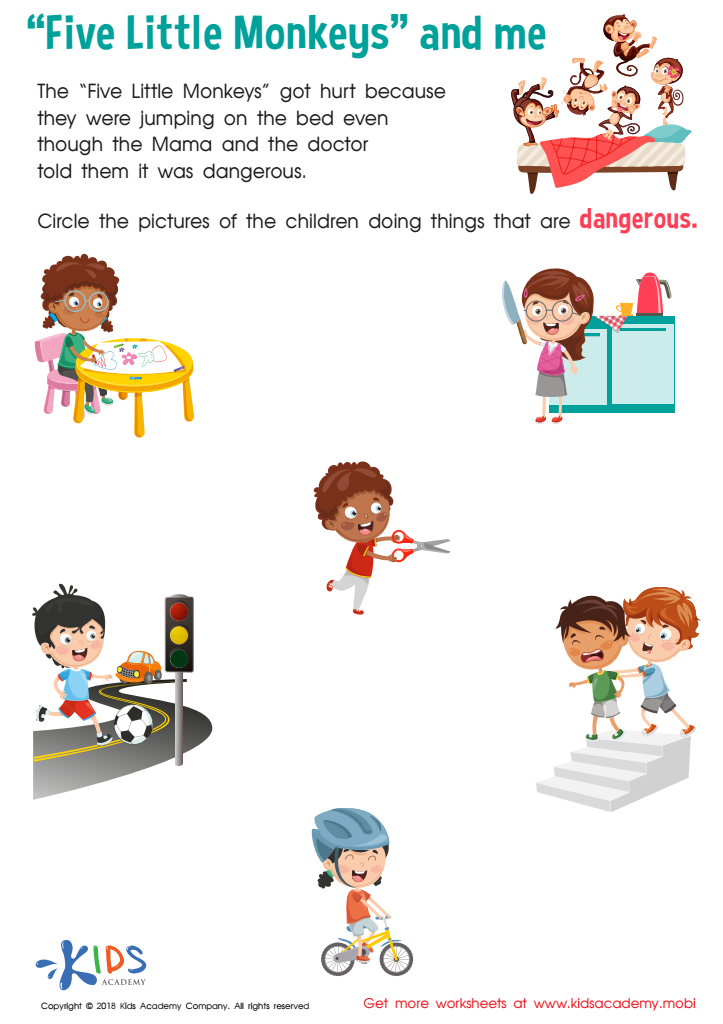
Five Little Monkeys and Me Worksheet


.jpg)
.jpg)




Sequencing skills, the ability to understand and order the events in a story, are crucial for young readers aged 6-8 for several key reasons. Firstly, these skills enhance comprehension. When children understand the order of events in fiction, they can grasp the plot more effectively, making the story meaningful and memorable. This lays the foundation for understanding more complex narratives as they grow.
Secondly, sequencing boosts critical thinking. By learning to identify the beginning, middle, and end of a story, children develop the ability to predict outcomes, understand cause-and-effect relationships, and grasp the flow of time within a narrative. These critical thinking skills are not only vital for reading proficiency but are also transferable to other academic subjects and everyday problem-solving.
Moreover, strong sequencing skills support written expression. When children understand how stories are constructed, they can better plan and organize their own writing, making their stories coherent and engaging. Finally, sequencing fosters a love for reading. When kids make sense of the stories they read, they enjoy them more, enhancing their overall reading experience and fostering a lifelong love of reading.
Therefore, investing time in developing sequencing skills in early grades is fundamental for academic success and personal growth in young children.








