Vocabulary enhancement Reading Fiction Worksheets for Ages 6-8 - Page 2
26 filtered results
-
From - To
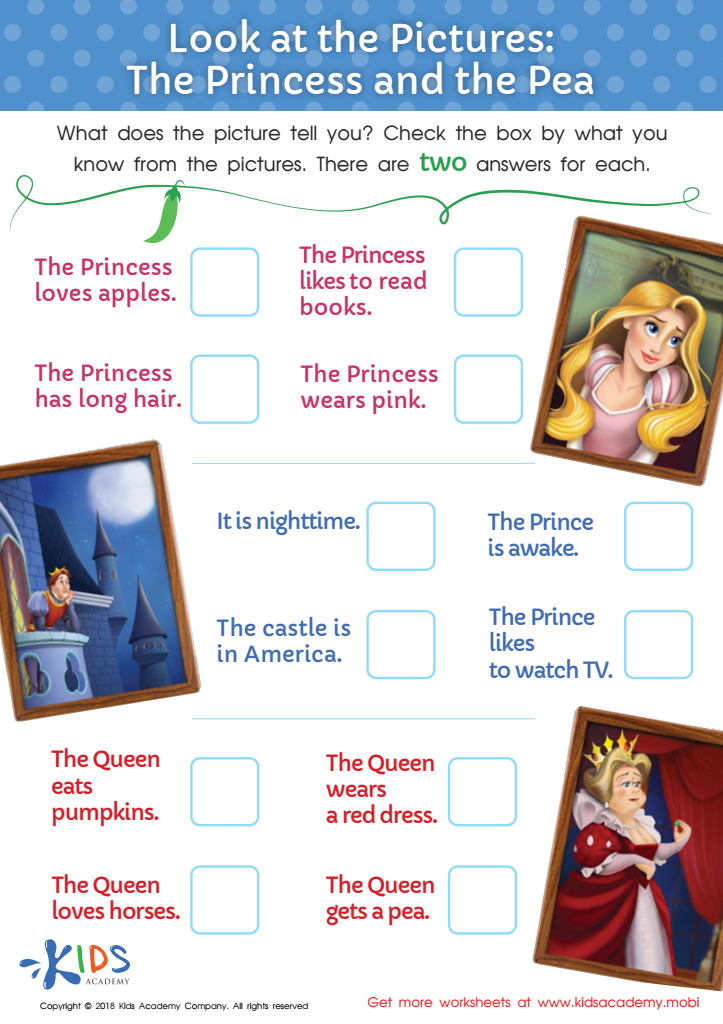
Look at the Pictures: The Princess and the Pea Worksheet
 Assign to My Students
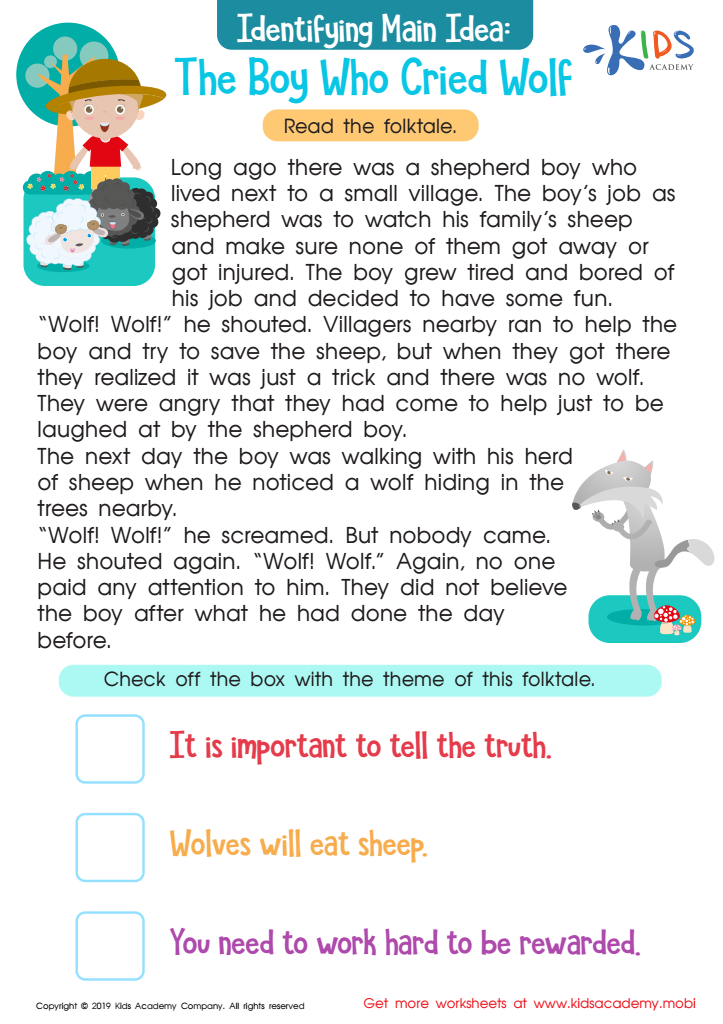
The Boy Who Cried Wolf Part 2 Worksheet




.jpg)
.jpg)

Vocabulary enhancement through reading fiction is pivotal for young children aged 6-8 because it lays the foundation for their linguistic, cognitive, and academic development. At this age, children's brains are particularly receptive to learning new words, and fiction presents a rich tapestry of language in a contextually meaningful way. Through engaging stories, young readers encounter diverse vocabulary that they might not come across in everyday conversation or through nonfiction texts.
Reading fiction also nurtures children's imaginations and helps in understanding and processing complex emotions and situations. When children come across new words in a story, they not only learn the word's meaning but also see how it's used in different scenarios, which boosts comprehension and retention. This kind of contextual learning is far more effective than rote memorization from lists.
Furthermore, a strong vocabulary is closely linked to overall academic success. Children with richer vocabularies excel across subjects because they can understand instructions and express their ideas more clearly. Enhanced vocabulary from early on helps in better reading comprehension skills, leading to a love for reading that persists and blossoms lifelong. In summary, prioritizing vocabulary growth through fiction for young children is a cornerstone for their educational journey and personal development.








