Math problem-solving Sight Words Worksheets for Ages 6-8
6 filtered results
-
From - To
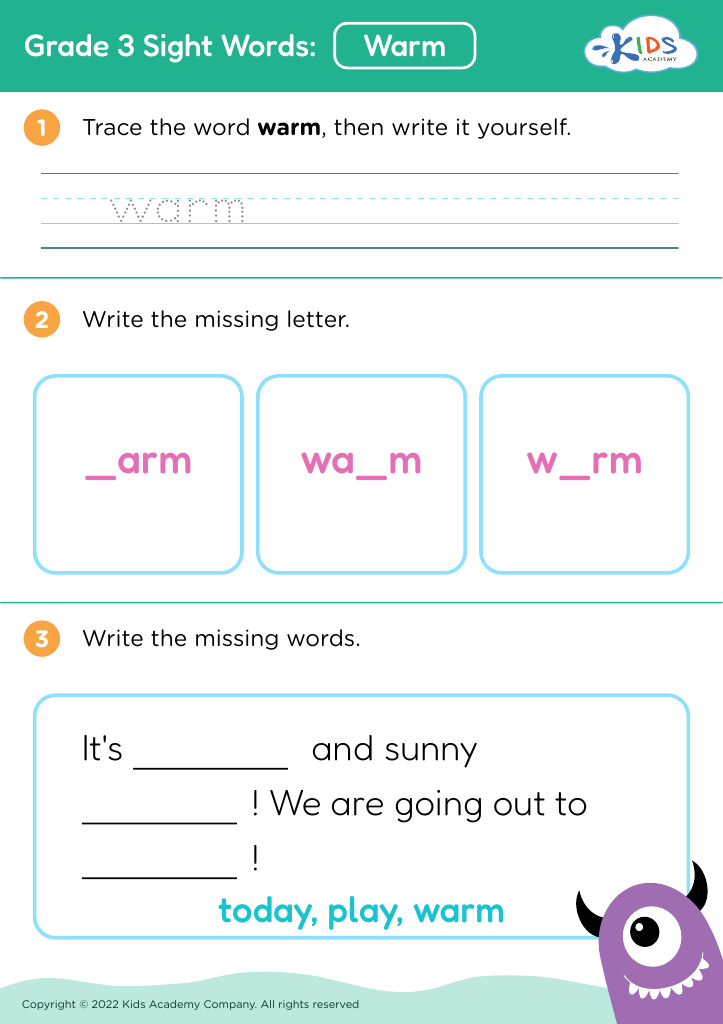
Boost your child’s math and reading skills with our engaging Math Problem-Solving Sight Words Worksheets, designed specifically for kids ages 6-8. These unique worksheets seamlessly combine essential sight word practice with basic math problems, enhancing both their vocabulary and arithmetic abilities. Perfect for young learners, these exercises aid in developing critical thinking and problem-solving skills while making learning fun and interactive. Our thoughtfully crafted worksheets are ideal for in-class activities or extra practice at home. Give your children the confidence and skills they need to excel in both math and reading with our expertly designed resources.







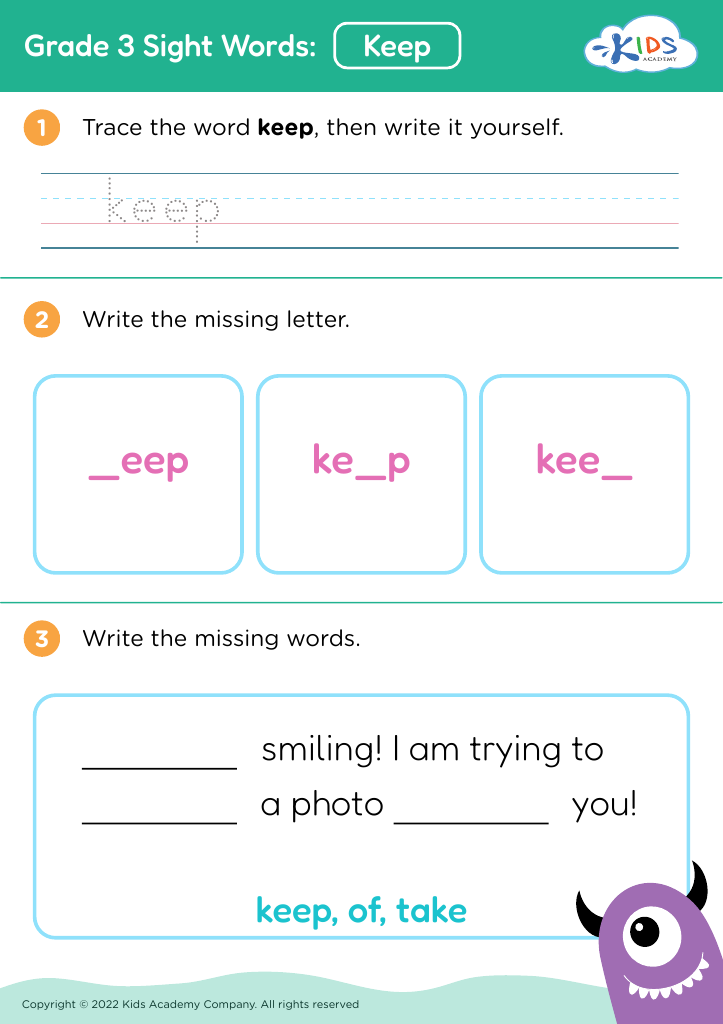
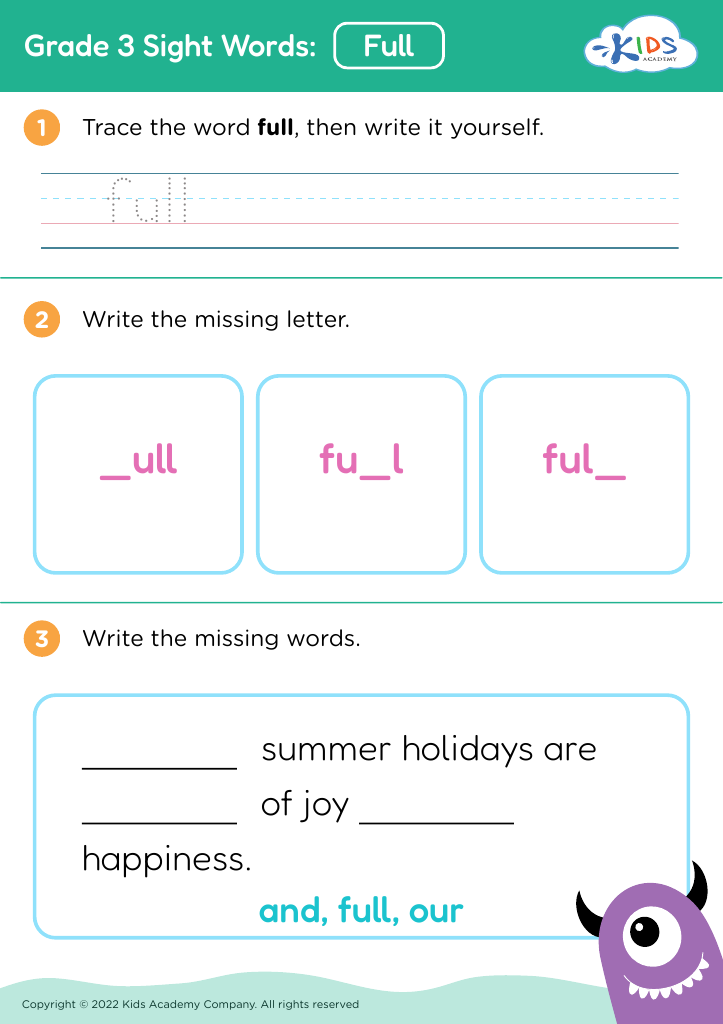
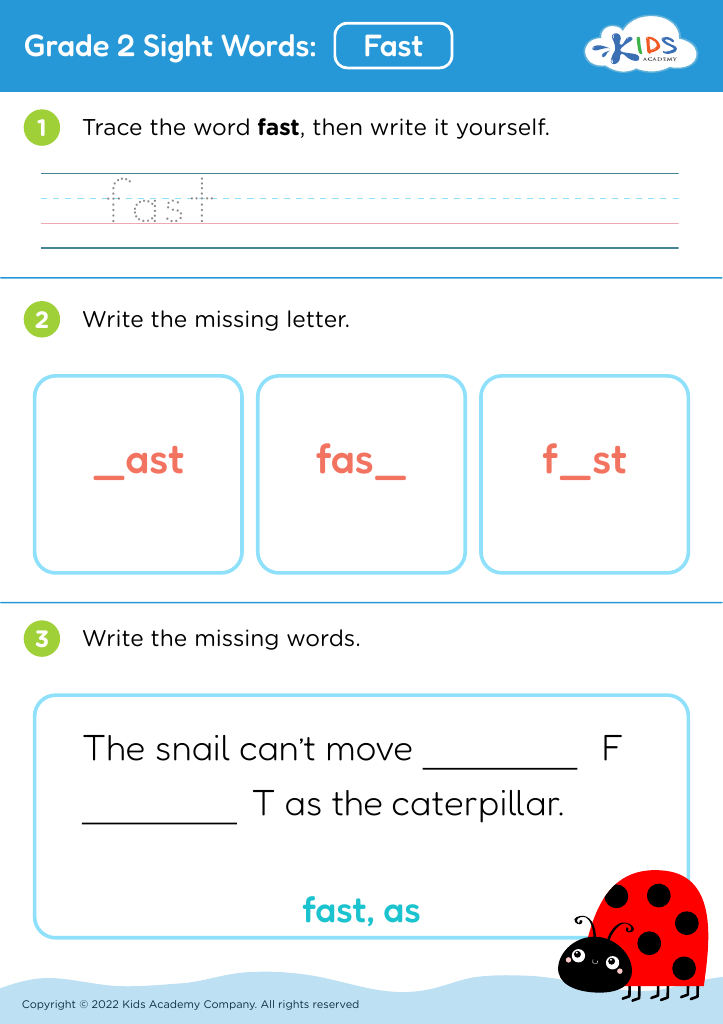
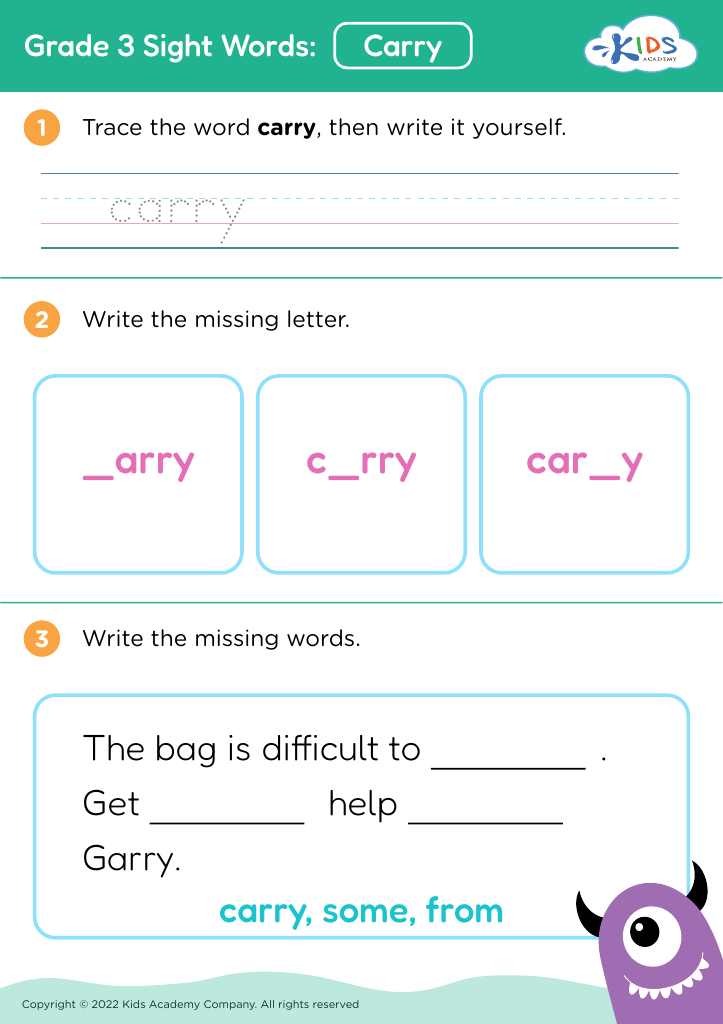
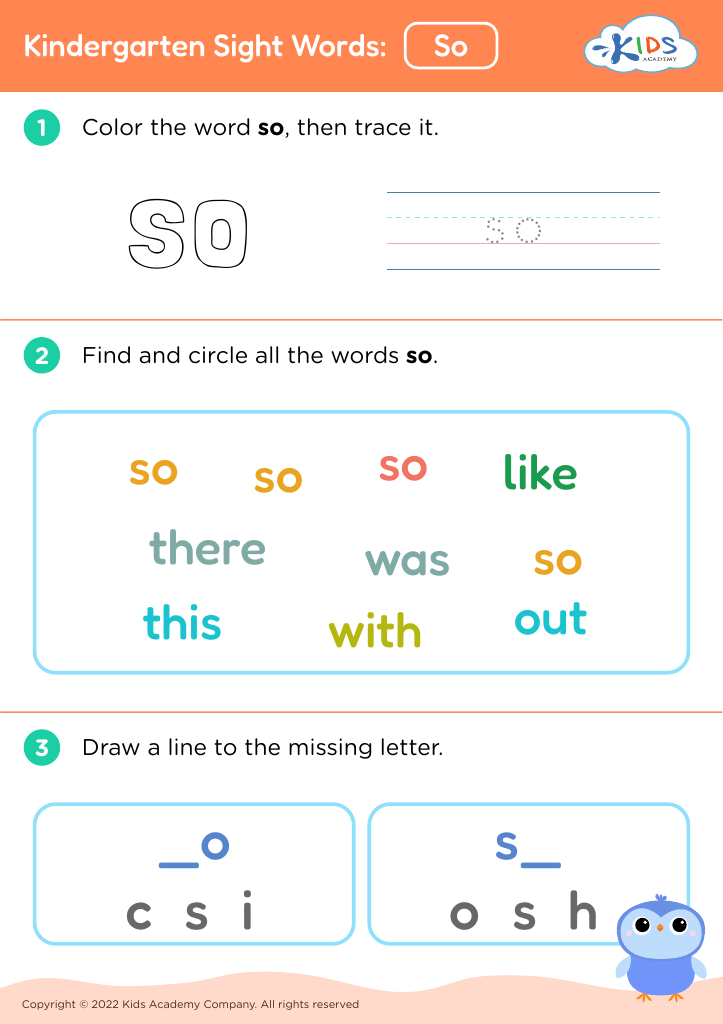








Math problem-solving sight words are essential for children aged 6-8 because they form the foundation of early math literacy. These words, such as "sum," "difference," "fraction," and "equal," are pivotal for understanding and solving math problems effortlessly. When parents and teachers emphasize these sight words, they enable children to navigate mathematical concepts more fluently and confidently.
At this formative age, cognitive skills are developing rapidly, and familiarity with key math vocabulary enhances comprehension and problem-solving abilities. Children who master these words can focus more on understanding the concepts rather than decoding the terms, which boosts their overall math performance.
Moreover, recognizing these sight words primes students for future academic success. It fosters critical thinking, comprehension, and application skills, essential components of STEM education. Additionally, this practice supports broader literacy as math vocabulary often overlaps with everyday language and other academic disciplines.
Teacher and parental involvement is crucial in this process. When adults model and reinforce the use of math sight words through conversations, games, and problem-solving activities, children see the practical applications of what they learn. This early engagement can ignite a lasting interest in mathematics, setting a positive trajectory for a child's educational journey.