Categorization skills Animals Worksheets for Ages 6-8
3 filtered results
-
From - To
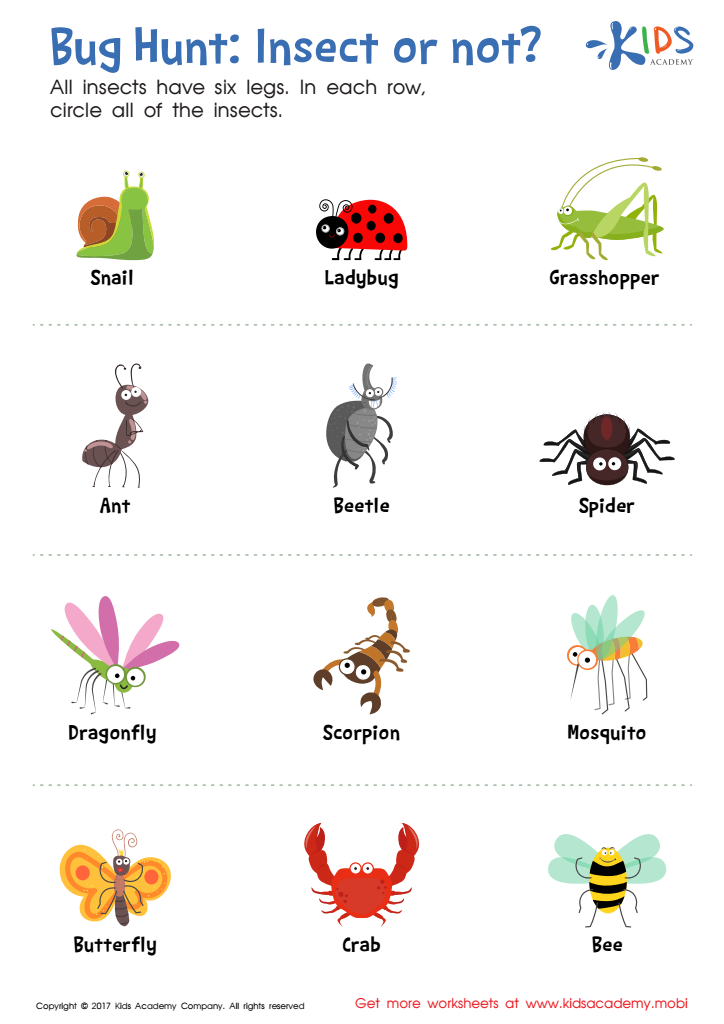
Introducing our "Categorization Skills Animals Worksheets" designed for kids ages 6-8! These fun, educational worksheets help young learners identify and group animals based on common characteristics. By engaging with various exercises, children enhance their critical thinking and observational skills while learning fascinating facts about the animal kingdom. Perfect for classroom use or at-home practice, these activities build a solid foundation in categorizing and understanding different animal traits. Make learning an adventure with our expertly crafted worksheets, designed to inspire a love for science in your young explorers!
 Assign to My Students
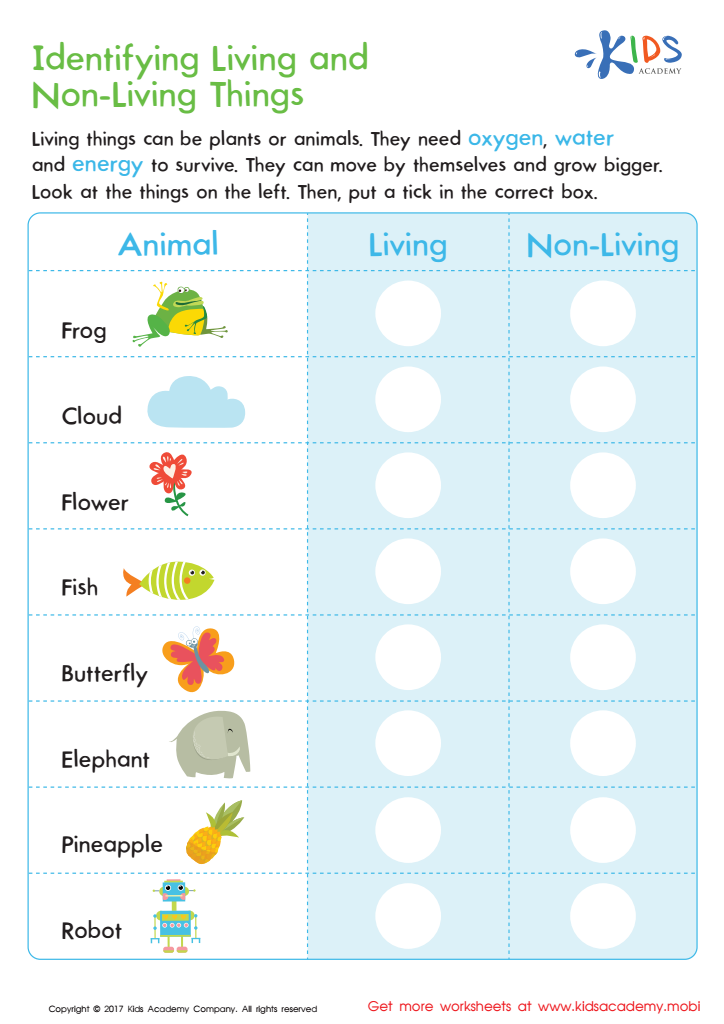
Identifying Living or Non–living Worksheet
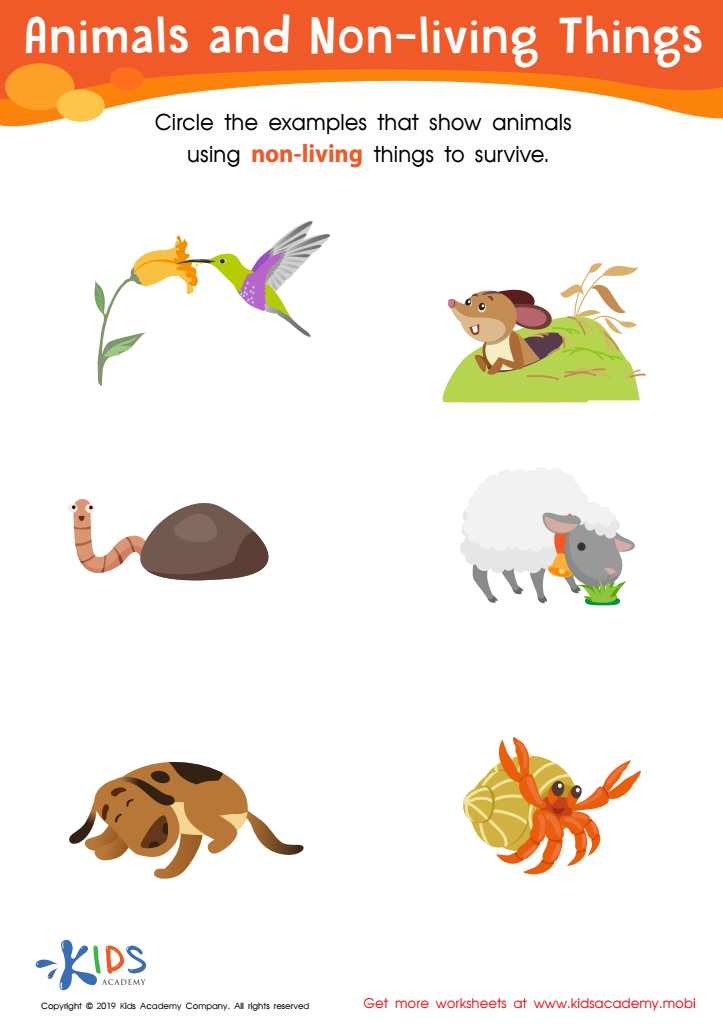
Animals and Non-Living Things Worksheet







For children ages 6-8, developing categorization skills, especially with animals, is crucial for cognitive growth and academic success. Categorization aids in structuring knowledge, enabling kids to understand relationships and make connections more effectively. This foundational skill facilitates efficient learning and memory retention by organizing scattered information into coherent groups.
When it comes to animals, categorization teaches children about biological diversity and ecological relationships. For instance, by sorting animals into mammals, birds, and reptiles, kids grasp essential attributes and common features in a meaningful way. This early understanding nurtures curiosity and a love for science, laying the groundwork for subjects like biology and environmental science.
Furthermore, categorizing animals enhances critical thinking and problem-solving abilities. Kids learn to identify patterns, compare characteristics, and differentiate between species, fostering analytical skills. These cognitive processes are transferable and beneficial in subjects like math, reading, and social studies.
Socially, this skill encourages interaction and discussion among peers, promoting cooperative learning and language development. Talking about animals and their categories can enliven classroom conversations and inspire group activities, thereby enhancing communication skills.
Ultimately, fostering categorization skills around animals enriches a child's cognitive toolkit, propelling them toward a more structured, curious, and connected understanding of the world.