Understanding prepositions Grammar Worksheets for Ages 6-8
4 filtered results
-
From - To
Boost your child's grammar skills with our 'Understanding Prepositions' worksheets designed for ages 6-8. These engaging and interactive printable worksheets help young learners grasp the essential role of prepositions in sentence structure. With a variety of fun exercises, kids will practice identifying and using prepositions effectively, enhancing their writing and comprehension skills. Each worksheet is thoughtfully crafted to support educators and parents in facilitating a joyful learning experience. Empower your child to understand the relationship between words and improve their language abilities in a playful way. Visit our website to explore these valuable resources and make learning grammar enjoyable!
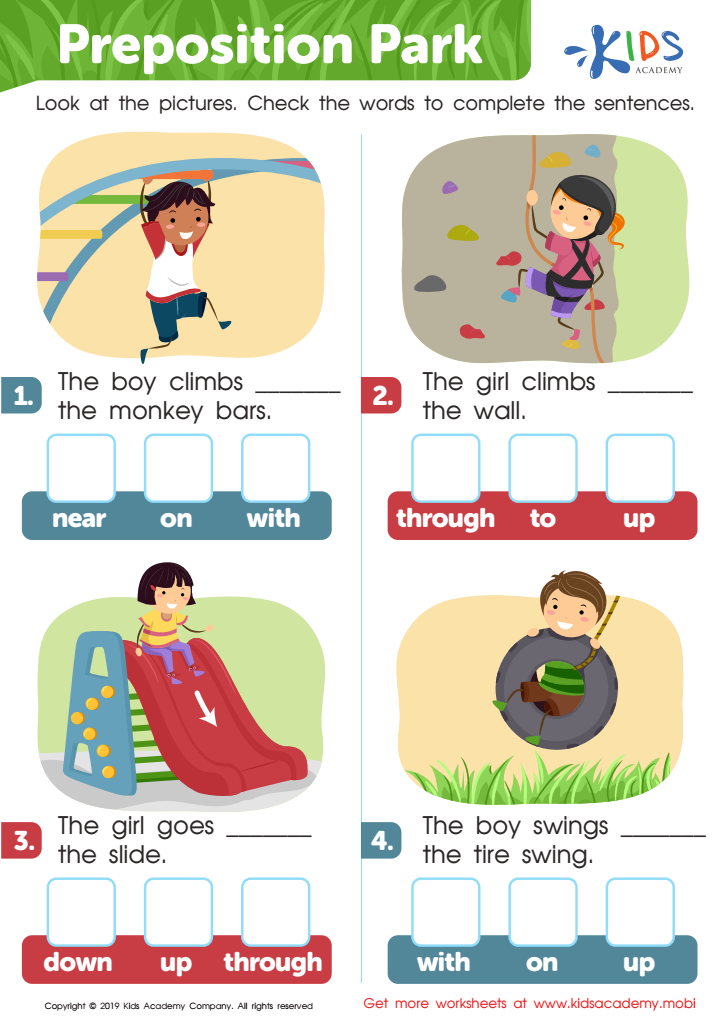
Preposition Park Worksheet
 Assign to My Students
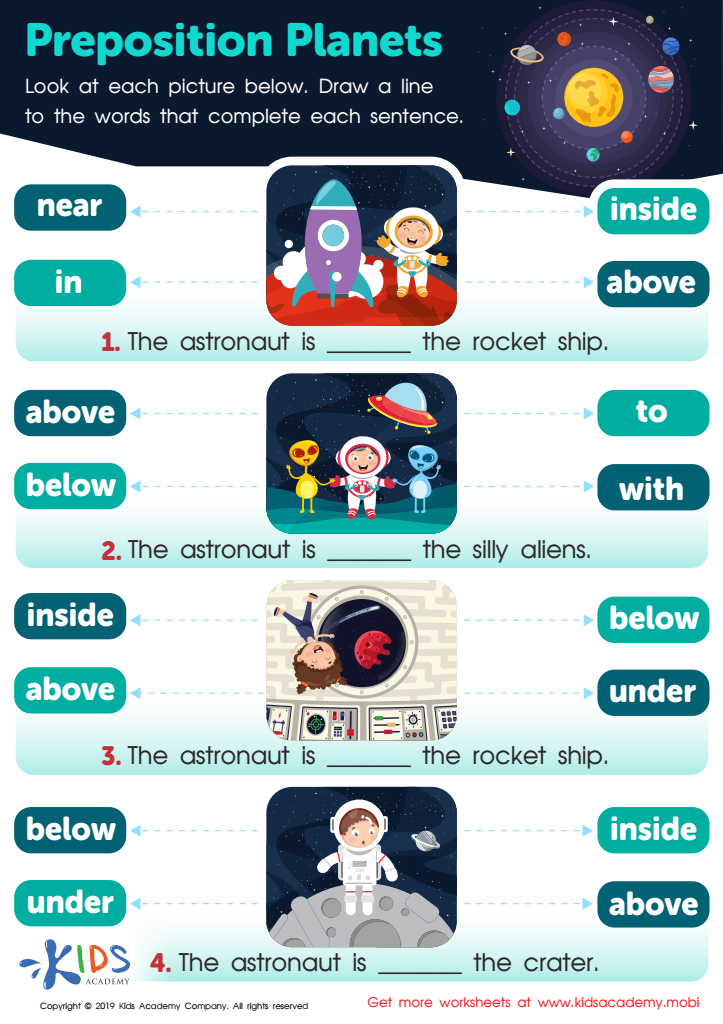
Preposition Planets Worksheet
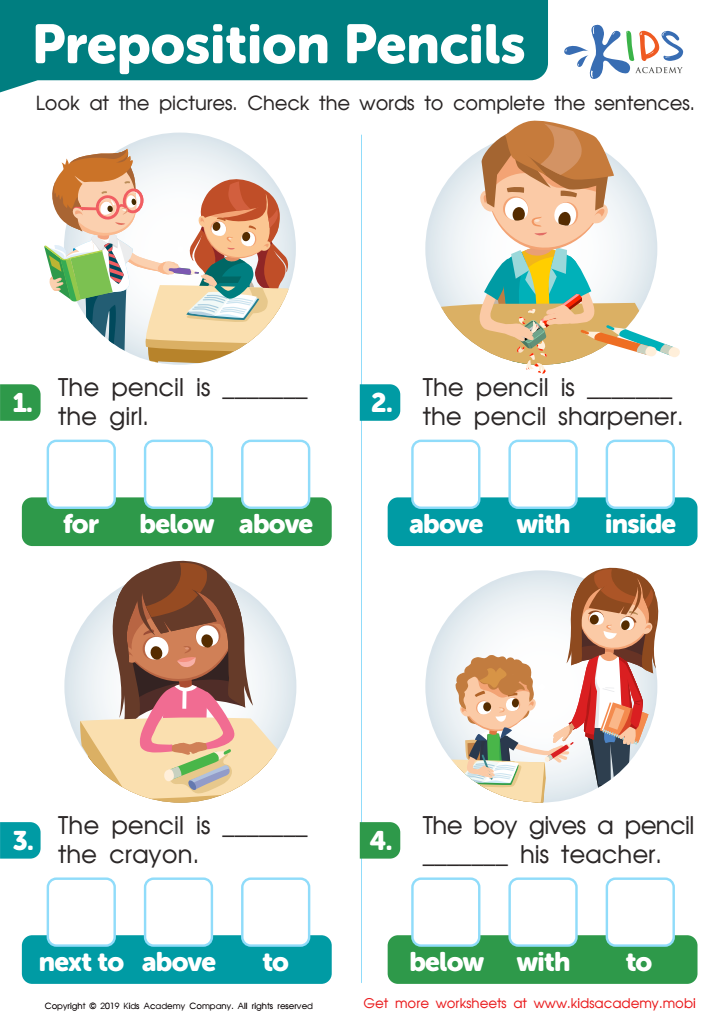
Preposition Pencils Worksheet
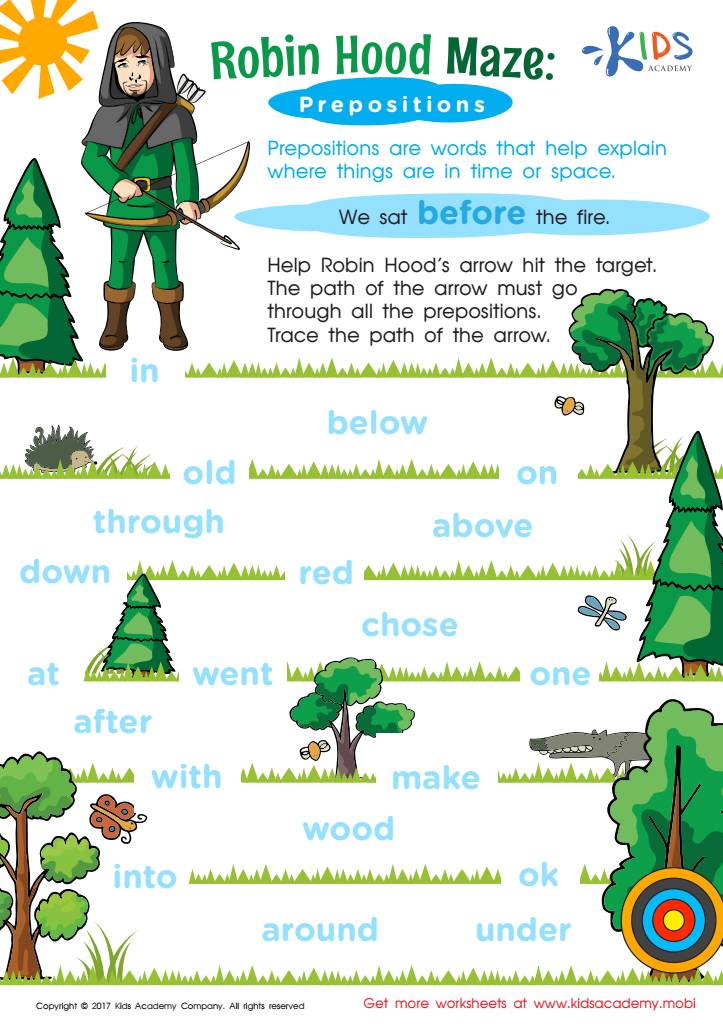
Prepositions Worksheet




Understanding prepositions is crucial for children aged 6-8 as it forms the foundation for effective communication and literacy skills. Prepositions are words that link nouns, pronouns, or phrases to other words in a sentence, providing critical information about time, location, and direction. For example, in the sentences “The book is on the table” or “She ran after the dog,” the prepositions “on” and “after” clarify relationships and contextualize ideas.
When parents or teachers emphasize the importance of prepositions, they help children develop strong grammatical skills, which enhances reading comprehension and writing abilities. By mastering prepositions, children learn to construct more complex sentences, express themselves clearly, and understand nuances in language, laying the groundwork for future academic success.
Moreover, engaging children in activities that focus on prepositions, such as games or storytelling, fosters a love for language and encourages critical thinking. As children become more proficient in using prepositions, their confidence in both oral and written communication increases, better preparing them for more complex language structures in their educational journey. Ultimately, helping children grasp prepositions supports not only their grammatical knowledge but also their overall cognitive development and social interactions.








