
Understanding syllables Grammar Worksheets for Ages 6-8
3 filtered results
Difficulty Level
Grade
Age
-
From - To
Subject
Activity
Standards
Welcome to our "Understanding Syllables Grammar Worksheets" designed for children ages 6-8! These engaging, printable worksheets help young learners master the concept of syllables, enhancing their phonemic awareness and reading skills. Each activity focuses on identifying, counting, and manipulating syllables in fun and interactive ways. Through varied exercises, children will develop a solid foundation in comprehension and spelling, setting them up for future literacy success. Our colorful designs and age-appropriate challenges keep kids excited about learning. Start your child’s journey toward strong reading skills today with our thoughtfully crafted syllable worksheets!
Favorites
With answer key
Interactive
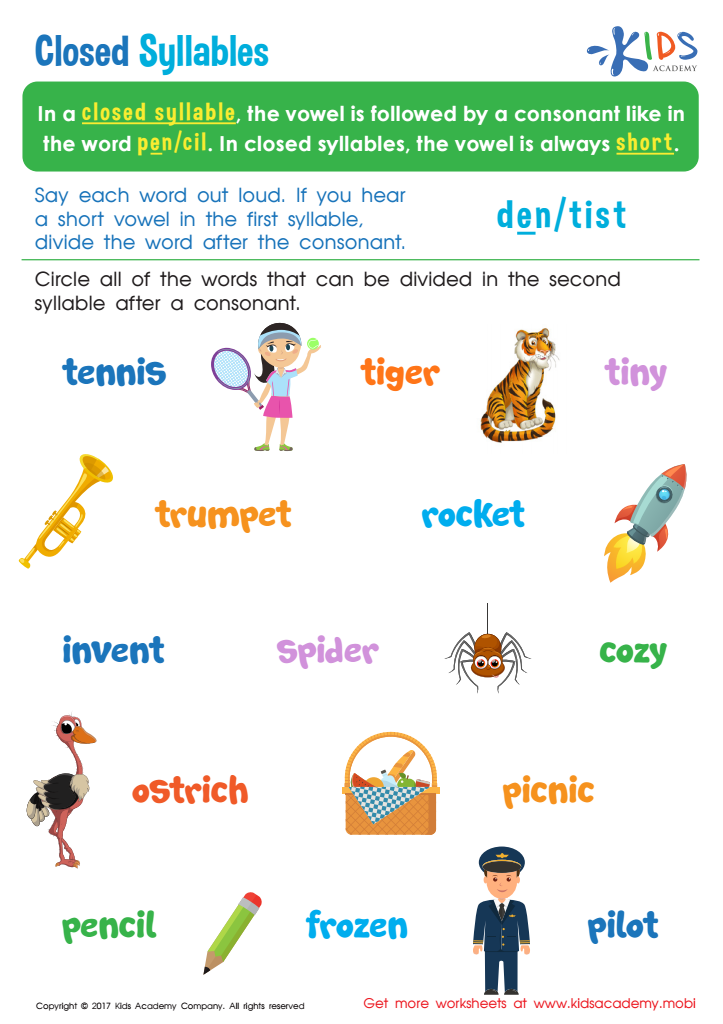
Closed Syllable Spelling Worksheet
Learning syllables can be tough, but we can make it easier! Look for long and short vowel sounds to identify closed syllables. This worksheet can help 3rd graders do just that, with its fun and colorful design.
 Assign to My Students
Closed Syllable Spelling Worksheet
Worksheet
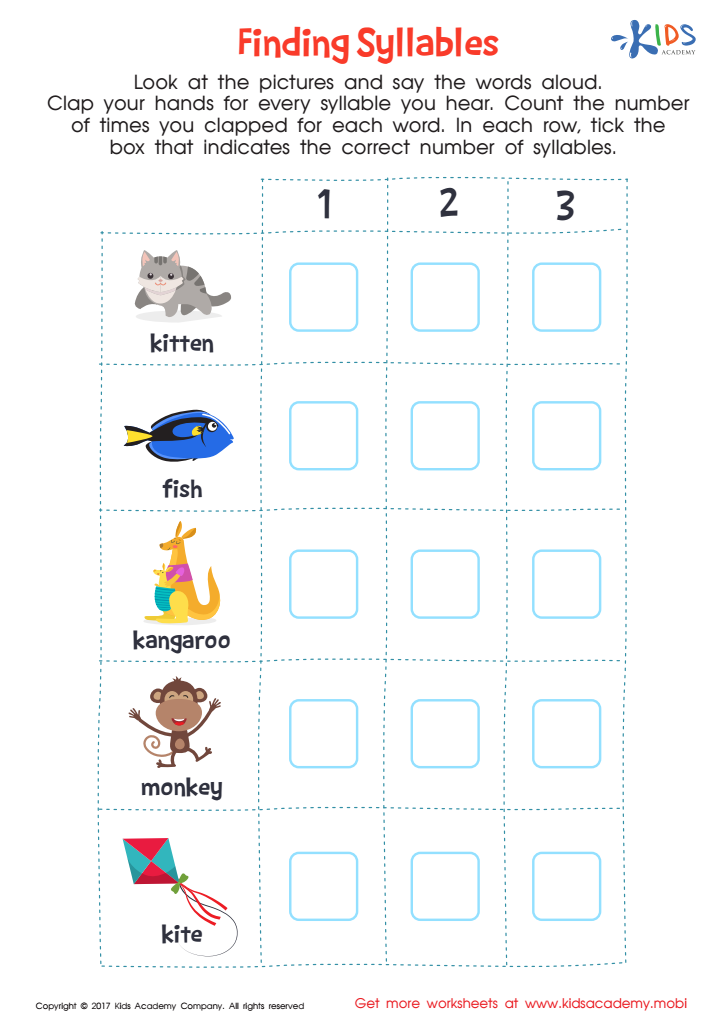
Finding Syllables Word Structure Worksheet
Have your kid clap and count syllables in words to improve their reading and spelling! Use this word structure worksheet for a fun activity - syllables!
Finding Syllables Word Structure Worksheet
Worksheet
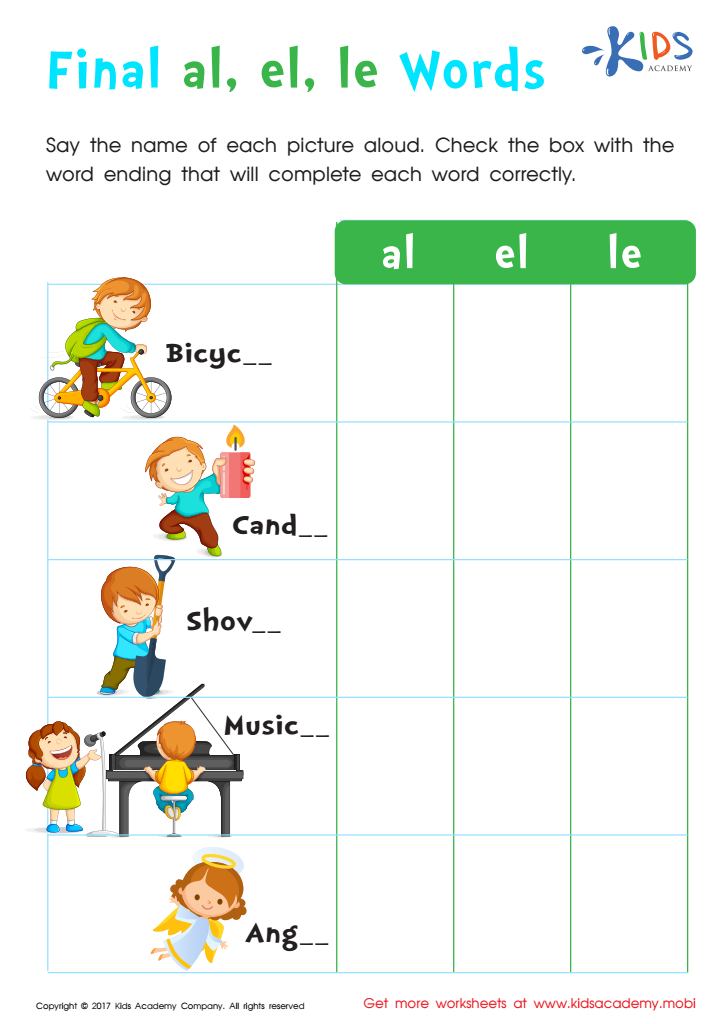
Spelling Words Ending with –le, –el and –al Worksheet
Spelling tricky words with the same ending sounds can be fun with this worksheet! Kids learn to spell -le, -el, and -al words while enjoying colorful pictures. It's a great way to refine their usage of tricky word endings.
Spelling Words Ending with –le, –el and –al Worksheet
Worksheet
Join Kids Academy for Free
Who is primarily going to use this learning content?





.jpg)


Understanding syllables is essential for children ages 6-8 as it forms the foundation of literacy and enhances their overall language skills. At this age, students are starting to become proficient readers and writers; thus, knowing how to break words into syllables helps them decode unfamiliar words, improving their reading fluency. Recognizing syllable patterns aids in spelling, as it allows children to segment words into manageable parts.
Furthermore, understanding syllables can positively impact a child's phonemic awareness, which is crucial for success in learning to read. It helps reinforce the sensory connections between sounds and letters, leading to better pronunciation and comprehension. Additionally, syllable recognition contributes to vocabulary development, enabling students to explore new words.
For parents and teachers, fostering this understanding encourages active engagement with language and supports critical thinking skills. Activities such as clapping to count syllables, using rhythmic patterns, or playing word games can make learning enjoyable. Ultimately, by emphasizing syllables, caregivers and educators equip children with vital tools that will not only aid them in their current learning journey but also lay a strong groundwork for future academic success in all language-related areas.








