Vowel Recognition Grammar Worksheets for Ages 6-8
4 filtered results
-
From - To
Unlock your child’s reading potential with our "Vowel Recognition Grammar Worksheets for Ages 6-8". Designed to enhance early literacy skills, these worksheets focus on identifying and distinguishing between the five vowels: A, E, I, O, and U. Engaging activities include coloring, tracing, and matching vowels to pictures, all crafted to make learning fun and interactive. Perfect for classroom use or at-home practice, these worksheets help solidify foundational grammar skills. Boost your child's confidence in reading and writing with targeted exercises that support letter recognition and phonemic awareness. Start your child on a path to literacy success today!
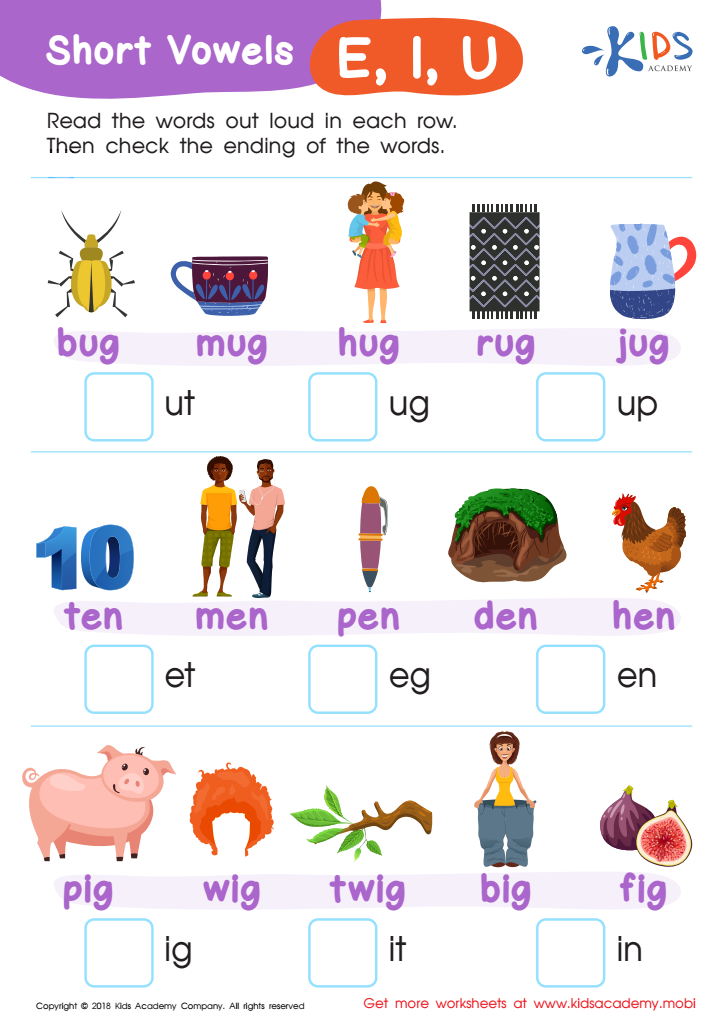
Short Vowels /e/, /i/, and /u/ Worksheet
 Assign to My Students
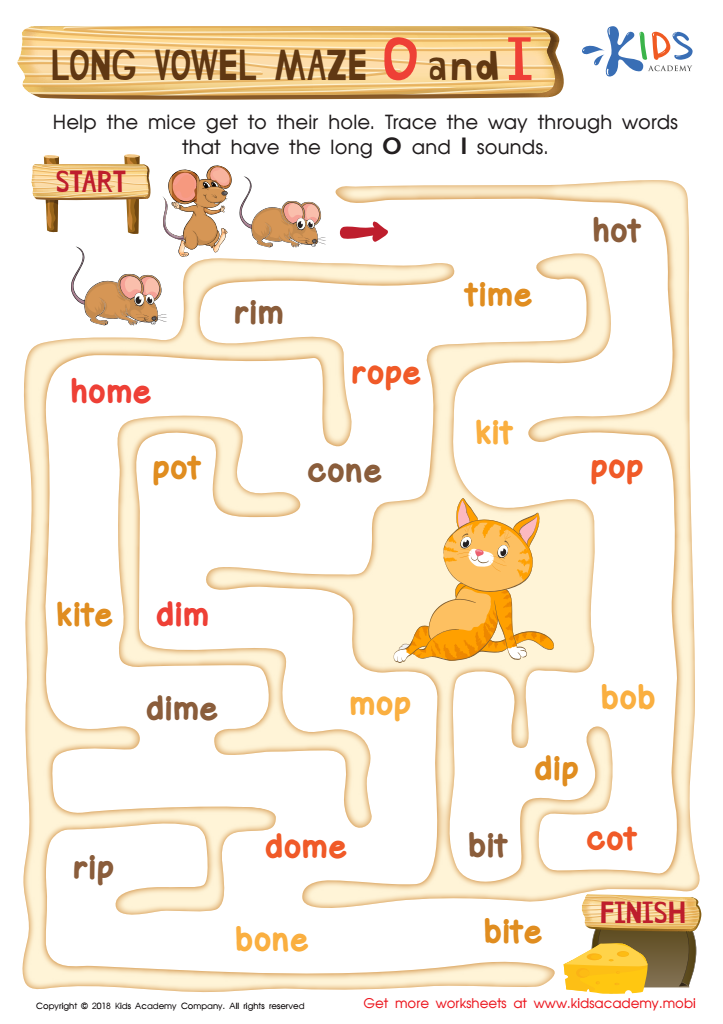
Long Vowel Maze /o/ and /i/ Worksheet
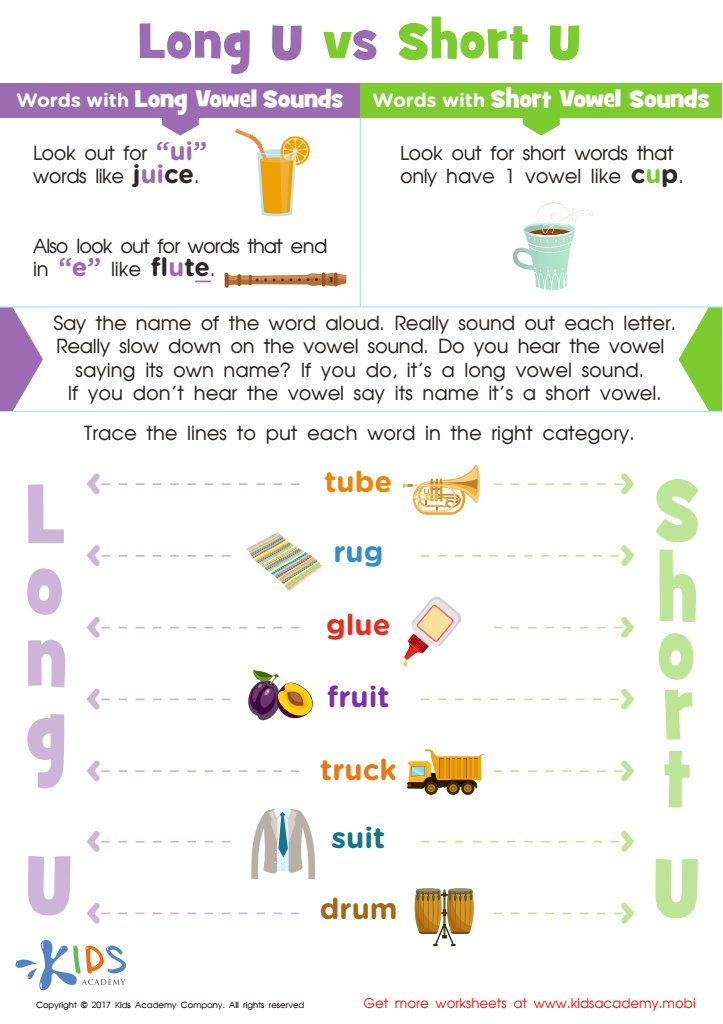
Long and Short Vowel U Spelling Worksheet
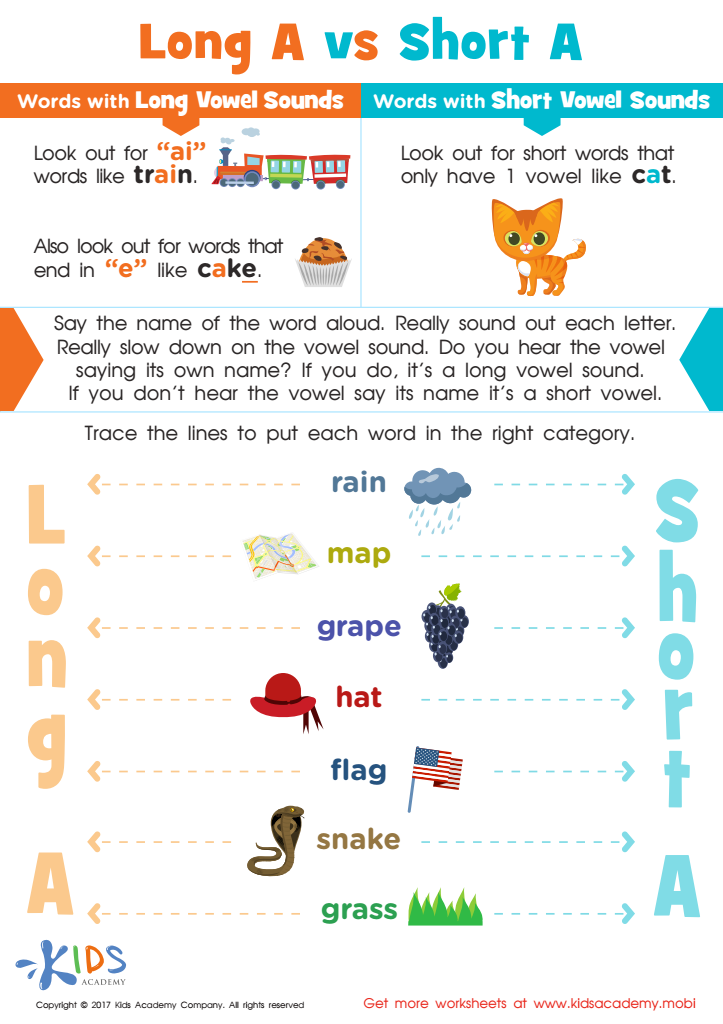
Long and Short Vowel A Spelling Worksheet




Vowel recognition grammar is a fundamental skill for children ages 6-8, forming the cornerstone of literacy development. At this stage, young learners are transitioning from simple word recognition to more complex reading and writing tasks. Recognizing vowels is crucial because vowels are integral to word formation and pronunciation; they connect consonants and impact the meaning of words. Mastery of vowel sounds and their variations (such as long, short, and diphthongs) enhances children's phonemic awareness, enabling them to decode unfamiliar words more effectively.
Furthermore, strong vowel recognition skills boost spelling accuracy and reading fluency. Children become more confident readers and writers when they can identify and correctly pronounce vowels within words. This fluency lays the groundwork for comprehension, as fluent readers can focus their cognitive resources on understanding text rather than just decoding it.
Additionally, fostering these skills at a young age promotes a lifelong love of learning and reading. Consistent practice with vowel recognition is linked to higher academic achievement. For teachers and parents, engaging children in playful yet educational activities centered on vowel sounds—such as games, songs, and storytelling—makes learning enjoyable and memorable. Thus, investing in vowel recognition grammar both at home and in the classroom sets up children for academic success and a richer educational experience.








