Understanding adjectives Writing Worksheets for Ages 6-8
5 filtered results
-
From - To
Enhance your child's writing skills with our "Understanding Adjectives" worksheets, specially designed for ages 6-8. These engaging, interactive resources help young learners grasp the fundamental role adjectives play in enhancing their sentences. By exploring different activities, children will identify, describe, and creatively use adjectives, fostering their vocabulary and comprehension. Each worksheet encourages critical thinking and promotes a fun learning experience. Ideal for both classroom and at-home use, our worksheets support early literacy development, helping kids express themselves more vividly. Dive into our collection today and inspire your young writers to bring their stories to life with colorful language!
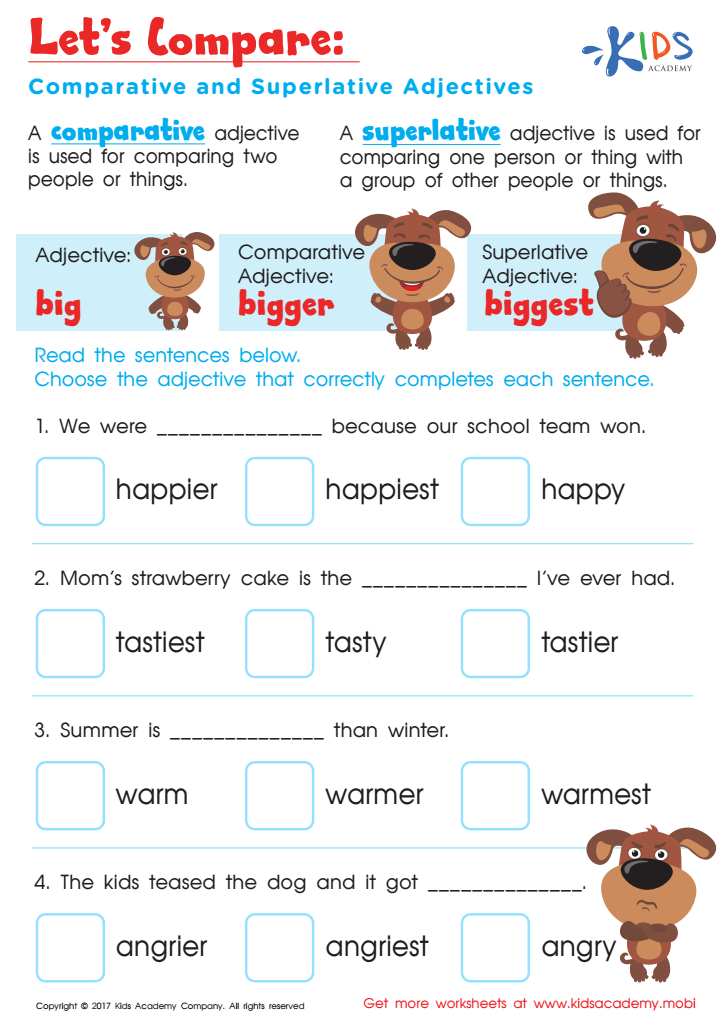
Comparative and Superlative Worksheet
 Assign to My Students
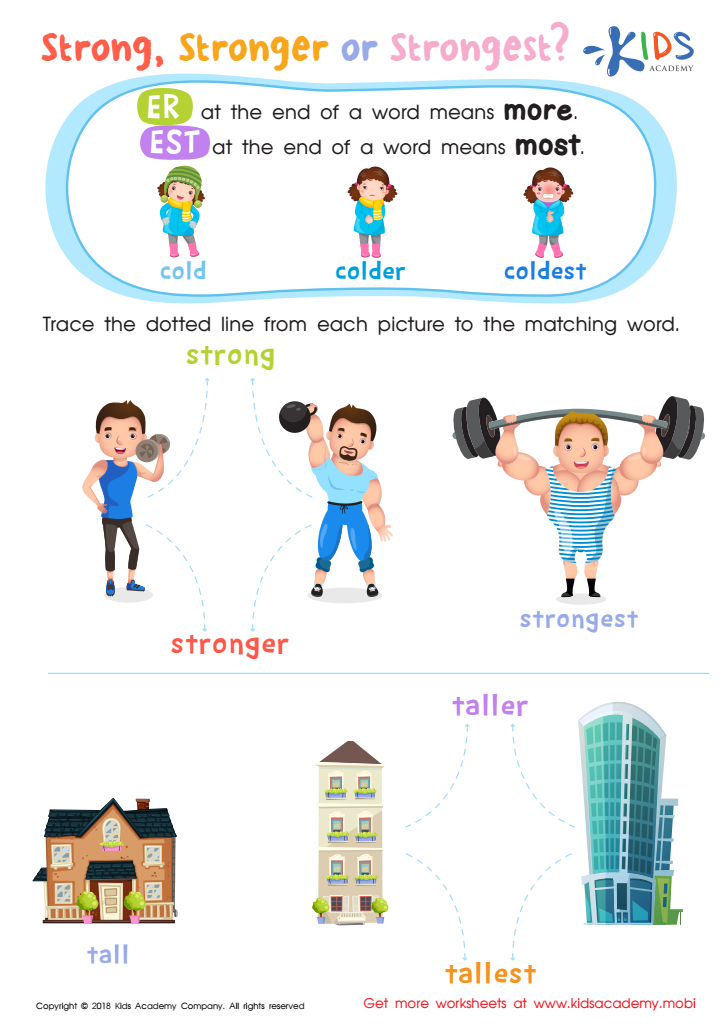
Strong or Stronger? Worksheet
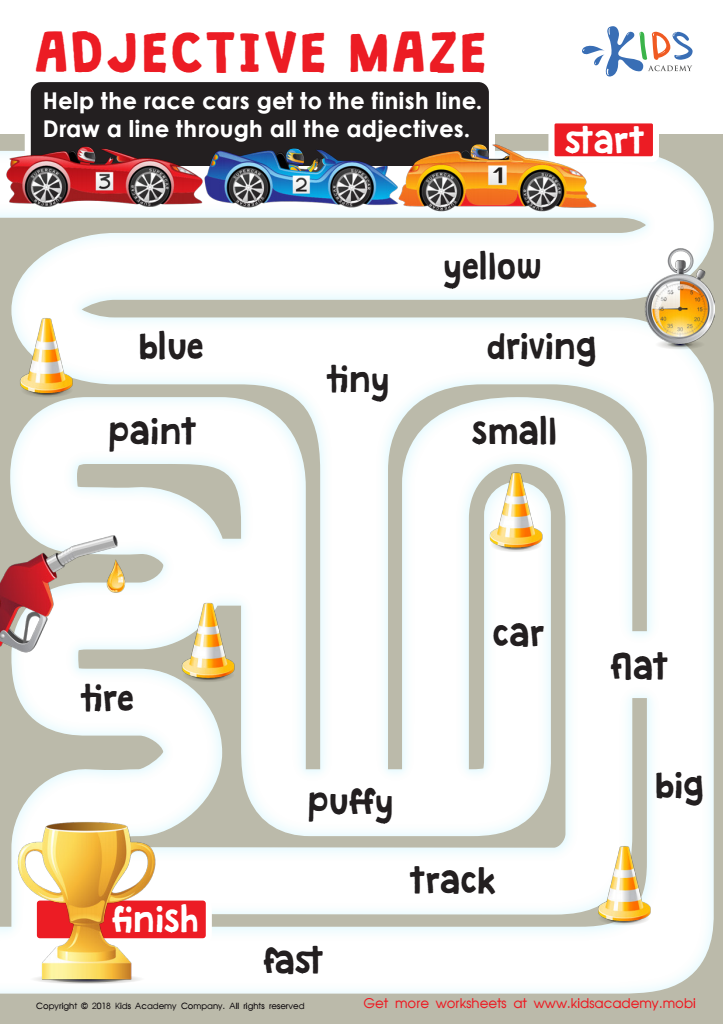
Adjective Maze Worksheet
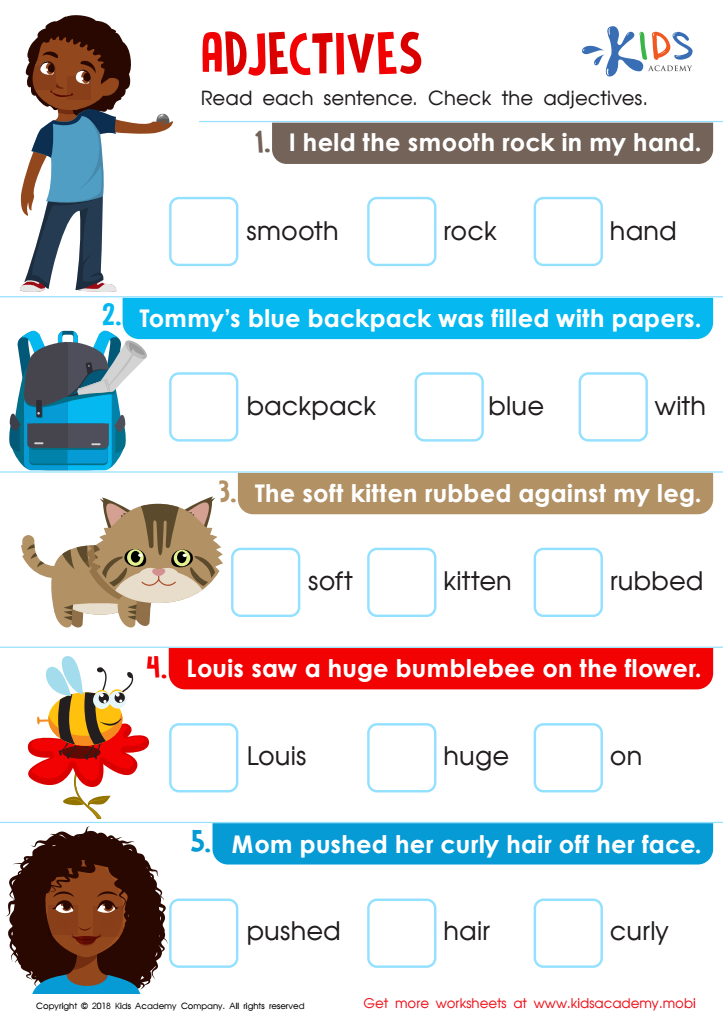
Adjectives Worksheet
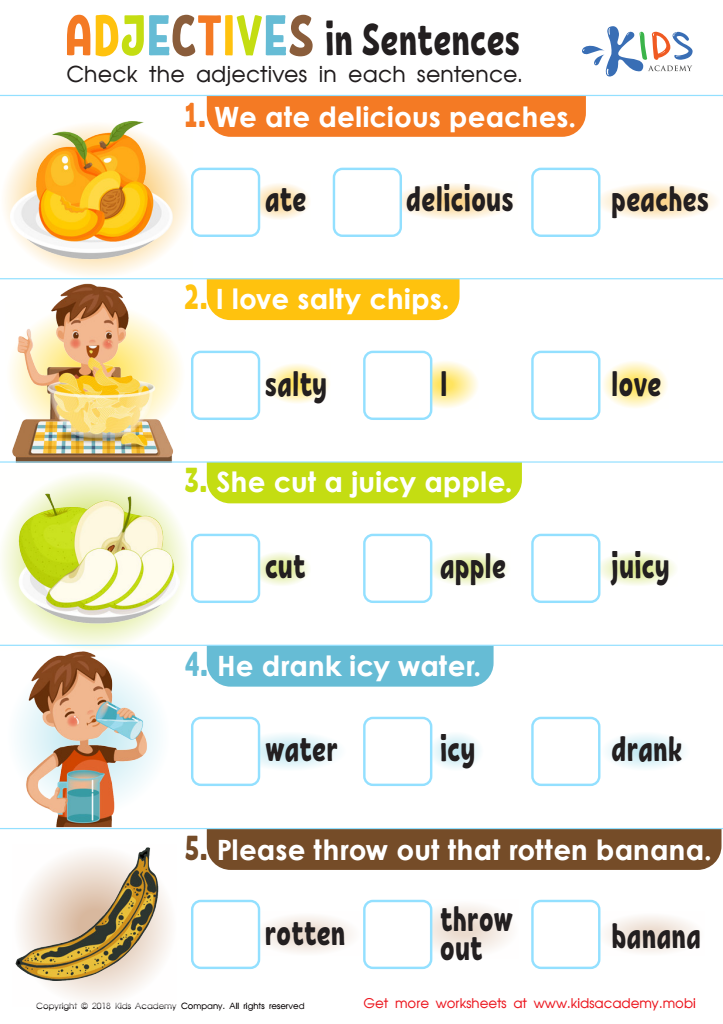
Adjectives in Sentences Worksheet








Understanding adjectives is crucial for children aged 6-8 because it significantly enhances their language development, communication skills, and overall literacy. Adjectives, which describe or modify nouns, add richness to writing and help children express themselves more vividly. By learning to identify and use adjectives, young learners can create more engaging and imaginative sentences, making their writing come alive.
For parents and teachers, fostering this understanding is essential as it lays the foundation for effective communication. Children who grasp the use of adjectives are better equipped to articulate their thoughts and feelings, leading to improved social interactions and confidence in sharing ideas. Moreover, incorporating adjectives into writing exercises encourages creativity, as students learn to paint pictures with words.
Additionally, developing a robust vocabulary, including adjectives, enhances reading comprehension. When children encounter descriptive language in text, their understanding deepens, allowing for more enjoyable and meaningful reading experiences. Overall, paying attention to adjectives not only enriches children's writing but also positions them for success across various subjects as they progress in their education. Recognizing the importance of adjectives supports holistic development, preparing young learners for more advanced language skills in the future.








