Word Recognition Consonant Digraphs Worksheets for Ages 6-9
5 filtered results
Difficulty Level
Grade
Age
-
From - To
Subject
Activity
Standards
Unlock young learners' reading potential with our Word Recognition Consonant Digraphs Worksheets, perfect for ages 6-9. Designed to develop essential literacy skills, these engaging worksheets help children recognize and pronounce common consonant digraphs such as "ch," "th," "sh," and more. With fun and interactive activities, kids will strengthen their understanding of word patterns, enhancing their reading proficiency and confidence. Ideal for classroom use or at-home practice, our worksheets align with educational standards and offer a valuable resource for teachers and parents. Boost your child's literacy journey with Kids Academy today!
Favorites
With answer key
Interactive
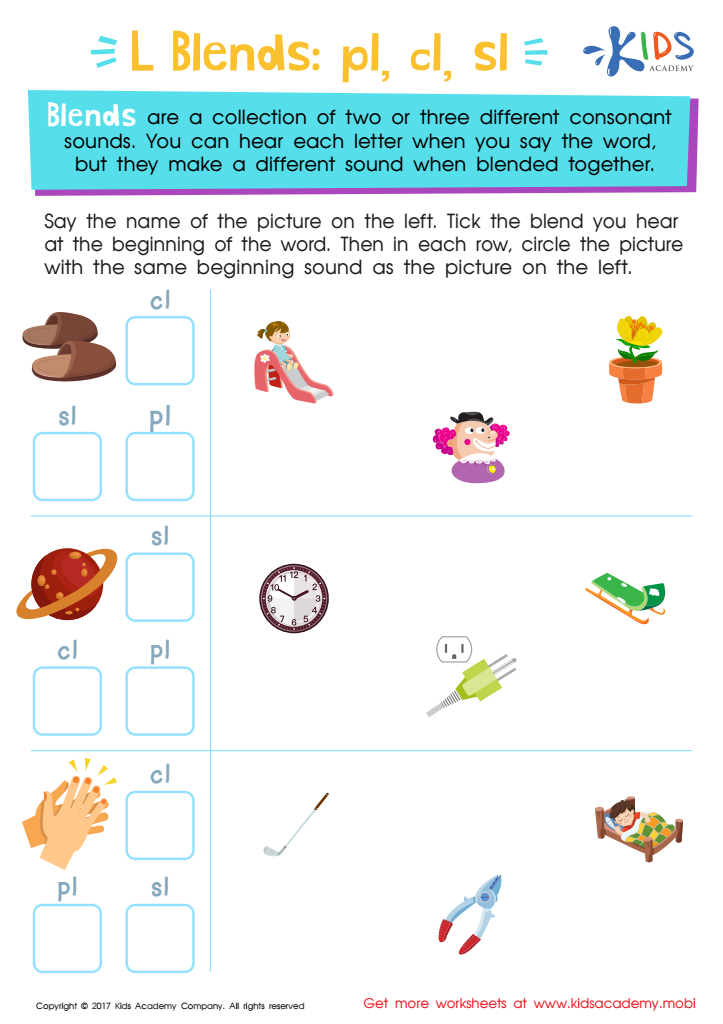
L Blends: "Pl", "Cl" and "Sl" Printable
This printable worksheet will help your child recognize and identify the Pl, Cl, and Sl consonant blends, sound them out, and identify them in print. Improve your child's reading and writing skills with fun and colorful phonics practice!
 Assign to My Students
L Blends: "Pl", "Cl" and "Sl" Printable
Worksheet
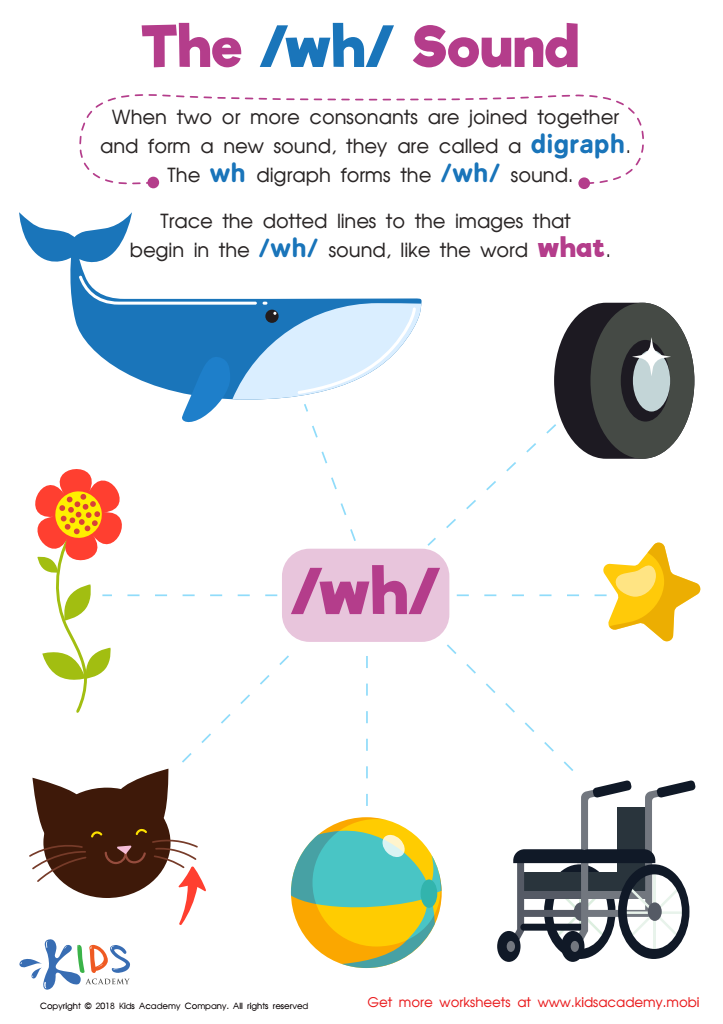
The /wh/ Sound Worksheet
Digraphs join two consonants to make a new sound, like /wh/. Give examples, like "whale", "when" and "why". Ask kids to name pictures in a worksheet and trace dotted lines to images beginning with the /wh/ sound; "what" is one example.
The /wh/ Sound Worksheet
Worksheet
The SH Digraph Worksheet
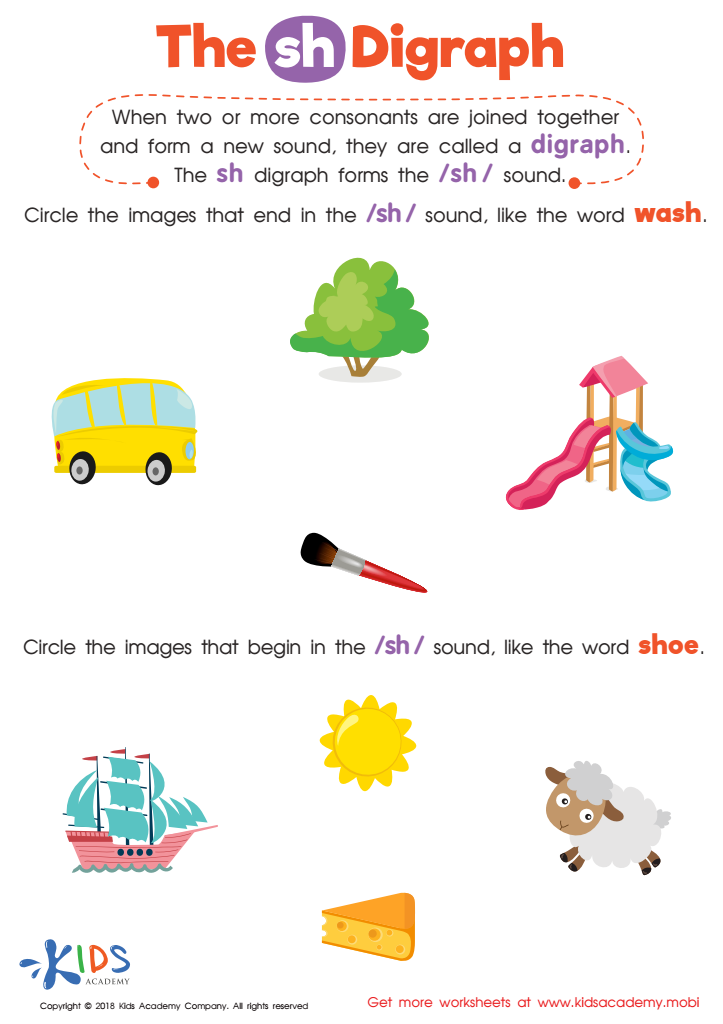
There are many phonetic sounds, each with its own unique sound. When two or more consonants are combined to create a new sound, it's called a digraph. Example: the sh digraph creates the /sh/ sound. Have kids look at the pictures and say the words aloud. Help them circle the images ending with /sh/, like 'wash'.
The SH Digraph Worksheet
Worksheet
Missing Digraph: Part 2 Worksheet
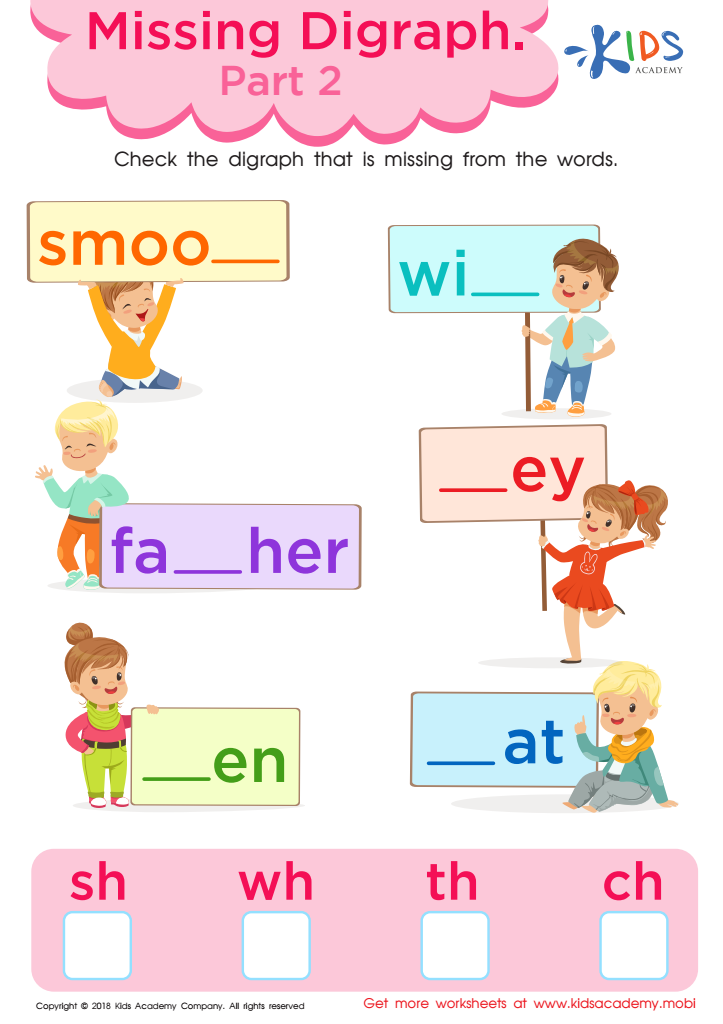
Practice the "th" digraph with this fun worksheet from Kids Academy! See how it appears at the beginning, middle, or end of words and help learners fill in the blanks. Check if they got it right by finding the th digraph at the bottom!
Missing Digraph: Part 2 Worksheet
Worksheet
Consonant Blends: "Dr" and "Tr" Printable
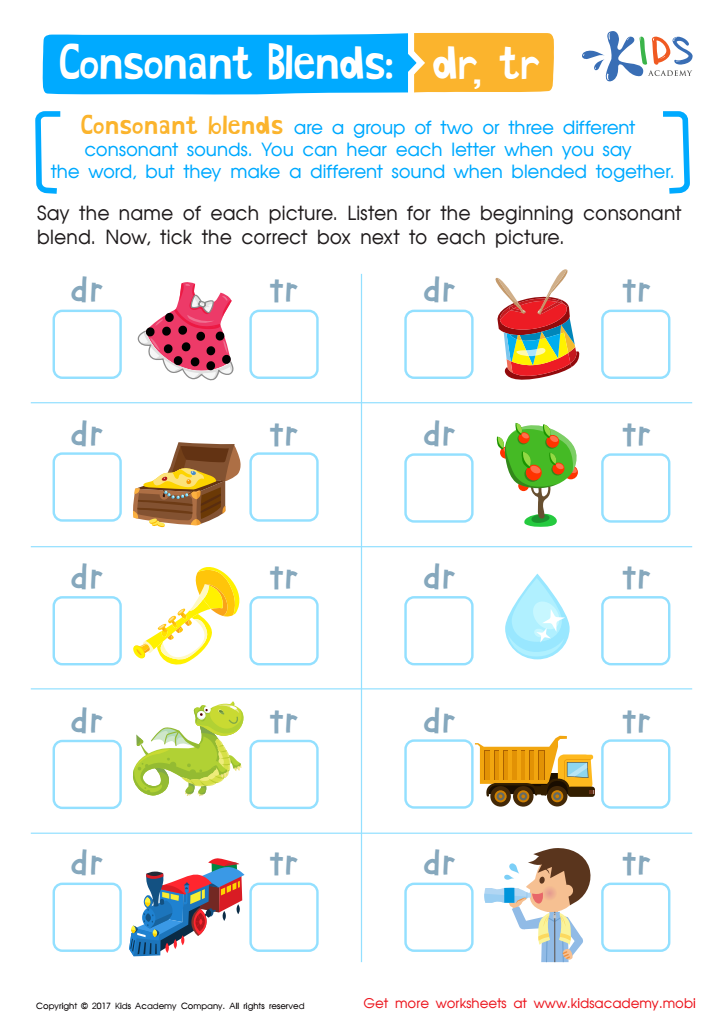
Pictures of the words provide a visual cue, and sound-outs help with auditory cues.
Consonant Blends: "Dr" and "Tr" Printable
Worksheet
Join Kids Academy for Free
Who is primarily going to use this learning content?


Word recognition consonant digraphs are crucial for young readers aged 6-9 because they form a fundamental component of early literacy skills. Consonant digraphs—pairs of consonants that together make a single sound, such as "sh," "ch," "th," and "wh"—help children decode and recognize written words more efficiently. Mastery of these digraphs supports the transition from decoding to fluent reading.
When children can quickly and accurately identify consonant digraphs, they enhance their ability to read smoothly, which boosts comprehension and enjoyment of reading. For instance, understanding that "sh" creates one sound helps children decode words like "ship" or "trash" quickly, rather than breaking down each letter individually, which can be confusing and time-consuming.
Additionally, early proficiency in recognizing consonant digraphs prepares children for more complex literacy tasks, fostering confidence and motivation in their reading abilities. It also influences spelling skills, enabling children to spell words correctly and understand word patterns, an essential component of language learning.
Teachers and parents should care about teaching consonant digraphs because these skills are foundational for more advanced reading and writing proficiency. By emphasizing their importance, children are better equipped to navigate the intricacies of the English language, setting them up for future academic success.