Filters

9 filtered results

Clear all filters
Favorites
With answer key
Interactive

9 filtered results

Difficulty Level

Grade


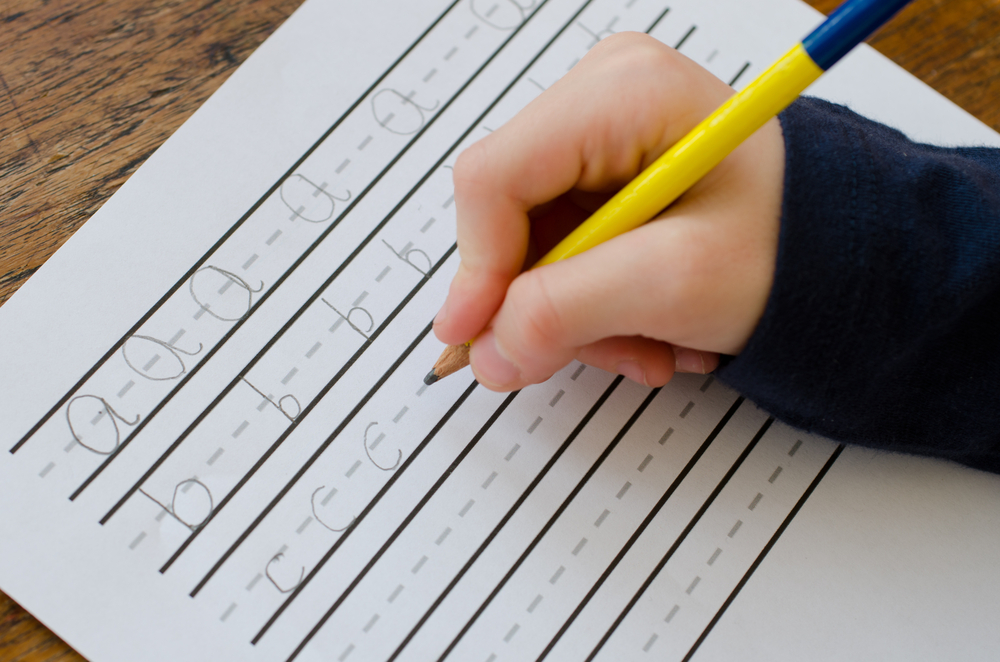
Enhance your child's fine motor skills with our engaging Cursive Alphabet Worksheets, specifically designed for ages 6-9. These worksheets help children master cursive writing while developing essential hand-eye coordination and dexterity. Each activity is crafted to combine fun and education, encouraging kids to practice their letters in a creative way. With vibrant visuals and interactive exercises, these worksheets cater to different learning styles, promoting both independence and confidence. Ideal for home or classroom use, our resources provide a structured approach to cursive writing that supports your child's academic growth. Foster creativity and skill-building through endless writing adventures today!

Check out this FREE Trial Lesson on Cursive Alphabet for age 6-9!

T

Favorites
With answer key
Interactive
  • 6-9
  • Fine motor skills development
  • Cursive Alphabet
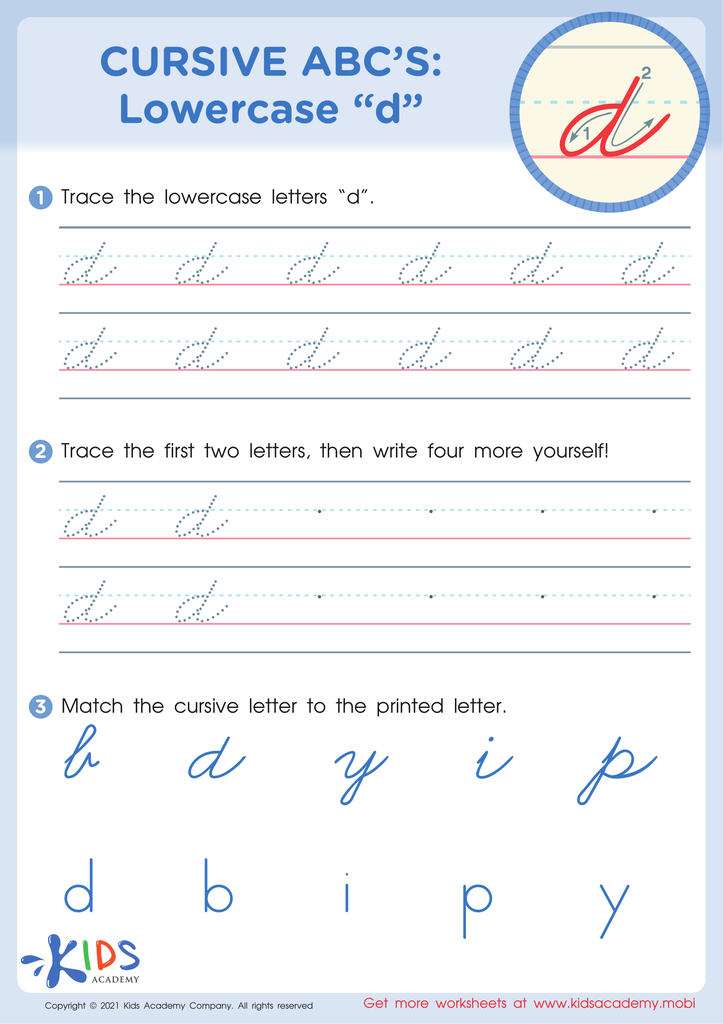
Cursive ABCs: Lowercase d

Cursive ABCs: Lowercase d

To make learning fun, introduce colorful worksheets! These help young learners perfect their cursive lowercase 'd'. By the end, they'll be better at writing and identifying the letter. It's an easy and enjoyable exercise for kids!
Cursive ABCs: Lowercase d
Worksheet
Cursive ABCs: Lowercase a

Cursive ABCs: Lowercase a

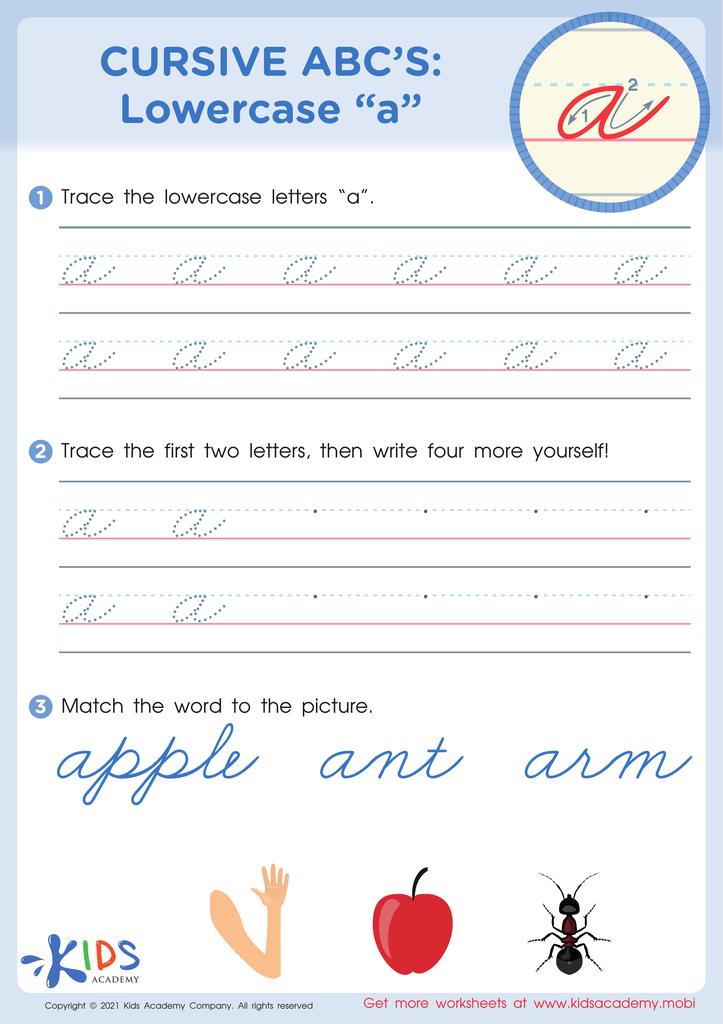
Help your children learn to write cursive letters with these free tracing sheets. They'll practice their handwriting, develop printing skills and build vocabulary. By tracing the lowercase letter “a” multiple times, they'll learn how it's formed and be ready to write it on their own. The colorful pictures at the bottom of each page also offer new words beginning with the letter 'a'.
Cursive ABCs: Lowercase a
Worksheet
Cursive ABCs: Lowercase f

Cursive ABCs: Lowercase f

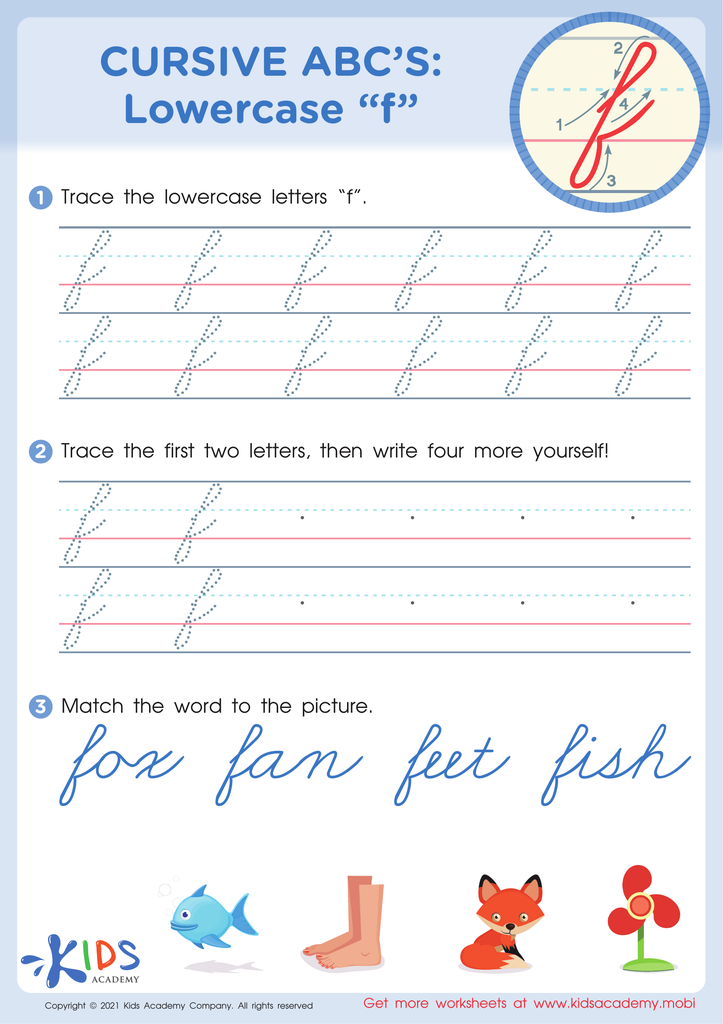
This worksheet helps your child improve letter writing and recognition. Each letter has its own form, so teaching is important. Practicing the lowercase letter 'f' helps kids memorize its shape and recognize it in words. With practice, they'll be able to write the letter correctly and identify it quickly.
Cursive ABCs: Lowercase f
Worksheet
Cursive ABCs: Uppercase F

Cursive ABCs: Uppercase F

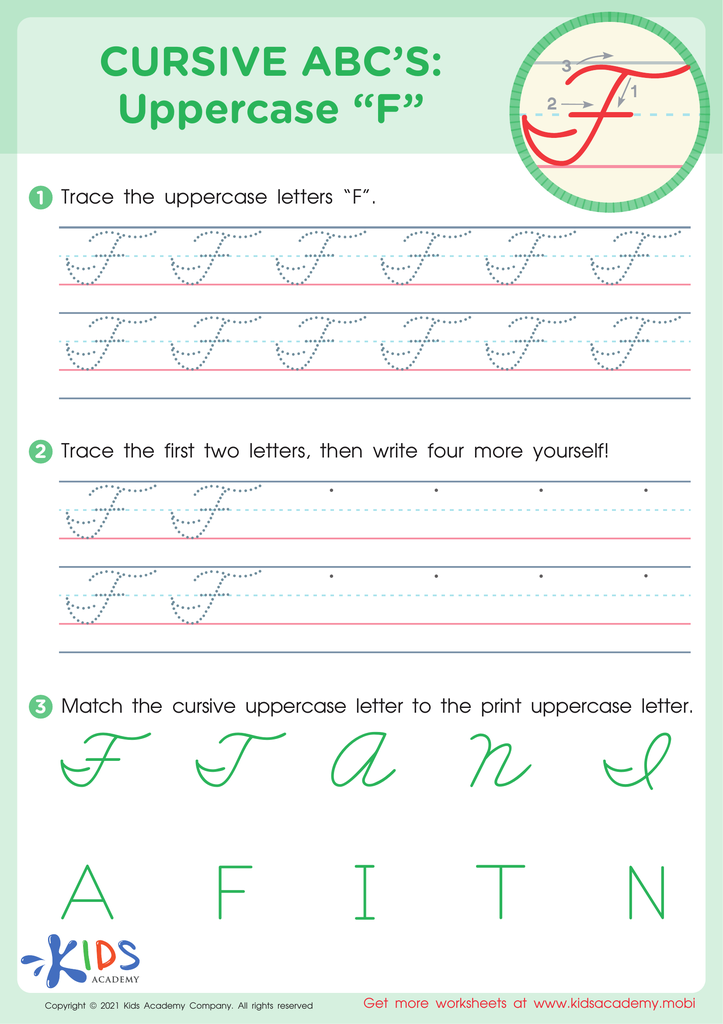
Help your kids trace the letters in these worksheets and watch their confidence grow as they learn to write cursive uppercase and lowercase letters. Ask them to identify the letters in words and give examples of words that start with an uppercase 'F', then have them write some letters on their own and assess their progress.
Cursive ABCs: Uppercase F
Worksheet
Cursive ABCs: Uppercase G

Cursive ABCs: Uppercase G

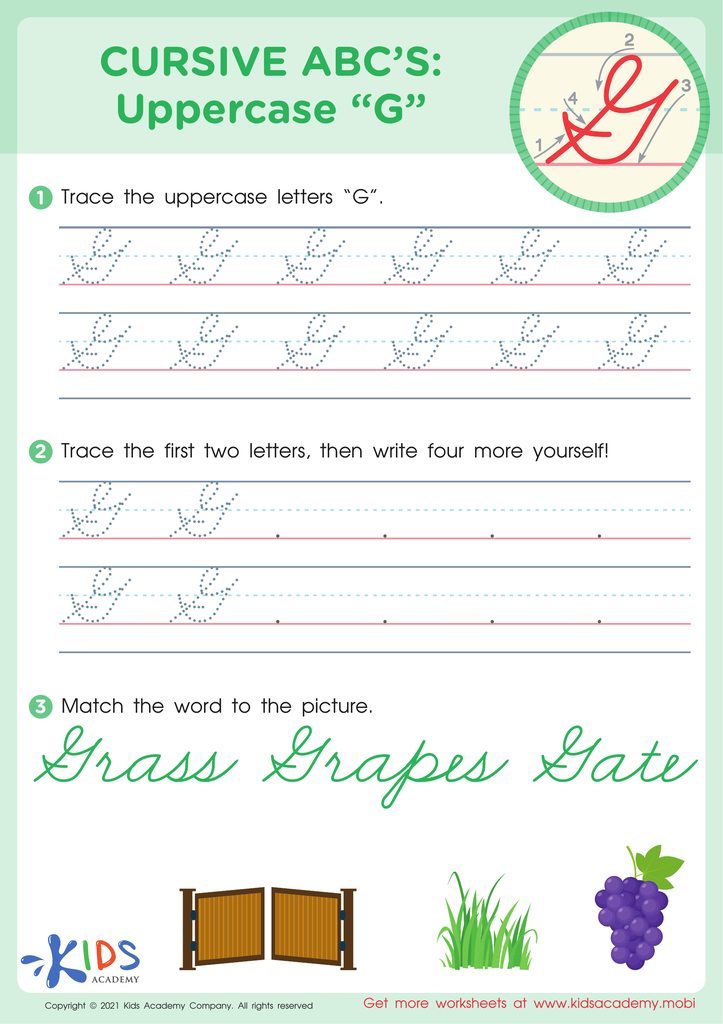
Remind your kids of words beginning with 'G' like 'girl' and 'goat'. Ask them to give examples too. Use this tracing worksheet to help your kids practice writing the cursive uppercase 'G'. It'll help them perfect their motor skills and get better at cursive letters.
Cursive ABCs: Uppercase G
Worksheet
Cursive ABCs: Uppercase D

Cursive ABCs: Uppercase D

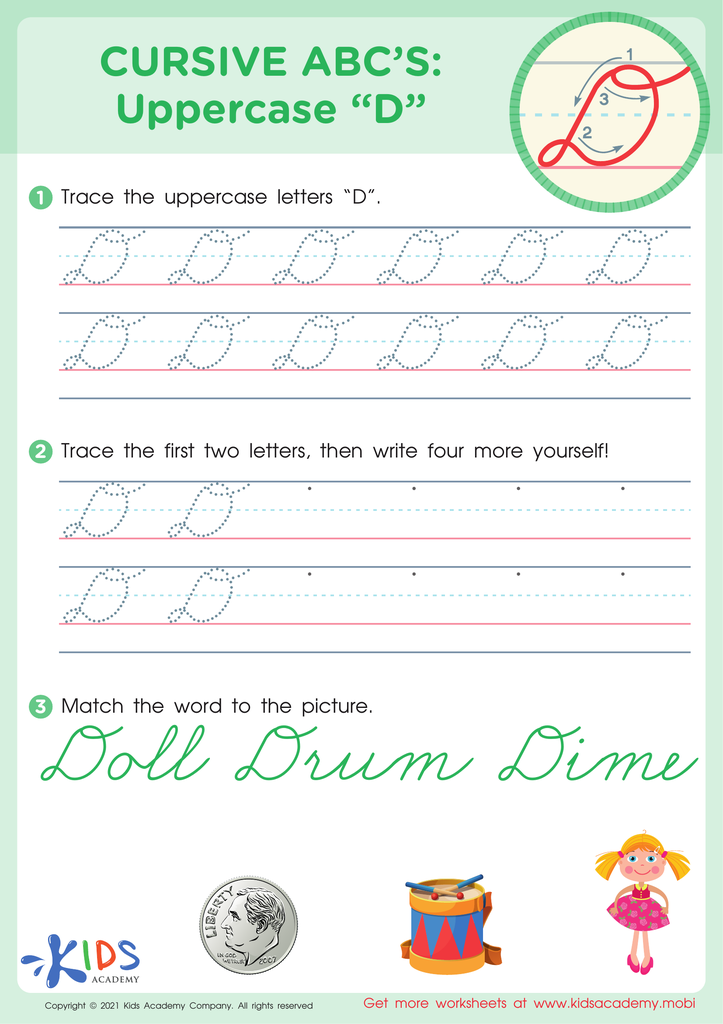
Help your kids learn to write the uppercase letter 'D' in cursive with the help of this tracing worksheet. Show them how to trace it over and over. When they're ready, let them write the letter on their own. Match pictures to words that start with 'D' and your kids will be pros in no time!
Cursive ABCs: Uppercase D
Worksheet
Cursive ABCs: Lowercase c

Cursive ABCs: Lowercase c

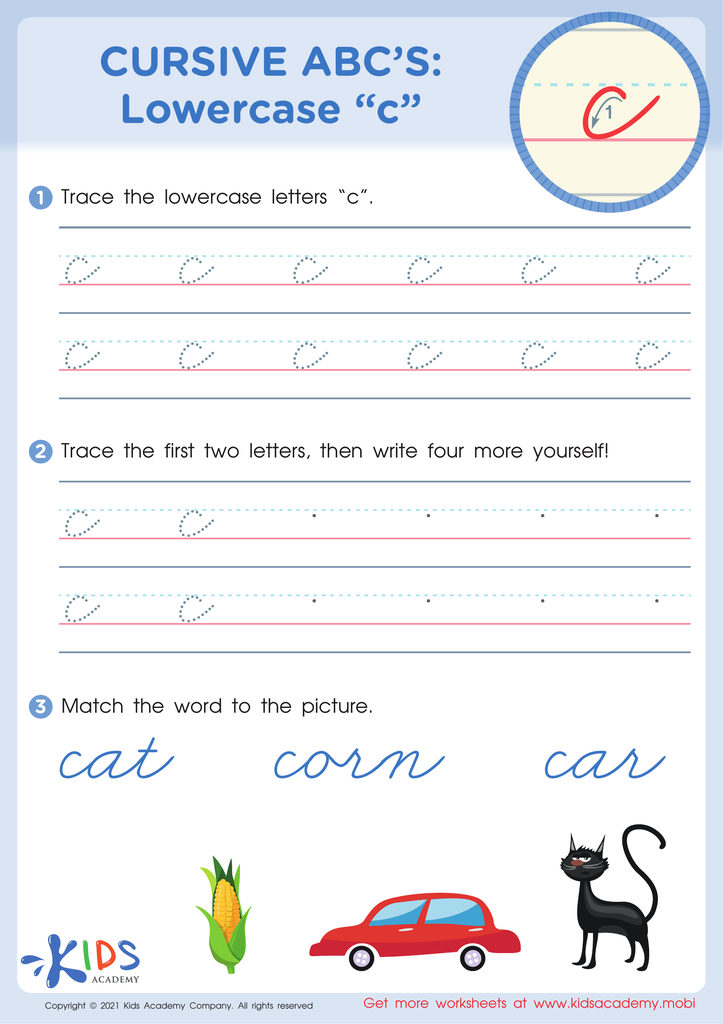
Once your child has successfully printed their letters, help them learn to recognize and write the alphabet in cursive. Struggling? This worksheet is perfect to assist them. Writing is an essential skill for kids to learn, so do all you can to help them. Use these tracing worksheets and guide them as they write the lowercase letter 'c' in cursive.
Cursive ABCs: Lowercase c
Worksheet
Cursive ABCs: Lowercase h

Cursive ABCs: Lowercase h

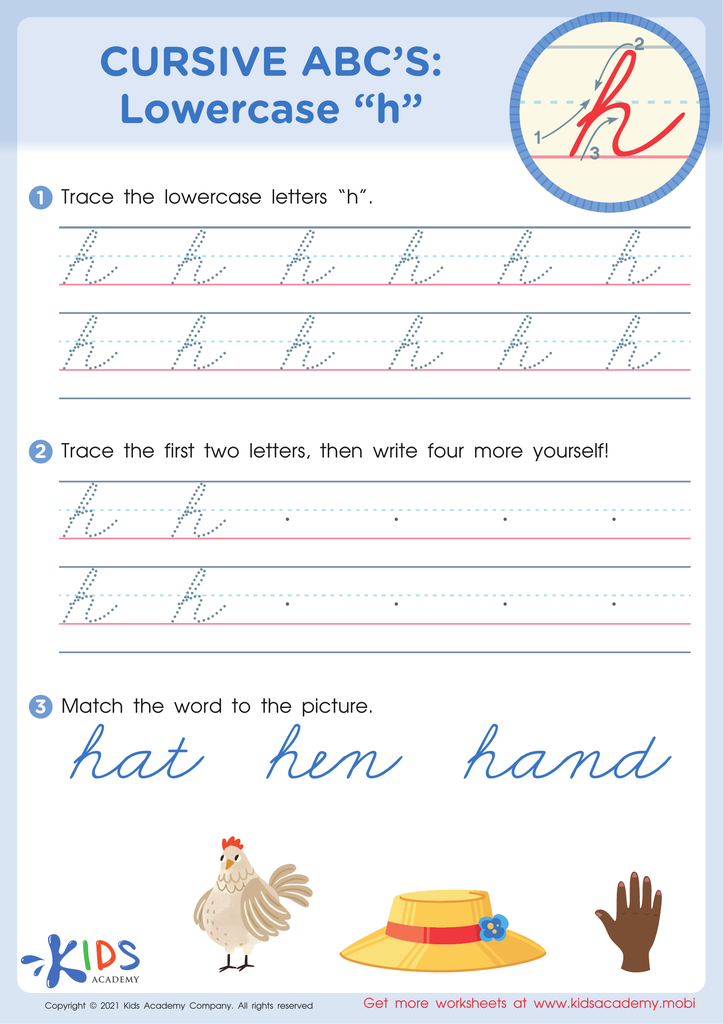
Your children will need more than just reciting the alphabet; they need to learn how to identify and write it. Cursive writing helps with neatness, and these tracing worksheets are great learning aids and offer exercises to practice writing lowercase 'h'. With these, your children get better writing skills and learn new words.
Cursive ABCs: Lowercase h
Worksheet
Cursive ABCs: Lowercase b

Cursive ABCs: Lowercase b

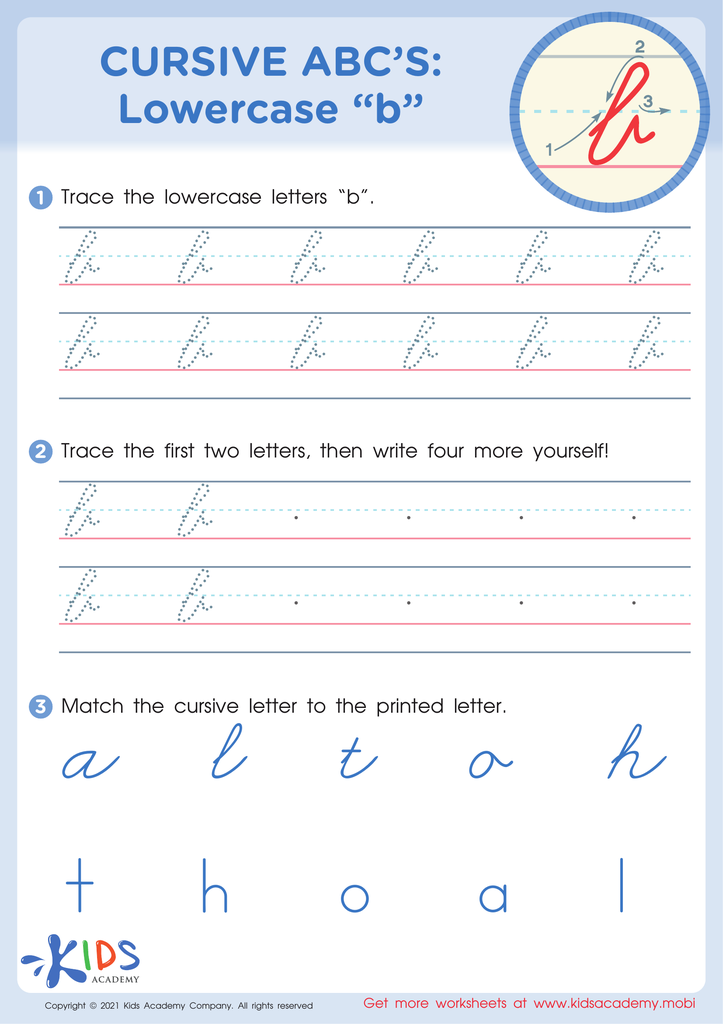
Trace two lines of lowercase b's with your kids. Guide them through the loops and swirls to help them learn cursive handwriting. Then let them practice writing the letter b themselves in the last two lines. With this exercise, your kids should become better at writing and recognizing the lowercase cursive b.
Cursive ABCs: Lowercase b
Worksheet


Fine motor skills development, particularly in relation to cursive writing for children aged 6-9, is crucial for several reasons. First, fine motor skills help children gain control over their hand movements, which is essential for writing legibly and efficiently. Cursive writing, in particular, encourages fluid and interconnected letters, enhancing their penmanship and expression.

Moreover, developing fine motor skills fosters cognitive growth. Activities such as practicing cursive writing improve hand-eye coordination, focus, and memory. These skills are foundational not only for writing but also for other academic tasks, such as drawing, crafting, and problem-solving.

Socially, children often feel a sense of accomplishment when they can write beautifully, boosting their self-confidence. This sense of achievement can enhance their engagement with learning, making them more enthusiastic about schoolwork.

Finally, cursive writing is still valued in many areas for its aesthetic quality and connectivity to heritage. Encouraging mastery in cursive can give children an appreciation for written communication. Overall, prioritizing fine motor skills development in cursive writing prepares children for academic success while supporting their emotional and social growth. Parents and teachers should recognize this critical area to help children flourish.