
Alphabetical order understanding Alphabet Worksheets for Ages 6-9
5 filtered results
Difficulty Level
Grade
Age
-
From - To
Subject
Activity
Standards
Discover engaging Alphabetical Order understanding worksheets designed for children ages 6-9 at Kids Academy! Our fun and interactive activities are tailored to help young learners grasp the concept of alphabetical order through a variety of hands-on exercises. With vibrant designs and age-appropriate challenges, these worksheets enhance literacy skills while making learning enjoyable. Students will practice arranging words, identifying sounds, and organizing letters in a logical sequence, fostering a deeper comprehension of the alphabet. Perfect for home or classroom use, our resources encourage critical thinking and boost confidence in reading and writing. Download today and watch your child thrive in their alphabet skills!
Favorites
With answer key
Interactive
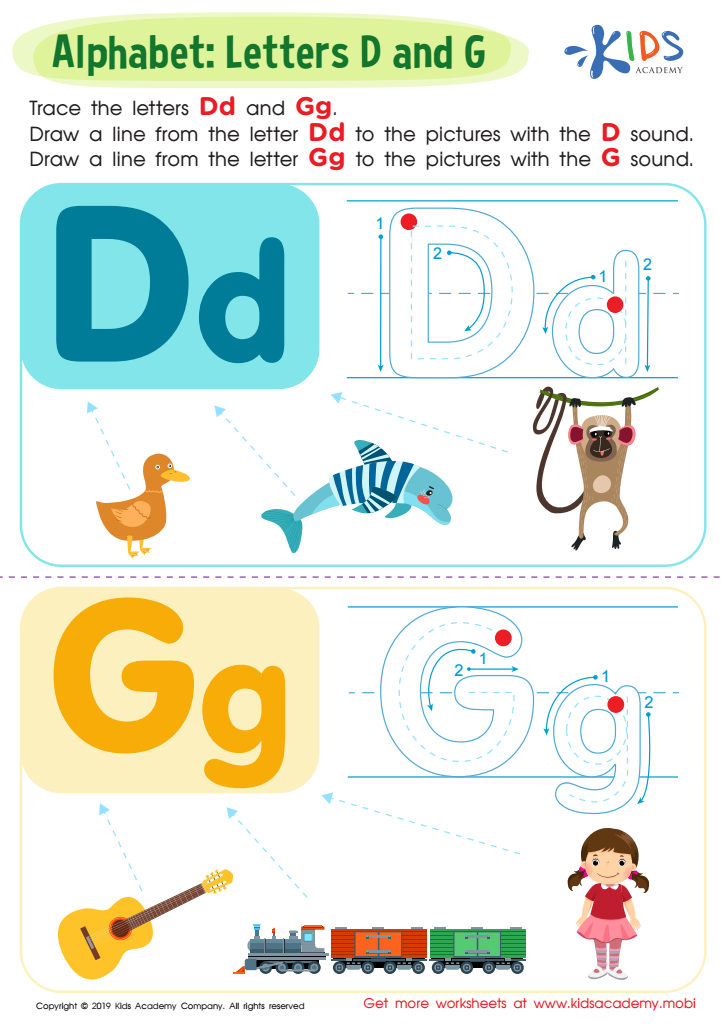
Letter D and G Tracing Worksheet
Kids can explore their imagination with the 'Alphabet: Letters D and G' worksheet! They'll trace capital and lowercase "D" and "G" and trace a line from the words. Colorful animals and objects make the task more fun and entertaining!
Letter D and G Tracing Worksheet
Worksheet
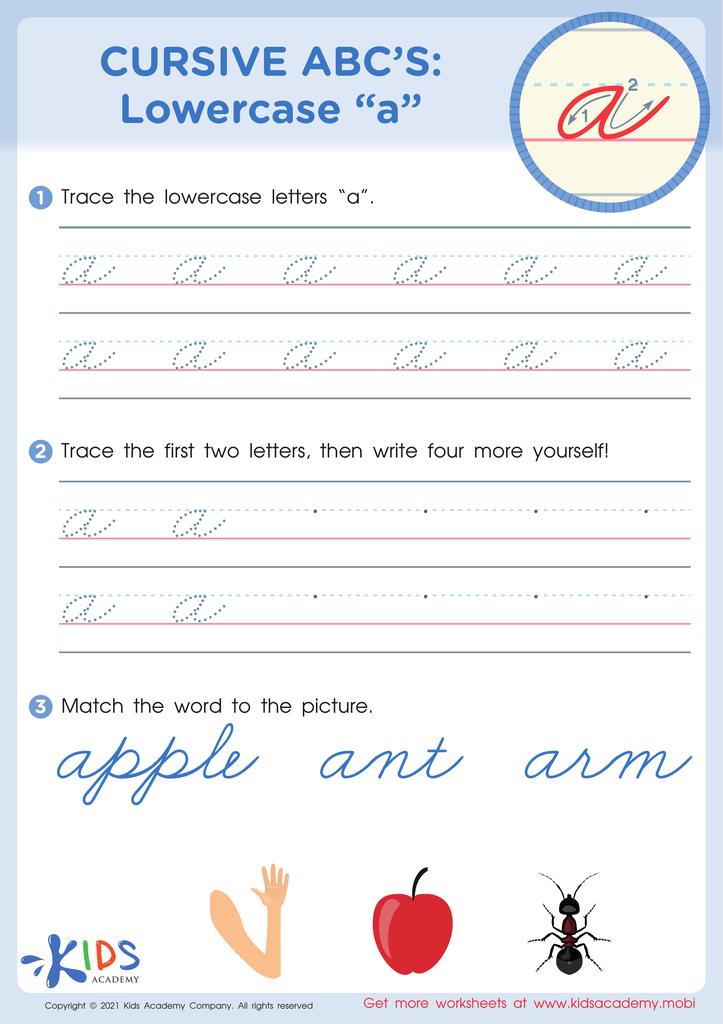
Cursive ABCs: Lowercase a
Help your children learn to write cursive letters with these free tracing sheets. They'll practice their handwriting, develop printing skills and build vocabulary. By tracing the lowercase letter “a” multiple times, they'll learn how it's formed and be ready to write it on their own. The colorful pictures at the bottom of each page also offer new words beginning with the letter 'a'.
Cursive ABCs: Lowercase a
Worksheet
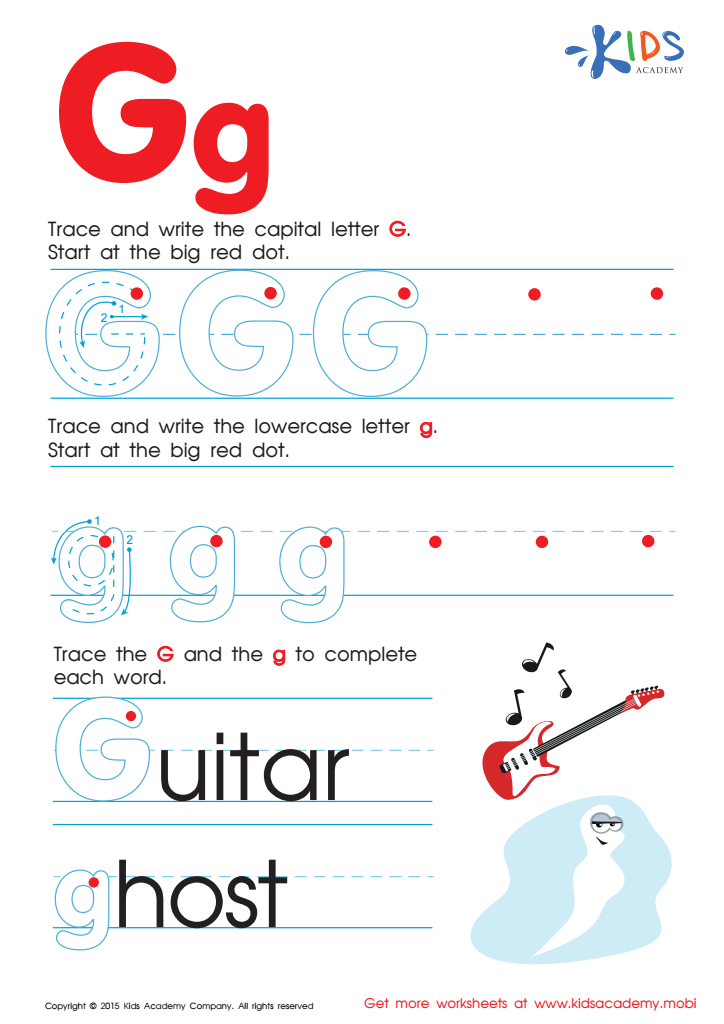
Letter G Tracing Page
Get ready to trace the letter "G" – with a big red spot as the starting point, trace the lines and watch the letter appear. Uppercase and lowercase letters are both easy and fun to write. Give it a go and finish the word "go". Play the guitar and say "hello" to a funny ghost!
Letter G Tracing Page
Worksheet
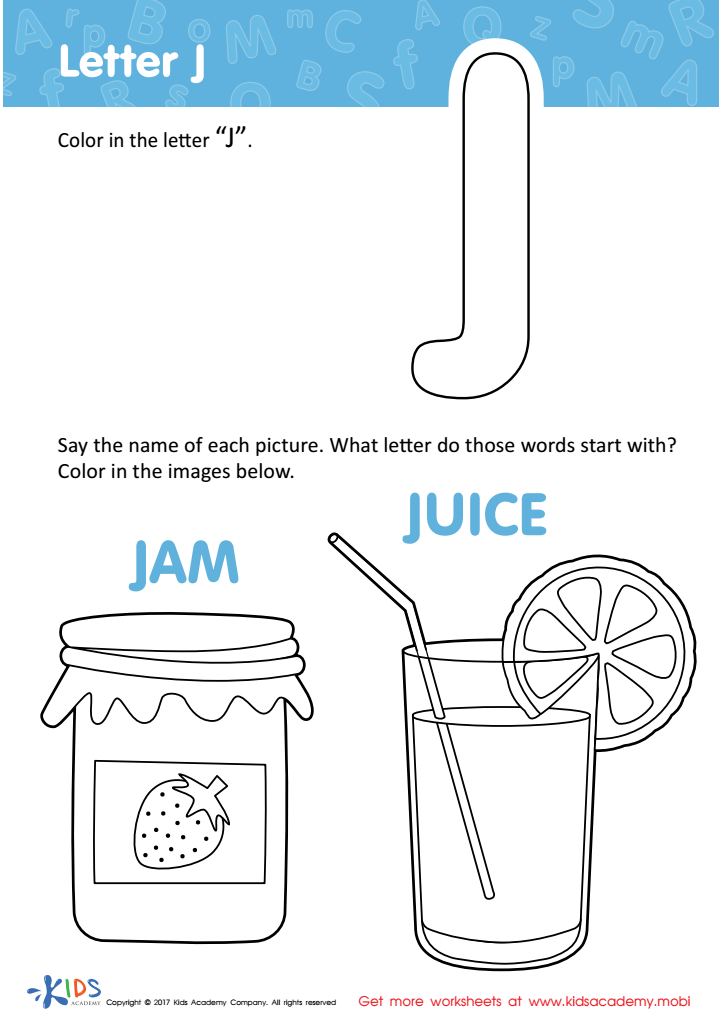
Letter J Coloring Sheet
Practice the letter 'J' with your little one with this fun coloring page! Pictures of jar, juice, jam and jelly make it an enjoyable experience for kids. Learning the letter and coloring is fun for even the youngest learners.
Download (PDF)
 Assign to My Students
Assign to My Students
Letter J Coloring Sheet
Worksheet
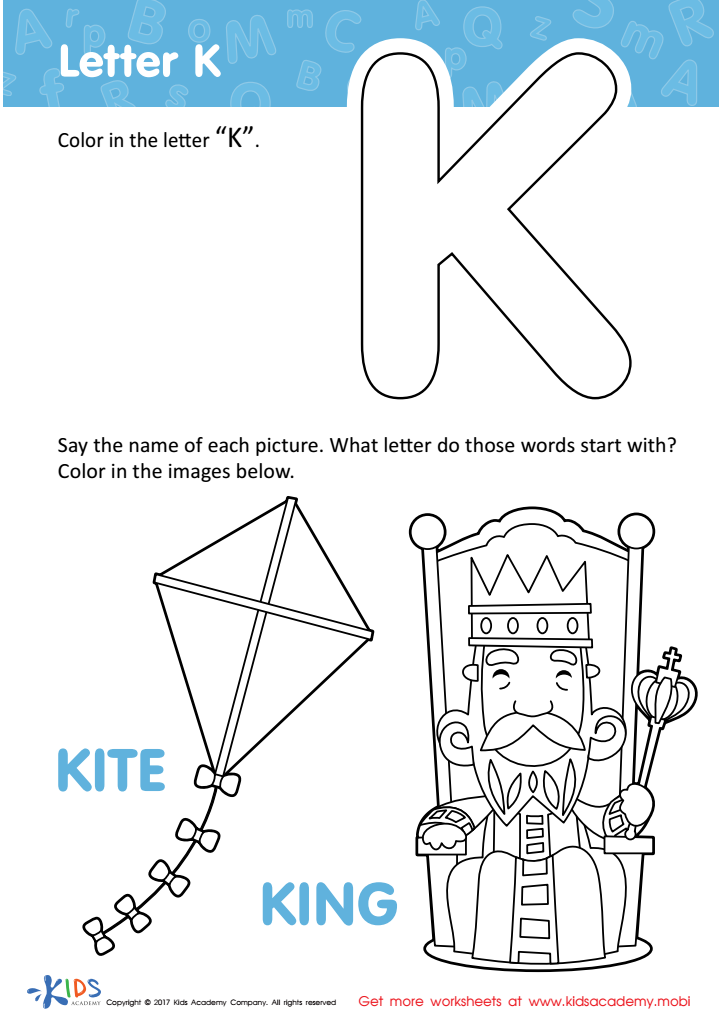
Letter K Coloring Sheet
This letter K coloring page captivates your child's creativity while learning the letter! Showcasing a king and kite, common words for their age group, it's sure to spark their imagination.
Download (PDF)
Assign to My Students
Assign to My Students
Letter K Coloring Sheet
Worksheet
Join Kids Academy for Free
Who is primarily going to use this learning content?








Understanding alphabetical order is crucial for children aged 6-9 as it lays the foundation for essential literacy skills. First, it supports reading development by helping students recognize the organization of words in dictionaries, encyclopedias, and databases. This skill enables them to locate information quickly and effectively, fostering independent learning.
Additionally, mastering the alphabet helps children with spelling and vocabulary acquisition. When they understand how letters are arranged, they gain confidence in their ability to decode and encode words, which advances their writing skills. Teachers can integrate fun activities like sorting words or creating alphabet books to make learning engaging.
Moreover, familiarity with alphabetical order promotes critical thinking and cognitive skills. Children learn to categorize and prioritize information logically, which can enhance problem-solving abilities.
For parents, reinforcing this concept at home encourages a shared learning experience that strengthens their child's engagement with language. Simple activities like playing word games or organizing books can reinforce these skills.
In summary, understanding alphabetical order is vital for literacy development, confidence in language usage, and cognitive growth in children. Supporting this learning enables teachers and parents to equip children with tools necessary for academic success.







