Fine motor development Alphabet Worksheets for Ages 6-9
3 filtered results
-
From - To
Discover our engaging Fine Motor Development Alphabet Worksheets designed specifically for children aged 6-9. These interactive worksheets combine structured learning with fun activities, promoting hand-eye coordination and dexterity. As kids trace letters, complete hands-on tasks, and practice writing, they enhance their fine motor skills while reinforcing their understanding of the alphabet. Each worksheet is tailored to support early literacy development, making learning enjoyable and effective. Encourage your child's growth and confidence as they master their writing techniques and letter recognition! Explore our collection today and provide your young learners with the tools they need for academic success.
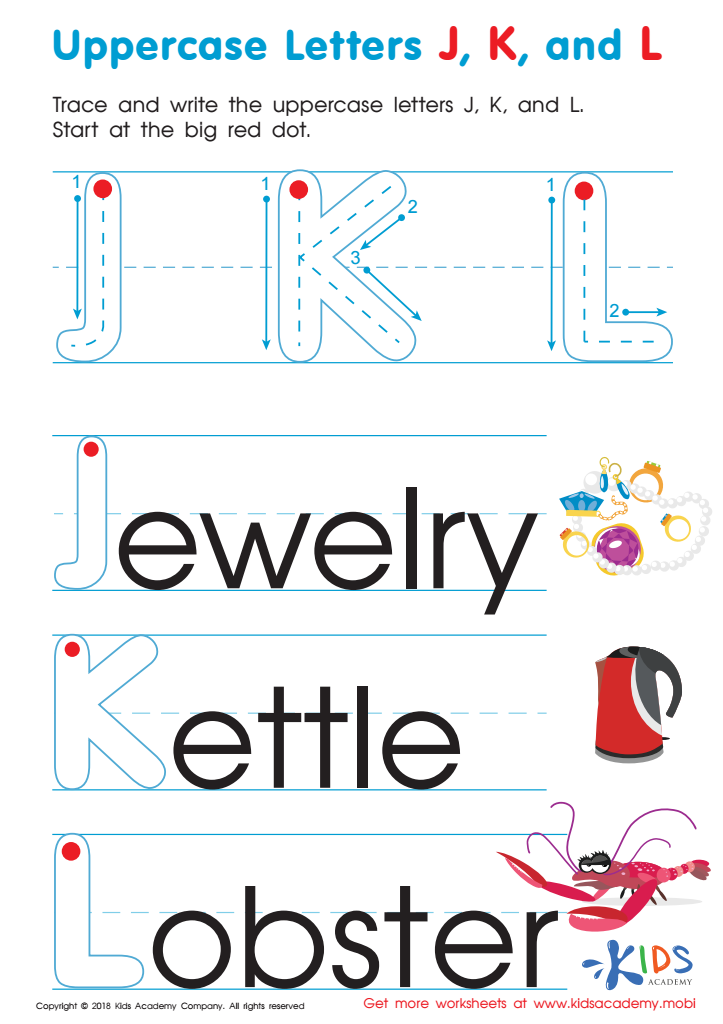
Uppercase Letters J, K, and L Worksheet
 Assign to My Students
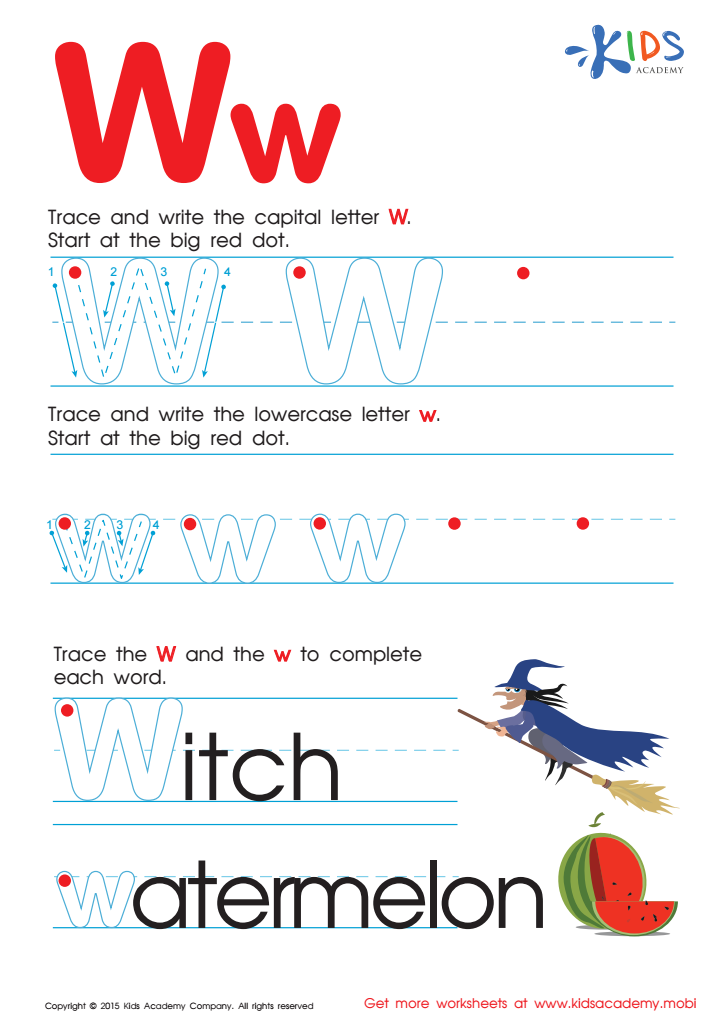
Letter W Tracing Page
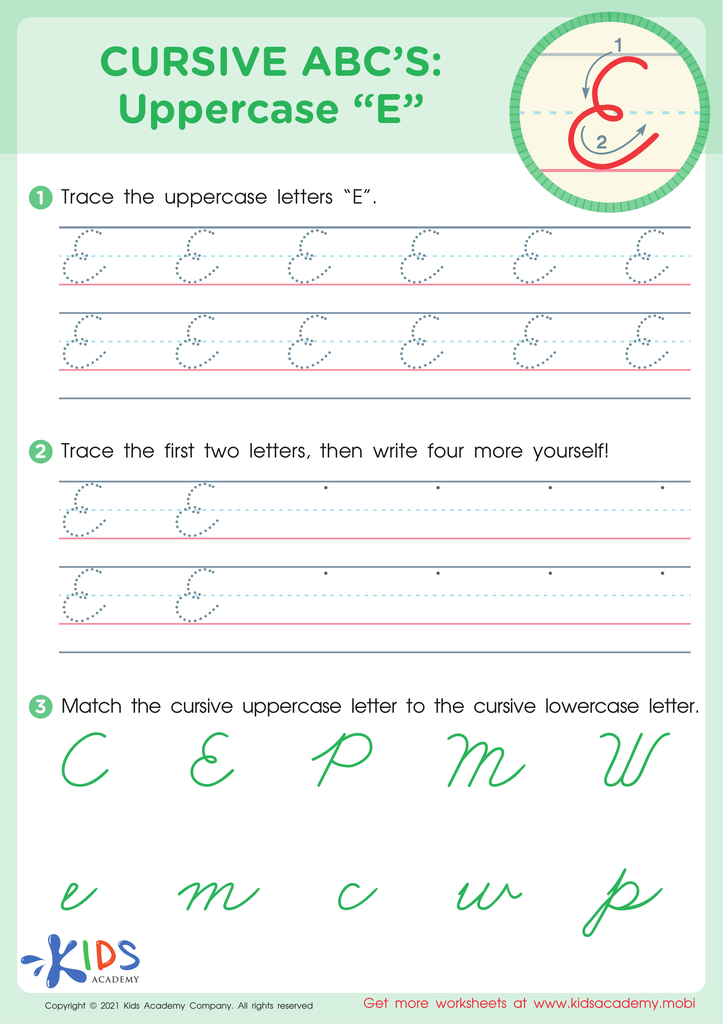
Cursive ABCs: Uppercase E








Fine motor development is crucial for children aged 6-9 as it lays the foundation for essential skills in academic and daily life. At this age, children are refining their ability to control hand movements, which is vital for tasks such as writing, drawing, and manipulating small objects. Specifically, fine motor skills impact their ability to form letters, use scissors, and engage in various creative activities.
Parents and teachers should care about fine motor development because it directly influences a child’s confidence and independence. When children struggle with tasks that require fine motor skills, they may feel frustrated and less motivated to engage in learning. Strong fine motor skills support better handwriting, leading to improved communication and expression of ideas in schoolwork. Furthermore, these skills are essential in developing early literacy, math skills, and even social interactions, as children often use their hands for collaborative activities.
Encouraging fine motor activities, such as building with blocks, crafting, or practicing letter forms through play, enables children to develop their coordination and dexterity while having fun. By prioritizing fine motor development, parents and teachers help set the stage for future academic success and lifelong skills, making it a critical focus during these formative years.







