Lowercase identification Letter Recognition Worksheets for Ages 6-9
5 filtered results
-
From - To
Boost your child's literacy skills with our engaging Lowercase Identification Letter Recognition Worksheets for ages 6-9! Designed to make learning fun and interactive, these worksheets help young learners identify and recognize lowercase letters through various activities, including tracing, matching, and coloring. Perfect for homeschooling or classroom settings, they cater to diverse learning styles while enhancing letter recognition and phonetic skills. Our worksheets aim to build confidence in young readers by fostering a solid foundation for reading and writing. Unlock your child's potential and support their literacy journey today with these valuable resources that promote early language development and cognitive growth!
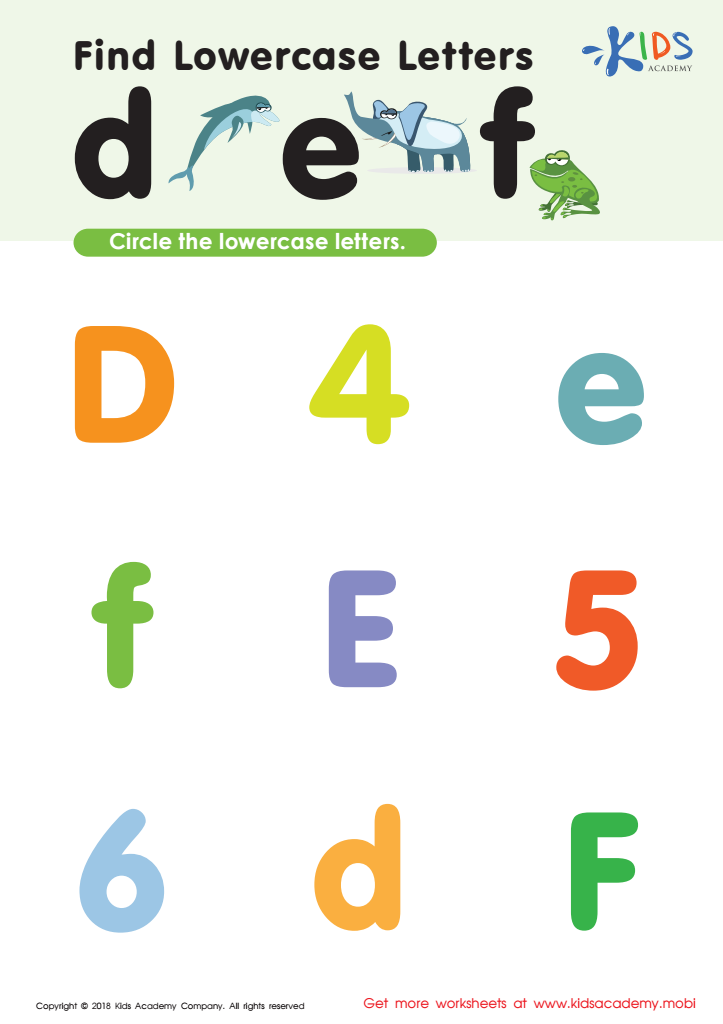
Find Lowercase Letters d e f Worksheet
 Assign to My Students
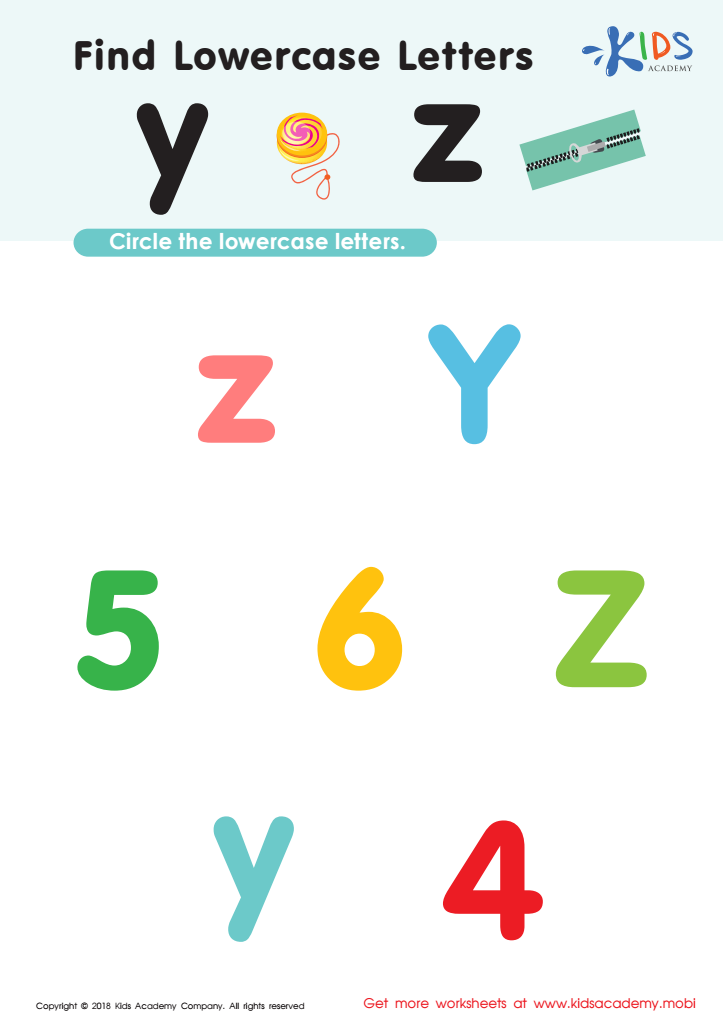
Find Lowercase Letters y z Worksheet
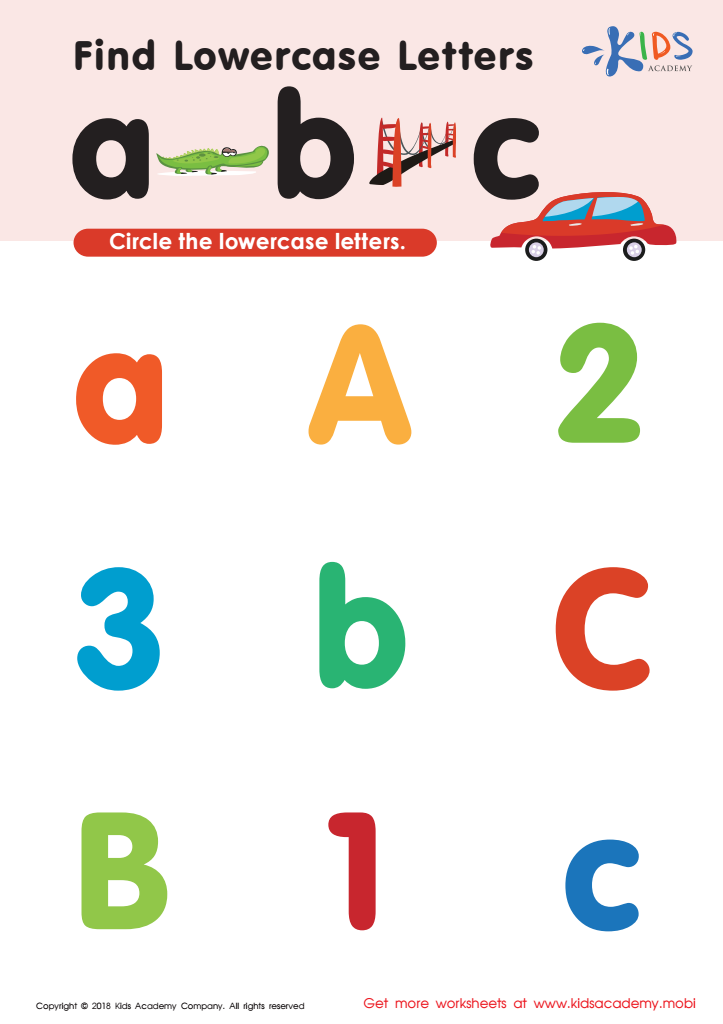
Find lowercase letters a b c Worksheet
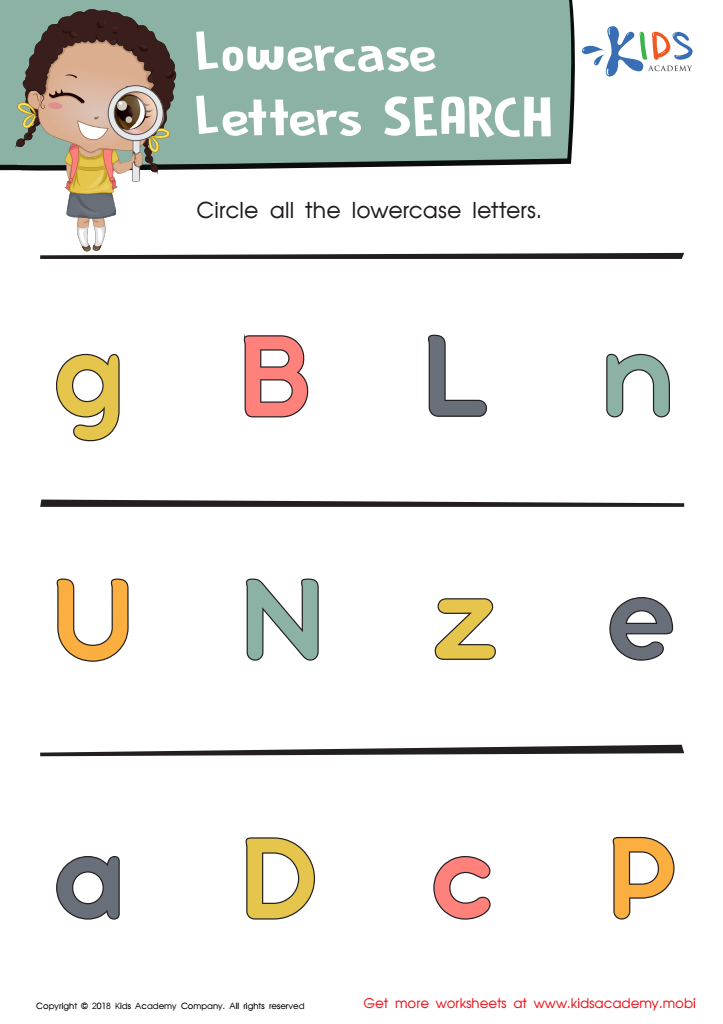
Lowercase Letters Search: Assessment Worksheet
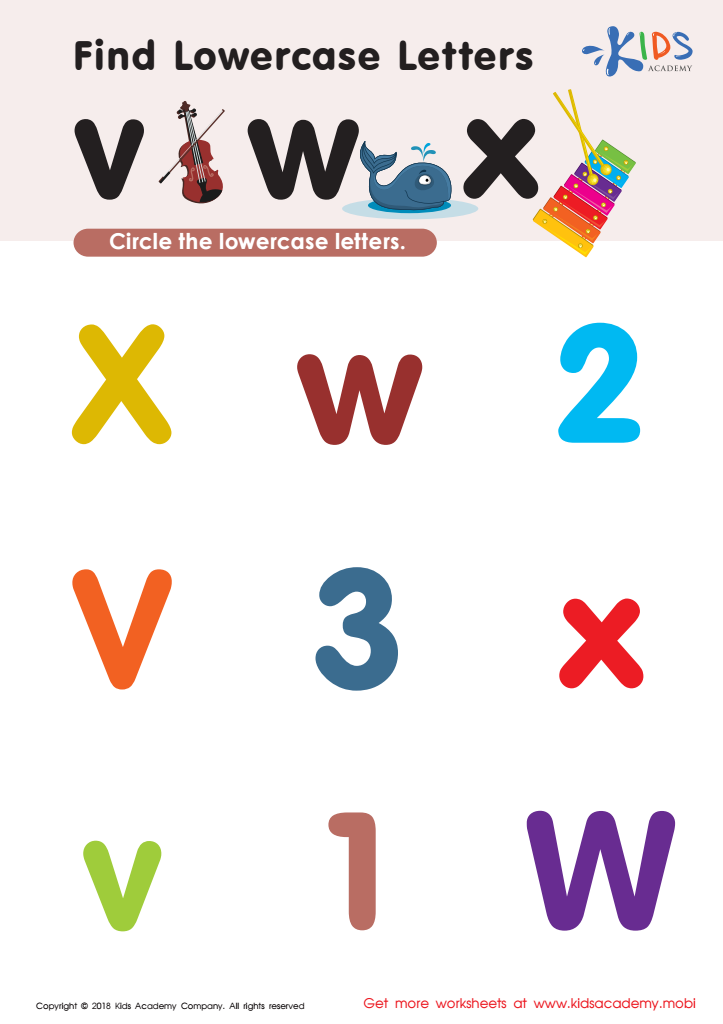
Find Lowercase Letters v w x Worksheet








Lowercase letter recognition is a crucial skill for children aged 6 to 9, as it lays the foundation for fluent reading and writing. During this developmental stage, children transition from learning letters to reading entire sentences and understanding complex texts. Lowercase letters dominate written communication; thus, recognizing these characters is essential for decoding words in their daily encounters, from books to classroom materials.
When parents and teachers prioritize lowercase letter identification, they enhance children’s ability to read independently, which fosters a love for reading and learning. This skill also aids in spelling and writing, encouraging children to express their thoughts effectively. Additionally, recognition of lowercase letters plays a vital role in developing phonemic awareness—which is linked to overall literacy success.
Moreover, supporting children in this area builds their confidence in language skills, allowing them to participate more actively in classroom discussions and activities. Awareness of lowercase letters also assists children in differentiating between uppercase and lowercase usage, an important aspect of writing conventions. By promoting lowercase letter recognition, parents and teachers contribute significantly to their children's academic success and encourage a lifelong appreciation for literacy.







