Letter-sound correlation Phonics Worksheets for Ages 6-9
3 filtered results
-
From - To
Discover our engaging Letter-Sound Correlation Phonics Worksheets designed specifically for children ages 6-9! These printable resources help young learners master the crucial connection between letters and their corresponding sounds, enhancing their reading and phonemic awareness. With a variety of interactive activities, our worksheets promote essential skills through fun and stimulating exercises tailored for early grammar development. Encourage your child's literacy journey with colorful, captivating designs that keep them motivated and entertained. Explore our collection now to support their reading fluency and instill a lifelong love of learning. Perfect for both classroom use and at-home practice, these worksheets make phonics fun!
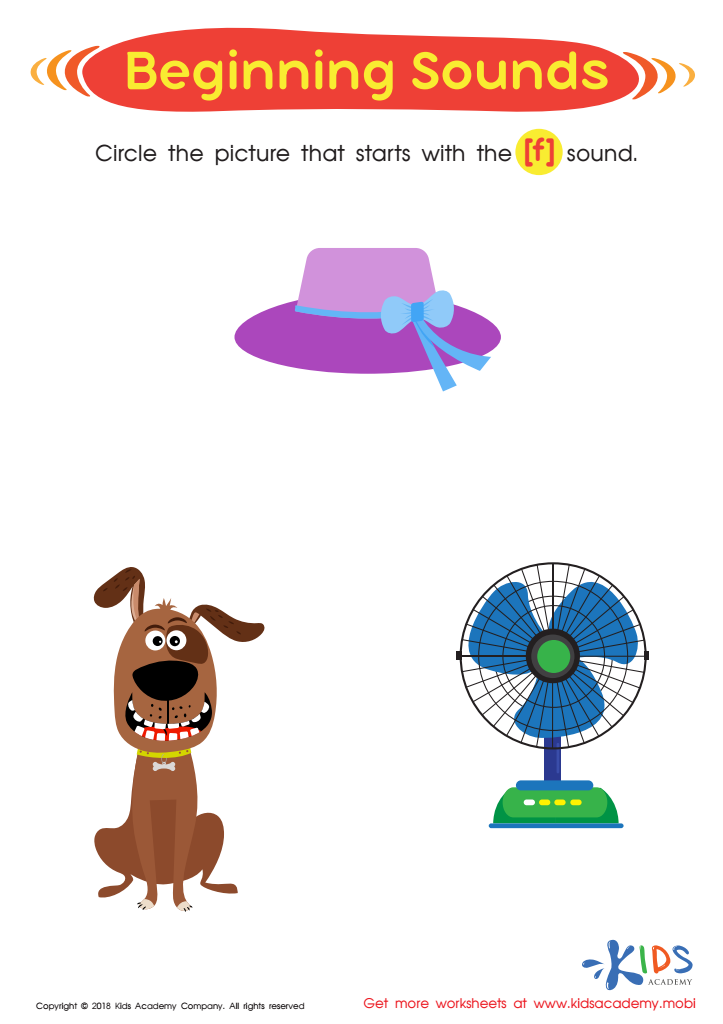
Beginning Sounds Assessment Printable
 Assign to My Students
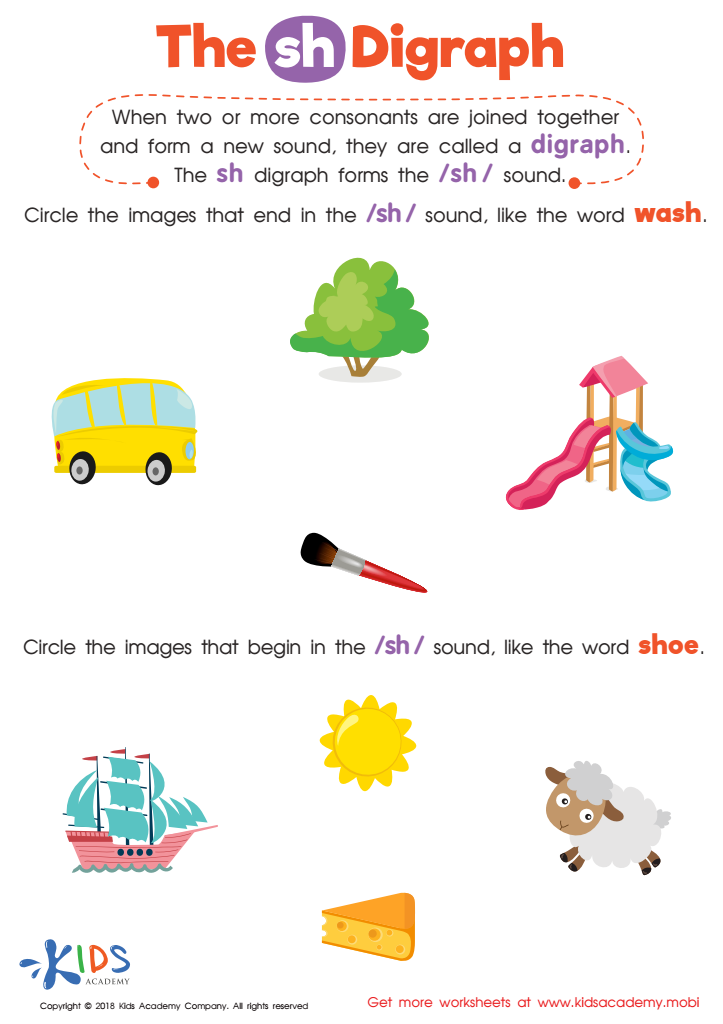
The SH Digraph Worksheet
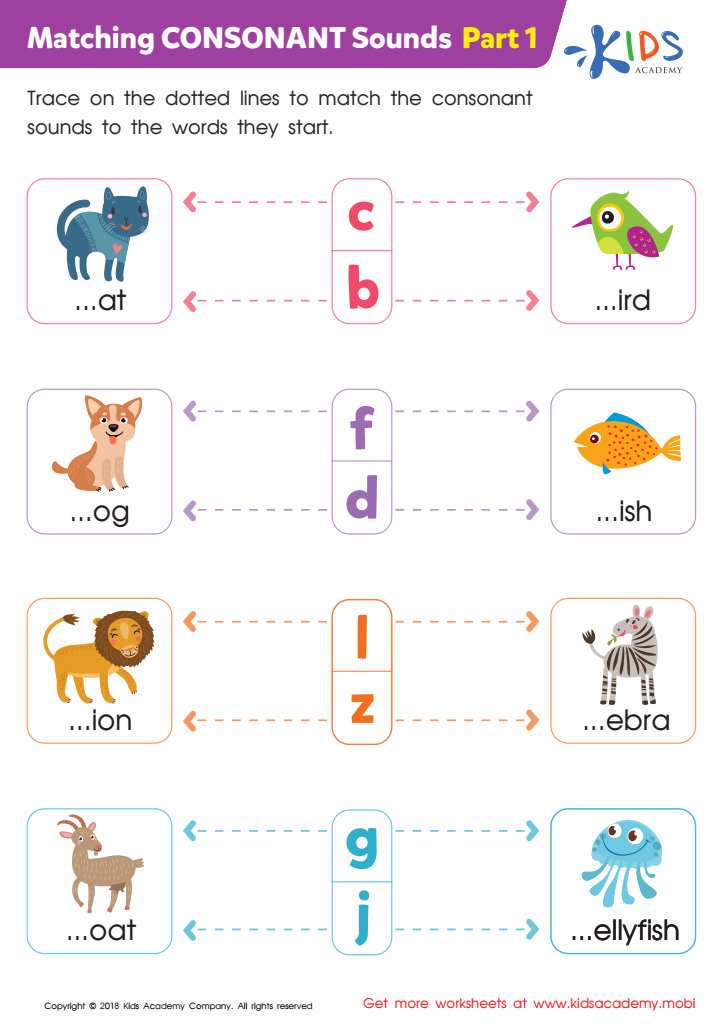
Matching Consonant Sounds: Part 1 Worksheet








Letter-sound correlation, or phonics, is crucial for children aged 6-9 as it forms the foundation for reading and writing skills. Understanding the relationship between letters and their corresponding sounds enables children to decode words independently, fostering confidence in their literacy abilities. This skill is vital during a developmental stage where children are transitioning from learning to read to reading to learn.
Research shows that phonics instruction significantly enhances reading proficiency, which correlates with overall academic success. When children grasp phonics, they can tackle unfamiliar words, leading to a more extensive vocabulary and improved comprehension skills. This fluency in reading also positively impacts other subjects, as the ability to interpret text is essential for understanding concepts in mathematics, science, and social studies.
Moreover, phonics instruction empowers parents and teachers to engage meaningfully with children’s literacy development. By nurturing these skills, they cultivate a love for reading, ensuring that children view it as an enjoyable and rewarding activity rather than a chore.
In summary, investing in phonics for early learners is essential not just for literacy, but also for creating independent, self-motivated learners who are well-equipped for future academic challenges.







