
Listening skills Phonics Worksheets for Ages 6-9
5 filtered results
Difficulty Level
Grade
Age
-
From - To
Subject
Activity
Standards
Enhance your child’s auditory and phonics abilities with our Listening Skills Phonics Worksheets for ages 6-9. Designed to intertwine fun and education, these worksheets develop crucial listening skills through engaging activities and exercises. Each worksheet focuses on sound recognition, word discrimination, and phonemic awareness, laying a strong foundation for reading and language development. Tailored for young learners, our resources promote active listening and effective communication by stimulating children's auditory senses. Empower your child to become a proficient listener and reader with our expertly crafted phonics worksheets, ensuring a successful learning journey ahead. Dive into the world of sounds with Kids Academy!
Favorites
With answer key
Interactive
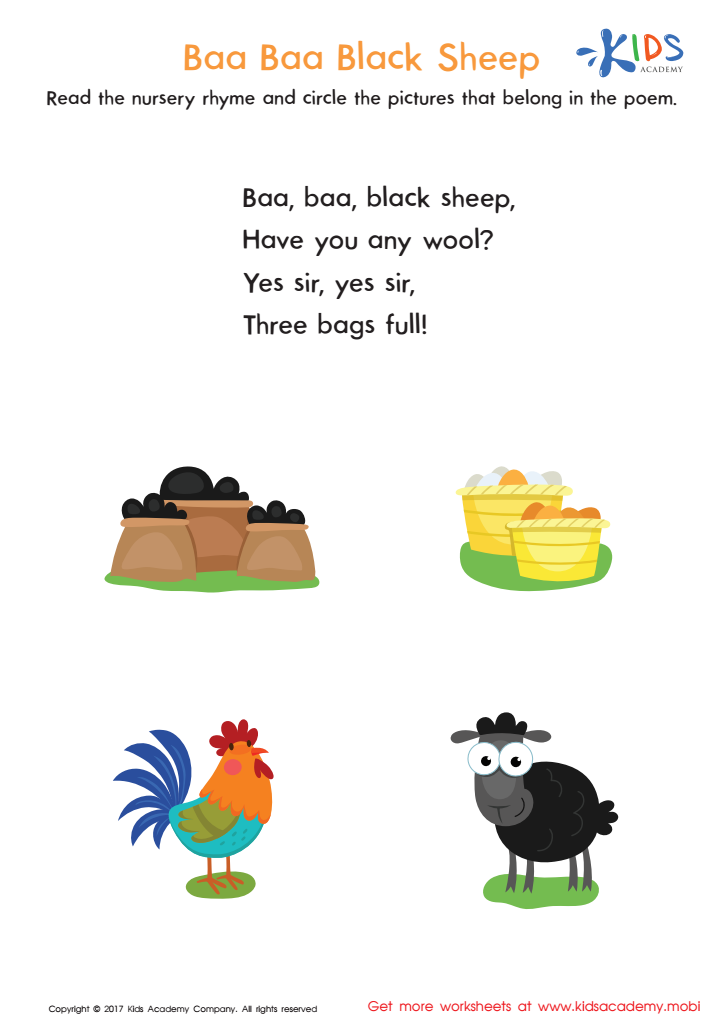
Baa Baa Black Sheep Printable
Jumpstart your child's reading skills with this printable Baa Baa Black Sheep worksheet! Recite the lines with them, then have them select the pictures associated with the poem to test comprehension. Fun and educational!
 Assign to My Students
Baa Baa Black Sheep Printable
Worksheet
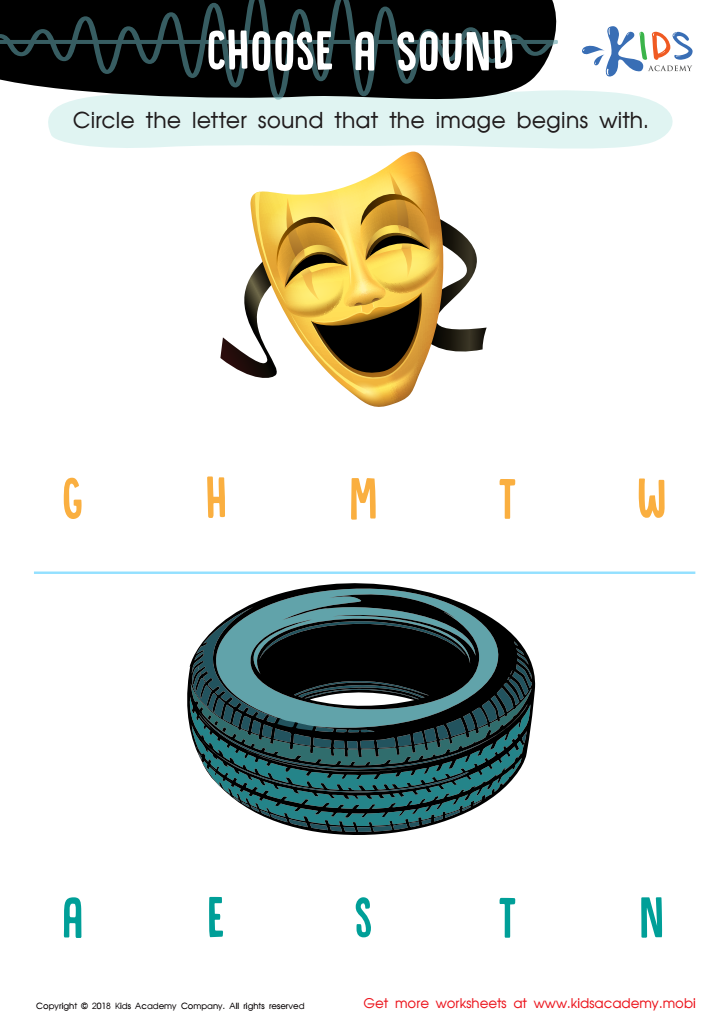
Choose a Sound Worksheet
Help your child hone pre-reading skills with this colorful worksheet! They'll practice tracing letter sounds, develop phoneme awareness, and gain confidence. Plus, it's a fun way to work on their fine motor skills.
Choose a Sound Worksheet
Worksheet
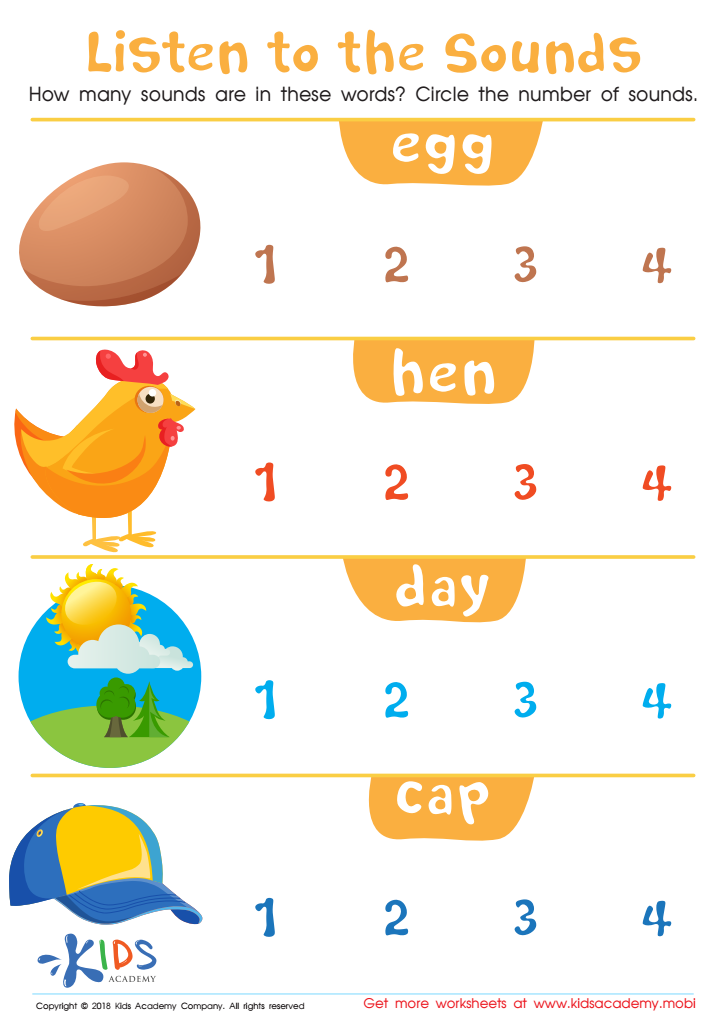
Listen to the Sounds Worksheet
This worksheet builds emerging readers' skills in using sounds for reading and spelling. It helps strengthen auditory processing by having them count the sounds in each word, then trace the corresponding number. Fun and cheerful!
Listen to the Sounds Worksheet
Worksheet
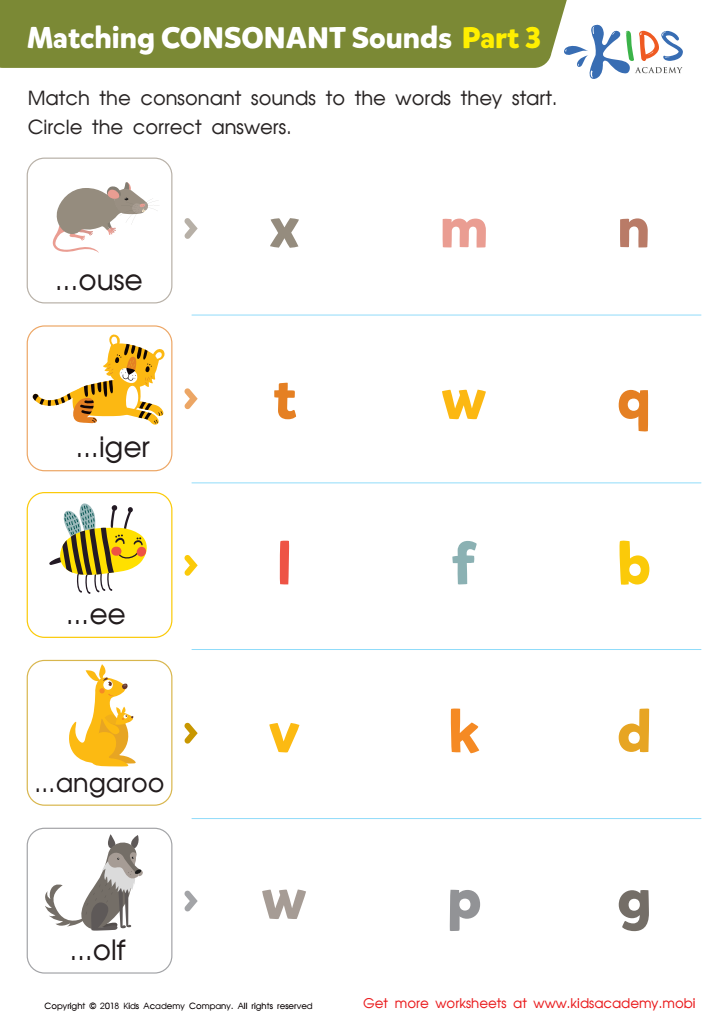
Matching Consonant Sounds: Part 3 Worksheet
Help your early learner match consonant sounds to words with this fun worksheet! Have them name the pictures and try out each letter in the corresponding column. When they hear the sound that matches, circle it. Have them write the letter in the box to complete the word. Work their way down the page until the critters' names all match with consonants!
Matching Consonant Sounds: Part 3 Worksheet
Worksheet
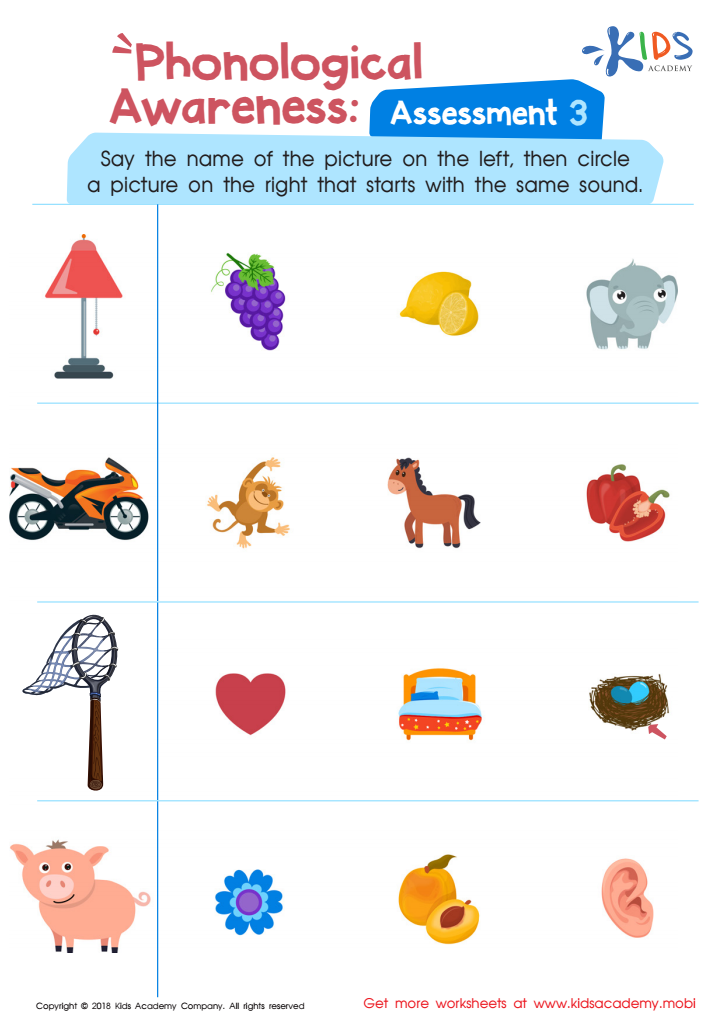
Phonological Awareness: Assessment 3 Worksheet
Test kids' reading readiness with a phonological awareness worksheet! With this PDF exercise, encourage children to name each picture aloud and match left to right. Help them learn to recognize word sounds at the start, middle and end of words. They'll be sure to remember that lamp doesn't sound like elephant!
Phonological Awareness: Assessment 3 Worksheet
Worksheet
Join Kids Academy for Free
Who is primarily going to use this learning content?








Parents and teachers should care about listening skills and phonics for children ages 6-9 because these foundational skills are critical for their overall language development and academic success. At this age, children are in a crucial stage of learning to read, and phonics instruction helps them understand the relationship between letters and sounds. This understanding is essential for decoding new words, which is the first step toward fluent reading.
Listening skills are equally important, as they form the basis for effective communication and comprehension. When children develop good listening skills, they are better able to follow instructions, engage in meaningful conversations, and understand stories or information presented to them. This sets the stage for improved vocabulary, sentence structure, and ultimately, better writing skills.
Moreover, strong listening skills support social development and emotional intelligence, enabling children to interact more effectively with peers and adults. This can lead to improved confidence and self-esteem, which are key components of a healthy learning environment.
By prioritizing listening skills and phonics, parents and teachers ensure that children acquire the tools they need for literacy and lifelong learning. These skills lay the groundwork for academic achievement across all subjects and contribute to a child's ability to thrive both inside and outside the classroom.







