Rhyming skills development Phonics Worksheets for Ages 6-9
4 filtered results
-
From - To
Unlock the joy of learning with our Rhyming Skills Development Phonics Worksheets designed for children aged 6-9! These engaging activities help young learners enhance their phonemic awareness and build essential reading skills through fun and interactive rhyming exercises. Each worksheet focuses on recognizing and creating rhymes, allowing students to practice sounds, improve vocabulary, and strengthen their understanding of word patterns. Tailored to suit diverse learning styles, our worksheets promote independence and foster a love for language. Encourage your child's literacy journey today with our carefully crafted resources that make learning to read an enjoyable adventure! Explore our collection now and inspire a lifelong passion for reading!
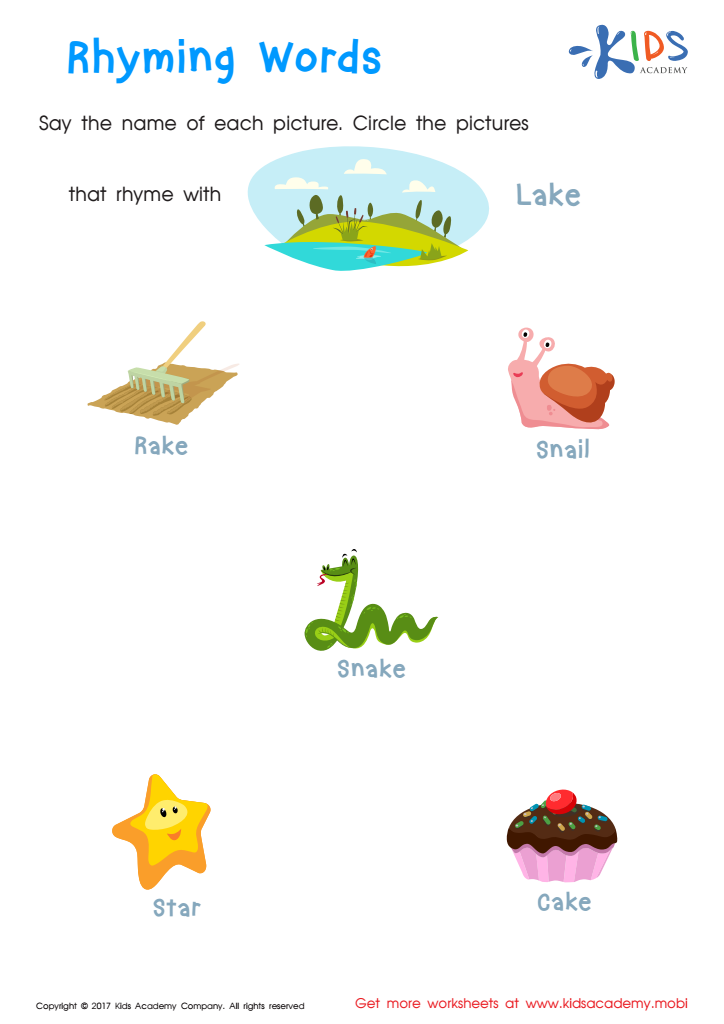
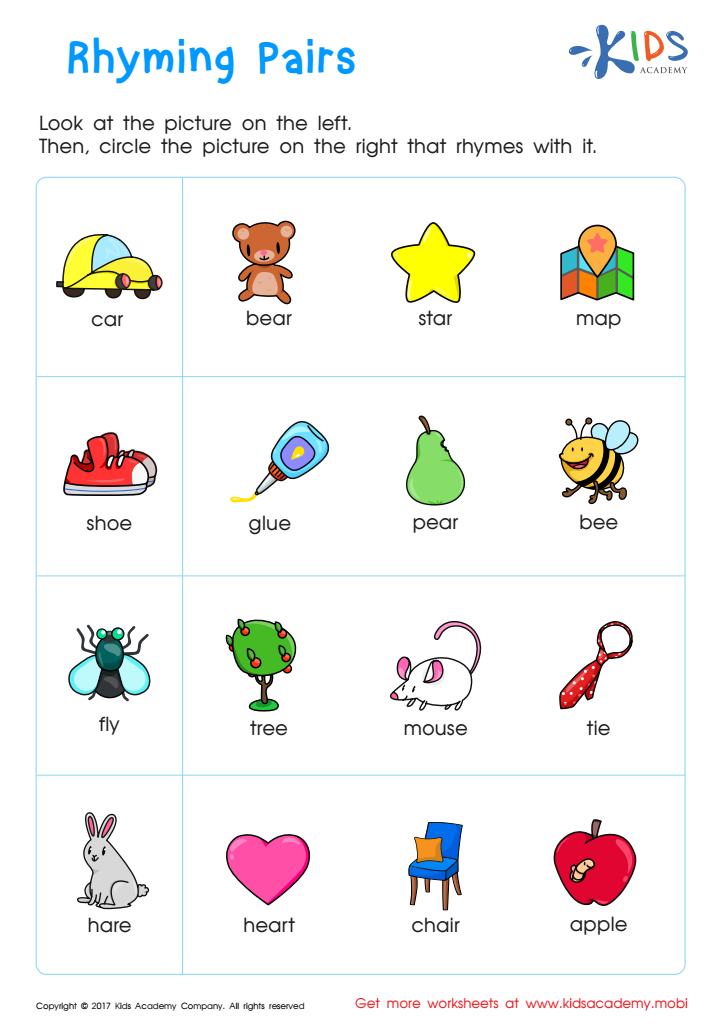
Rhyming Words Rhyming Worksheet
 Assign to My Students
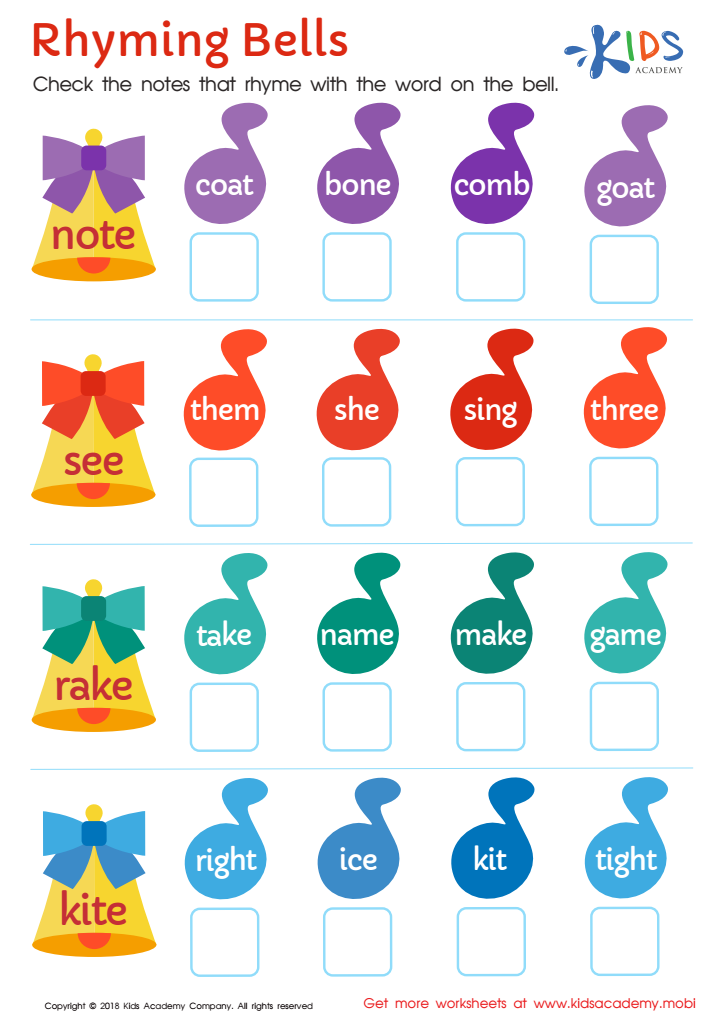
Rhyming Bells Worksheet
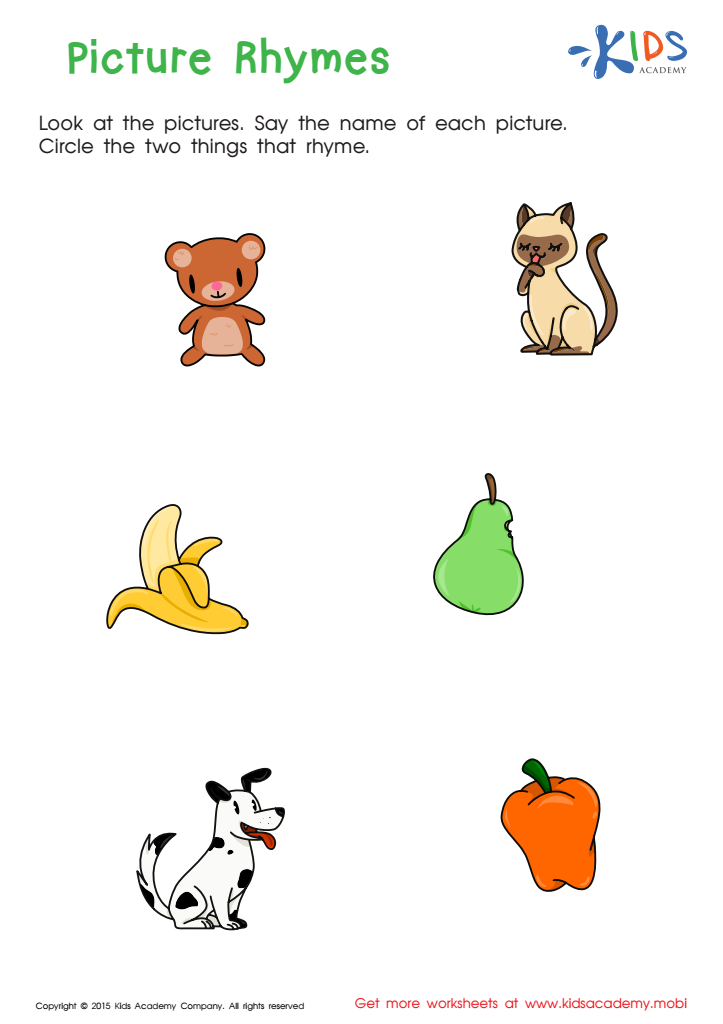
First Words: Picture Rhymes Worksheet








Rhyming skills development is crucial for children aged 6-9 as it serves as a foundation for phonics and early literacy. Understanding rhymes helps children recognize and manipulate sounds, which enhances their phonemic awareness—the ability to hear, identify, and manipulate phonemes in words. This skill is vital because it links directly to reading and spelling proficiency. By recognizing patterns in sounds, children can decode new words more readily, improving their fluency and comprehension.
Moreover, rhyming enhances vocabulary development. When children engage with rhymes, they encounter new words and contexts, fostering richer language skills. This playful interaction with sounds and syllables can make learning to read more enjoyable and engaging, promoting a positive attitude towards literacy.
Parents and teachers play a significant role in this development. By incorporating rhyming games, songs, and playful activities into reading routines, they can create a supportive and stimulating environment that nurtures these skills. Strong rhyming abilities not only contribute to better reading outcomes but also encourage creative thinking and a love for language, laying the groundwork for lifelong learning. Understanding the significance of rhyming can encourage adults to prioritize these activities, ensuring children thrive in their literacy journey.







