Sound differentiation Phonics Worksheets for Ages 6-9
3 filtered results
-
From - To
Discover our engaging Sound Differentiation Phonics Worksheets designed specifically for children ages 6-9! These worksheets provide essential practice in identifying and distinguishing sounds, boosting early reading skills critical for young learners. Featuring enjoyable activities and colorful illustrations, our resources make phonics fun and effective! Ideal for both classroom and home use, these worksheets help children develop listening and pronunciation skills necessary for mastering phonetic sounds. By reinforcing sound recognition through interactive exercises, educators and parents can transform learning into an exciting adventure. Unlock your child's potential in reading and phonics with our carefully curated worksheets today!
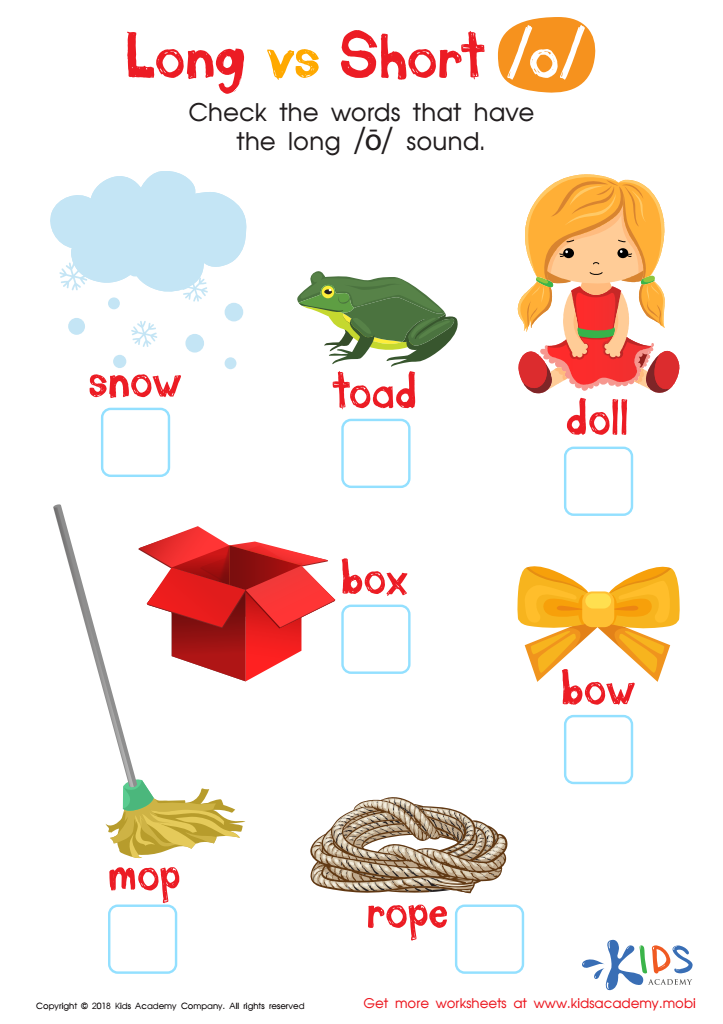
Long vs Short O Reading Worksheet
 Assign to My Students
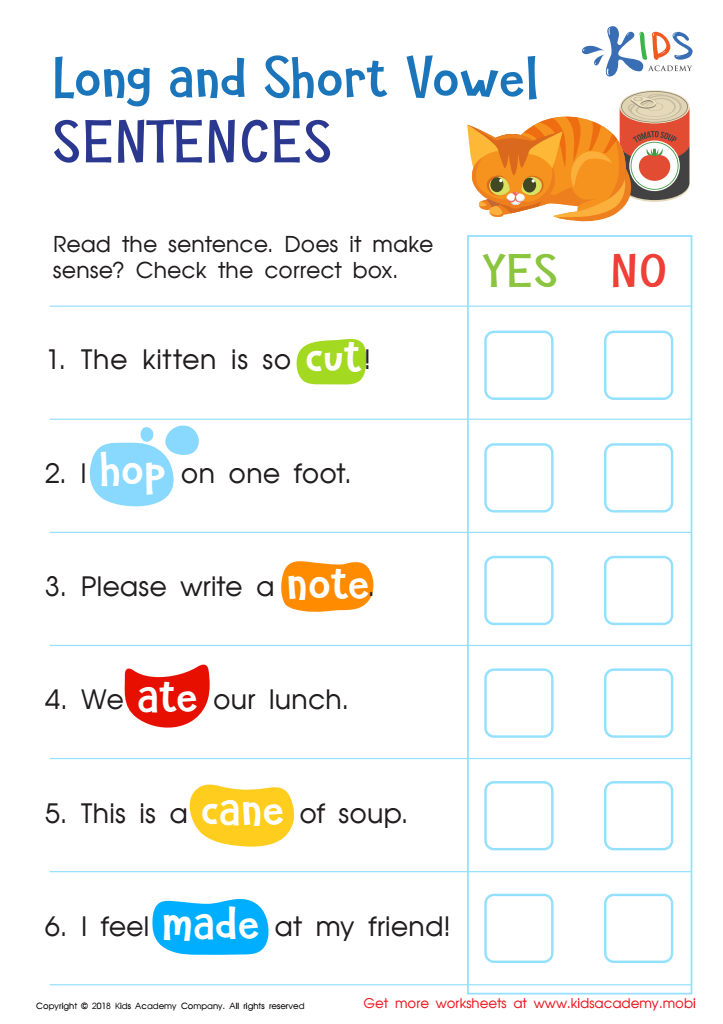
Long and Short Vowel Sentences: Assessment Worksheet
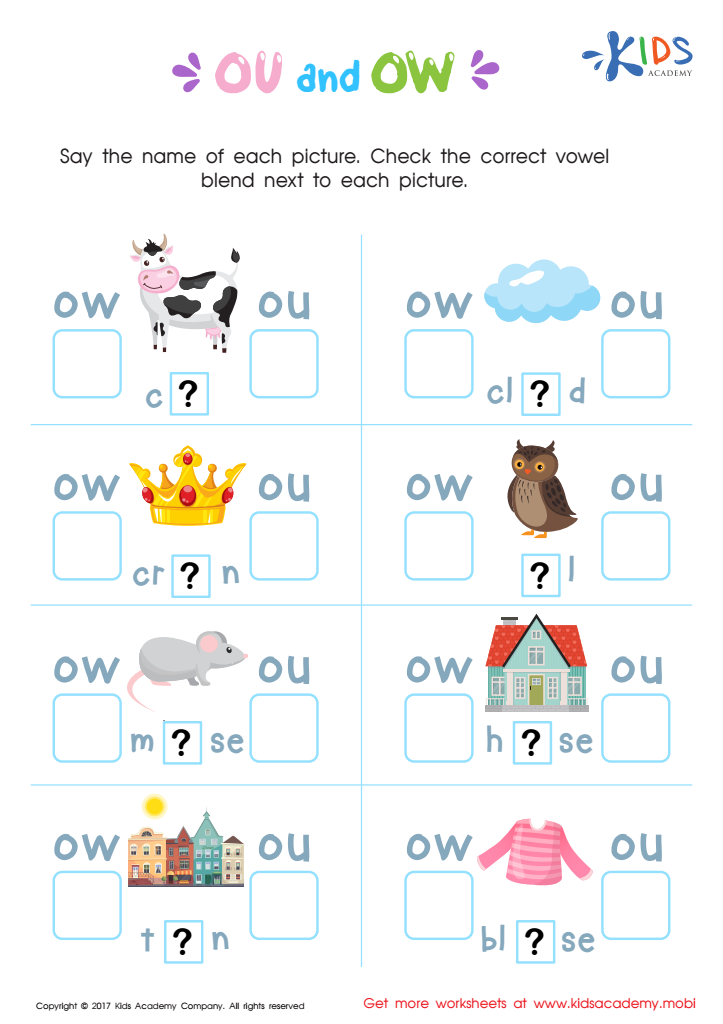
OU and OW Words Worksheet








Sound differentiation phonics is crucial for children ages 6-9 as it lays the foundation for reading and writing skills. During this developmental phase, children are actively learning to decode words and understand the correspondence between sounds and letters. By mastering sound differentiation, children can identify and manipulate individual sounds (phonemes) within words, making them more adept at decoding unfamiliar words.
Parents and teachers should prioritize sound differentiation phonics as it fosters fluency in reading, critical for academic success and lifelong learning. Proficient phonics skills enhance vocabulary development and comprehension, ultimately contributing to improved performance across all subjects. Furthermore, children struggling with phonics may experience frustration and decreased motivation, leading to a negative attitude toward learning.
Additionally, a solid grasp of phonics supports other literacy skills, such as spelling and writing, allowing children to express their thoughts and creativity effectively. Engaging in sound differentiation phonics activities can also be fun, providing opportunities for parents to bond with their children and making learning an enjoyable experience.
In summary, emphasizing sound differentiation phonics is essential for promoting literacy and academic achievement in young learners, equipping them with the tools they need to thrive in their educational journey.







