Spelling improvement Phonics Worksheets for Ages 6-9
8 filtered results
-
From - To
Boost your child's spelling skills with our engaging Phonics Worksheets designed specifically for ages 6-9! These worksheets provide a fun and interactive way for young learners to master essential spelling concepts through phonetic sounds and patterns. Each resource is tailored to reinforce knowledge of letters, sounds, and vocabulary, making it easy for children to connect phonics with spelling. With colorful designs and age-appropriate activities, students will eagerly dive into exercises that promote learning and confidence. Download our printable phonics worksheets today and watch your child's spelling prowess soar while enjoying a fun, educational experience! Perfect for home or classroom use!
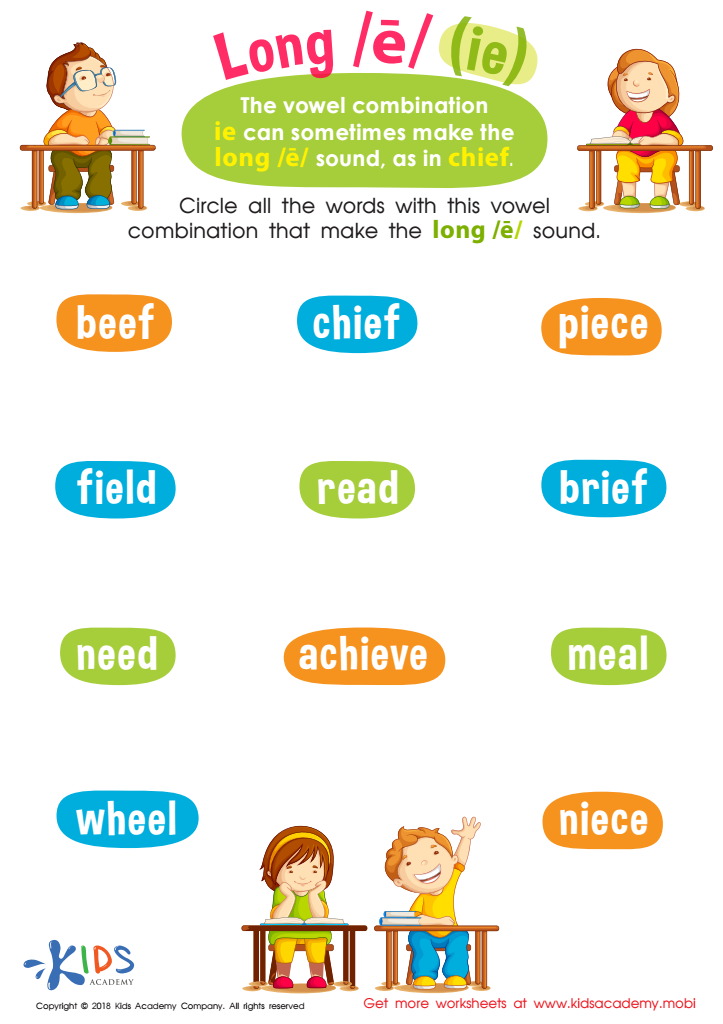
Reading: Long E and IE Worksheet
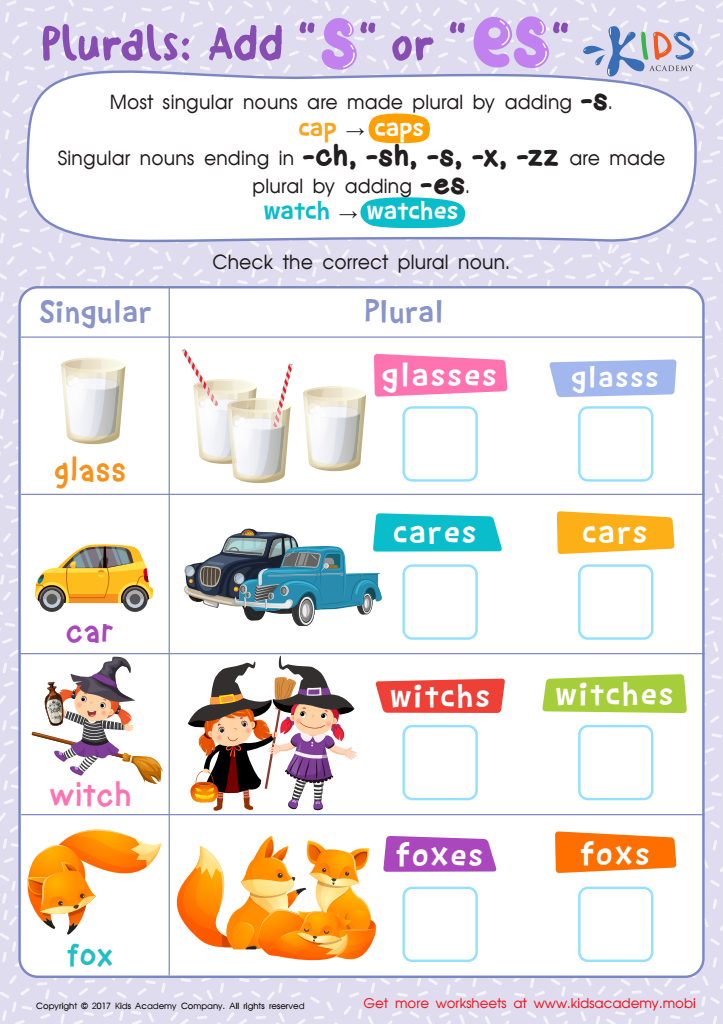
Plurals: "–es" or "–es"? Worksheet
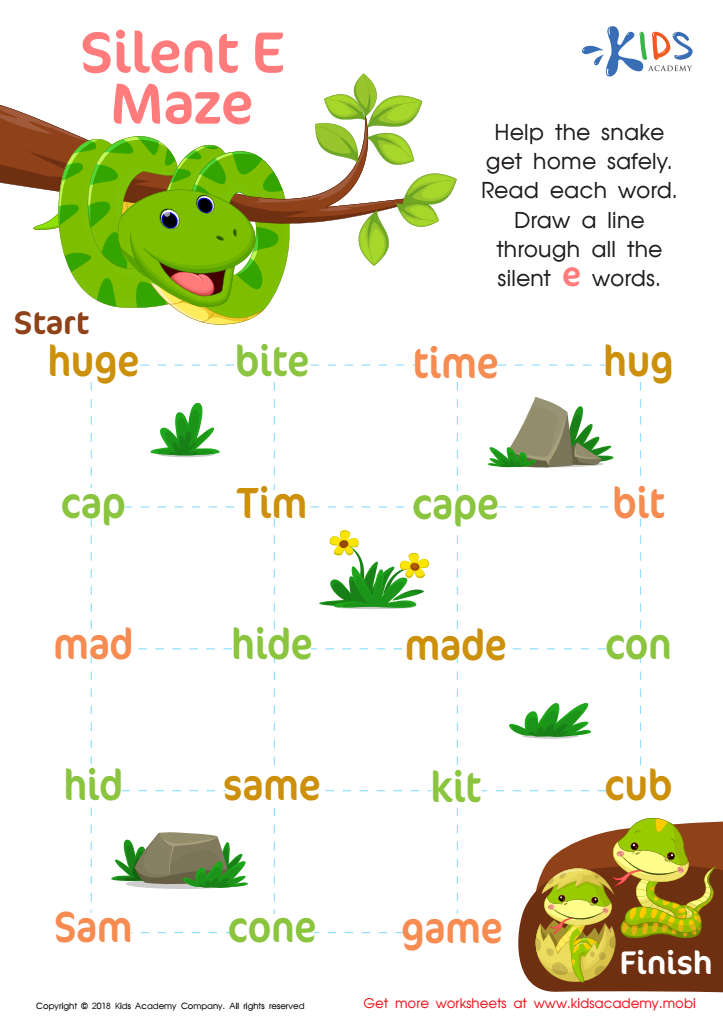
Silent E Maze Worksheet
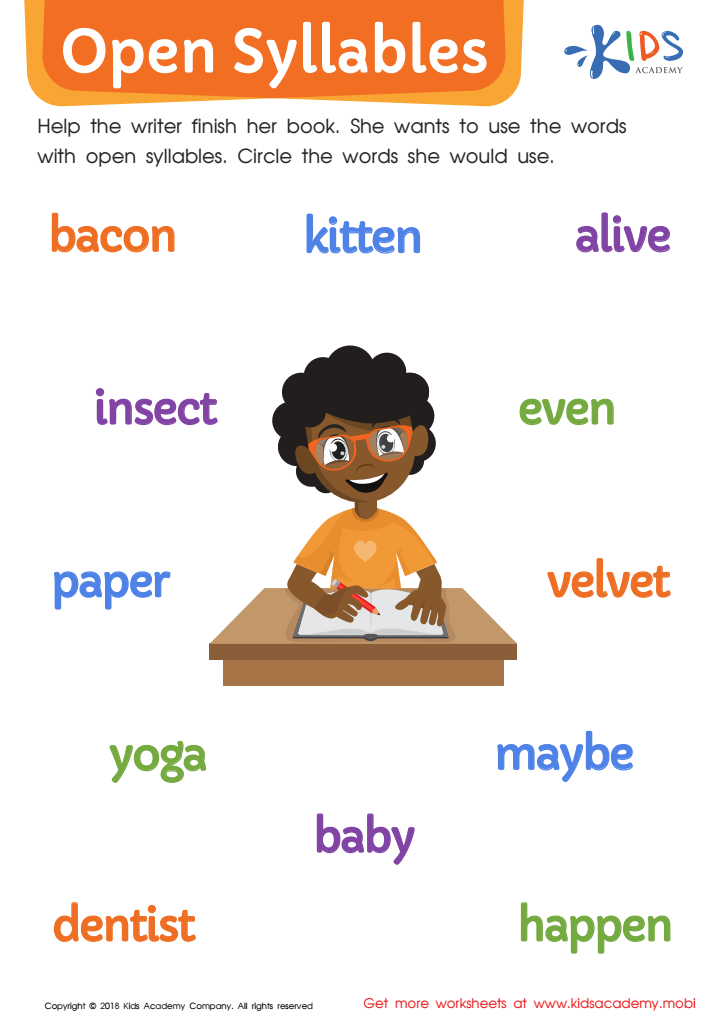
Open Syllables Worksheet
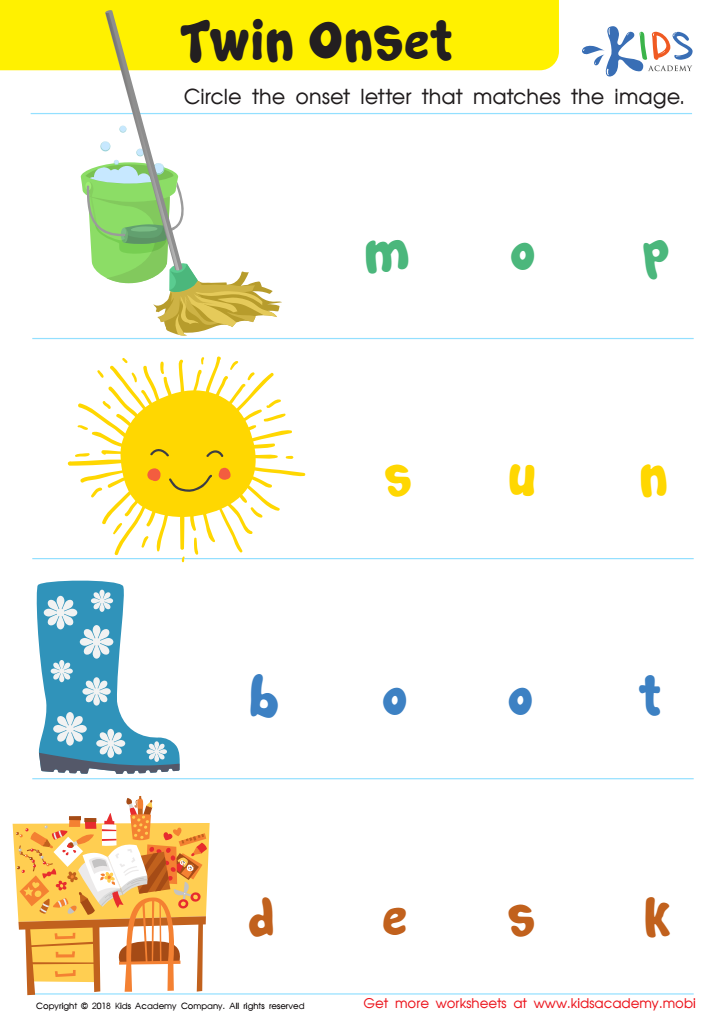
Twin Onset Worksheet
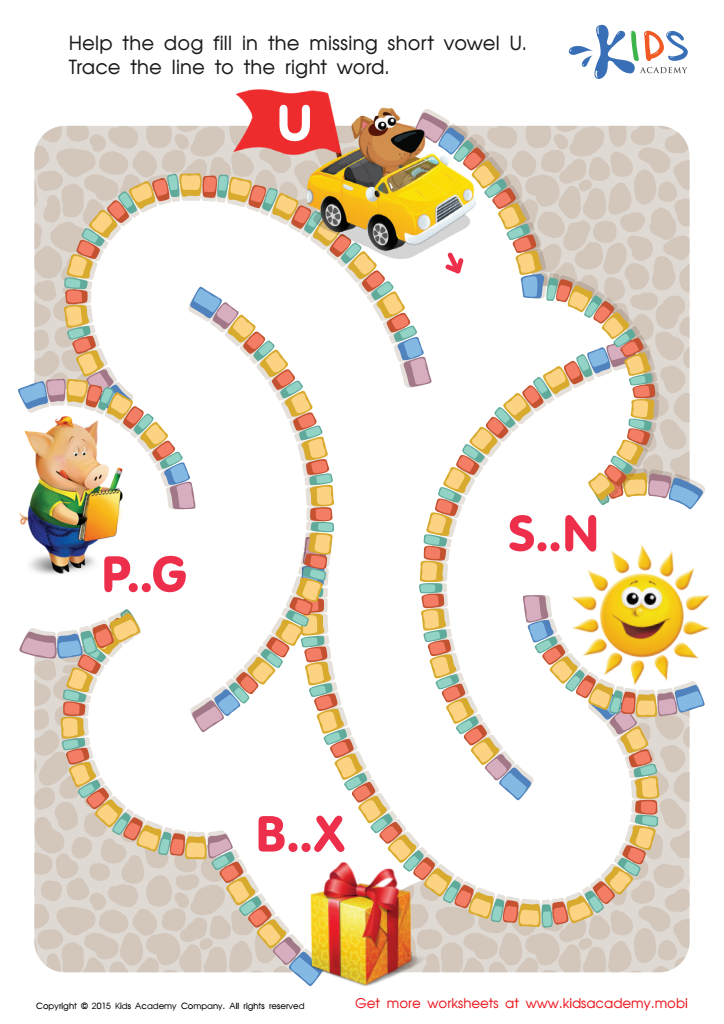
Short Vowel Sound U Worksheet
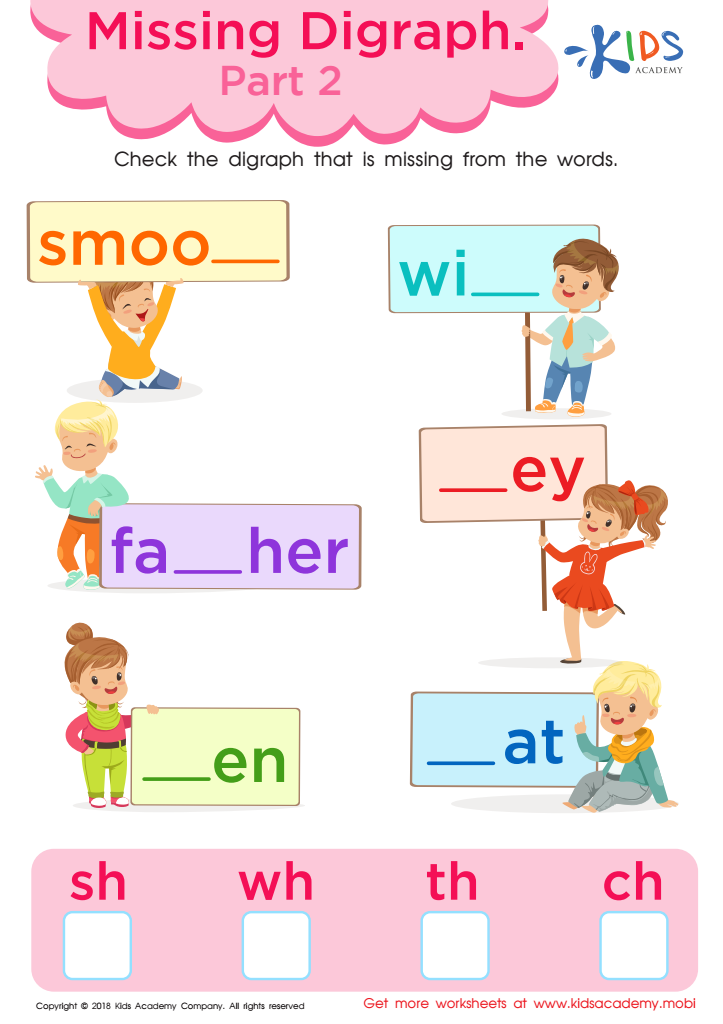
Missing Digraph: Part 2 Worksheet
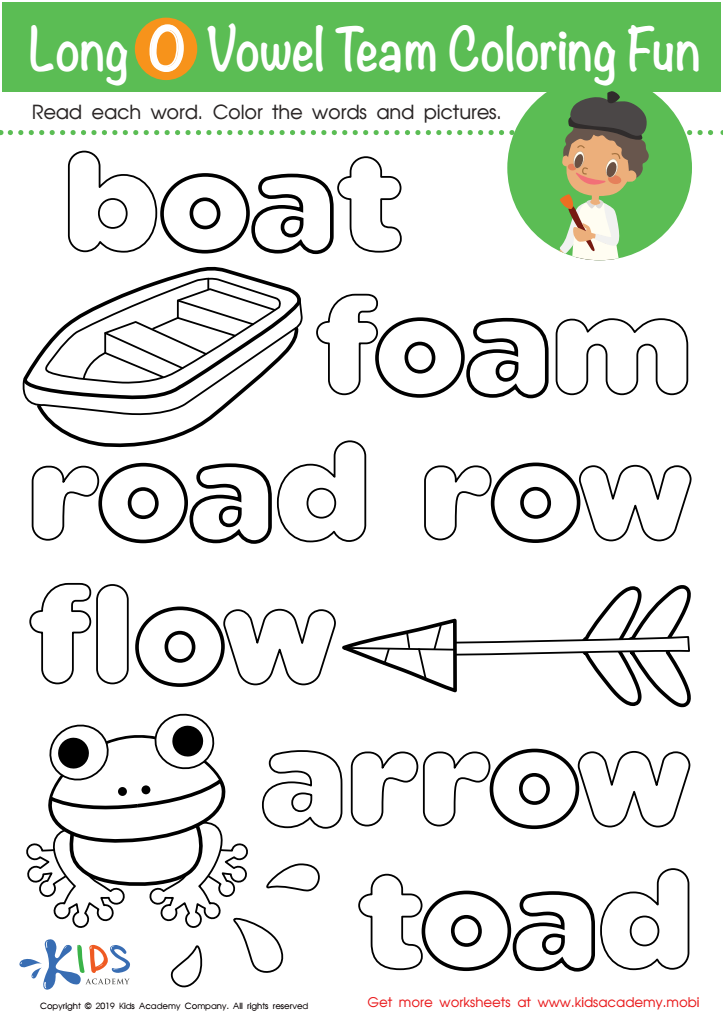
Long O Vowel Team Coloring Worksheet
 Assign to My Students








Spelling improvement through phonics is crucial for children aged 6-9 as it lays the foundation for their literacy skills and overall academic success. During these formative years, children are developing their reading and writing abilities, and a solid understanding of phonics—the relationship between letters and sounds—enhances their capacity to decode words. This skill enables them to read independently and fluently, fostering a love for reading that is essential for lifelong learning.
Moreover, strong spelling skills contribute to effective communication. At this age, children are beginning to express their thoughts and ideas in writing. By mastering phonics and spelling, they gain confidence in their written expression, helping them articulate themselves clearly and accurately.
Additionally, research shows that early struggles with spelling can lead to ongoing literacy challenges. By emphasizing phonics instruction and spelling improvement, parents and teachers can support students in building a strong literacy foundation, minimizing the risk of future learning difficulties.
In summary, prioritizing spelling and phonics not only enhances reading and writing skills but also boosts learners' self-esteem, promotes effective communication, and supports successful academic trajectories. This investment in their early education is vital for their future personal and academic growth.







