Spelling practice Phonics Worksheets for Ages 6-9 - Page 3
60 filtered results
-
From - To
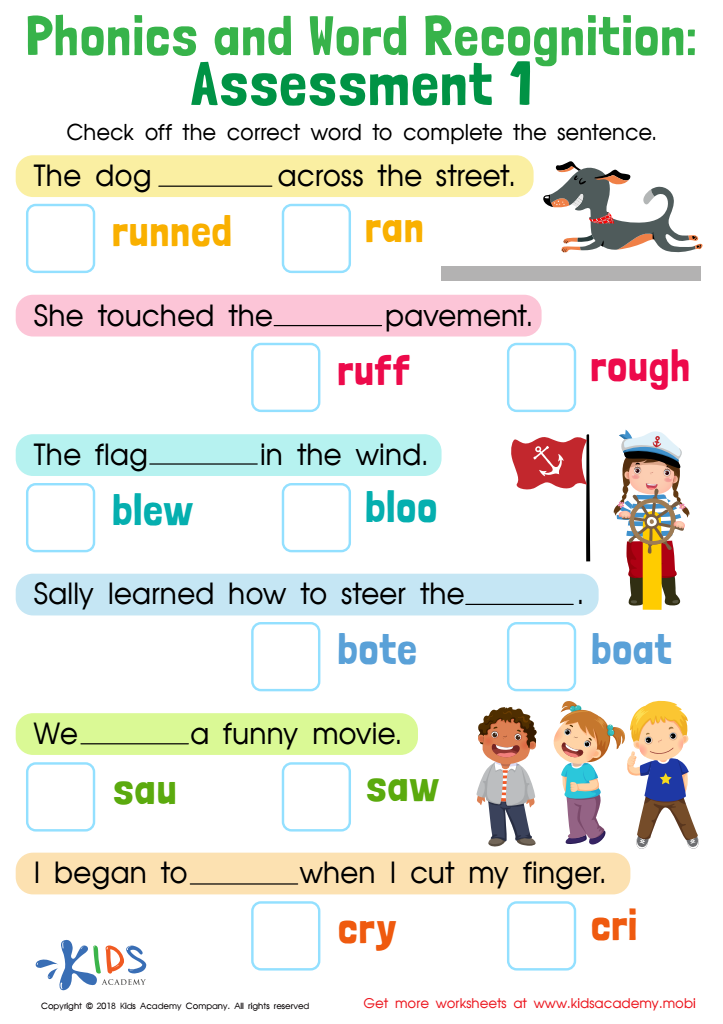
Phonics and Word Recognition: Assessment 1 Worksheet
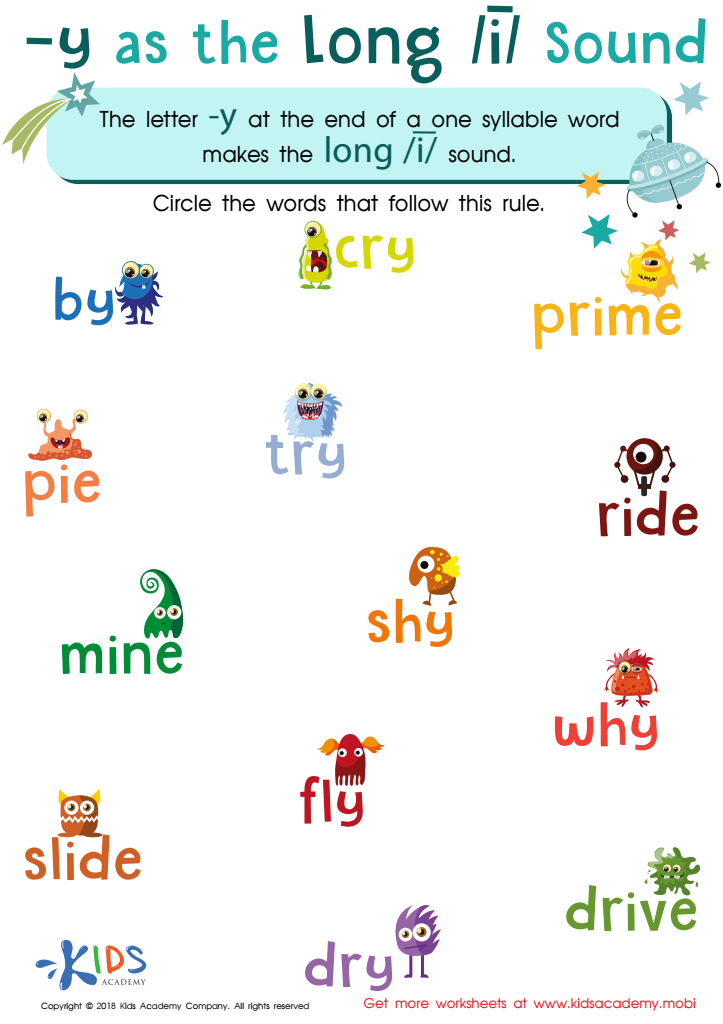
Reading: Y as Long I Worksheet
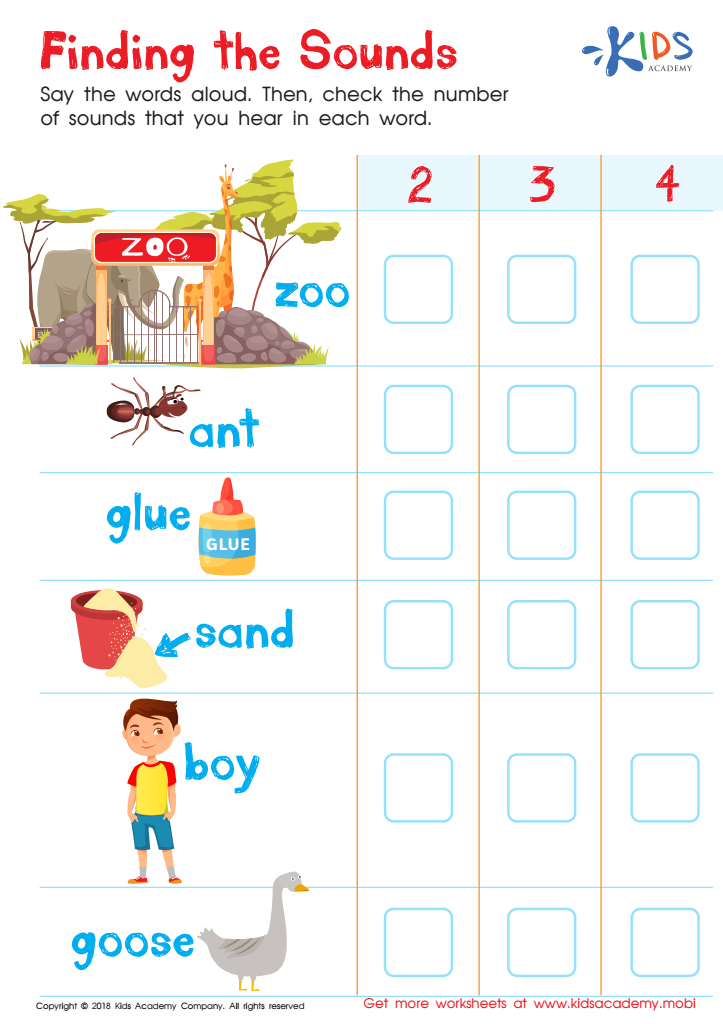
Finding the Sounds Worksheet
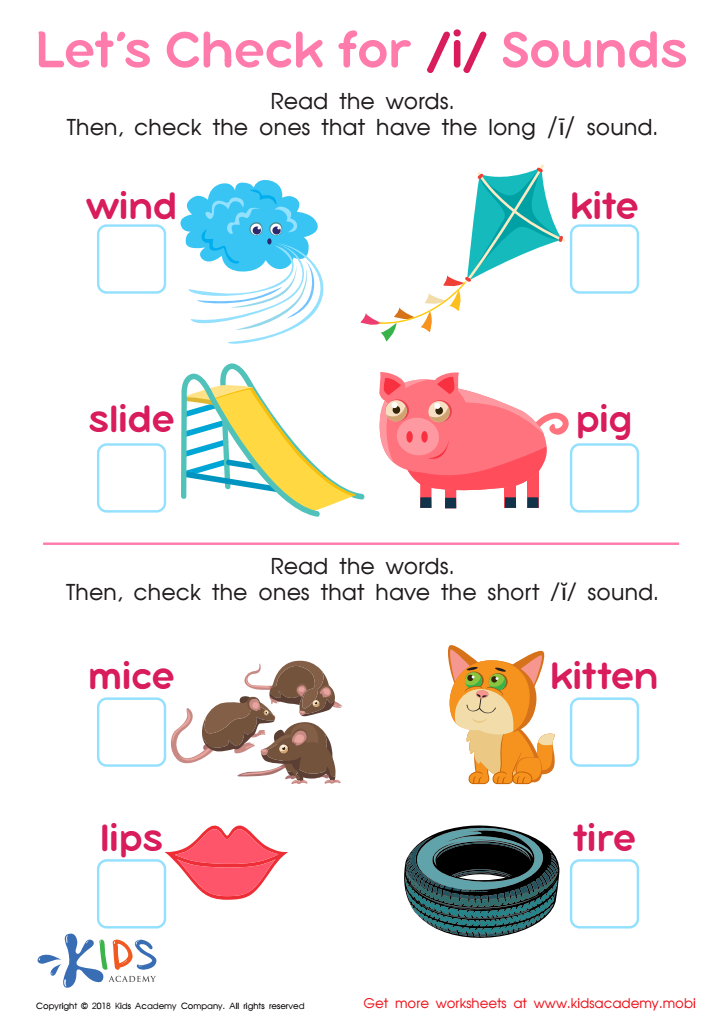
Let's Check for «i» Sounds Worksheet
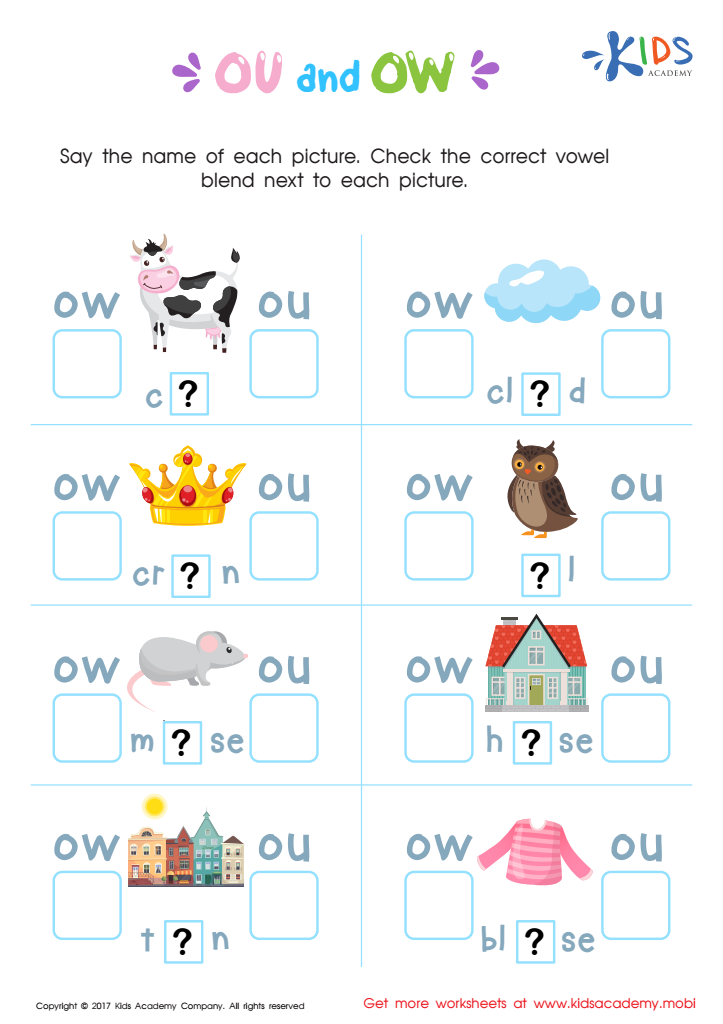
OU and OW Words Worksheet
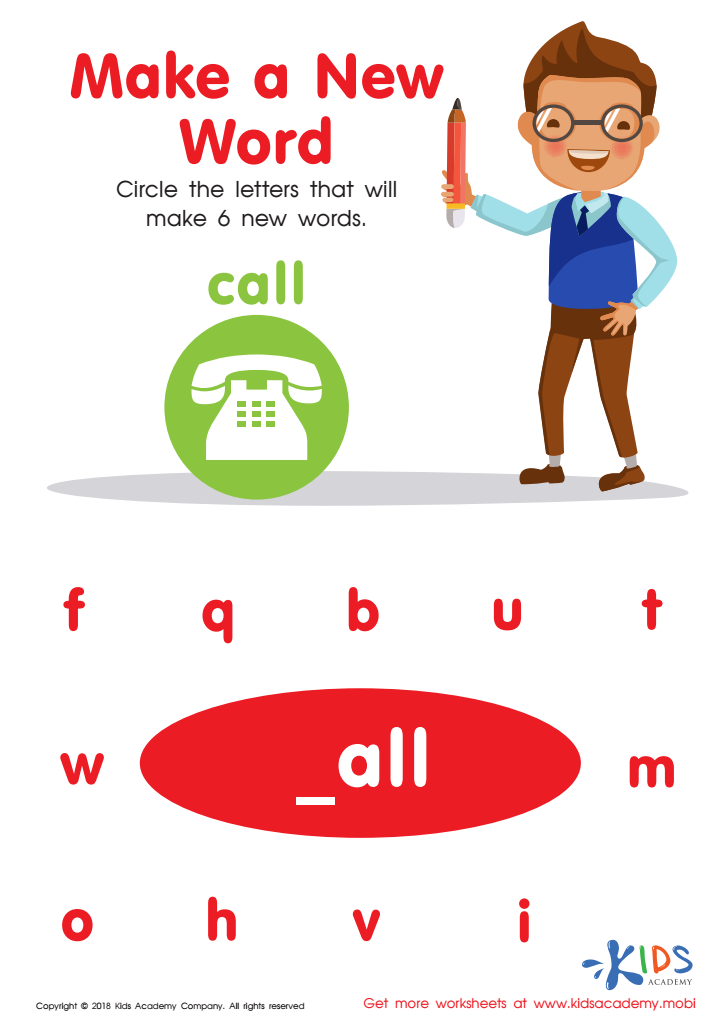
Make a New Word Worksheet
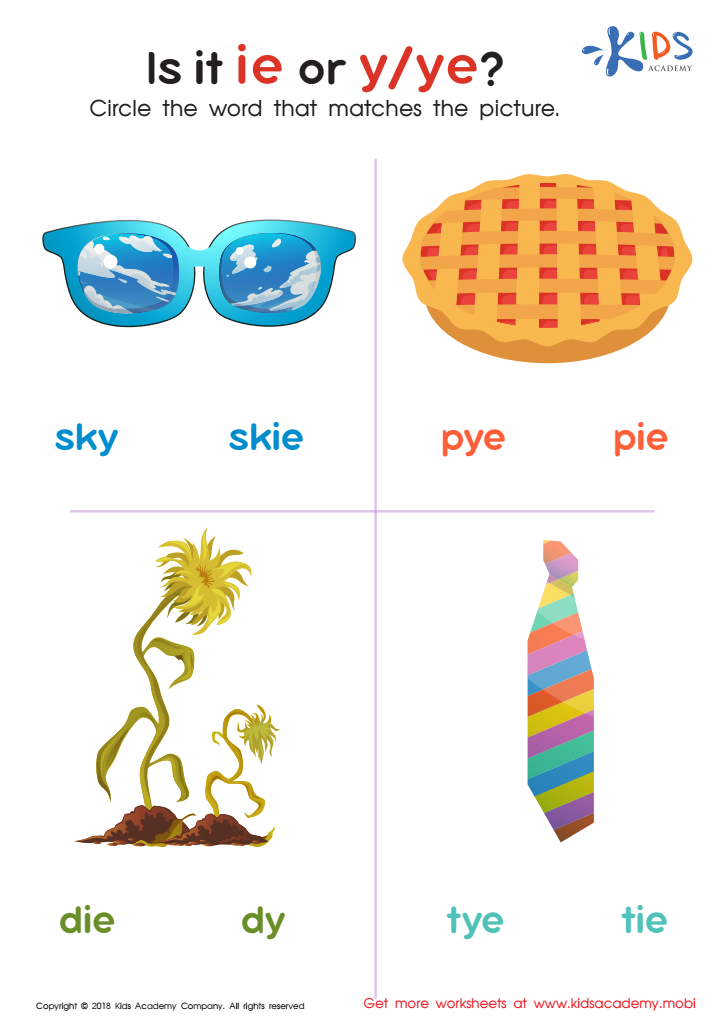
Is It IE or Y/Ye? Worksheet
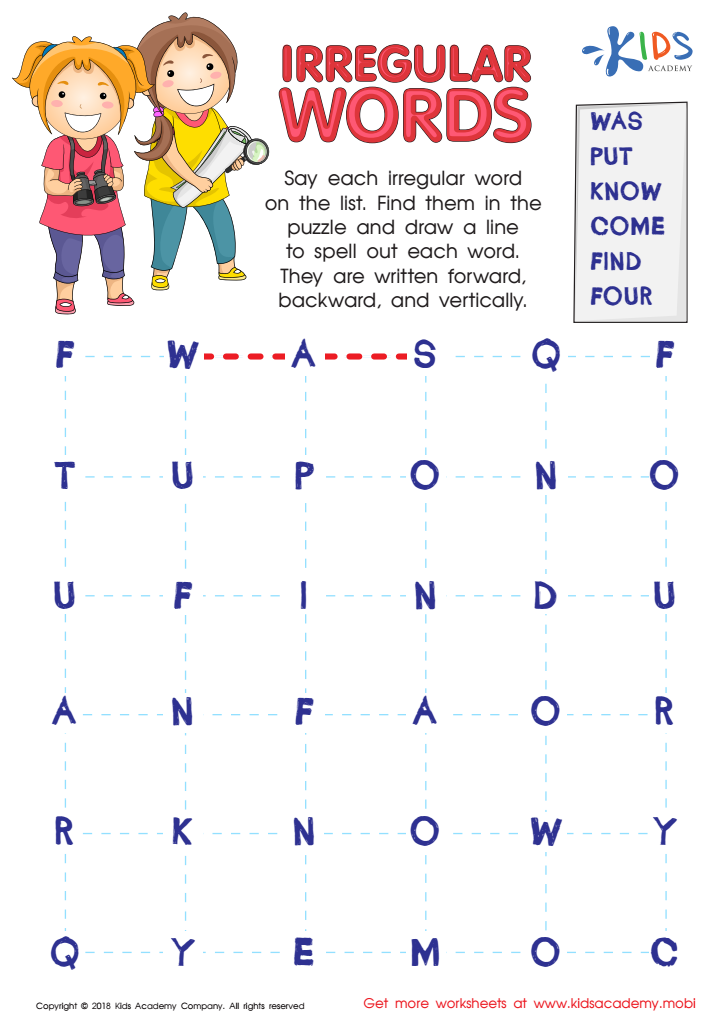
Irregular Words Worksheet
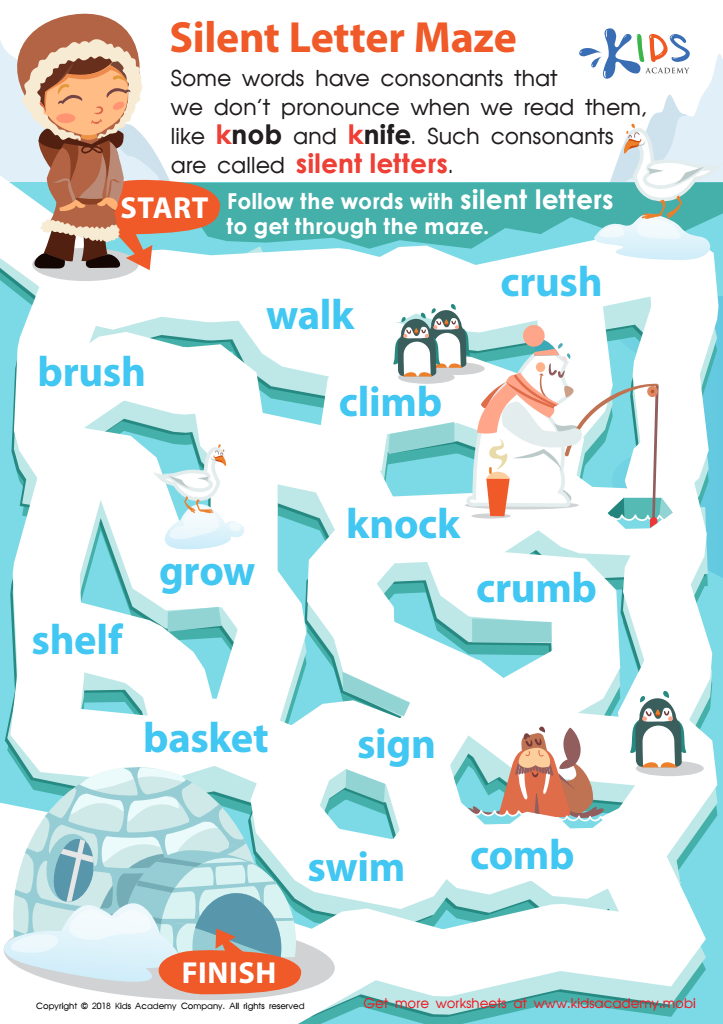
Silent Letter Maze Worksheet
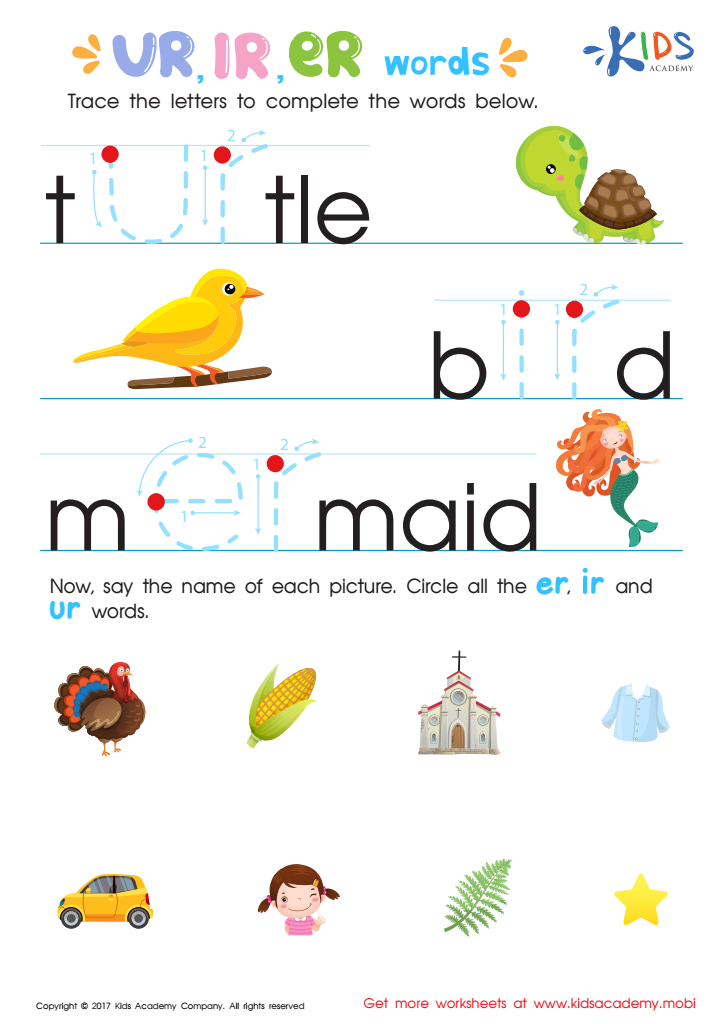
IR UR ER Words Worksheet
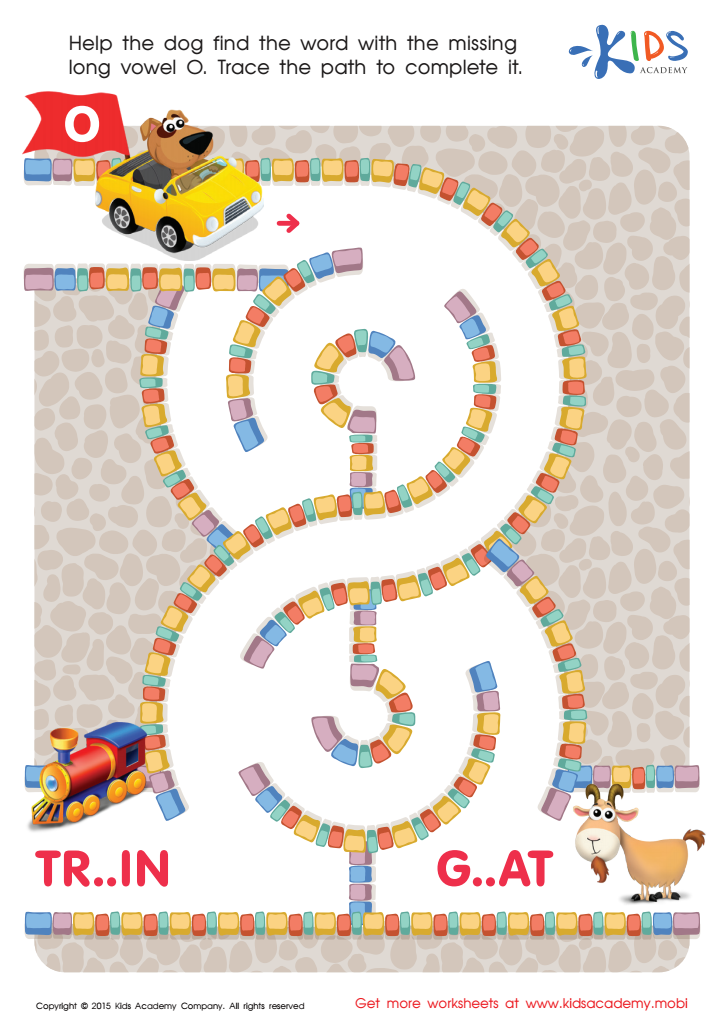
Long Vowel Sound O Worksheet
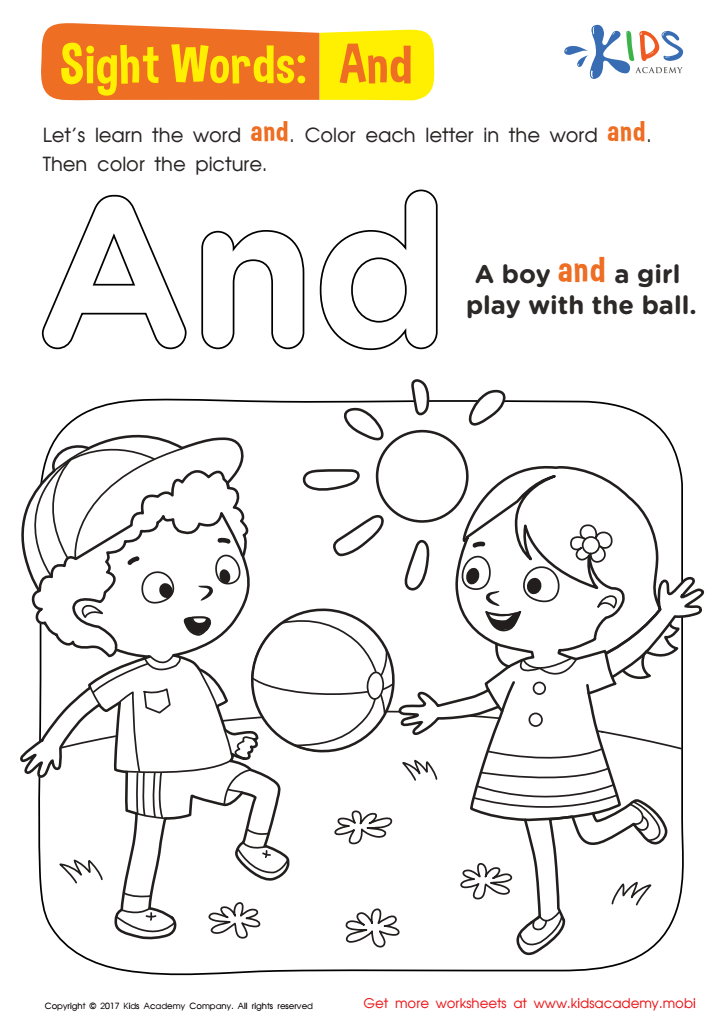
And Worksheet Sight Words Worksheet
 Assign to My Students








Spelling practice and phonics for children ages 6-9 are critical components of early literacy that lay the foundation for lifelong reading and writing skills. During these formative years, children are developing their understanding of how letters correspond to sounds (phonemic awareness) and how these letters and sounds come together to form words. This understanding is crucial for both decoding (reading) and encoding (spelling) words accurately.
Spelling practice enhances a child's ability to recognize patterns in words, which helps improve reading fluency and comprehension. When children learn to spell, they are better able to decode unfamiliar words independently. Phonics, which involves teaching the relationship between sounds and their corresponding letters or groups of letters, empowers children to read with greater accuracy and confidence.
For parents and teachers, incorporating spelling and phonics into daily routines provides structured opportunities for children to practice these essential skills, enabling them to progress at their own pace. Encouraging spelling practice and phonics helps avoid future struggles with literacy that can affect academic performance across subjects. Moreover, it fosters a sense of achievement and builds self-esteem, as children see their reading and writing abilities improve. Therefore, prioritizing spelling and phonics is vital for nurturing successful, motivated, and proficient young readers and writers.







