Spelling practice Short Vowels Worksheets for Ages 6-9
6 filtered results
-
From - To
Enhance your child's reading and writing skills with our engaging Spelling Practice Short Vowels Worksheets, specially designed for ages 6-9. These worksheets focus on short vowel sounds, fostering phonemic awareness and spelling proficiency. Each activity provides interactive exercises that make learning fun, helping kids identify, practice, and master short vowels in various contexts. Perfect for home or classroom use, these resources aim to build confidence in young learners as they explore language. Dive into a world of creativity and education with our carefully crafted worksheets, setting the foundation for your child's literacy journey! Start your child’s spelling adventure today!
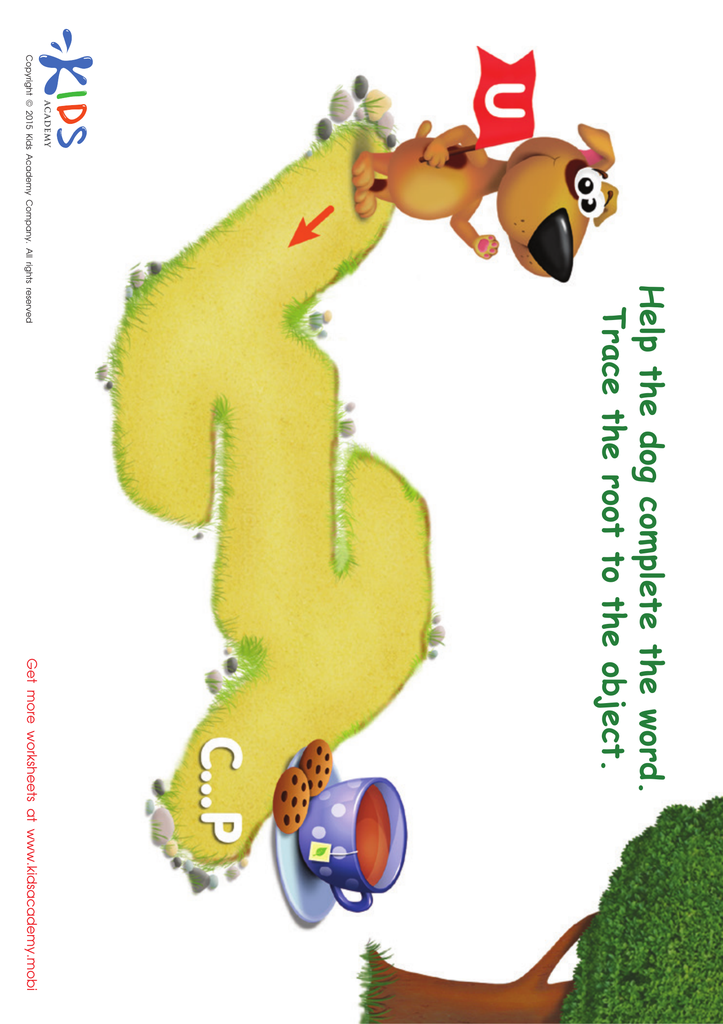
Short Vowel Sound U Worksheet Worksheet
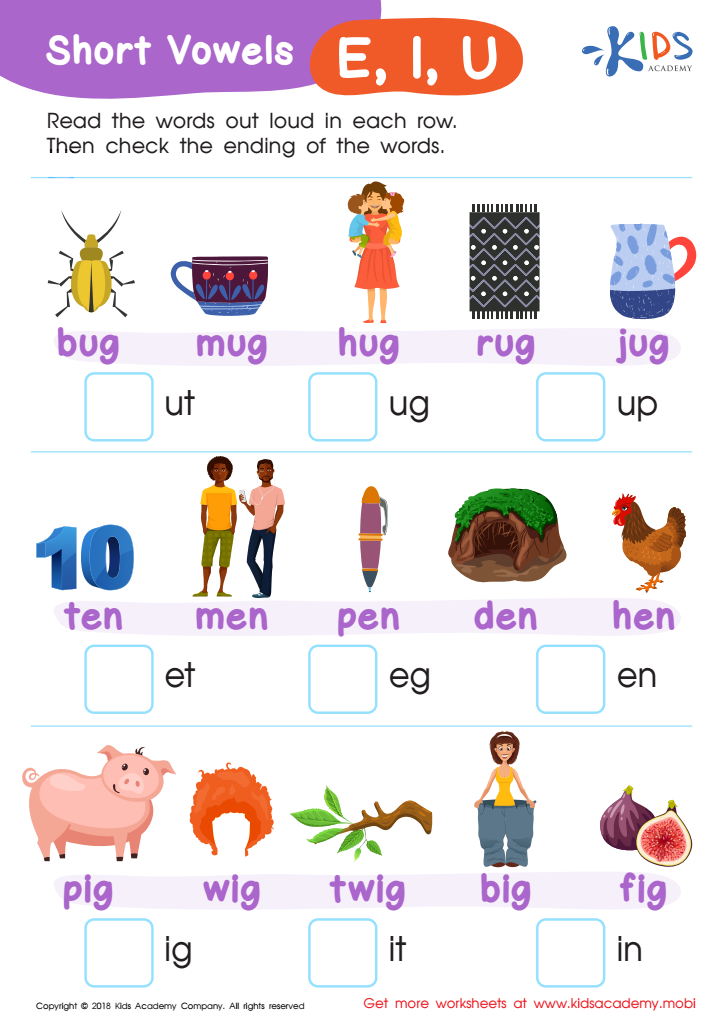
Short Vowels /e/, /i/, and /u/ Worksheet
 Assign to My Students
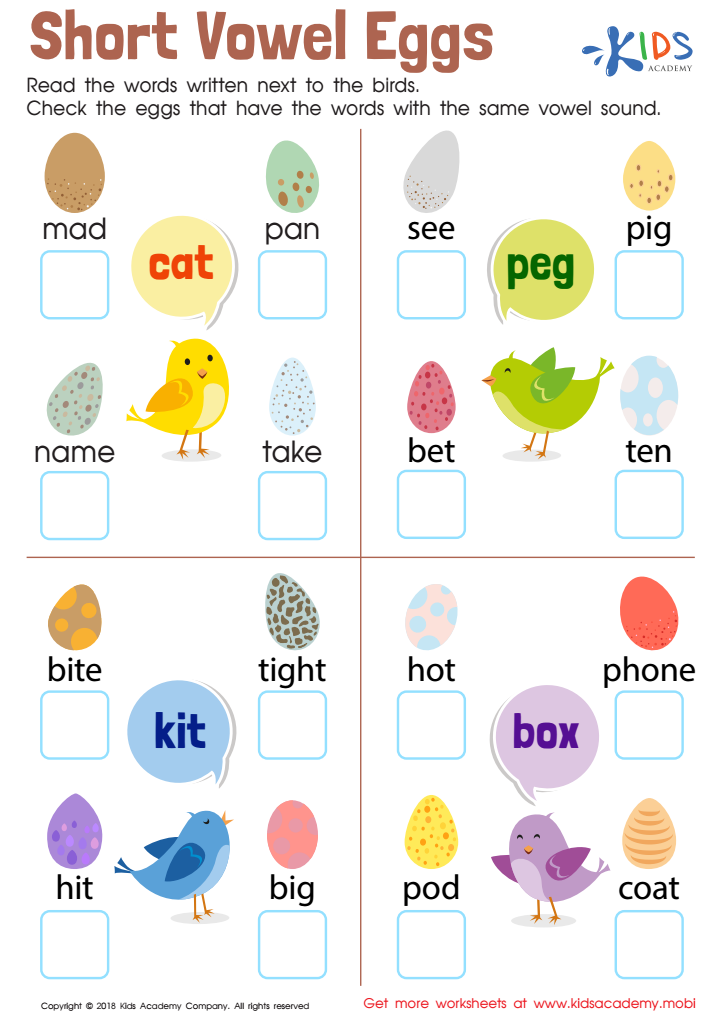
Short Vowel Eggs Worksheet
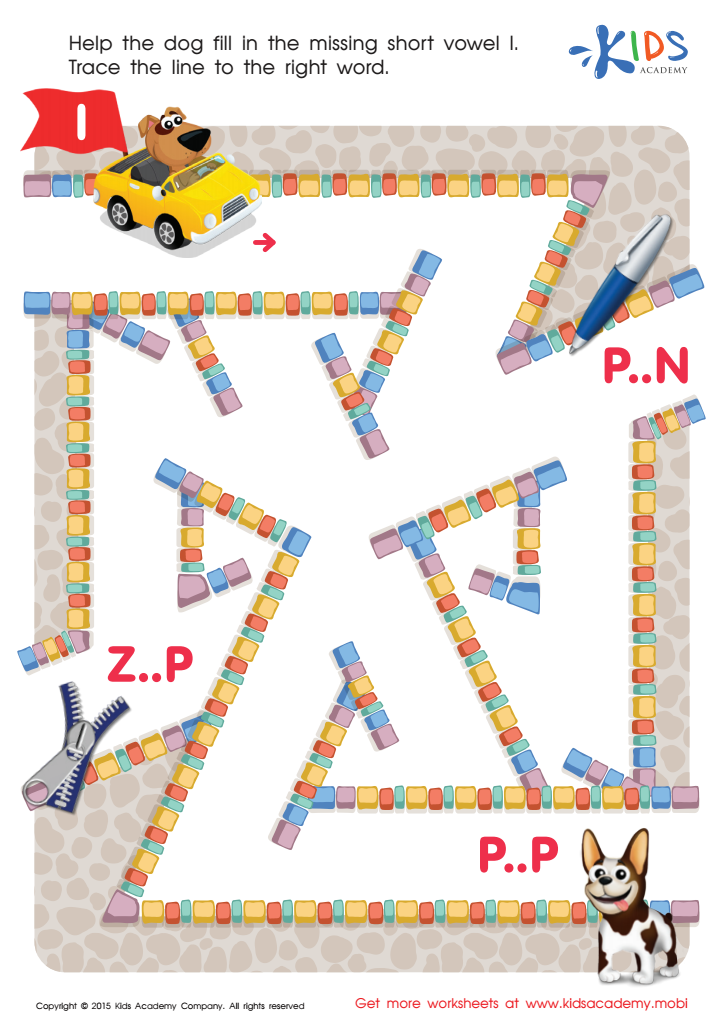
Short Vowel Sound I Worksheet
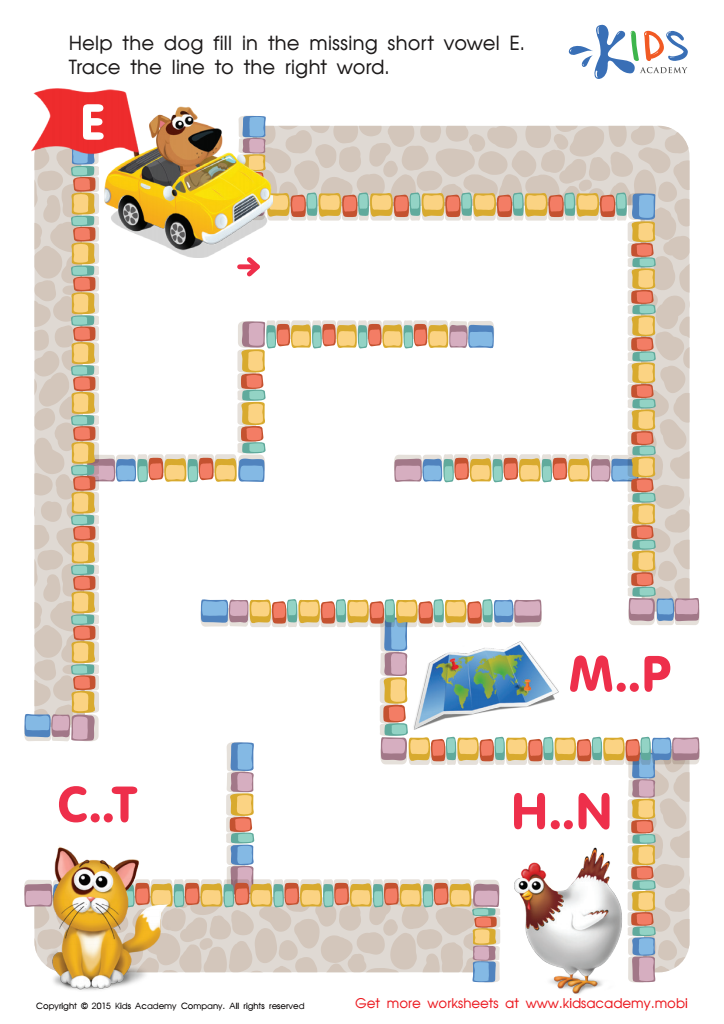
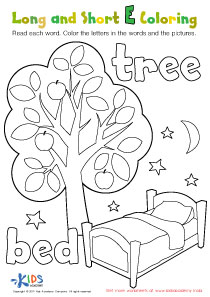
Short Vowel Sound E Worksheet
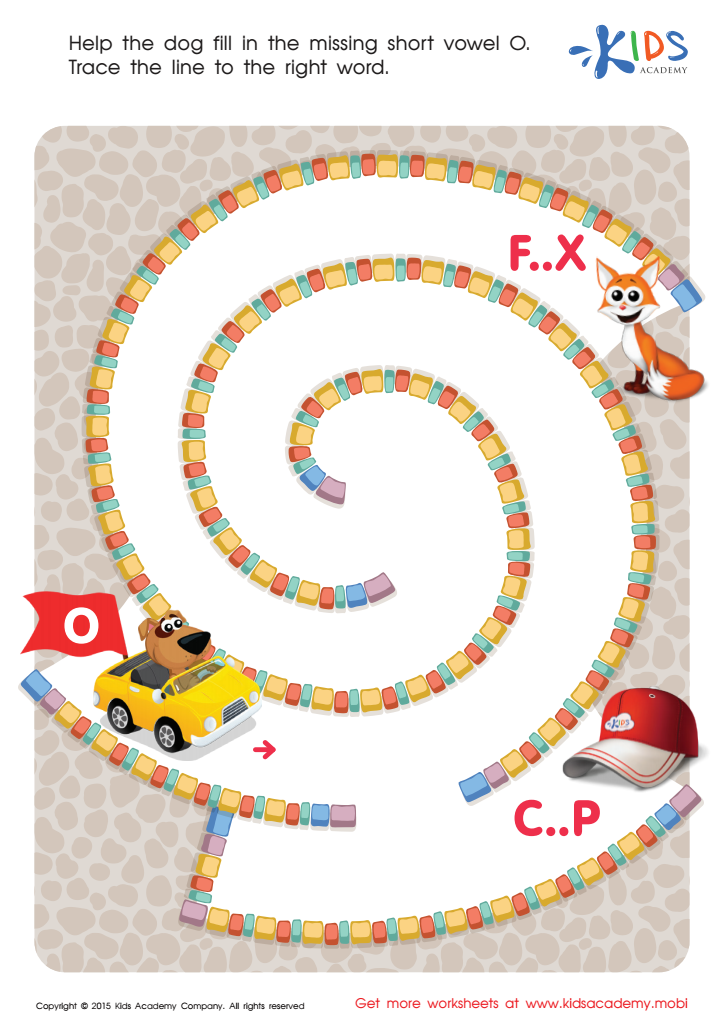
Short Vowel Sound O Worksheet



Spelling practice, especially with short vowels, is crucial for children aged 6-9 as it lays a solid foundation for their reading and writing skills. During these formative years, children are developing their phonemic awareness, which is the ability to hear, identify, and manipulate sounds in words. Short vowels—like 'a' in "cat," 'e' in “bed,” and 'i' in “tip”—are fundamental building blocks of language. Mastering these sounds helps children decode new words they encounter, promoting greater confidence and fluency in reading.
Additionally, focusing on short vowels enhances spelling accuracy. Many young learners encounter difficulties when they start reading, and a strong grasp of short vowel sounds can prevent common errors and frustrations. Furthermore, spelling practice can promote better handwriting skills as children learn to form letters and understand word structure.
For parents and teachers, emphasizing short vowel spelling practice can create stronger communication abilities in children, providing them with the tools they need for academic success. It fosters a love for learning and creates a positive feedback loop; as children improve their spelling and reading, they are more motivated to engage with literature and writing tasks in the future. Ultimately, cultivating these essential skills early on sets the stage for lifelong literacy.