Filters

28 filtered results

Clear all filters
Favorites
With answer key
Interactive

28 filtered results

Difficulty Level

Grade


Check out this FREE Trial Lesson on Tracing Letters for age 6-9!

Tracing Lowercase Letters a-i

Favorites
With answer key
Interactive
  • 6-9
  • Alphabet Recognition
  • Tracing Letters
Uppercase Letters Y Z Worksheet

Uppercase Letters Y Z Worksheet

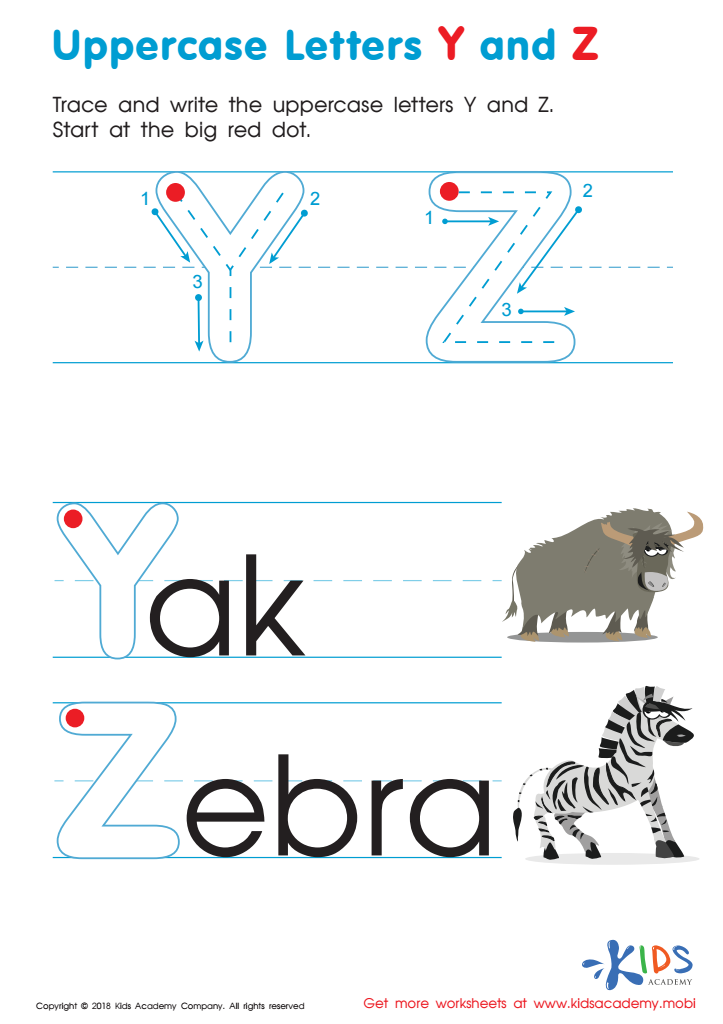
Help your child learn their ABCs with this fun tracing activity! They must trace and write Y and Z in uppercase form, starting from the red dot. Kids will love the fun images for extra engagement. Guiding their hand carefully will help them practice and perfect their writing skills.
Uppercase Letters Y Z Worksheet
Worksheet
Lowercase Letters g h i Worksheet

Lowercase Letters g h i Worksheet

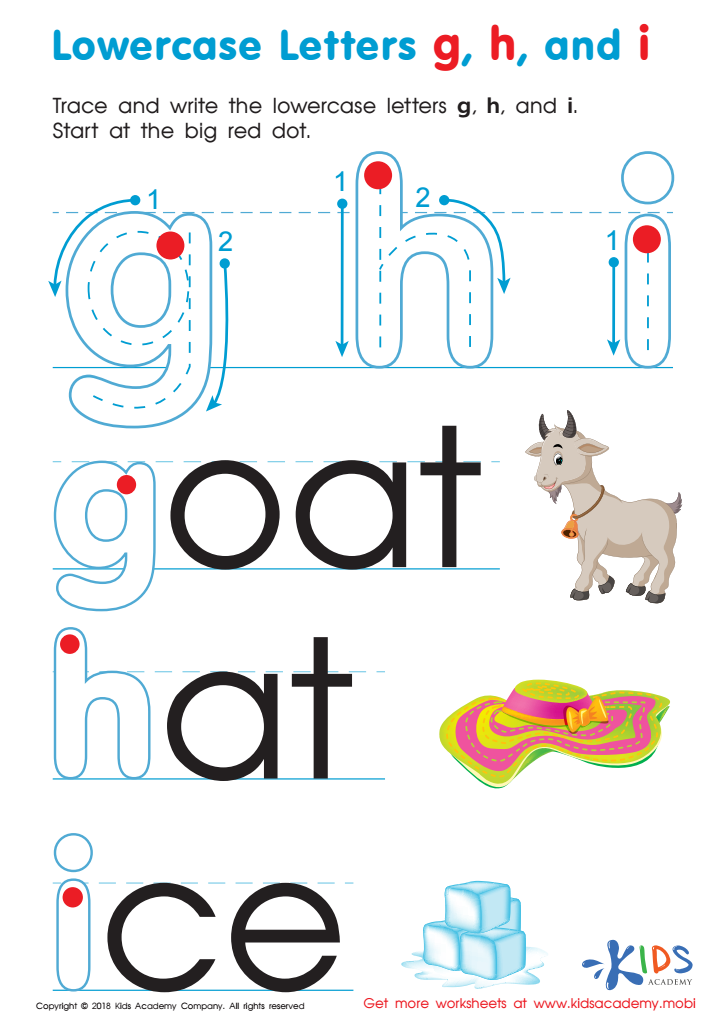
Learning is fun for your youngster with color and an enjoyable exercise. Help them build their understanding of the alphabet by starting at the big red dot drawn on each letter and carefully following the dotted lines to draw g, h, and i.
Lowercase Letters g h i Worksheet
Worksheet
Letter L and P Tracing Worksheet Preview

Letter L and P Tracing Worksheet

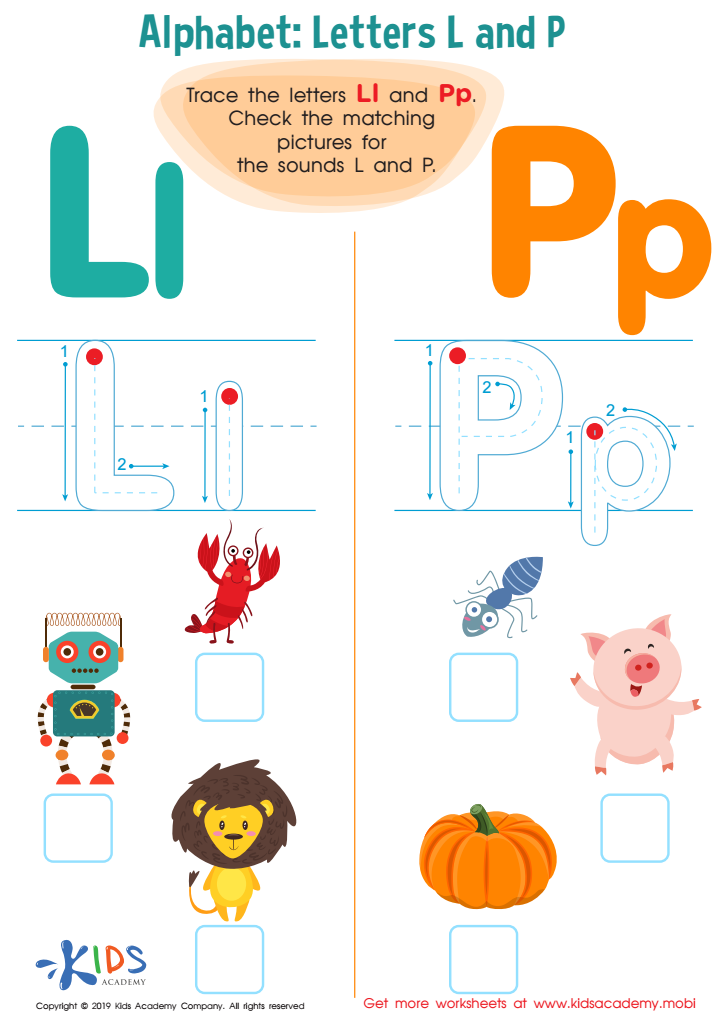
This traceable worksheet can motivate your students to learn and practice core skills. They'll trace the letters 'L' and 'P' and identify the pictures next to them. With this exercise, they'll unlock their learning abilities and excel in the subject!
Letter L and P Tracing Worksheet
Worksheet
Lowercase Letters a b c Worksheet


Lowercase Letters a b c Worksheet

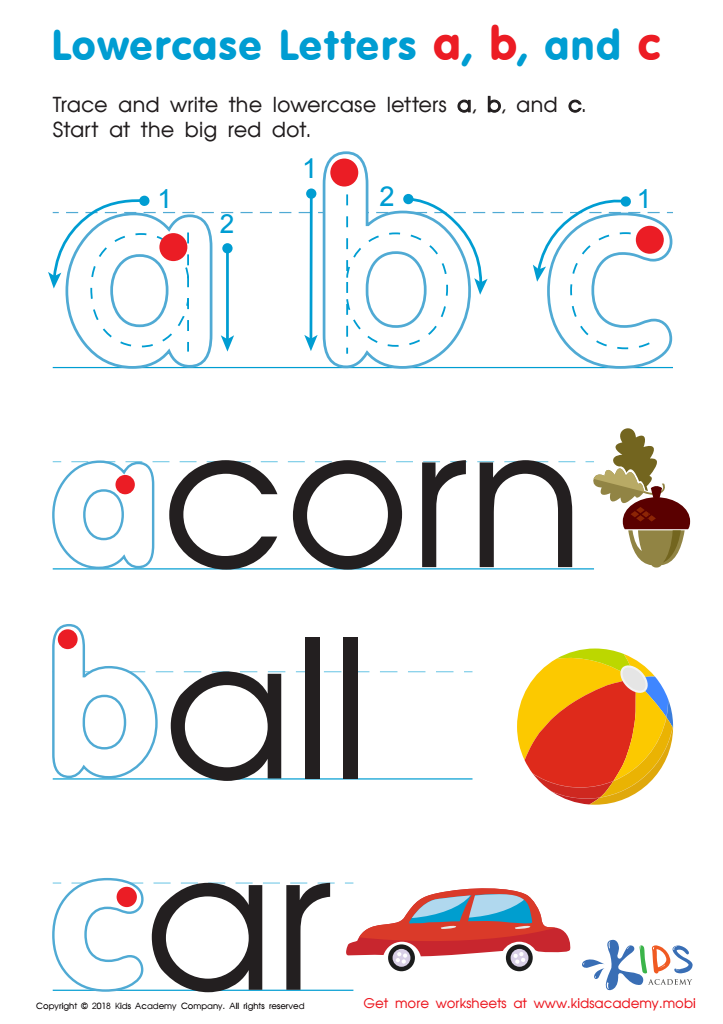
Help your child trace and write the lowercase letters of the alphabet with this fun worksheet. Start by following the arrows and directions from the red dot, and watch them improve their writing skills! Vibrant illustrations make it easy and enjoyable.
Lowercase Letters a b c Worksheet

Worksheet


Alphabet recognition and letter tracing are fundamental skills for children aged 6-9, serving as building blocks for literacy and overall academic success. At this age, children are developing their reading and writing capabilities, and mastery of the alphabet is crucial for their confidence and proficiency in these areas.

Parents and teachers should care about these skills because they lay the groundwork for phonemic awareness, which is essential for learning to read. When children can confidently recognize and trace letters, they become more proficient at sounding them out, leading to improved reading fluency and comprehension. Moreover, fine motor skills develop through the act of tracing, enhancing hand-eye coordination, which is important not only for writing but for several daily tasks.

Additionally, fostering a love for letters and words can ignite children’s interest in reading, an essential habit for long-term success. Engaging activities that focus on alphabet recognition and tracing letters make learning enjoyable, paving the way for a positive attitude toward education.

Overall, prioritizing alphabet acknowledgment and tracing in the early stages of a child’s educational journey creates a strong foundation for future learning experiences, making it a key focus for parents and educators alike.