Spelling Skills Vowels Worksheets for Ages 6-9
4 filtered results
-
From - To
Enhance your child's spelling skills with our engaging Vowels Worksheets designed for ages 6-9. These carefully crafted worksheets help young learners master vowel sounds, improving their reading and writing abilities. Each activity focuses on identifying and using vowels correctly within words, fostering phonemic awareness and spelling proficiency. Featuring fun exercises like vowel matching, word completion, and fill-in-the-blanks, our worksheets make learning enjoyable and effective. Parents and teachers will appreciate the structured yet playful approach tailored to ensure kids confidently navigate vowel use and bolster their foundational literacy skills. Unlock your child's potential with our comprehensive spelling practice.
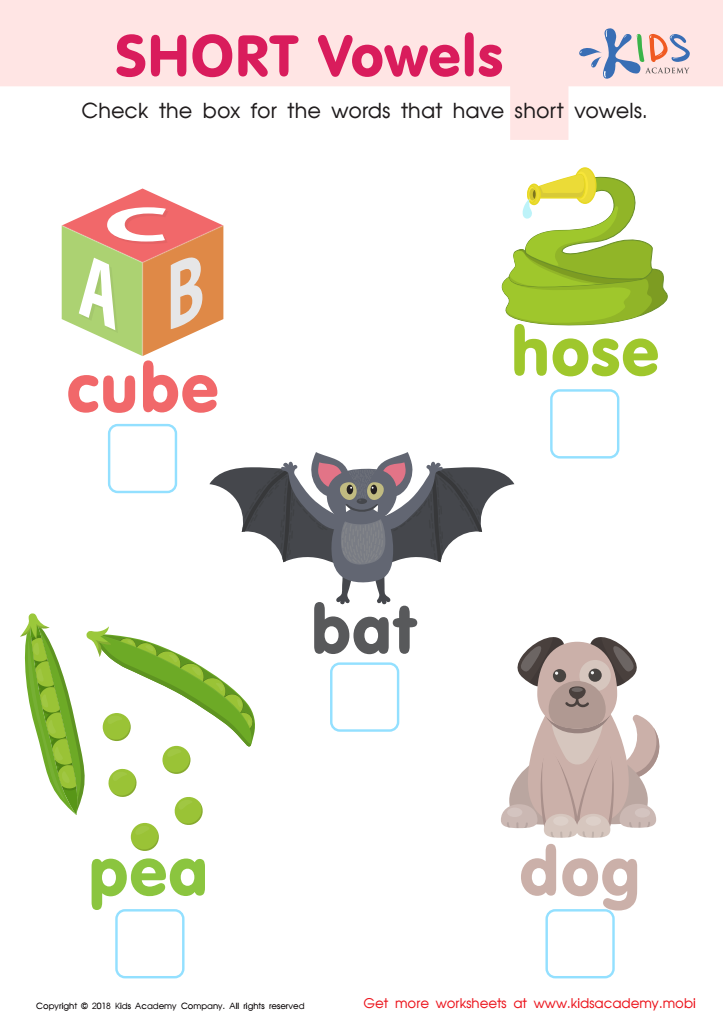
short vowels Worksheet
 Assign to My Students
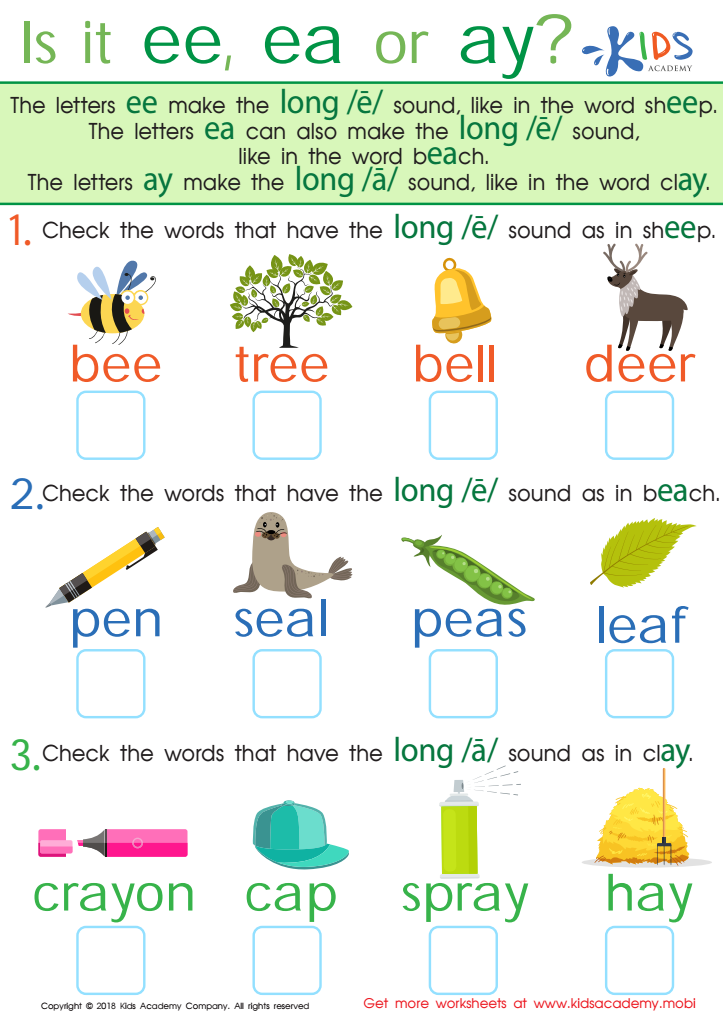
Is It EE, EA, or AY? Worksheet
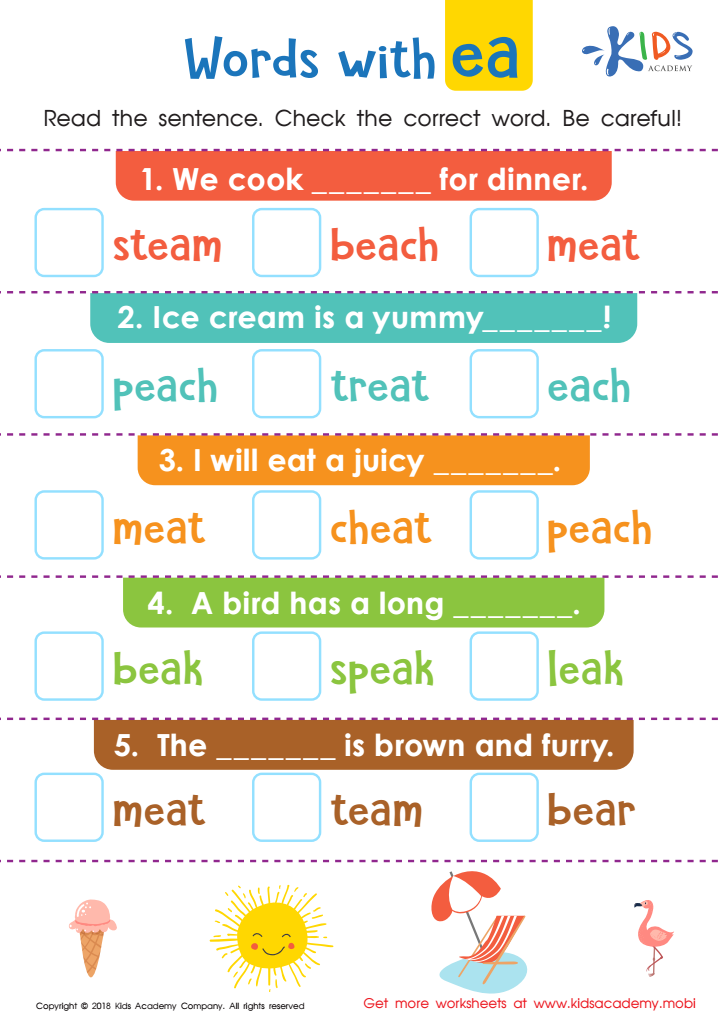
Words with ea Worksheet
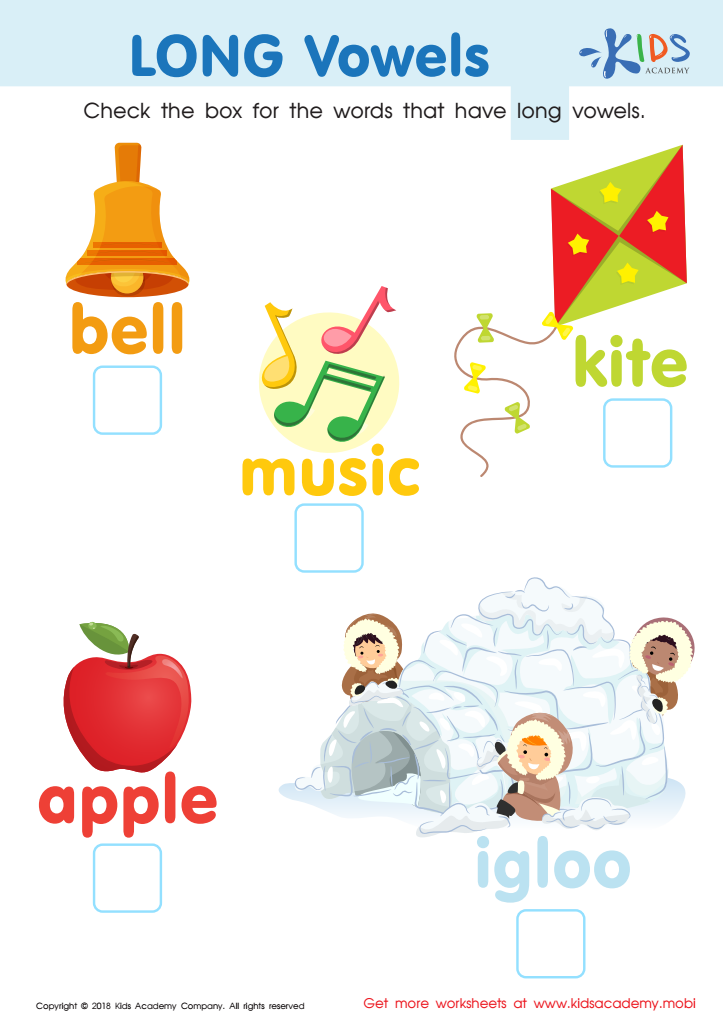
long vowels Worksheet





Spelling skills, particularly the understanding and use of vowels, are fundamental for children aged 6-9 as they lay the foundation for effective communication, reading, and writing skills. Vowels are the heart of words, and mastering their sounds and spelling helps children decode new words more efficiently, boosting their reading fluency. During these formative years, young learners shift from recognizing sounds to connecting them with letters, a crucial step in the spelling process.
For parents and teachers, fostering strong spelling skills, including vowel recognition, supports children’s broader educational journey. Accurate spelling enhances a child's confidence in expressing themselves, both verbally and in writing, allowing for clearer, more precise communication. It also aids in better comprehension of texts, as recognizing vowel patterns helps in understanding the meaning of new or complex words.
Moreover, focus on vowels can make spelling fun and engaging through games, songs, and creative activities, making the learning process enjoyable. This positive experience encourages a love for language and literacy that lasts a lifetime. Ensuring children develop solid spelling skills, particularly with vowels, prepares them not just for academic success, but for effective communication in all aspects of life. Therefore, it is essential for parents and teachers to actively support and engage in this aspect of their early literacy development.







