Critical thinking development Chess Worksheets for Ages 6-9
5 filtered results
-
From - To
Unlock your child's potential with our engaging Critical Thinking Development Chess Worksheets designed for ages 6-9! These fun and interactive worksheets help young learners sharpen their analytical skills through chess. As children explore strategies, solve puzzles, and learn essential chess concepts, they enhance their problem-solving abilities and logical reasoning. Perfect for budding chess enthusiasts, our worksheets encourage creativity and mental agility while fostering a love for learning. Whether at home or in the classroom, these resources provide an excellent foundation for critical thinking in a playful and enjoyable way. Start your child's journey to becoming a strategic thinker today!
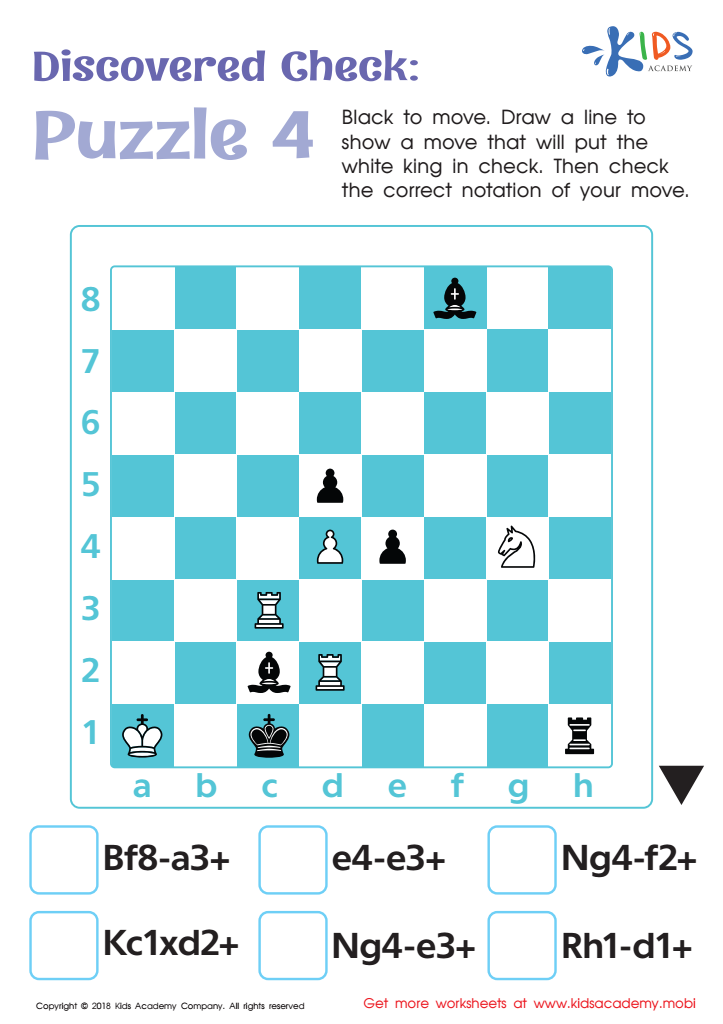
Discovered Check: Puzzle 4 Worksheet
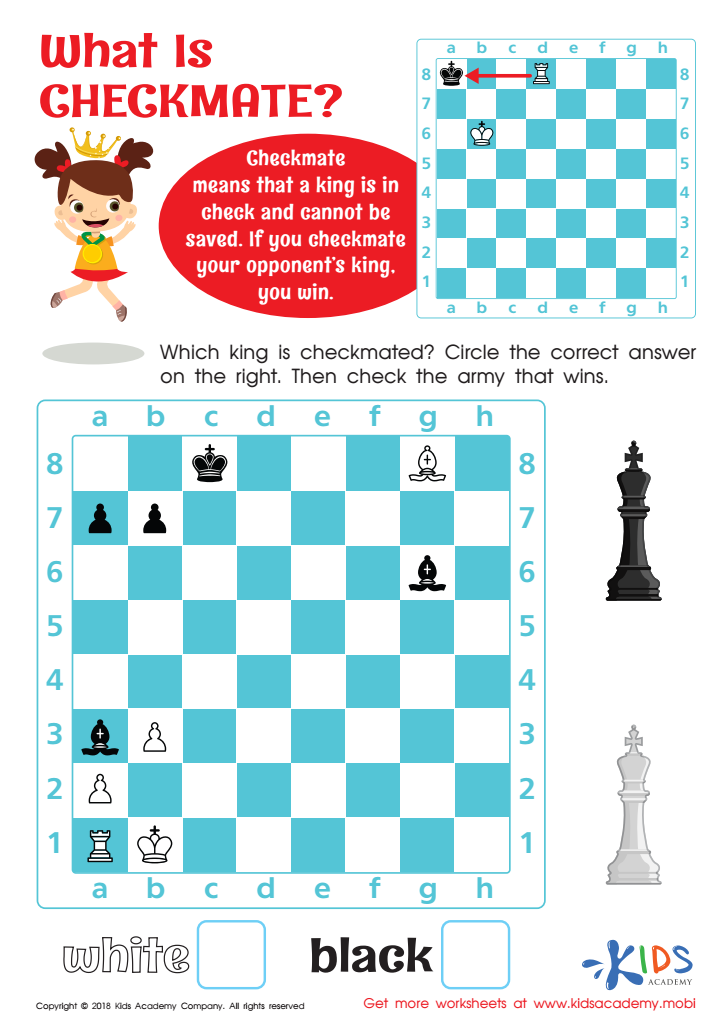
What is Checkmate? Worksheet
 Assign to My Students
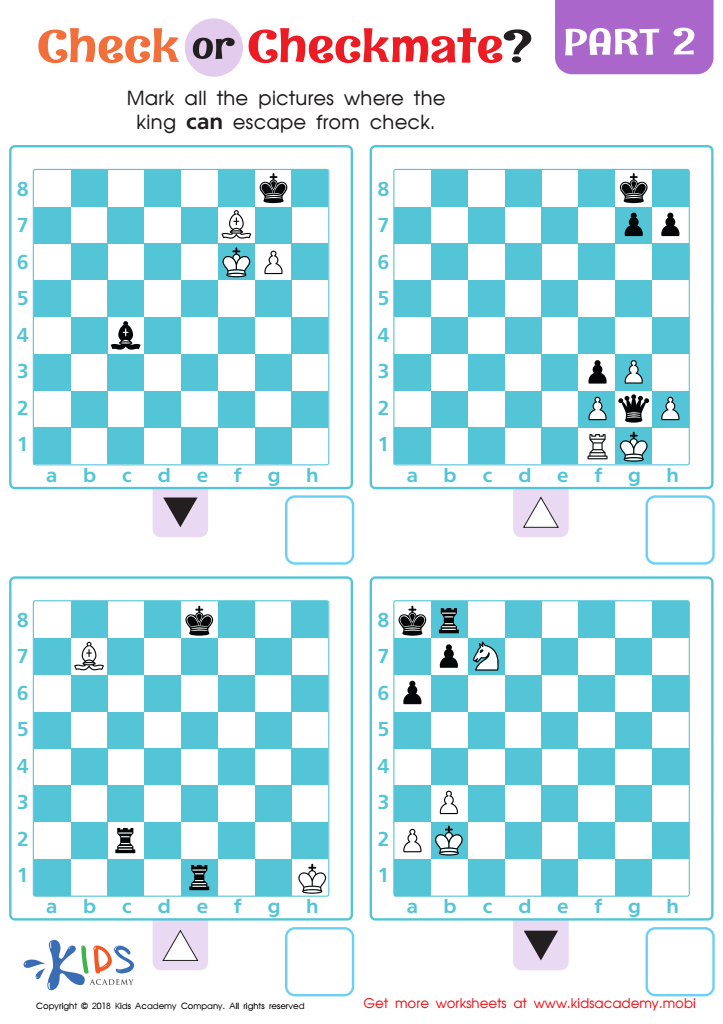
Check or Checkmate: Part 2 Worksheet
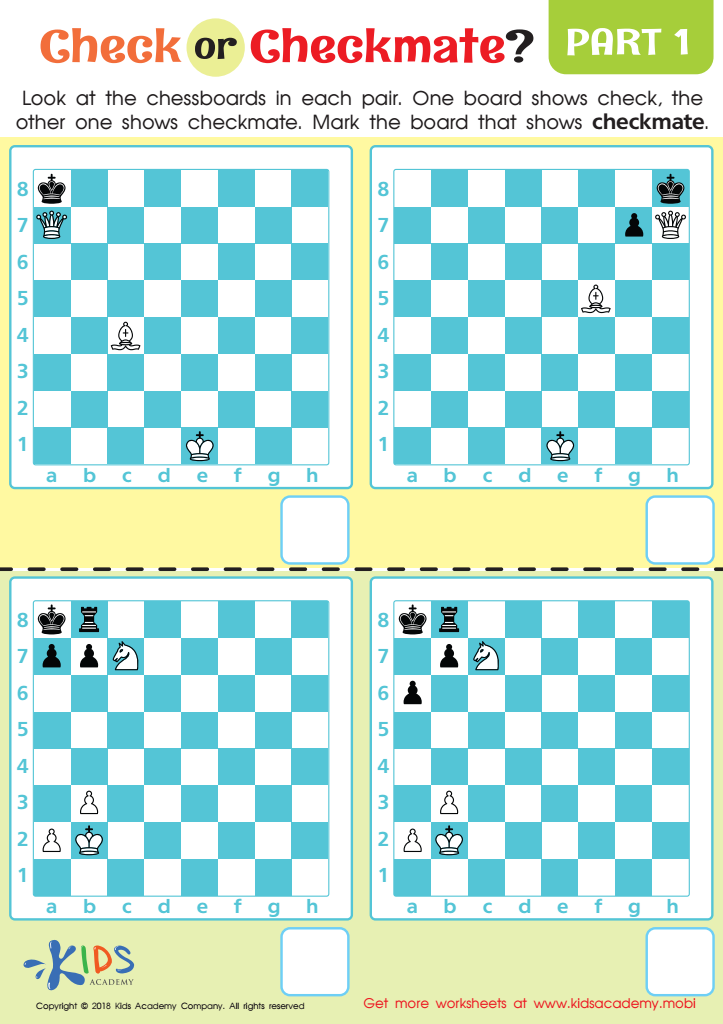
Check or Checkmate: Part 1 Worksheet
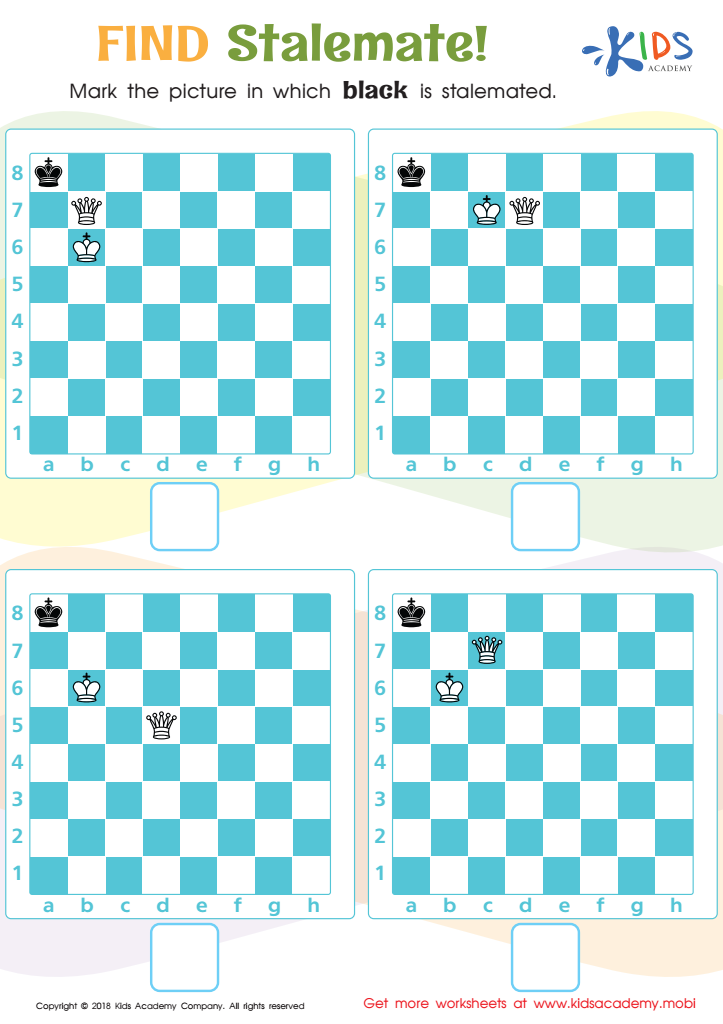
Find Stalemate! Worksheet





Critical thinking development through chess is vital for children aged 6-9 because it nurtures essential cognitive skills that benefit various aspects of their lives. Chess encourages problem-solving, as players must anticipate their opponent's moves and devise strategies to achieve their goals. This process fosters analytical thinking, enabling children to evaluate different possibilities and outcomes critically.
Engaging with chess also enhances decision-making abilities. Children learn to weigh options, consider consequences, and make informed choices under pressure, skills that translate to real-life scenarios outside the game. Additionally, chess promotes patience and discipline, as students must concentrate for extended periods and think carefully before making moves.
Moreover, chess develops social skills and sportsmanship. Playing with peers encourages interaction, teaching valuable lessons in cooperation, communication, and respecting both teammates and opponents. This engagement can enhance emotional intelligence, fostering empathy and understanding as children navigate wins and losses.
Overall, parents and teachers should prioritize critical thinking through chess, as it equips children with foundational skills that support academic success, personal growth, and social interactions, setting them up for future achievements in diverse areas throughout their lives.