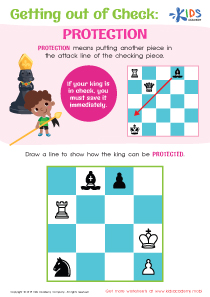
Problem-solving skills development Chess Worksheets for Ages 6-9
3 filtered results
-
From - To
Enhance your child's problem-solving skills with our engaging chess worksheets designed for ages 6-9. These age-appropriate resources focus on developing critical thinking, strategic planning, and analytical abilities through enjoyable chess-related activities. Each worksheet encourages young learners to approach challenges creatively, fostering resilience and independence. As children navigate different chess scenarios, they learn to assess options and make decisions, laying a strong foundation for cognitive skills. Designed to complement lesson plans or provide fun practice at home, our worksheets are perfect for sparking an early interest in chess while boosting essential life skills. Unlock your child's potential today!
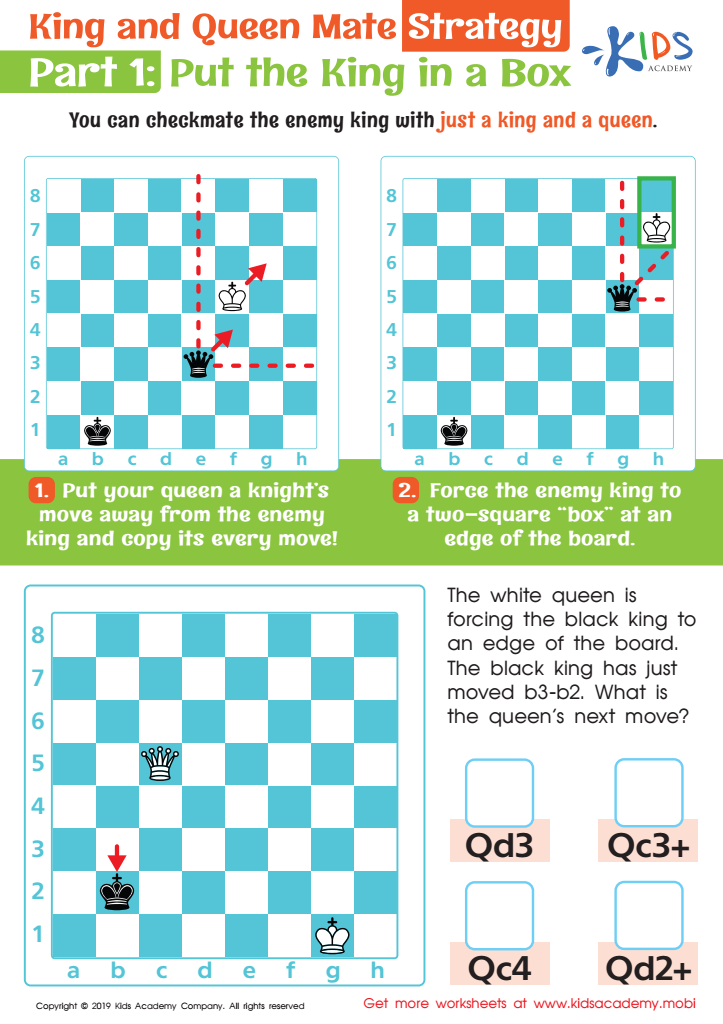
King and Queen Mate Strategy: Part 1 Worksheet
 Assign to My Students
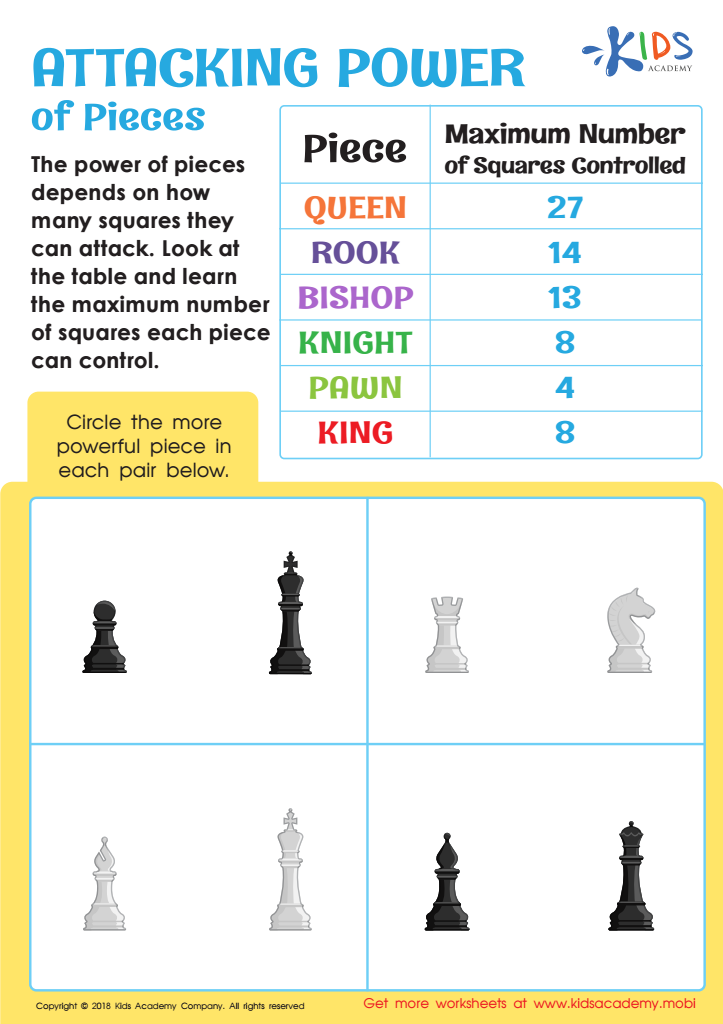
Attacking Power of Chess Pieces Worksheet
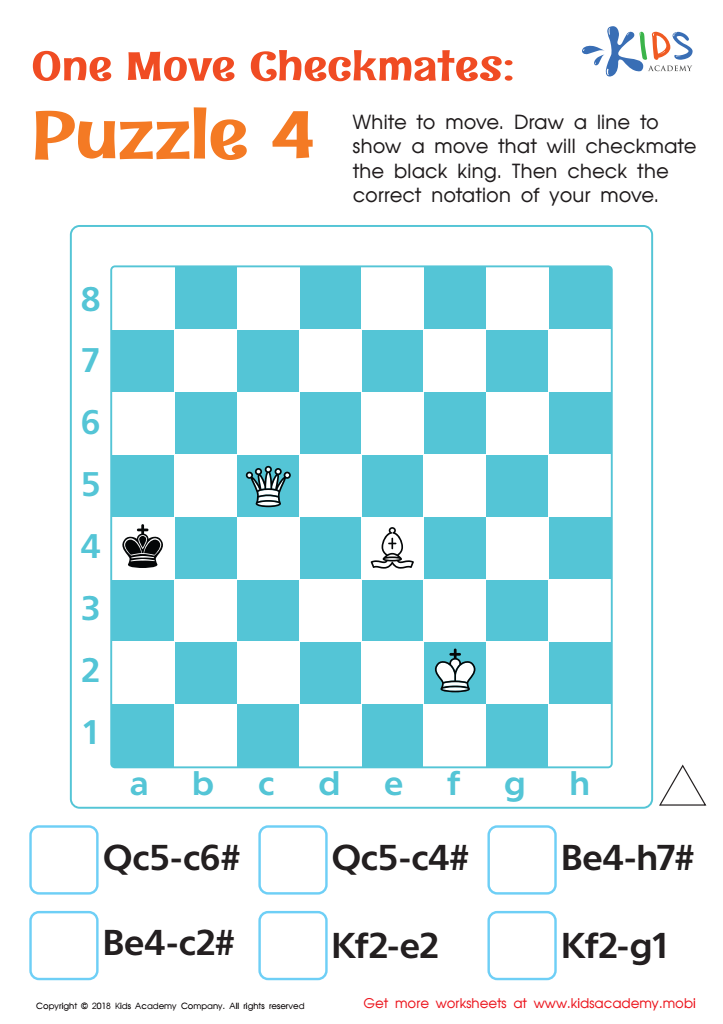
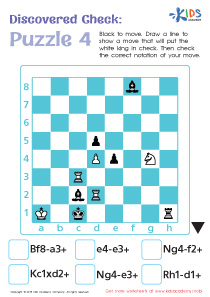
One Move Checkmates: Puzzle 4 Worksheet



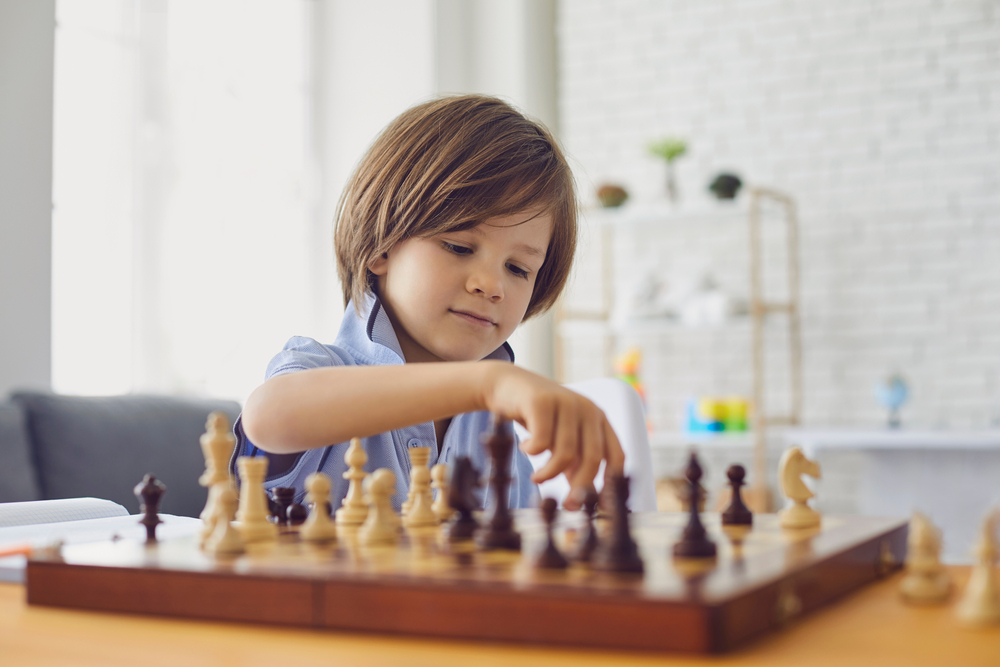




Problem-solving skills are crucial for children's cognitive development, and chess is an exceptional tool for nurturing these abilities in children aged 6-9. During this formative period, children's brains are highly adaptable, making it an ideal time to introduce complex thinking strategies. Playing chess engages young minds in critical thinking, promoting logical reasoning and strategic planning.
When children play chess, they learn to analyze various positions and anticipate potential outcomes. Each move requires them to consider different possibilities, fostering adaptability and resilience when faced with challenges. This type of thinking extends beyond the chessboard, equipping children with the tools to tackle real-life problems effectively.
Furthermore, chess encourages patience and perseverance. Kids learn that making a successful move often requires thoughtful consideration, reinforcing the importance of taking their time. This skill translates to improved concentration in academic settings, enhancing their overall learning experiences.
Moreover, chess provides a social environment where children can interact with peers, learn about sportsmanship, and develop communication skills. By supporting chess as a developmental activity, parents and teachers are investing in a foundation of problem-solving skills that will benefit children in academics and everyday life. Ultimately, chess empowers children to navigate challenges with confidence and creativity.