Alphabetical order practice Worksheets for Ages 6-9
3 filtered results
-
From - To
Discover fun and engaging Alphabetical Order Practice Worksheets designed specifically for children aged 6-9. Our expertly crafted worksheets help young learners organize words alphabetically, enhancing their reading and language skills. Each sheet is packed with age-appropriate words, colorful illustrations, and interactive activities that make learning enjoyable. Perfect for classroom use or at-home practice, these worksheets support vocabulary development and early literacy. Foster a love for learning in your child with our comprehensive and curriculum-aligned Alphabetical Order Practice Worksheets. Download today and watch your child master the alphabet in a playful, educational environment!
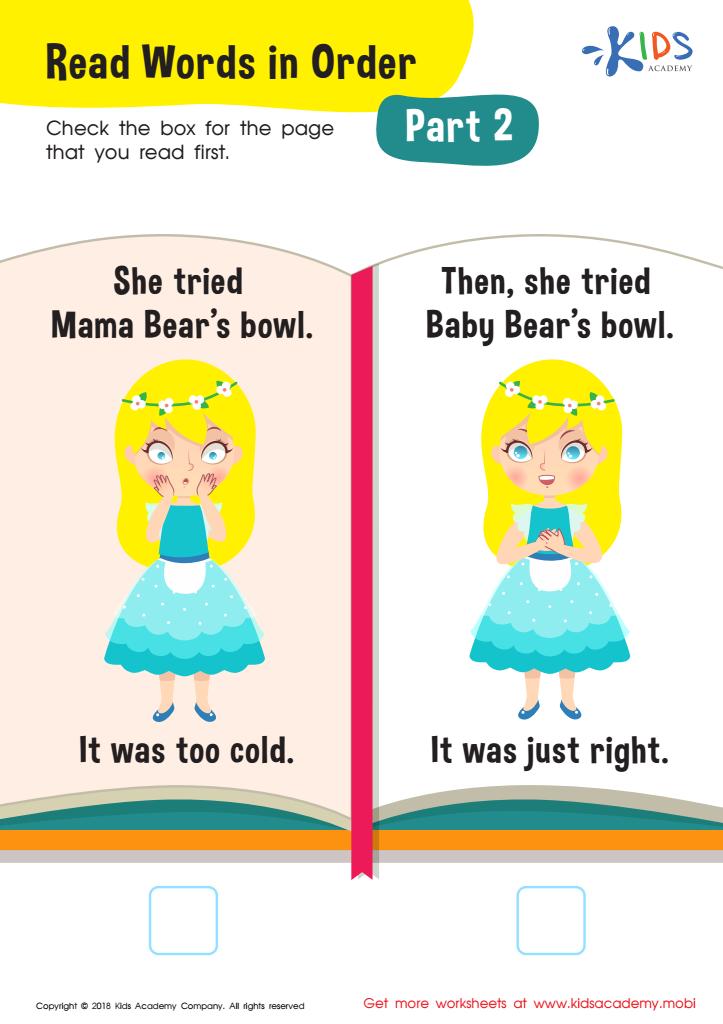
Read Words Order Part 2 Worksheet
 Assign to My Students







Practicing alphabetical order significantly benefits children aged 6-9 as it lays a critical foundation for their educational development. Children in this age group are in their formative years of learning to read and write, and familiarizing themselves with the alphabet is essential. Understanding alphabetical order helps children organize information efficiently, a skill they will continually use in various subjects. For example, they will be able to look up words in dictionaries, navigate library bookshelves, and use reference materials more effectively.
Moreover, practicing alphabetical order enhances their ability to sequence and recognize patterns, which are important cognitive skills. It aids in memory improvement and fosters critical thinking ability by requiring them to apply logic and recognize relationships between words and letters. This exercise also reinforces their understanding of letter identification, a fundamental aspect of literacy.
For teachers and parents, guiding children through these exercises ensures they are developing these essential tools early on, setting up a smooth transition into more complex literacy tasks. In essence, it’s not merely about learning the sequence of letters but building a robust framework for academic success and day-to-day functional skills, aiding in both their immediate learning tasks and future educational pursuits.








