Filters

149 filtered results

Clear all filters
Favorites
With answer key
Interactive

149 filtered results

Difficulty Level

Grade


Check out this FREE "Cognitive Development" Trial Lesson for age 6-9!

Matching Sentences to Illustrations

Favorites
With answer key
Interactive
  • 6-9
  • Cognitive Development
Night Sky Numbers Worksheet

Night Sky Numbers Worksheet

Help your child develop their writing skills with this fun PDF worksheet! Using guiding stars, it teaches them the correct patterns for numbers 1, 2 and 3. They'll have a great time tracing their way from the top and will feel a sense of achievement when they finish.
Night Sky Numbers Worksheet
Worksheet
Check Memory Worksheet

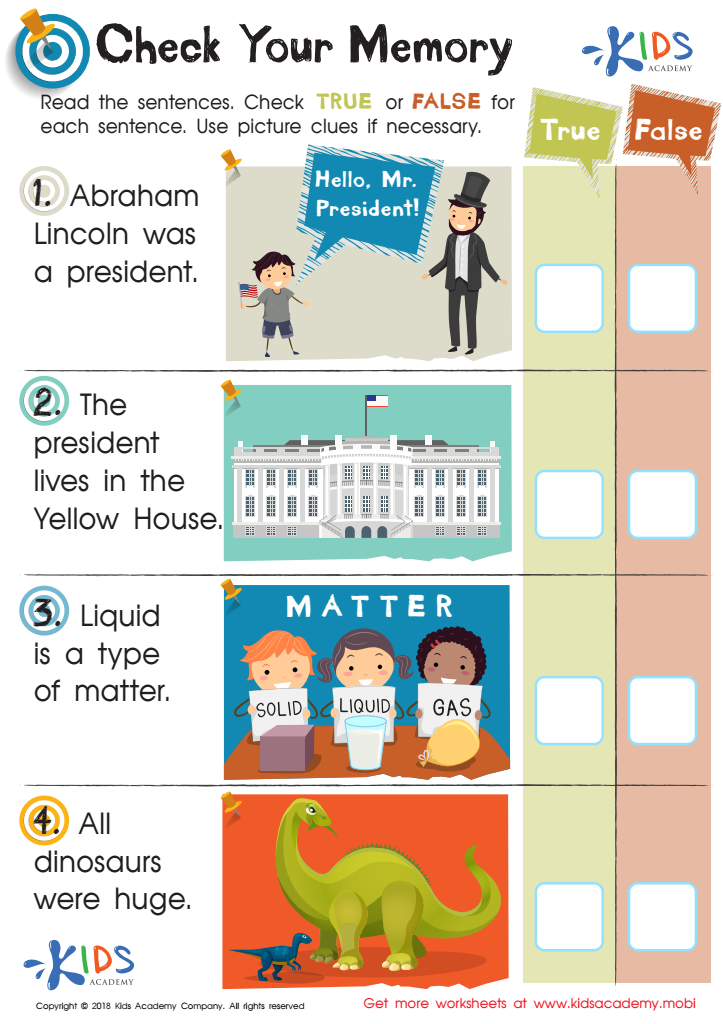
Check Memory Worksheet

Assisting your kids with their homework and using worksheets is a great way for them to learn. The vibrant visuals in this printout can help stimulate the mind and motivate your child. Have them read the sentences and then point to the associated images. Afterwards, ask them to state True or False for each sentence. If they are still uncertain, offer them the picture clues to assist further.
Check Memory Worksheet
Worksheet
Finish the Word Worksheet

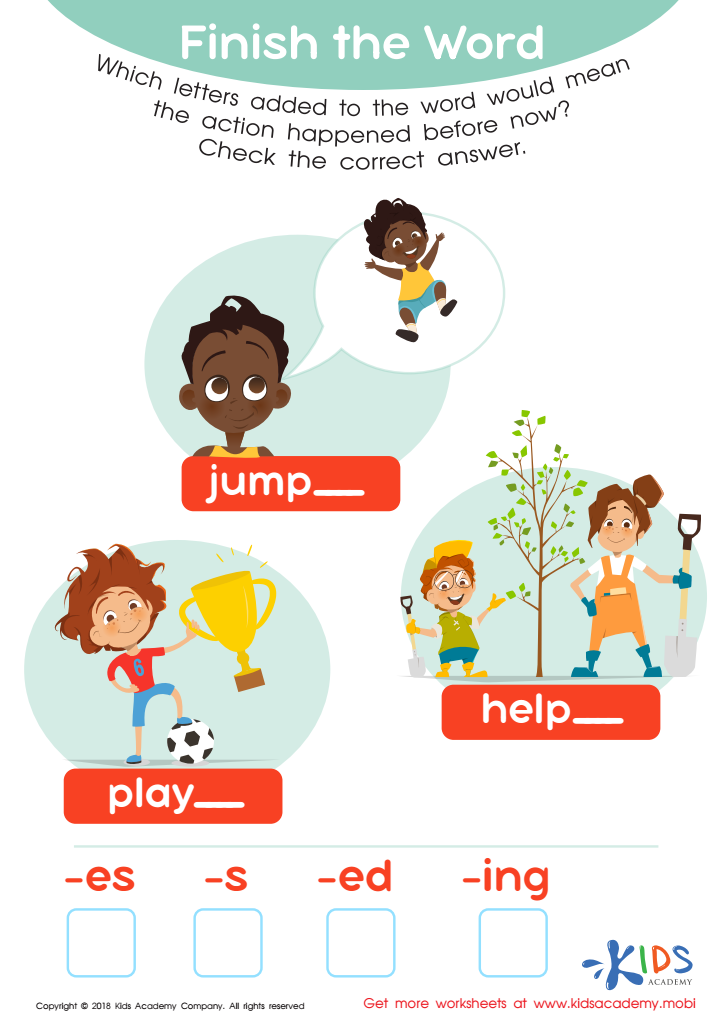
Finish the Word Worksheet

Does your kid know tenses? Listen to see if they are using words correctly. With this worksheet, your kids will learn to use the appropriate past tense forms. Ask them which letters added to words make the action past. Help them check the answers.
Finish the Word Worksheet
Worksheet
What Does Not Match? Worksheet

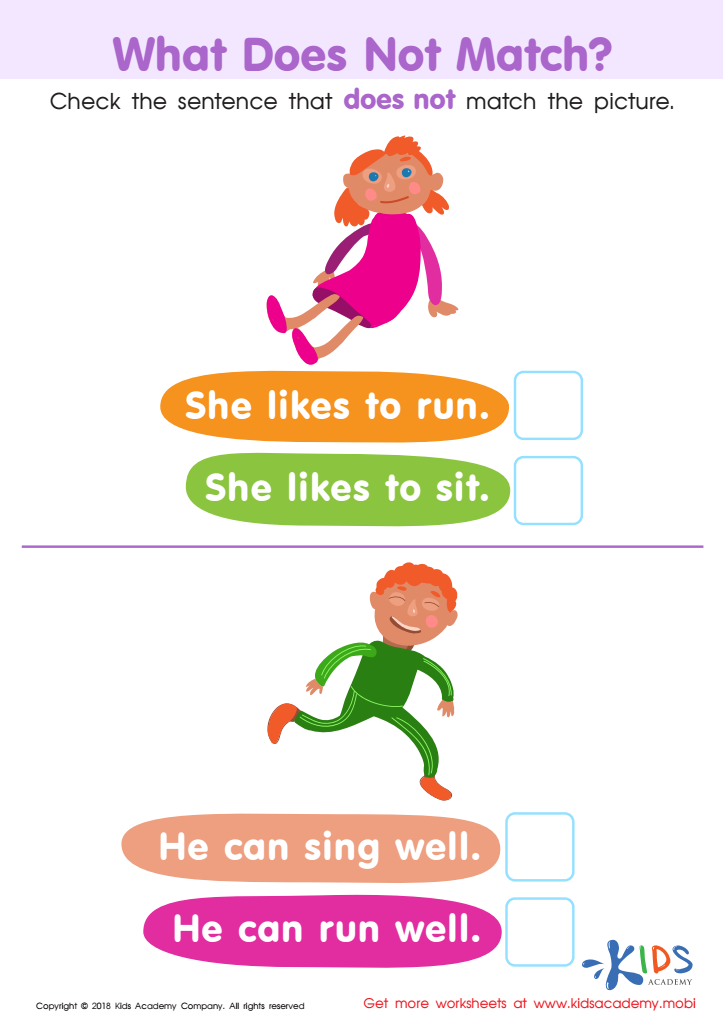
What Does Not Match? Worksheet

Emerging readers need to practice using visual cues and repetitive text. This colorful PDF provides them with an opportunity to look at pictures, use discrimination and discern which phrase does not match. It also enables them to gain familiarity with high-frequency words to aid decoding longer sentences.
What Does Not Match? Worksheet
Worksheet
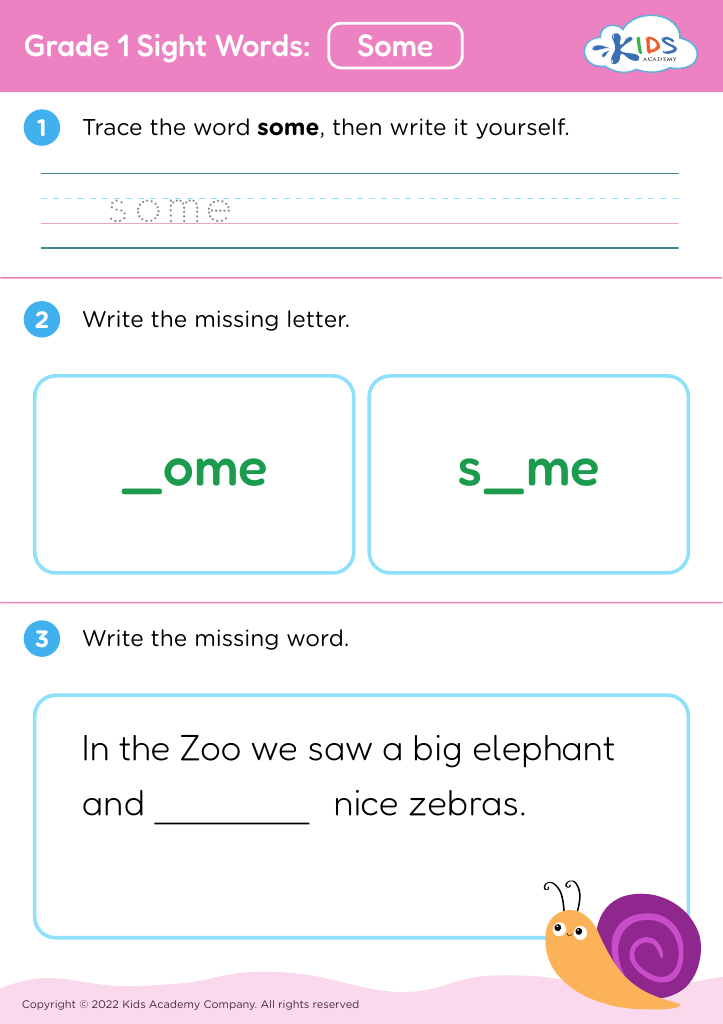
Grade 1 Sight Words: Some

Grade 1 Sight Words: Some

Grade 1 Sight Words: Some
Worksheet


... 6 7

Cognitive development during ages 6 to 9 is crucial as it lays the foundation for a child's lifelong learning and social interactions. During this period, children transition from basic learning to more complex thoughts, critical thinking, and problem-solving skills. Parents and teachers should care about this development because it directly influences a child's ability to comprehend information, understand concepts, and build relationships with peers.

Engaging with children during this developmental stage allows them to explore their curiosity, enhancing their memory, attention span, and reasoning capabilities. The classroom plays a key role in promoting cognitive skills through interactive learning environments that encourage questioning, collaboration, and decision-making.

Moreover, supporting cognitive development at this age helps identify unique learning styles, enabling tailored strategies that cater to individual needs. When parents and teachers actively participate in this process—offering stimulating activities, encouraging discussions, and fostering a love for learning—they not only enhance academic performance but also boost self-esteem and resilience in children.

In essence, focusing on cognitive development equips children with the tools necessary for success, both in school and in life, making it a vital area of interest for parents and educators alike.