Color differentiation Worksheets for Ages 6-9
4 filtered results
-
From - To
Explore our engaging Color Differentiation Worksheets designed for children aged 6-9! These creative resources help young learners develop important skills in identifying and distinguishing colors. Featuring vibrant illustrations and interactive activities, our worksheets encourage children to recognize colors in various contexts, enhancing their cognitive and observational abilities. Each worksheet promotes essential fine motor skills through fun coloring tasks and boosts creativity as kids bring their tasks to life. Perfect for enhancing classroom learning or enriching home education, our color differentiation worksheets are a fantastic way to make learning fun and interactive! Start your child's colorful journey today and watch them flourish!
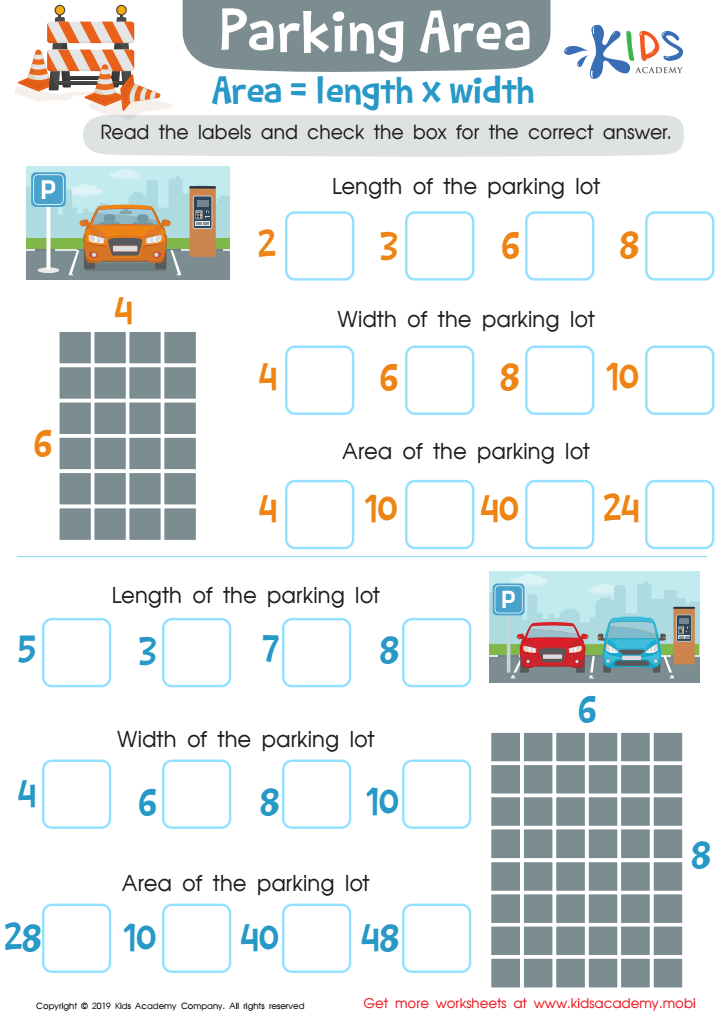
Parking Area Worksheet
 Assign to My Students


.jpg)


.jpg)
Color differentiation is crucial for children aged 6-9 because it plays a significant role in their cognitive and emotional development. At this age, children begin to refine their understanding of the world around them, and color perception can enhance learning and creativity. Understanding colors aids in the development of essential skills such as categorization, classification, and critical thinking, as children learn to distinguish between different hues, shades, and their meanings.
Moreover, color differentiation is vital in educational settings where visual learning is emphasized. Color-coded materials can make information more accessible, helping children to organize their thoughts and tasks effectively. For instance, using different colors to outline homework or classwork can signal importance and aid memory retention.
Additionally, colors can evoke emotions and stimulate creativity. Teachers and parents can use colors to create engaging environments that inspire curiosity and imagination. By encouraging color exploration in arts and crafts, children also develop fine motor skills and learn to express themselves.
Ultimately, supporting color differentiation enriches the learning experience, boosts self-esteem, and fosters an appreciation for the visual aspects of life, all of which are essential for holistic development in young learners.








