Check out this FREE "Comparing Fractions" Trial Lesson for age 6-9!

T

Favorites
With answer key
Interactive
  • 6-9
  • Comparing Fractions
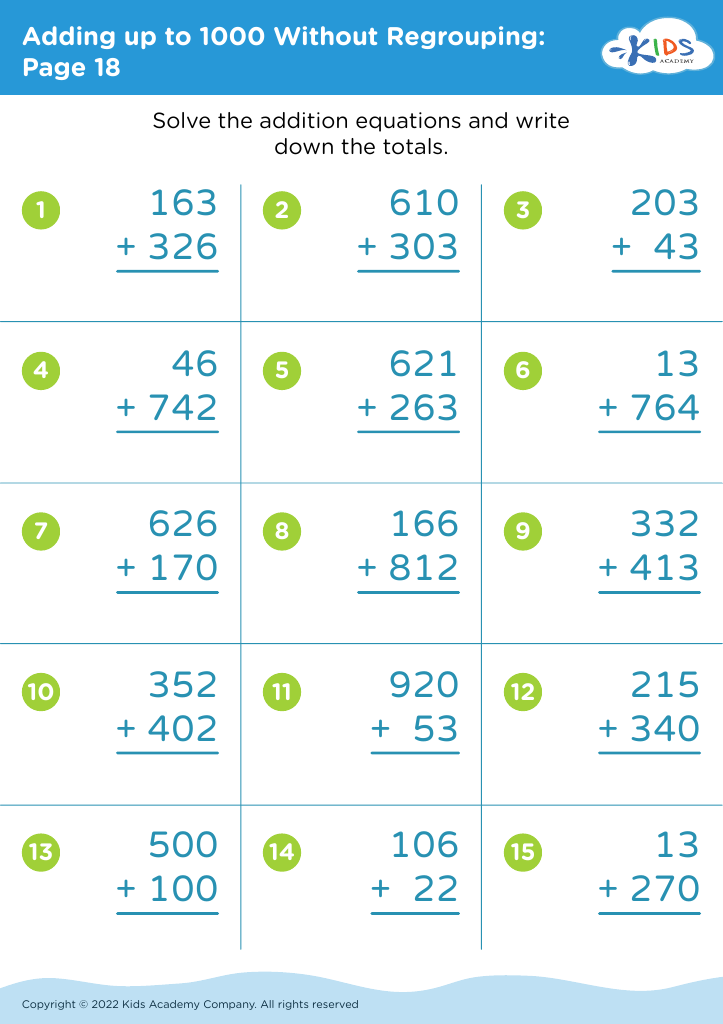
Adding up to 1000 Without Regrouping: Page 18
Worksheet
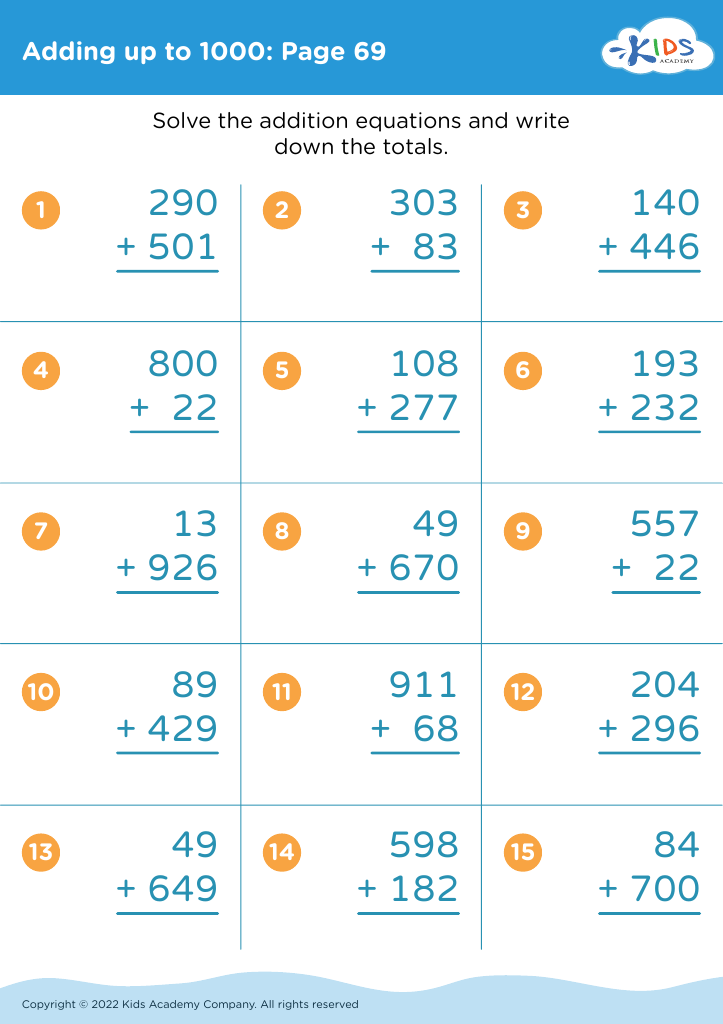
Adding up to 1000: Page 69

Adding up to 1000: Page 69

Adding up to 1000: Page 69
Worksheet
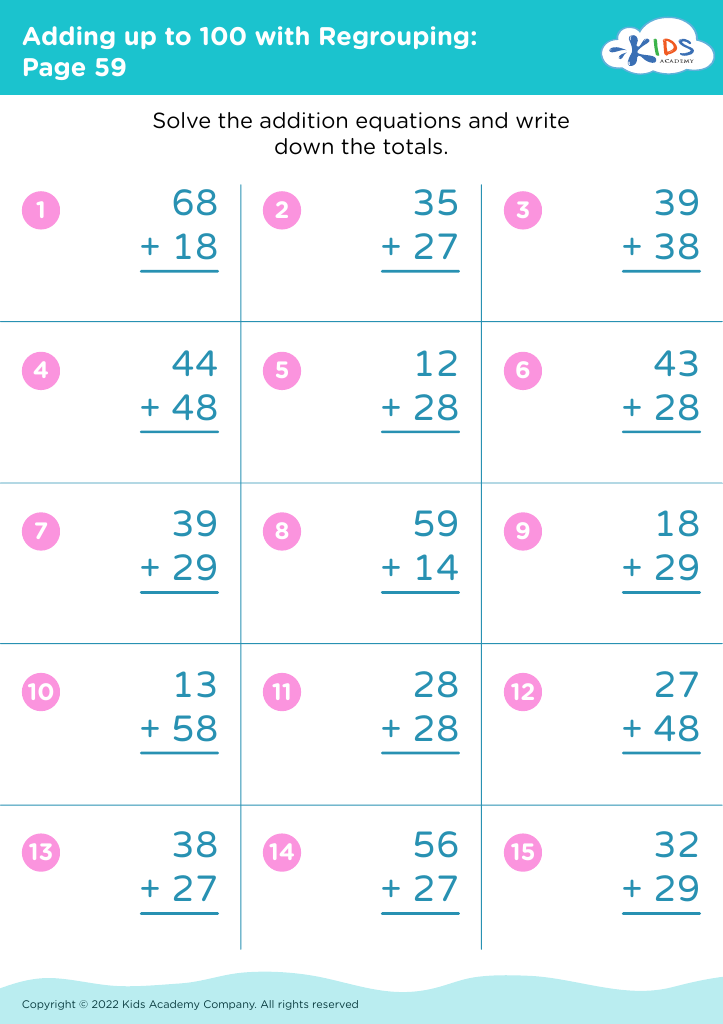
Adding up to 100 with Regrouping: Page 59
Worksheet
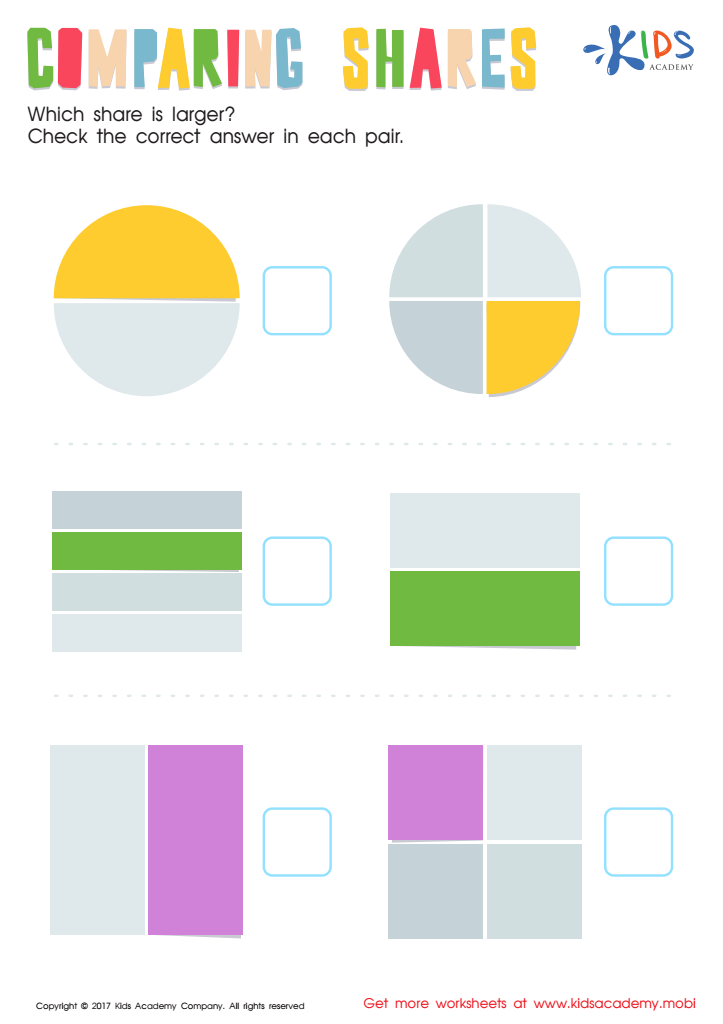
Comparing Shares Worksheet

Comparing Shares Worksheet

Can your students identify and draw shapes correctly? If so, this exercise may be too easy. For those who are still learning, extra help may be needed. The worksheet requires students to select which shape is larger in each pair; circles and squares are included.
Comparing Shares Worksheet
Worksheet
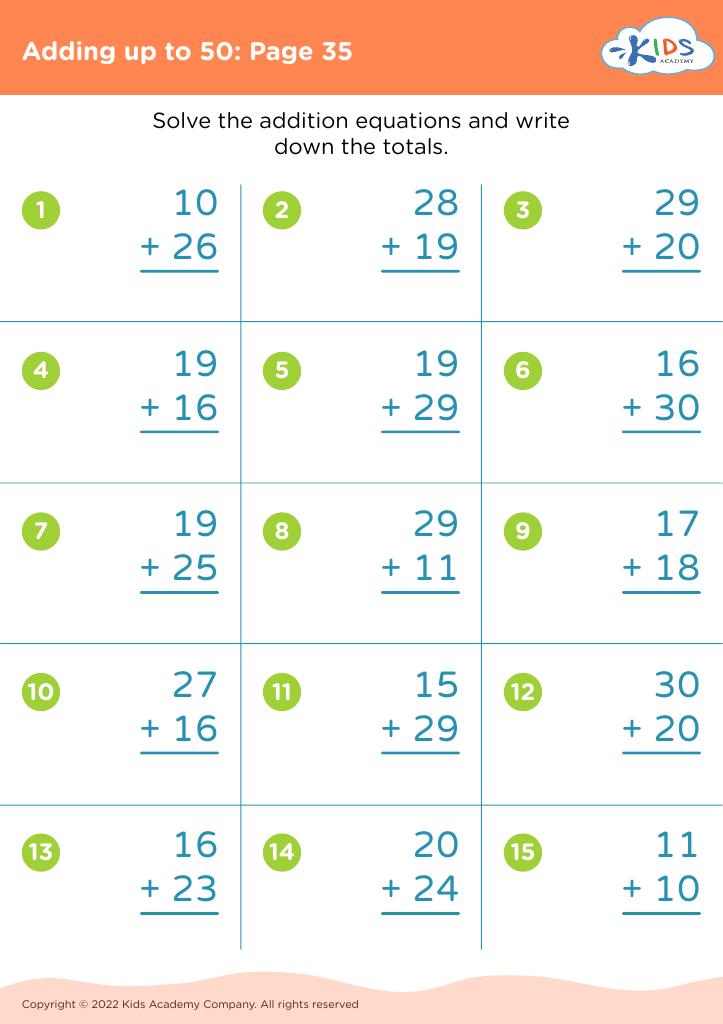
Adding up to 50: Page 35

Adding up to 50: Page 35

Adding up to 50: Page 35
Worksheet
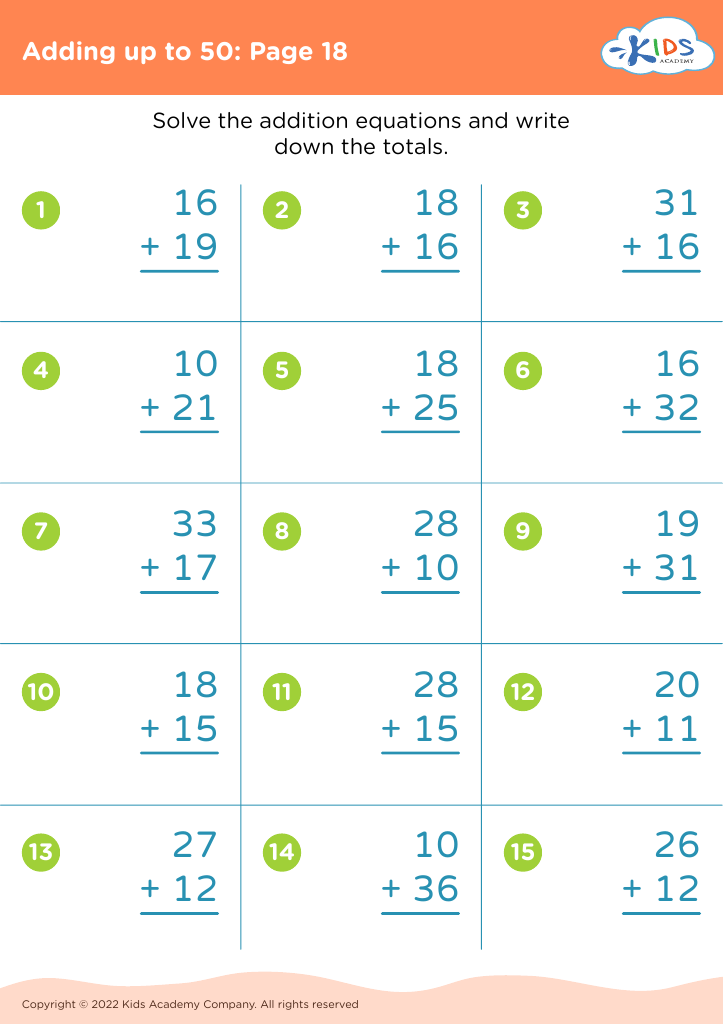
Adding up to 50: Page 18

Adding up to 50: Page 18

Adding up to 50: Page 18
Worksheet
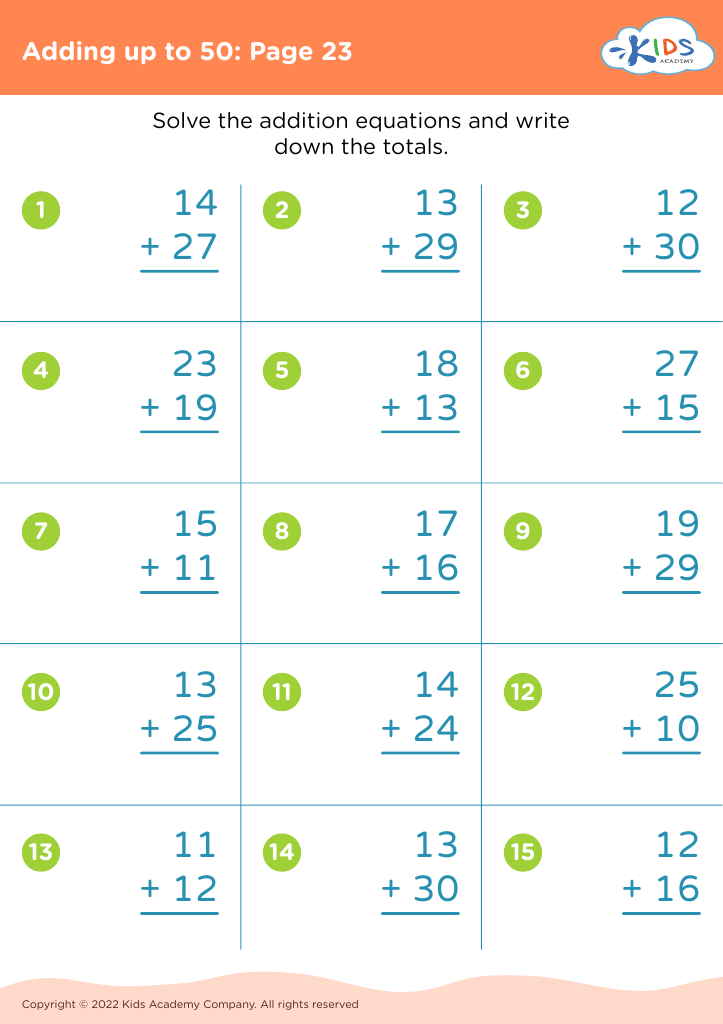
Adding up to 50: Page 23

Adding up to 50: Page 23

Adding up to 50: Page 23
Worksheet
Making Smaller Shares Worksheet
Making Smaller Shares Worksheet
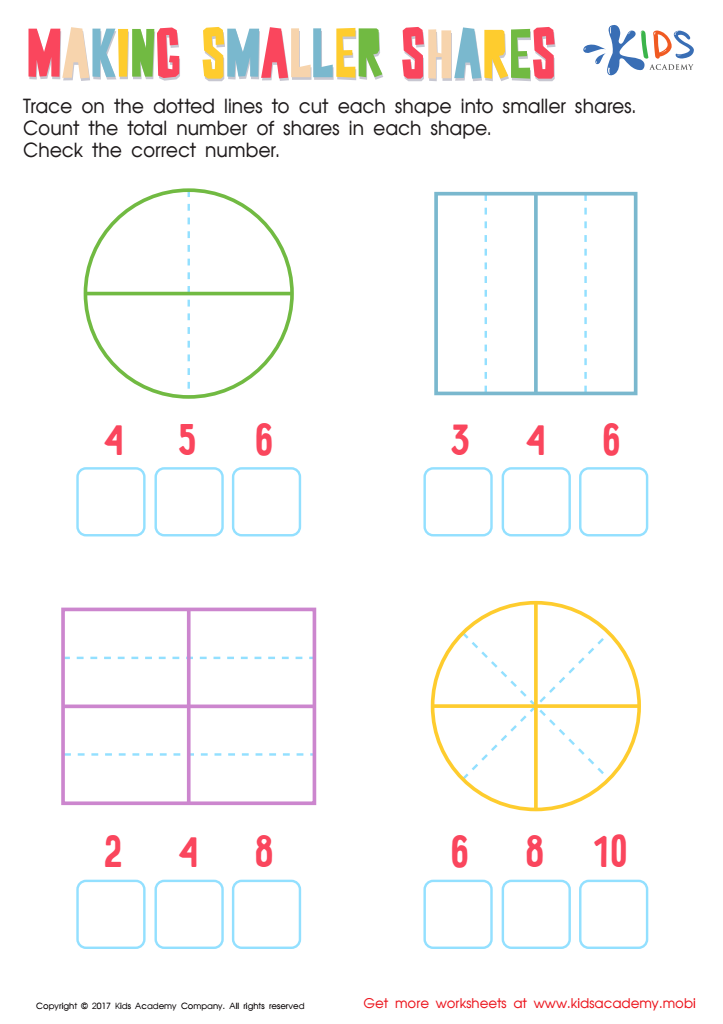
Help your kids learn shapes by having them cut out shapes on this tracing sheet. Point out the dotted lines, then guide their hand as they trace them, breaking shapes into smaller parts. Ask your children to count the number of parts and check the answers given.
Making Smaller Shares Worksheet
Worksheet
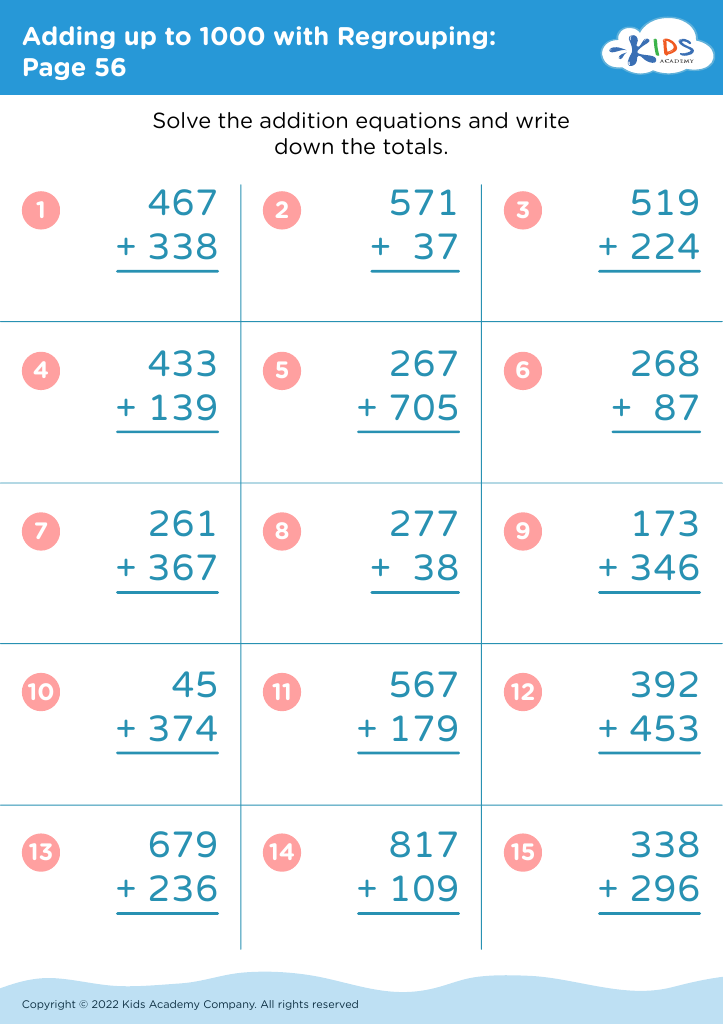
Adding up to 1000 with Regrouping: Page 56
Worksheet
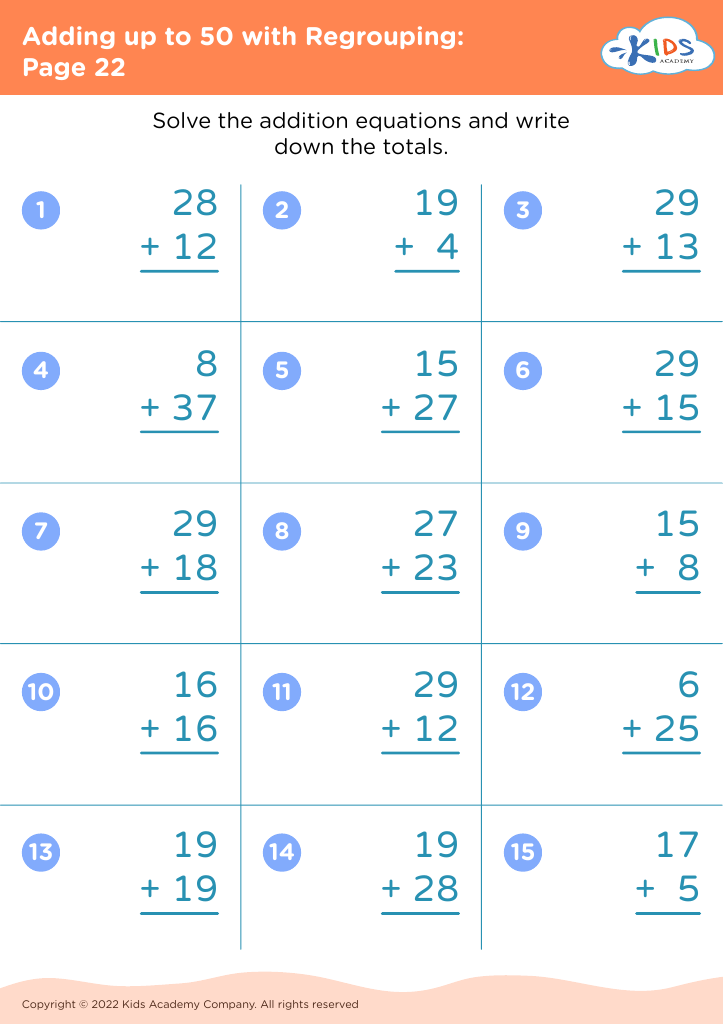
Adding up to 50 with Regrouping: Page 22
Worksheet
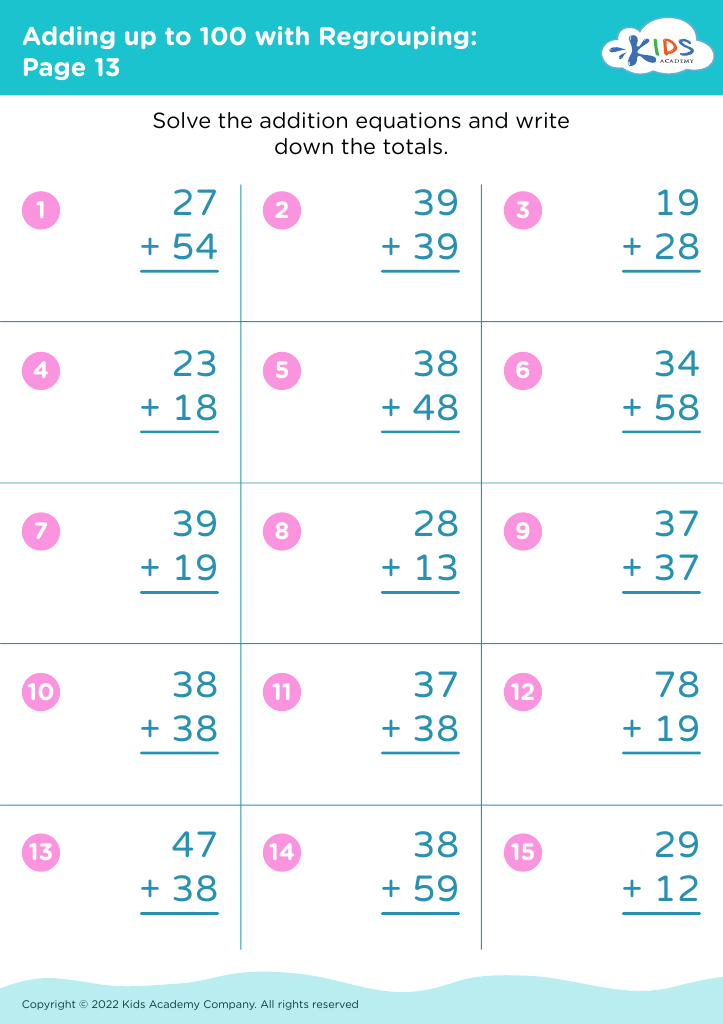
Adding up to 100 with Regrouping: Page 13
Worksheet
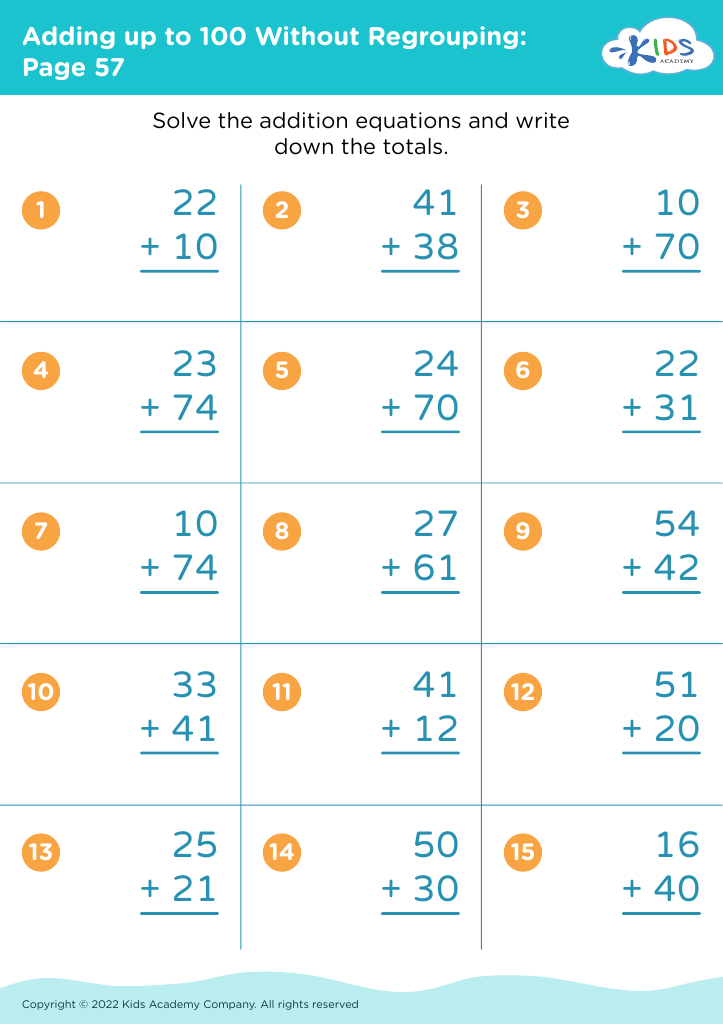
Adding up to 100 Without Regrouping: Page 57
Worksheet
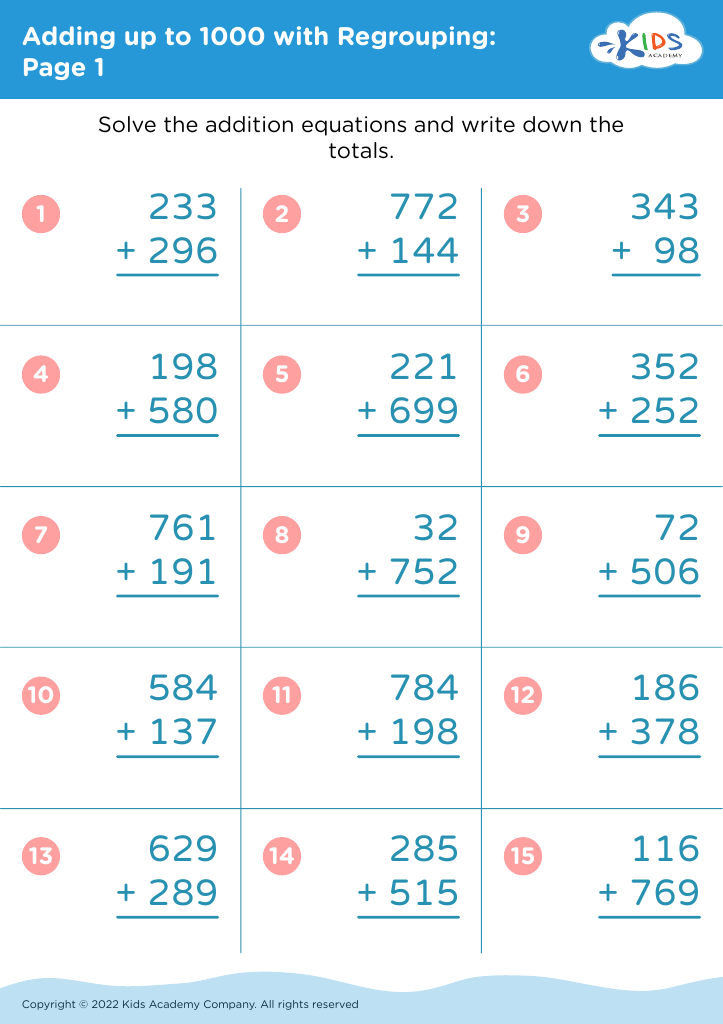
Adding up to 1000 with Regrouping: Page 1
Worksheet
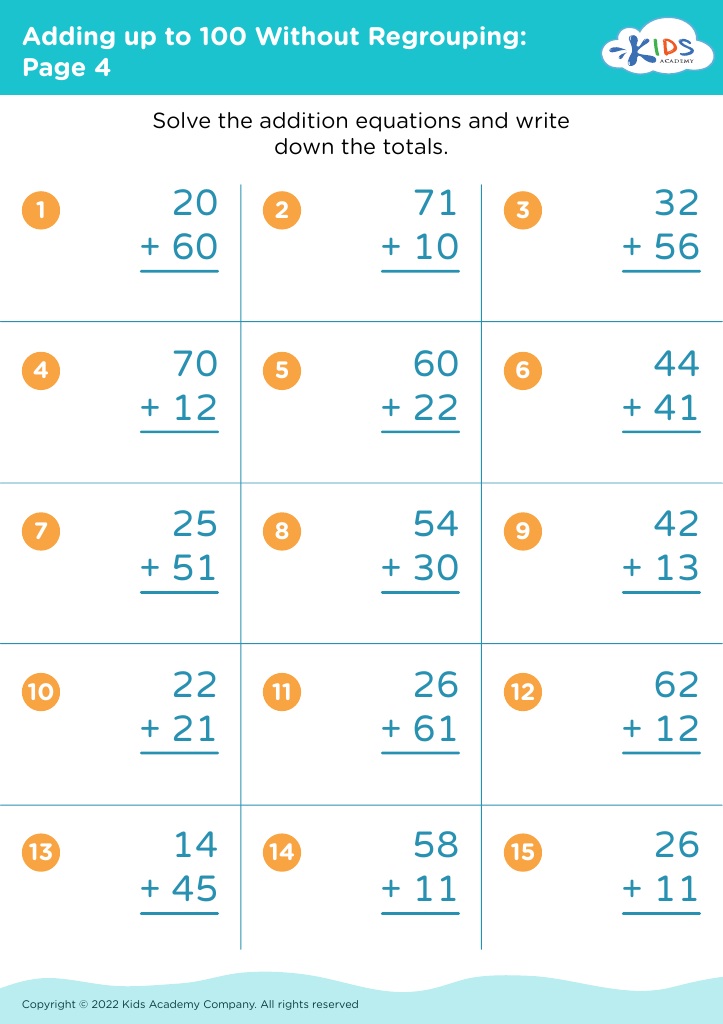
Adding up to 100 Without Regrouping: Page 4
Worksheet
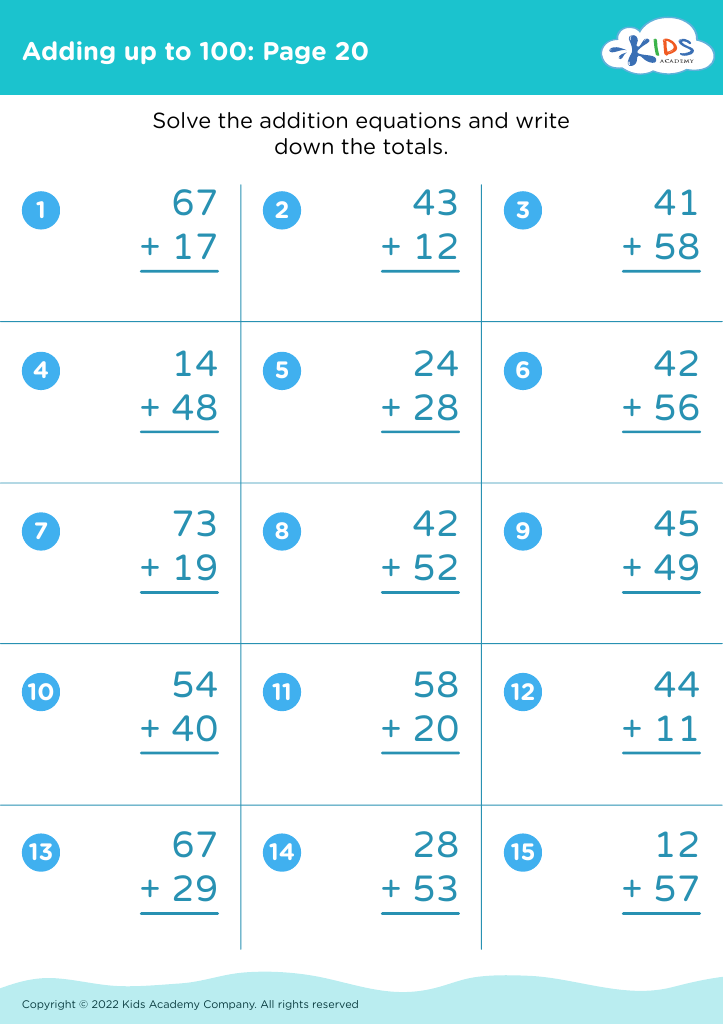
Adding up to 100: Page 20

Adding up to 100: Page 20

Adding up to 100: Page 20
Worksheet
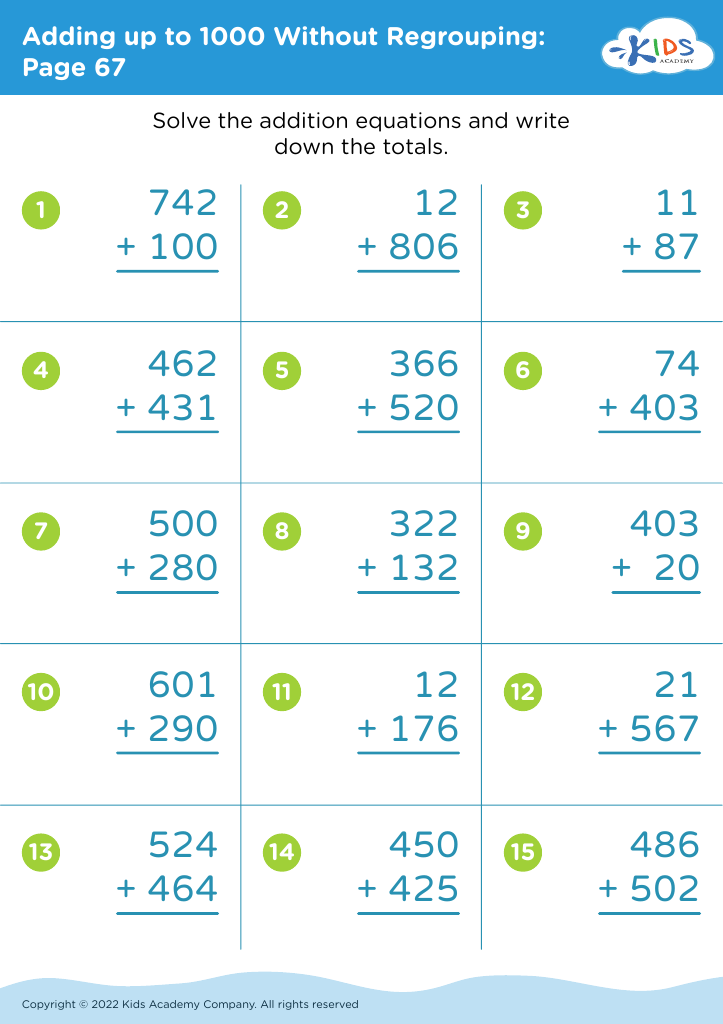
Adding up to 1000 Without Regrouping: Page 67
Worksheet
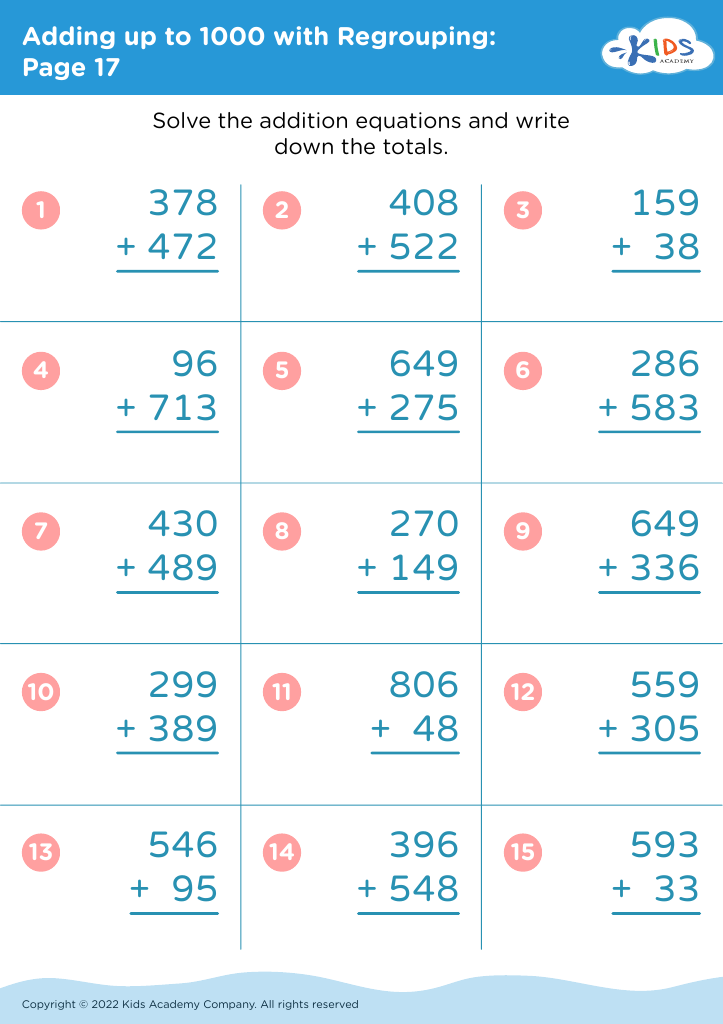
Adding up to 1000 with Regrouping: Page 17
Worksheet
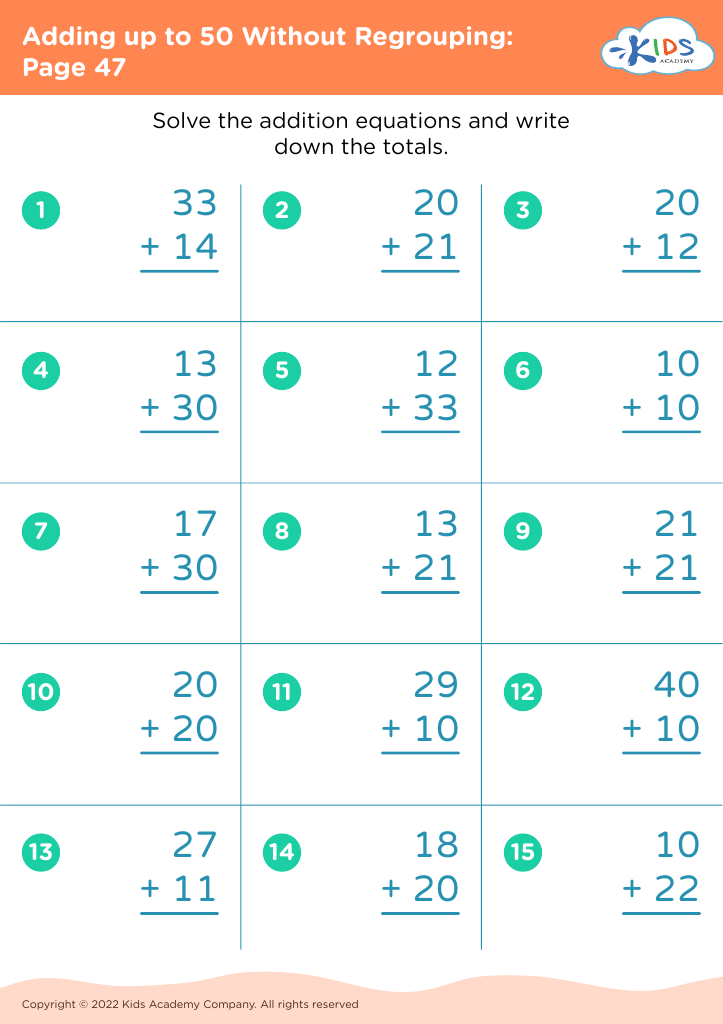
Adding up to 50 Without Regrouping: Page 47
Worksheet
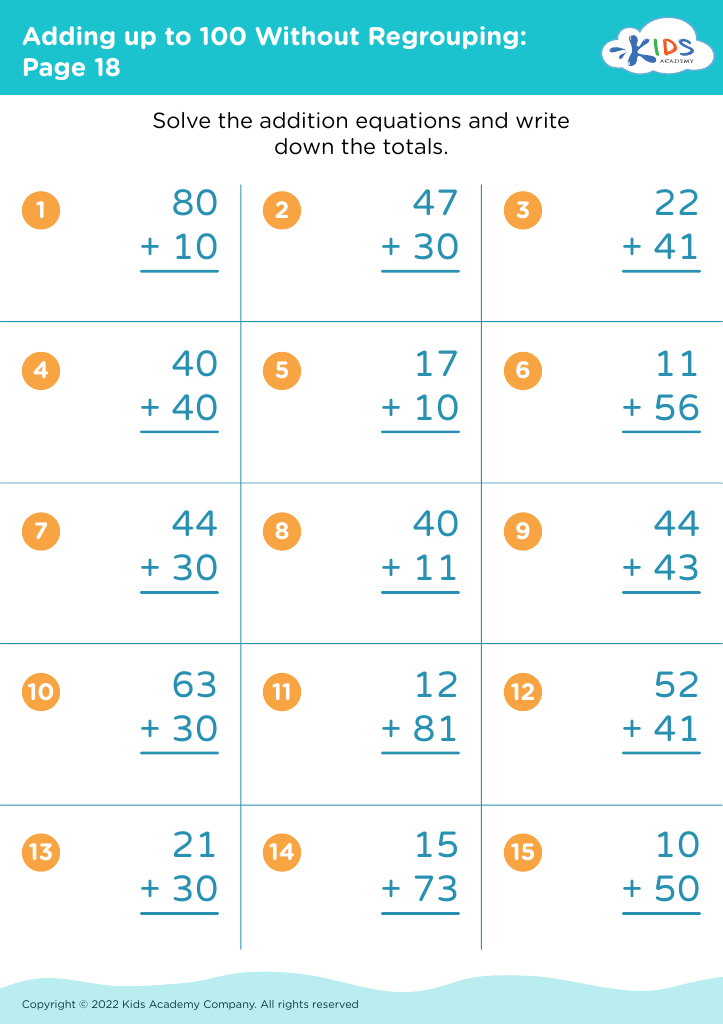
Adding up to 100 Without Regrouping: Page 18
Worksheet
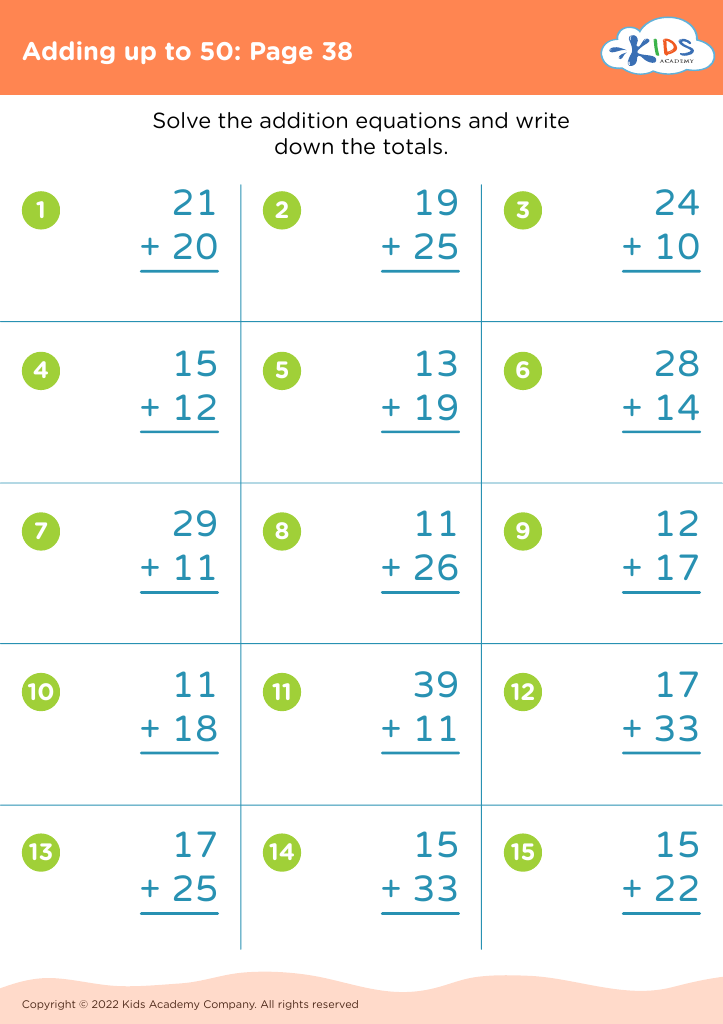
Adding up to 50: Page 38

Adding up to 50: Page 38

Adding up to 50: Page 38
Worksheet
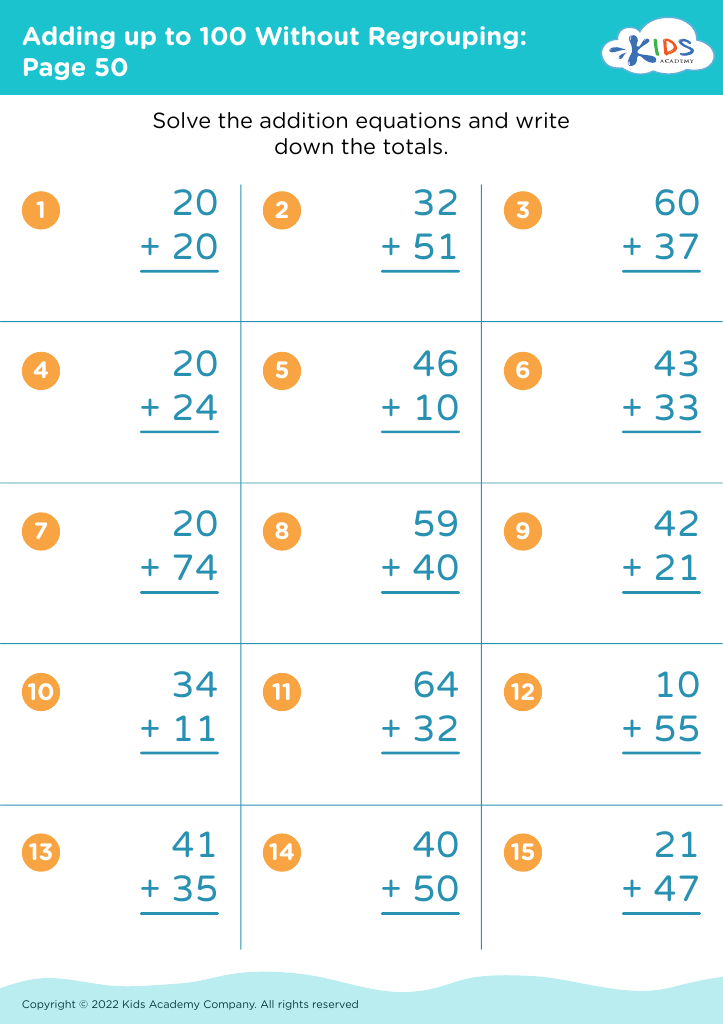
Adding up to 100 Without Regrouping: Page 50
Worksheet
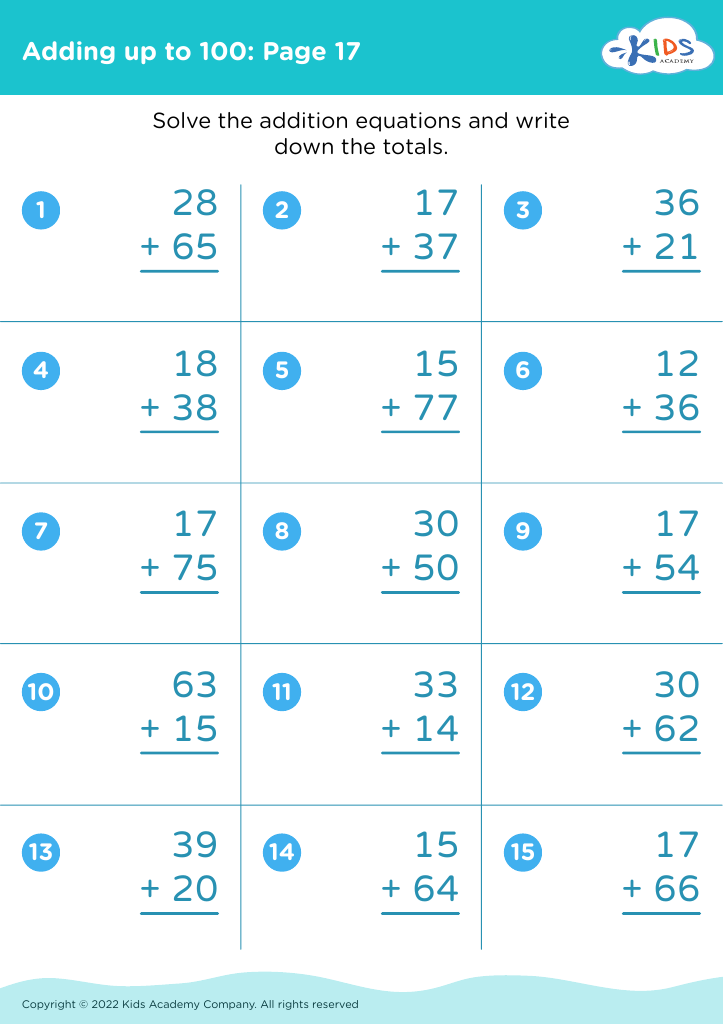
Adding up to 100: Page 17

Adding up to 100: Page 17

Adding up to 100: Page 17
Worksheet
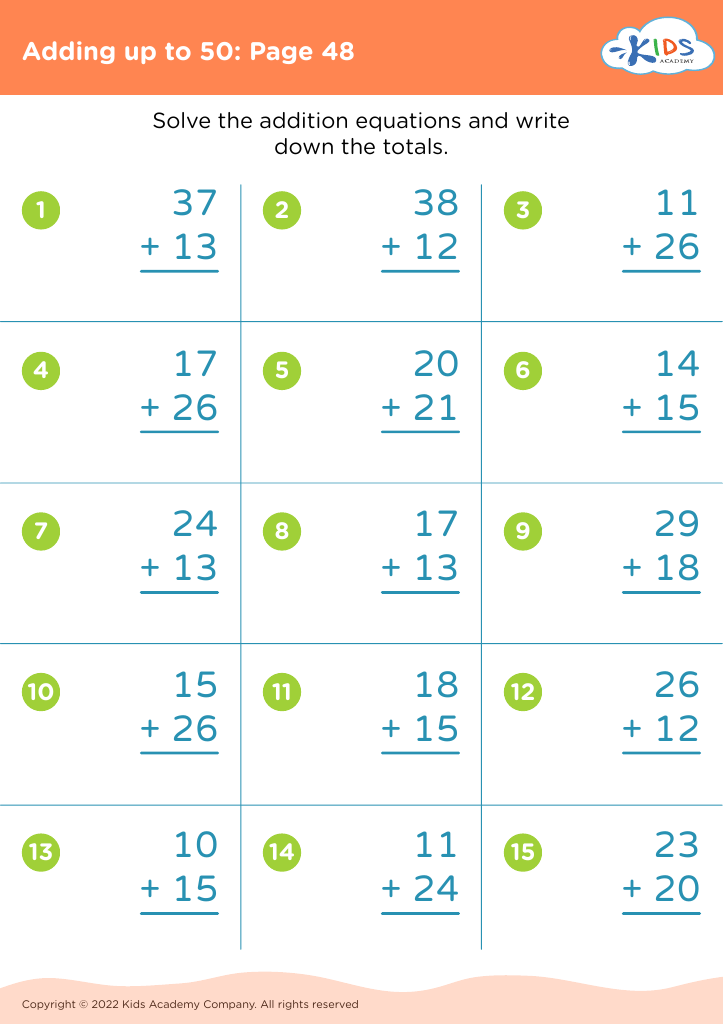
Adding up to 50: Page 48

Adding up to 50: Page 48

Adding up to 50: Page 48
Worksheet
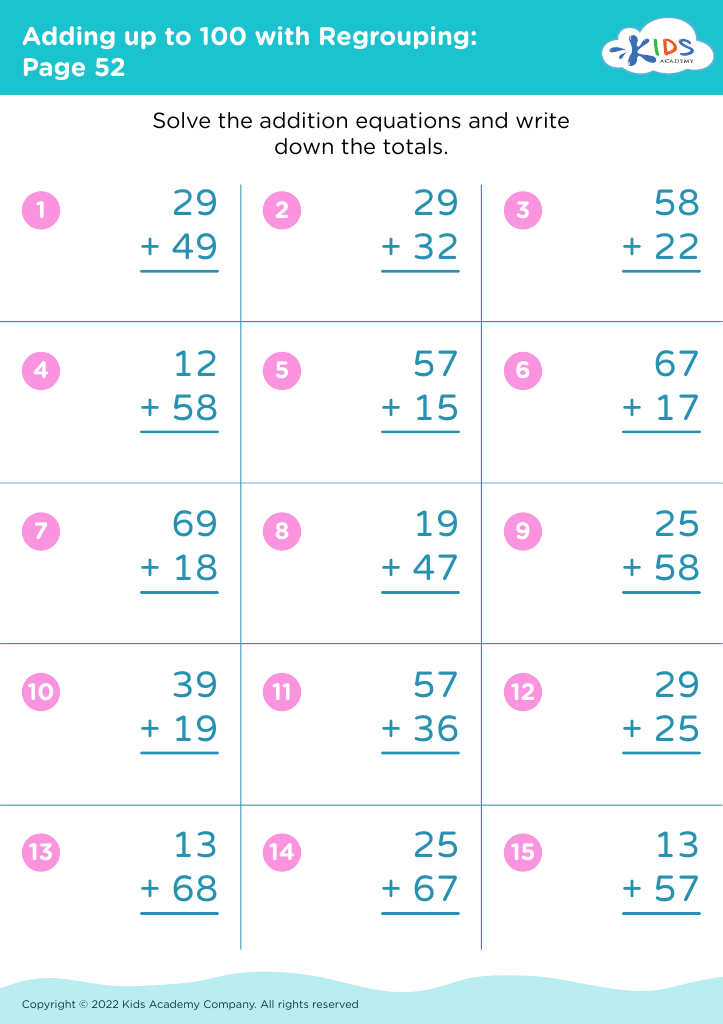
Adding up to 100 with Regrouping: Page 52
Worksheet


Comparing fractions for ages 6-9 is essential as it lays a foundational understanding of number sense, mathematical reasoning, and problem-solving skills. During these formative years, children develop the ability to understand and interpret fractions, which is a critical step towards more complex math concepts in the future.

Grasping the concept of comparing fractions helps children build a visual and relational understanding of parts and wholes. This, in turn, enhances their ability to handle equivalent fractions, addition and subtraction of fractions, and eventually grasp more advanced topics like decimals and percentages. It also provides a context for real-life situations, such as dividing a pizza or sharing a treat, making abstract concepts more relevant and engaging.

Moreover, early exposure to fractions through comparison activities boosts critical thinking. Children learn to evaluate sizes, make judgments, and express their reasoning, skills that are transferable to other academic subjects and everyday decision-making.

Parents and teachers caring about comparing fractions signify a commitment to solidifying children's mathematical foundations. Understanding fractions at an early age can overcome math anxiety, fostering a positive attitude towards learning and promoting confidence in handling math tasks. Thus, emphasizing these concepts ensures children are well-prepared for future educational endeavors and practical life challenges.