
Comparing object weights Worksheets for Ages 6-9
3 filtered results
Difficulty Level
Grade
Age
-
From - To
Subject
Activity
Standards
Discover our engaging "Comparing Object Weights Worksheets" designed for children ages 6-9. This resource encourages young learners to explore weight concepts through fun and interactive activities. Each worksheet features visually appealing illustrations and hands-on exercises that make learning about heavy and light objects exciting. Students will practice comparison skills, improve their understanding of measurement, and enhance their critical thinking abilities. With a variety of problems that cater to different learning styles, these worksheets are perfect for classroom use or at-home practice. Foster curiosity and confidence in your child as they follow the journey of weights in an enjoyable and educational way!
Favorites
With answer key
Interactive
 Assign to My Students
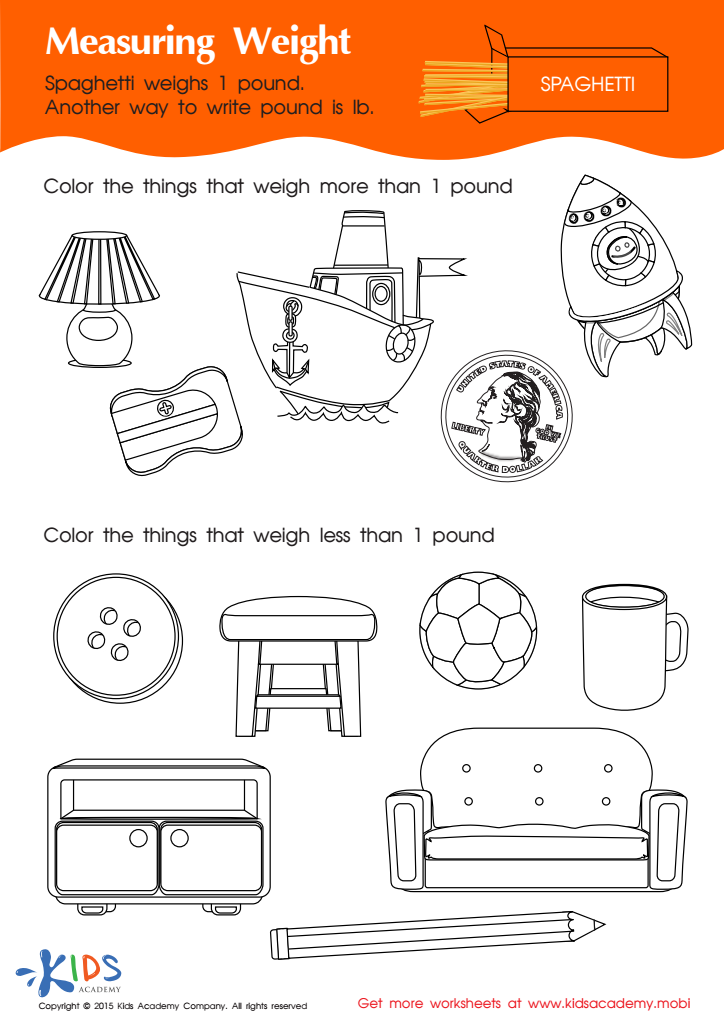
Measurement: Measuring Weight in Pounds 1 Worksheet
Worksheet
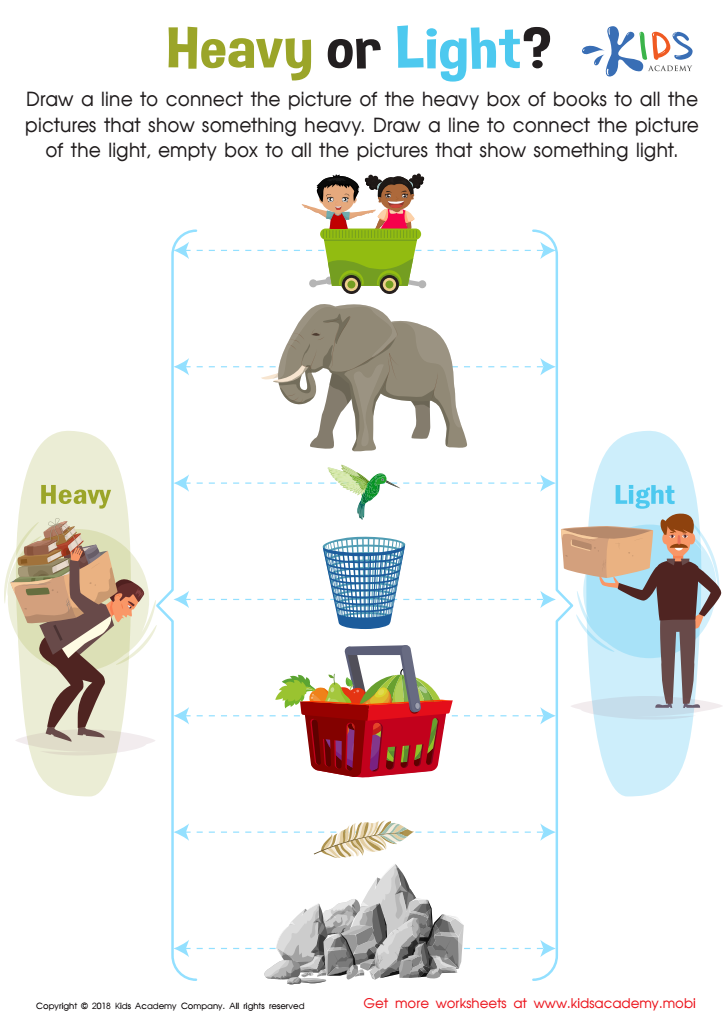
Heavy or Light? Worksheet
Kids can struggle to understand weight comparison, as size and mass matter. This free PDF helps develop fine-motor and hand-eye skills as kids trace lines to match pictures. The familiar pictures create concrete representations, ideal for learning more complex concepts.
Heavy or Light? Worksheet
Worksheet
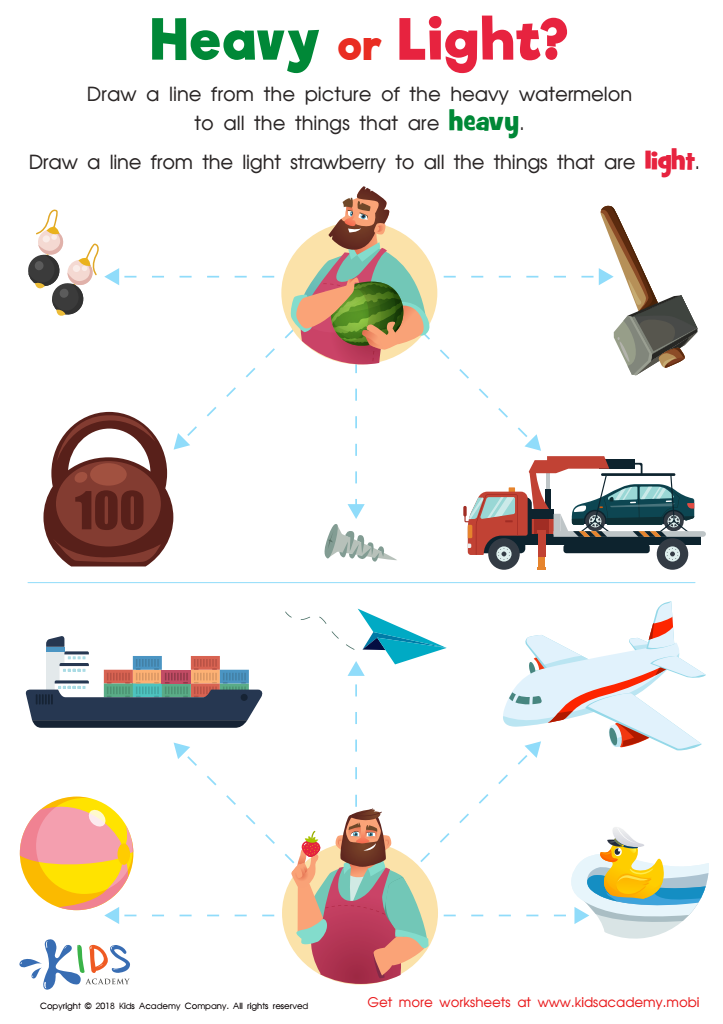
Heavy or Light? Worksheet
This fun, free worksheet helps kids build measurement skills and reinforce concepts of 'heavy' and 'light', while also improving their fine motor skills. Kids use traceable lines to connect the gentleman to objects they know, giving them a strong foundation for understanding weight.
Heavy or Light? Worksheet
Worksheet
Join Kids Academy for Free
Who is primarily going to use this learning content?







Understanding how to compare object weights is essential for children aged 6-9 as it lays the foundation for critical thinking and problem-solving skills. As this young age group begins to engage with more abstract concepts in math and science, concepts like weight comparison help make these subjects tangible. When children compare weights, they develop an understanding of measurement, which is a key component of mathematics. This skill promotes mathematical reasoning and encourages them to use logical steps to reach conclusions.
Moreover, weight comparisons also introduce children to concepts of balance and equip them with practical life skills. For instance, they learn how different objects can affect stability in various contexts, which is crucial for their safety and day-to-day activities. Similarly, this activity enhances their observational skills and encourages curiosity, leading to greater engagement in hands-on learning.
Additionally, involving parents in weight comparison activities fosters bonding and enriches their child's learning experience. This collaboration makes learning interactive and enjoyable, ultimately nurturing a love for learning. By prioritizing the importance of comparing object weights, parents and teachers contribute to developing well-rounded, inquisitive, and confident learners.








