Data analysis skills Worksheets for Ages 6-9
3 filtered results
-
From - To
Unlock your child's potential with our engaging Data Analysis Skills Worksheets for ages 6-9! Tailored for young learners, these colorful and interactive worksheets introduce fundamental concepts of data analysis through fun activities. Your child will explore sorting, graphing, and interpreting data, all while developing critical thinking skills. Each worksheet encourages hands-on learning, allowing kids to visualize information and make sense of their world. Perfect for reinforcing classroom learning or enhancing at-home education, our collection supports various learning styles and ensures hours of educational enjoyment. Spark your child's curiosity today and empower them with essential data skills for the future!
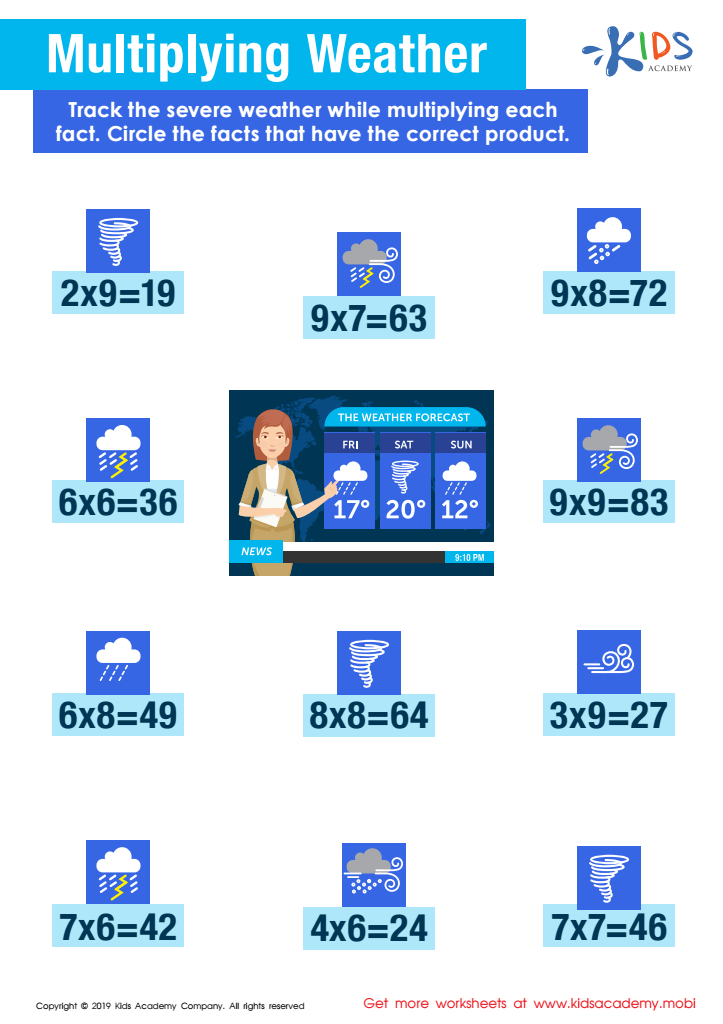
Multiplying Weather Worksheet
 Assign to My Students
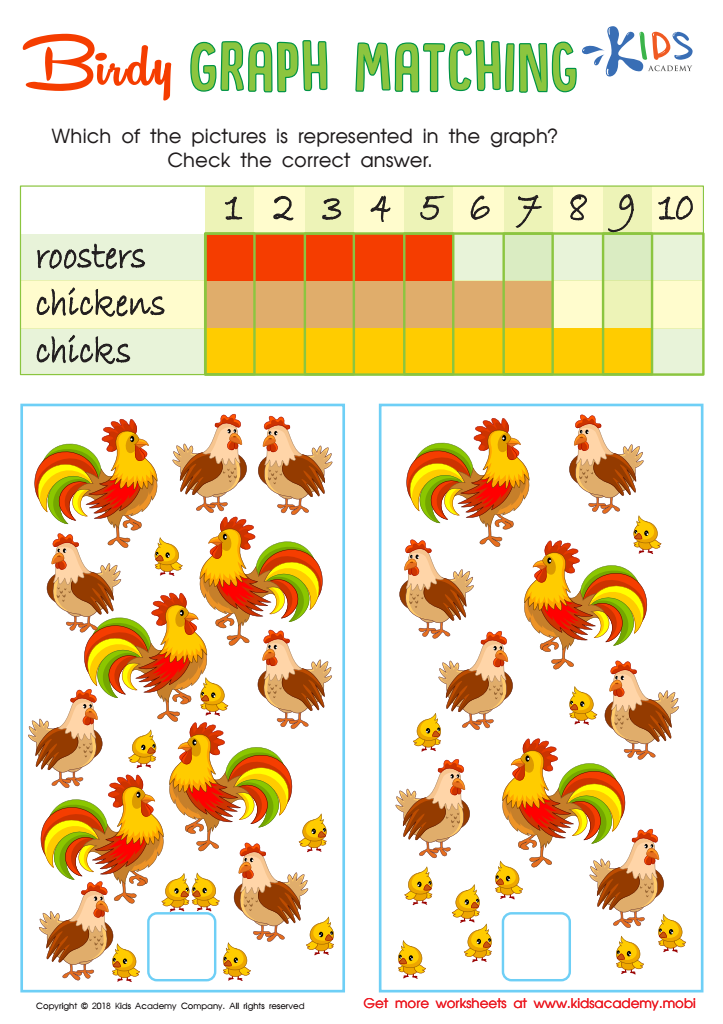
Birdy Graph Matching Worksheet








Data analysis skills are crucial for children aged 6-9 as they lay the foundation for critical thinking and problem-solving abilities that are essential in today's data-driven world. At this stage, children are naturally curious and eager to explore their environment; fostering data analysis helps harness this innate curiosity. By engaging in simple data collection exercises—such as surveys, charts, or observations—children learn to organize and interpret information effectively.
These skills enable children to make sense of the world around them, enhancing their abilities in subjects like math, science, and technology, which increasingly rely on data interpretation. As they learn to analyze data, they also develop skills like pattern recognition, forecasting, and making informed decisions, essential not just academically but also in everyday life.
Additionally, early exposure to data literacy helps children understand biases in information and promotes a more analytical approach to media and advertising as they grow older. For parents and teachers, nurturing these skills provides children with the tools to become learners who are not just consumers of information, but creators and evaluators, enabling them to succeed in an increasingly complex future. Ultimately, supporting data analysis skills fosters a generation of informed, confident, and resourceful individuals.








