Developing spatial awareness Worksheets for Ages 6-9
3 filtered results
-
From - To
Enhance your child's spatial awareness with our engaging worksheets designed for ages 6-9! These printable activities encourage essential skills such as understanding shapes, directions, and relationships between objects. Our thoughtfully crafted worksheets feature fun illustrations and interactive tasks that will captivate young learners, making it easy to grasp complex spatial concepts. By completing these exercises, children will improve their problem-solving abilities and boost their confidence in mathematics-related tasks. Explore our collection of worksheets to nurture your child's spatial reasoning and set them on a path to academic success! Perfect for classroom settings or at-home learning. Get started today!
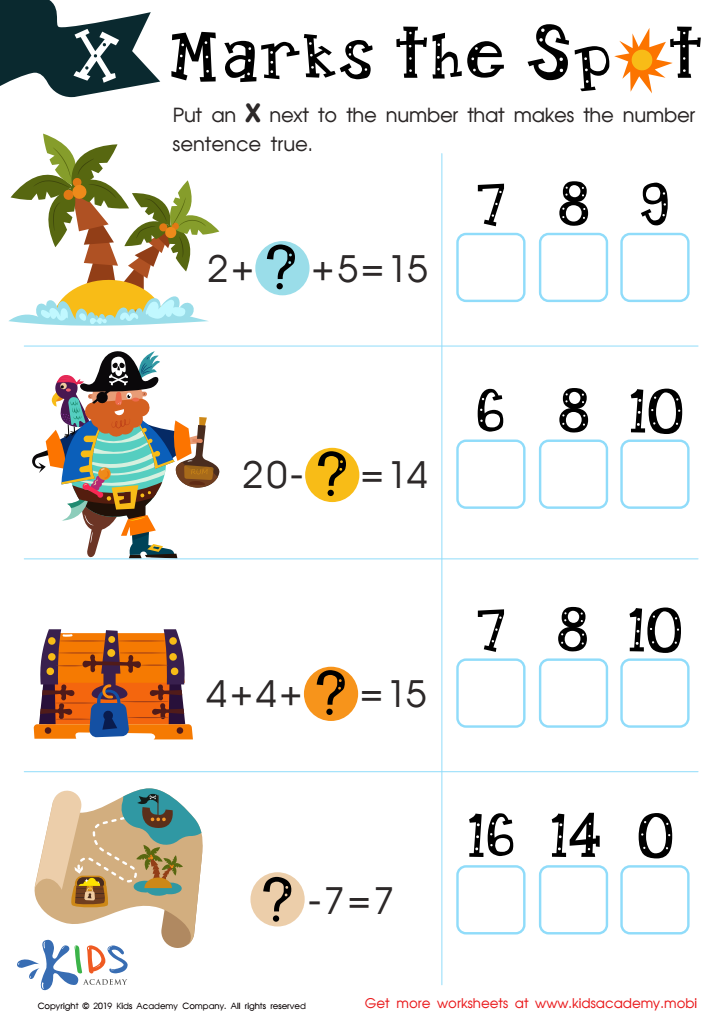
X Marks the Spot Worksheet
 Assign to My Students
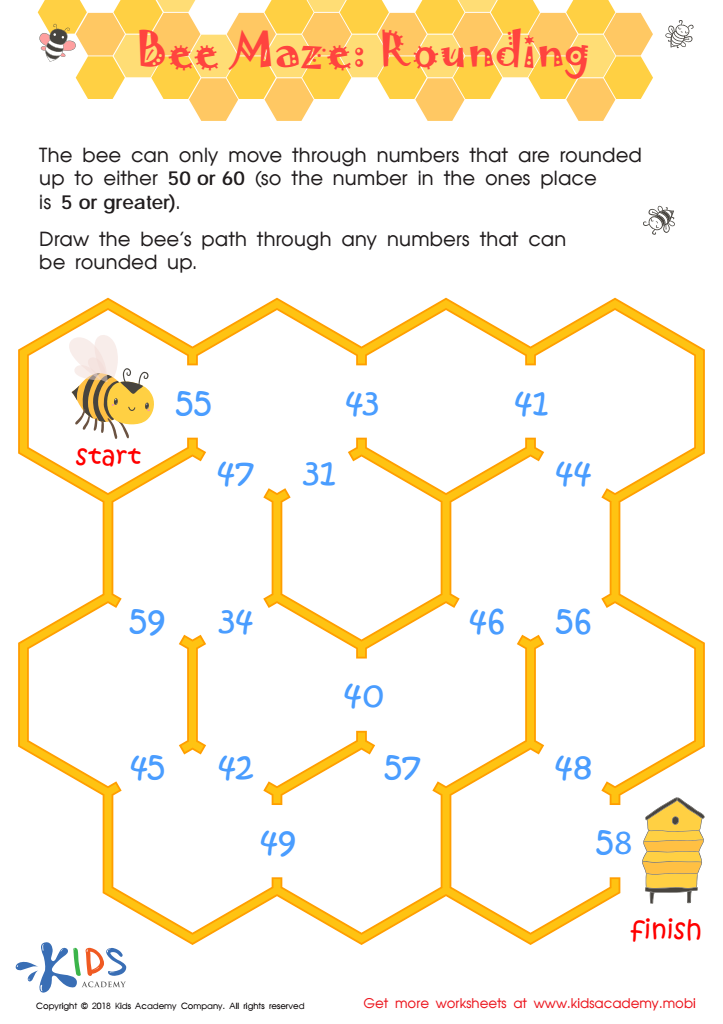
Bee Maze Rounding Worksheet
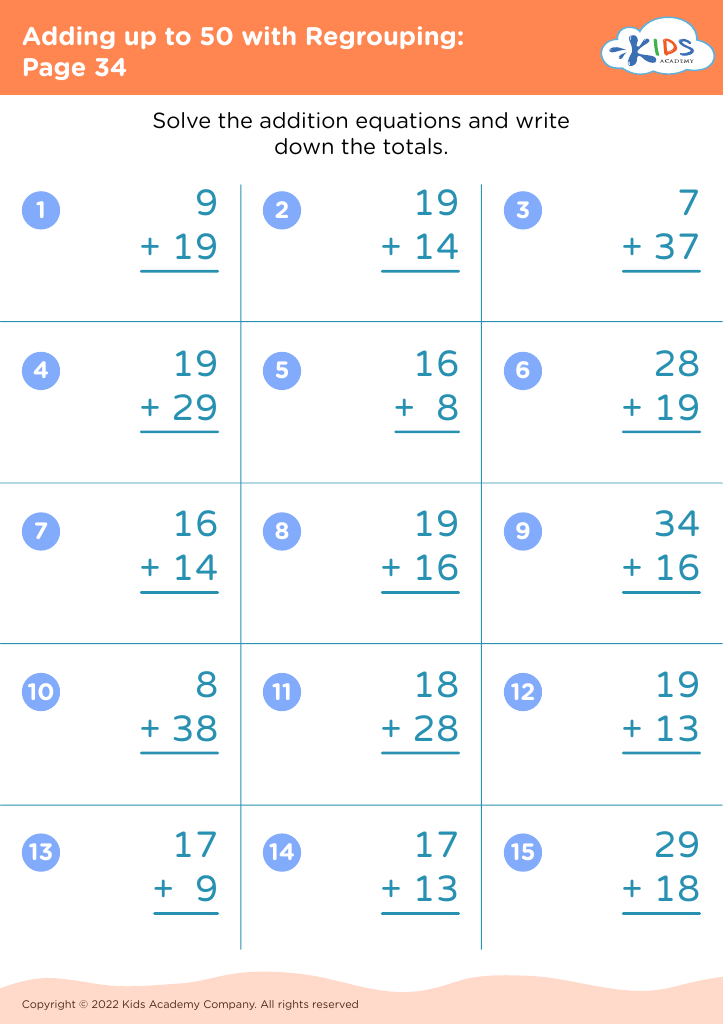



.jpg)



Developing spatial awareness in children aged 6-9 is crucial for several reasons. At this stage, children's cognitive, physical, and emotional development is interconnected, and spatial awareness plays a foundational role in their overall learning. Spatial awareness allows children to understand the relationships between objects, their positions, and how they move in space. This understanding is essential in subjects like math and science, where geometry and measurement concepts are introduced.
Moreover, spatial awareness supports critical life skills such as problem-solving, decision-making, and creativity. Children with strong spatial skills can visualize solutions, anticipate problems, and think outside the box. This ability also fosters independence, enabling children to navigate their environment safely and efficiently.
Furthermore, engaging activities that enhance spatial awareness—like puzzles, building blocks, or interactive games—encourage teamwork and communication, reinforcing social skills. As they grow, these foundational skills will impact academic performance, and vocational opportunities in fields such as engineering, architecture, and the arts.
When parents and teachers prioritize spatial awareness, they empower children with essential tools for learning and growth, setting the stage for lifelong learning and success in a rapidly changing world. Investing time and resources into this aspect of development can yield significant benefits for children.








