Geometry basics Worksheets for Ages 6-9
3 filtered results
-
From - To
Discover our engaging "Geometry Basics Worksheets for Ages 6-9". These printable resources are designed to introduce young learners to essential geometric concepts, including shapes, symmetry, and spatial relationships. Our expertly crafted worksheets make learning fun and interactive, providing a solid foundation in geometry through various activities and problem-solving exercises. Ideal for reinforcing classroom lessons or enhancing homeschool curriculum, these worksheets support the development of critical thinking and visual-spatial skills. Bring excitement to geometry with our carefully designed practice sheets, perfect for kids ages 6 to 9! Visit our webpage to explore and download them today.
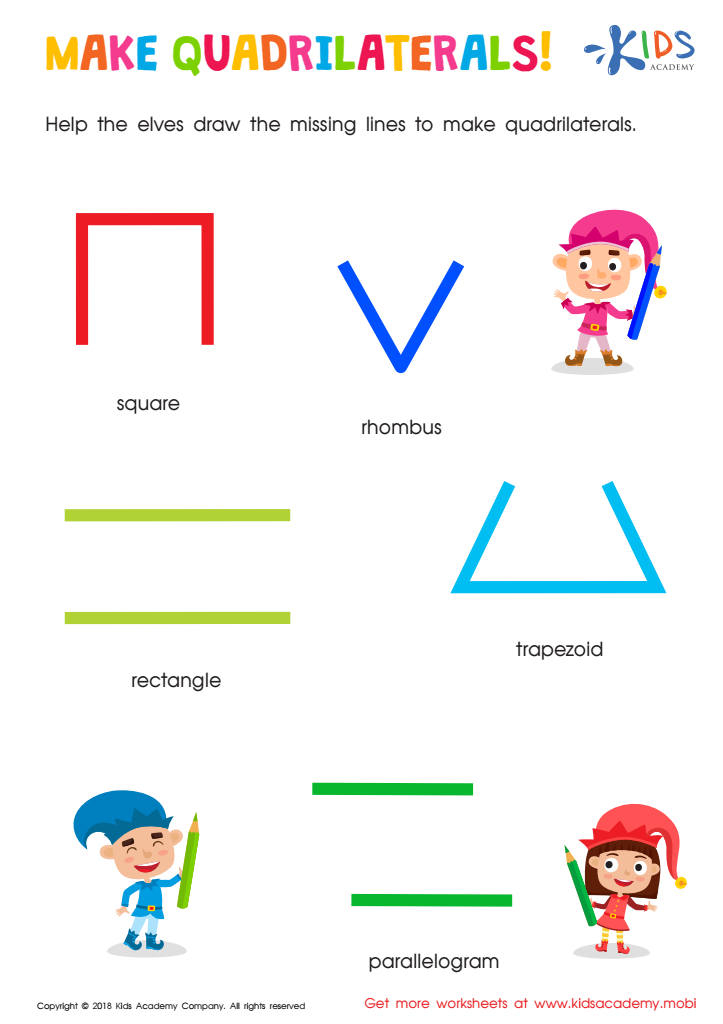
Make Quadrilaterals Worksheet
 Assign to My Students
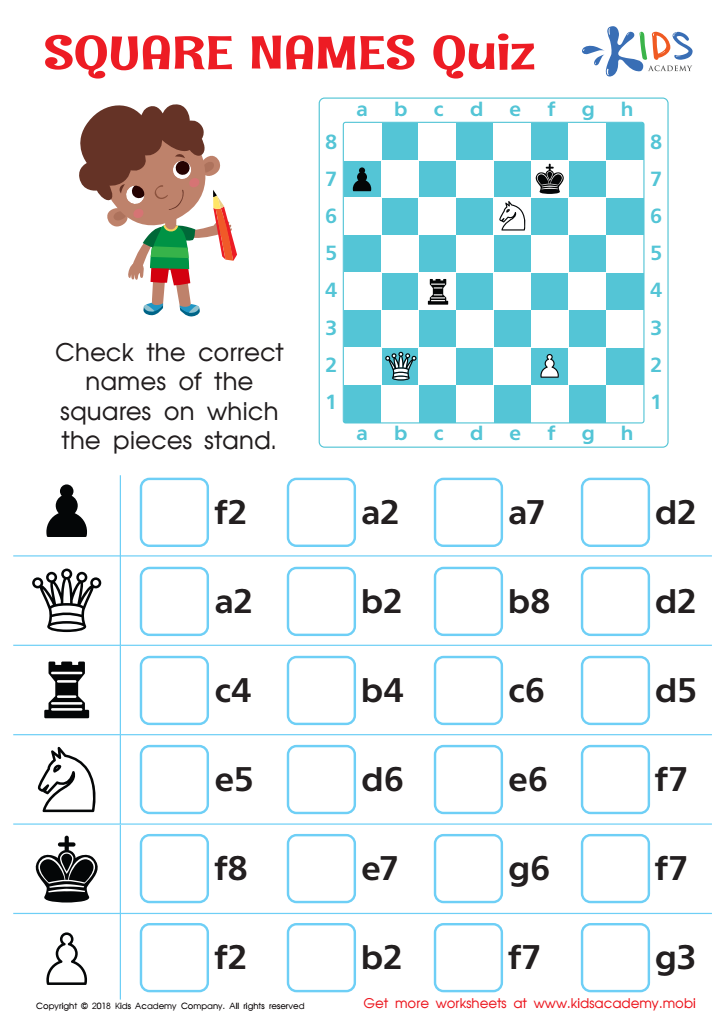
Square Names Quiz Worksheet
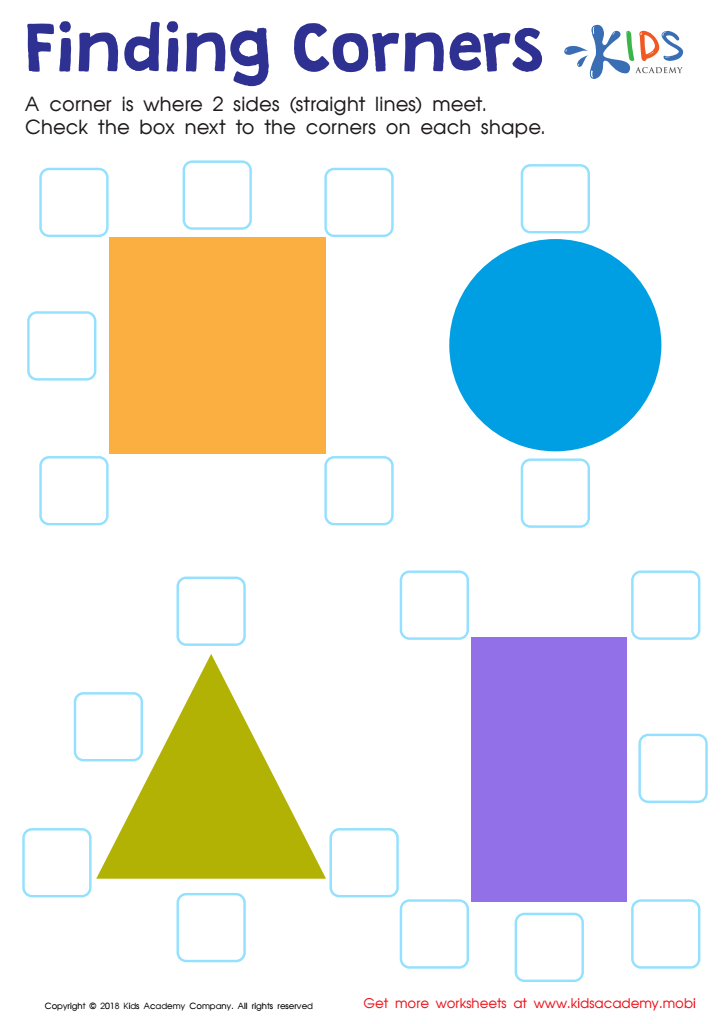
Finding Corners Worksheet






The foundational understanding of geometry is crucial for children aged 6-9 as it forms the building blocks for more advanced mathematical concepts and everyday problem-solving skills. Introducing geometry at an early age helps to develop spatial awareness, critical thinking, and reasoning, which are essential not only for mathematics but for various aspects of life and learning.
When children grasp the basics of shapes, sizes, and spatial relationships, they enhance their ability to visualize and comprehend various concepts in their environment. For instance, recognizing shapes and patterns aids in organizing and structuring information, which leads to better memory retention and reading skills. Geometry also plays a vital role in developing important fine motor skills as children learn to draw, cut, and manipulate different shapes.
Moreover, early exposure to geometry helps kids build a strong foundation for subjects like physics, engineering, art, and architecture in the future. Engaging geometry activities and discussions encourage children to ask questions, explore, and understand how objects fit together in space, fostering a deeper appreciation for the world around them.
Teachers and parents who prioritize the basics of geometry send a powerful message about the importance of mathematics and help children develop a positive attitude toward learning both now and in their future academic pursuits.








