
Grammar improvement Worksheets for Ages 6-9
7 filtered results
Difficulty Level
Grade
Age
-
From - To
Subject
Activity
Standards
Enhance your child's language skills with our engaging Grammar Improvement Worksheets for Ages 6-9! Tailored for early learners, these worksheets make grammar fun and accessible. Through interactive activities like fill-in-the-blanks, matching exercises, and sentence construction, children will strengthen their understanding of parts of speech, punctuation, and sentence structure. Each worksheet promotes critical thinking and boosts confidence in writing and reading. Perfect for home or classroom use, our resources cater to different learning styles, ensuring every child can thrive. Start your child’s journey to mastering grammar today and watch them enjoy the process of learning with our colorful and stimulating worksheets!
Favorites
With answer key
Interactive
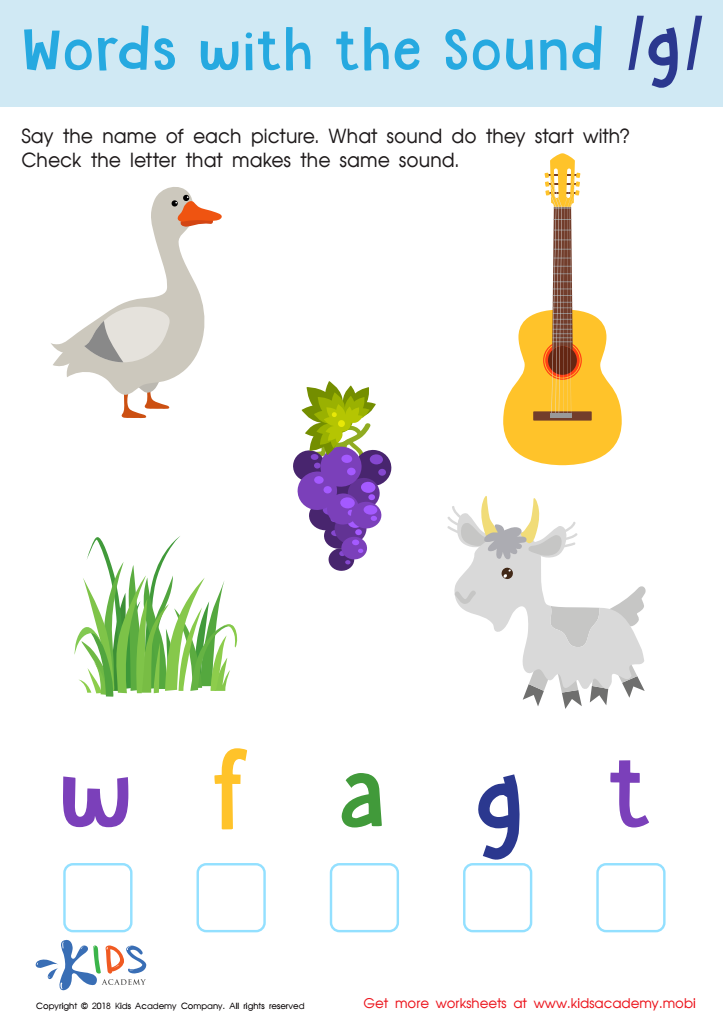
Words with sound g Reading Worksheet
Help your child learn the soft "g" sound with this phonics worksheet. Ask them to name each picture, then identify the letter sound it begins with. If it's "g", they can check the box. Have them repeat each word, listening for the soft "g" sound before moving on to the next page.
 Assign to My Students
Words with sound g Reading Worksheet
Worksheet
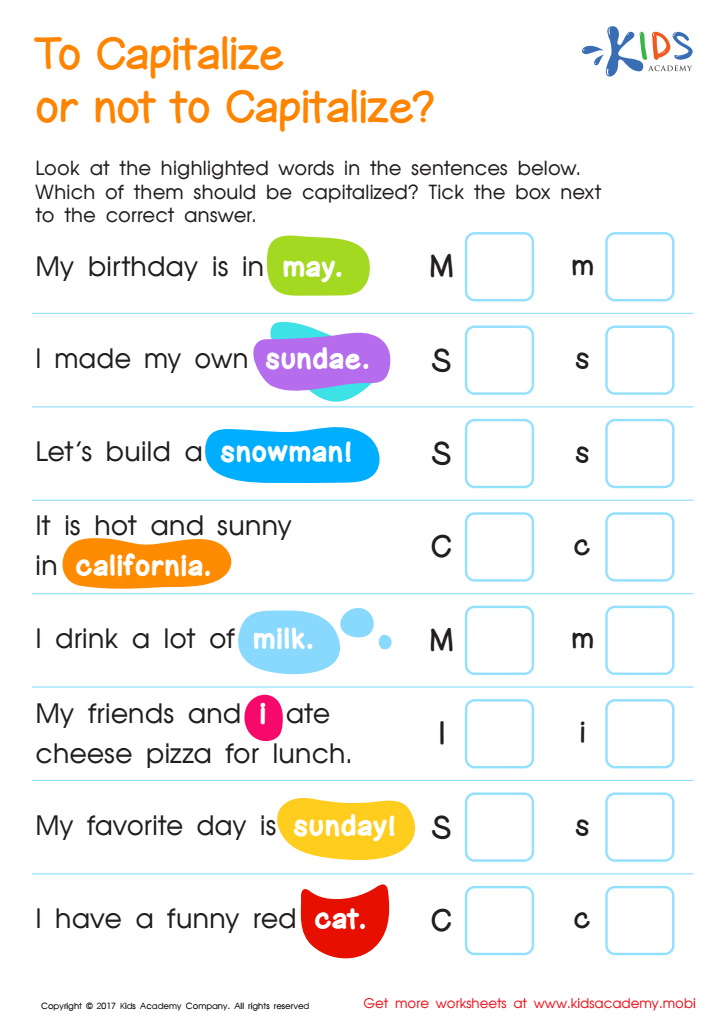
Capitalization: To Capitalize or Not? Printable
Have them answer the questions in "To Capitalize or Not to Capitalize" to check their understanding.
Capitalization: To Capitalize or Not? Printable
Worksheet
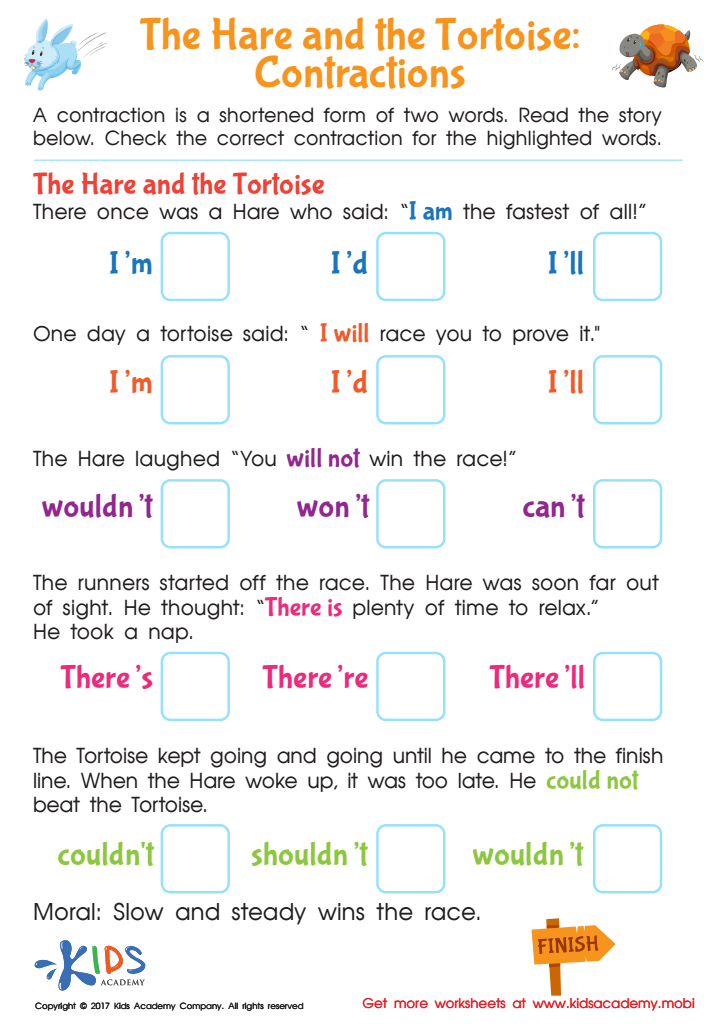
Contractions Worksheet
Read a funny story about the hare and the tortoise to learn about contractions with this grammar worksheet pdf. Tick the right contraction from the options given.
Contractions Worksheet
Worksheet
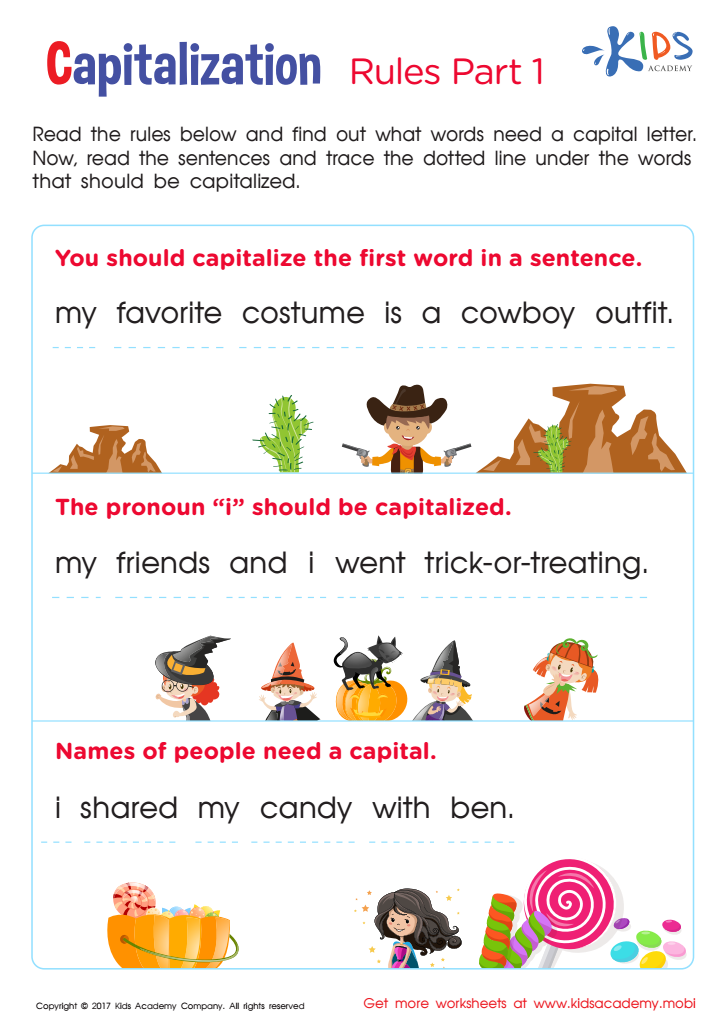
Capitalization Rules: Part 1 Worksheet
Kids entering high school with poor capitalization skills? Equip your 1st grader with the tools to combat this now! This capitalization worksheet will give them the knowledge they need to understand the importance of proper grammar rules and get their writing up to scratch.
Capitalization Rules: Part 1 Worksheet
Worksheet
Fix Punctuation Worksheet
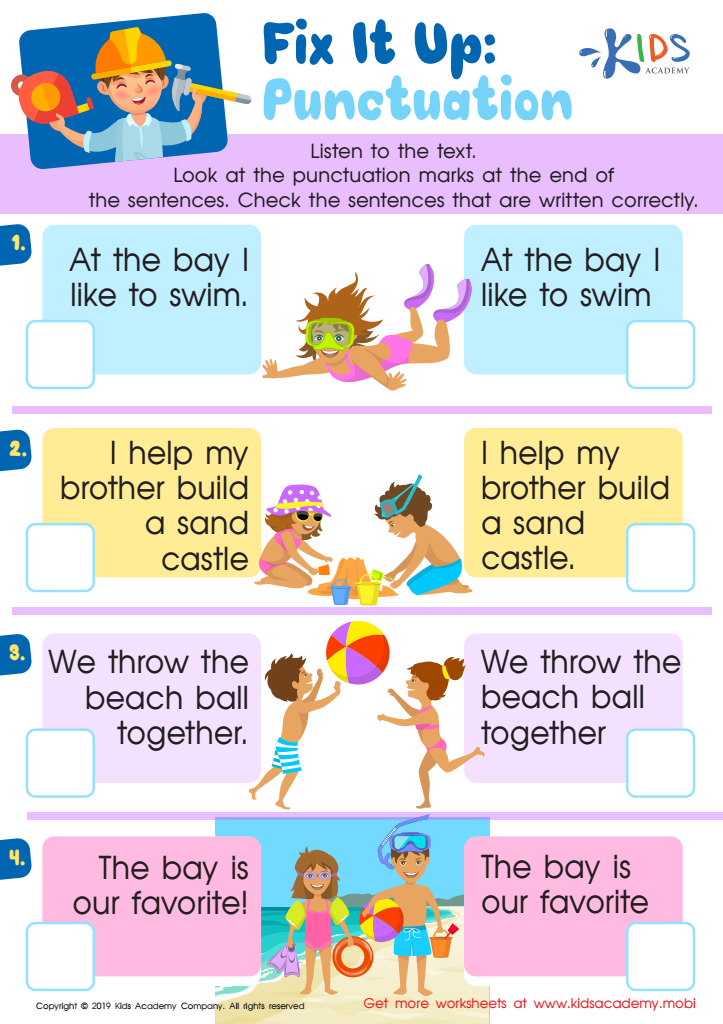
Have your kids tell you which punctuation marks they know before using this colorful worksheet. Read the sentences together and ask them to identify which are correctly punctuated. Guide them to check their answers. This simple activity helps teach kids to use punctuation correctly.
Fix Punctuation Worksheet
Worksheet
Verbs Homework Worksheet
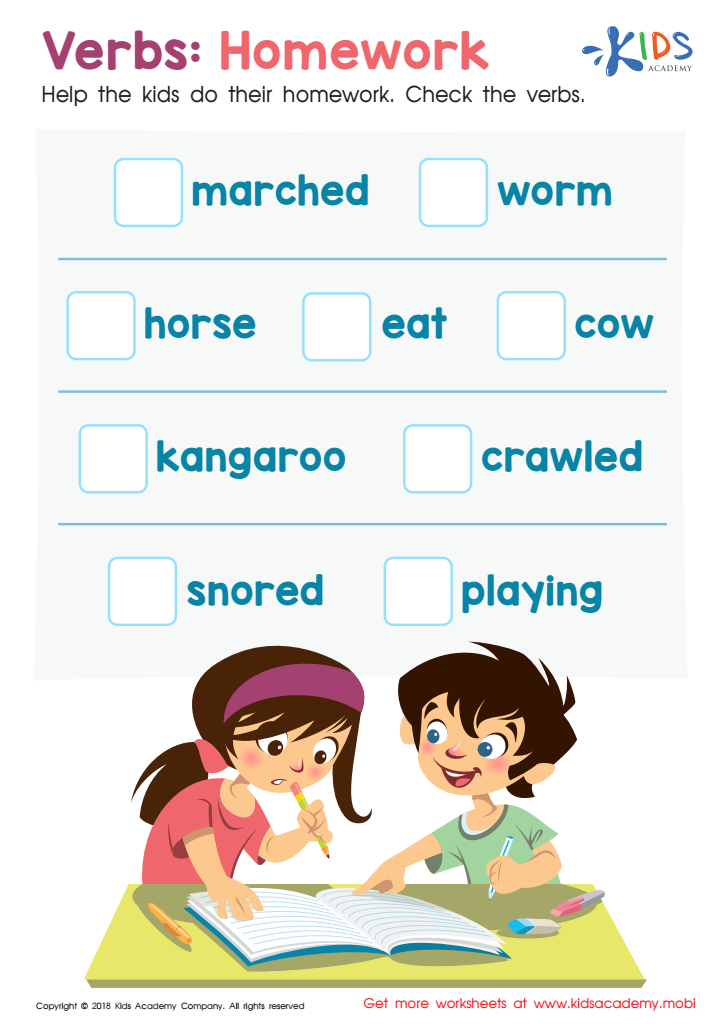
Schoolwork might not be fun, but it is important for your kid to learn. Writing and reading can be tough, but with guidance and a good worksheet they can learn verb use. Give examples, then use this colorful PDF to help them circle the verbs. It's a great way to let them do their own homework.
Verbs Homework Worksheet
Worksheet
Join Kids Academy for Free
Who is primarily going to use this learning content?







.jpg)
Grammar improvement for children aged 6-9 is crucial for several reasons. At this developmental stage, children are like sponge learners, soaking up language skills that will form the foundation for their future communication abilities. Mastery of grammar enhances children's reading and writing skills, enabling them to comprehend complex texts as well as express themselves clearly and effectively.
Moreover, learning grammar at an early age fosters confidence. When children understand the rules of language, they are more willing to engage in discussions, share ideas, and participate in classroom activities. This communicative confidence contributes to their overall academic success.
Strong grammar skills are key for effective social interactions as well. Children who express themselves clearly are better equipped to form friendships and navigate social settings, thus enhancing their emotional and social development.
Additionally, a solid grasp of grammar can impact future educational opportunities. As children progress through school, inadequate grammar knowledge can become a barrier to learning, particularly in subjects like writing, which emphasize clarity and coherence. Therefore, investing time in grammar improvement during these formative years not only supports immediate academic performance but also lays a lasting foundation for lifelong learning and communication skills. Parents and teachers play a vital role in nurturing this essential skillset.








