Graph interpretation Worksheets for Ages 6-9
5 filtered results
-
From - To
Enhance your child’s analytical skills with our engaging Graph Interpretation Worksheets for ages 6-9! These printable worksheets from Kids Academy partake in introducing young learners to the world of data analysis through fun and age-appropriate exercises. Each worksheet is designed to simplify the concepts of reading, interpreting, and creating various types of graphs. By using colorful and relatable imagery, children can quickly grasp the importance and functionality of graphs in everyday life. Ideal for classroom or home use, our worksheets will not only boost mathematical understanding but also foster critical thinking and decision-making skills. Start developing your child's graph interpretation abilities today!
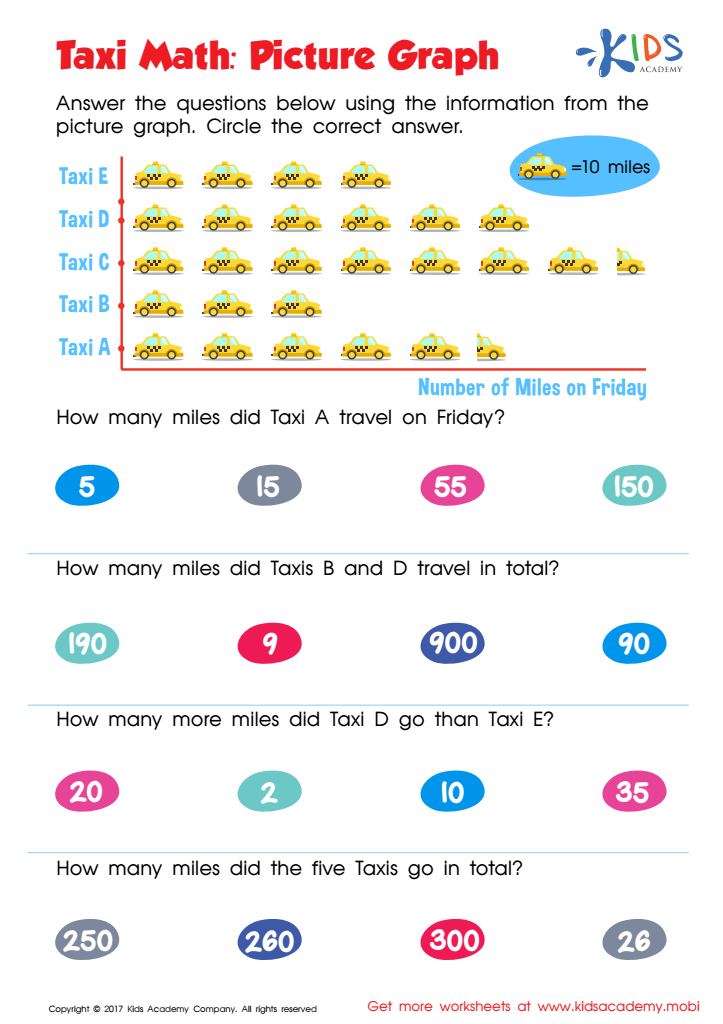
Taxi Math Worksheet
 Assign to My Students
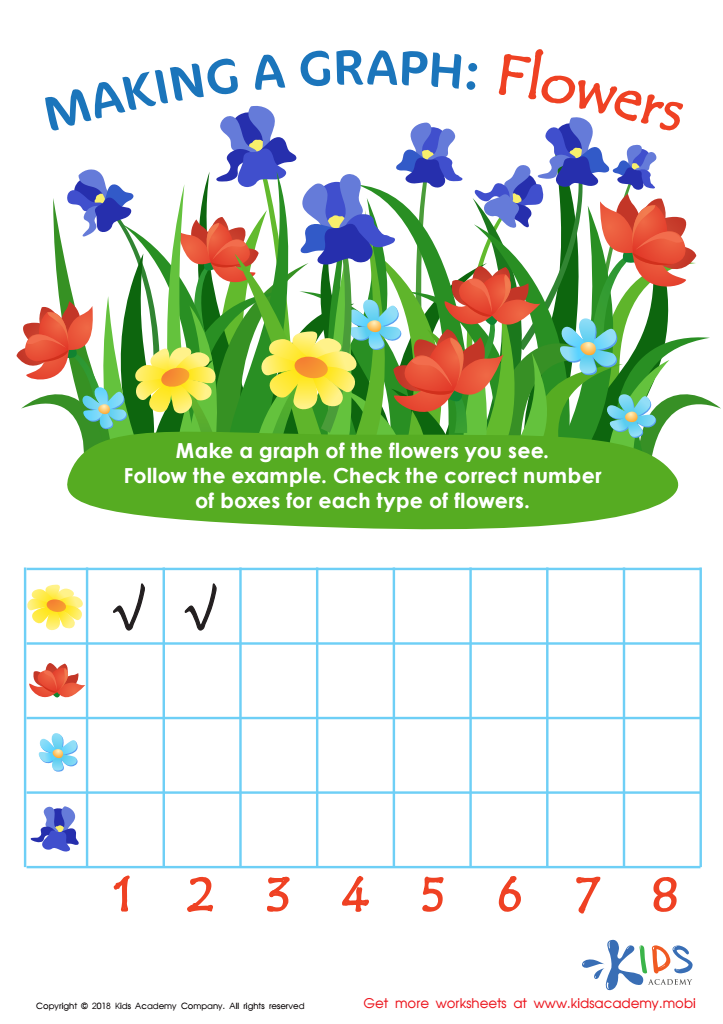
Making a Graph: Flowers Worksheet
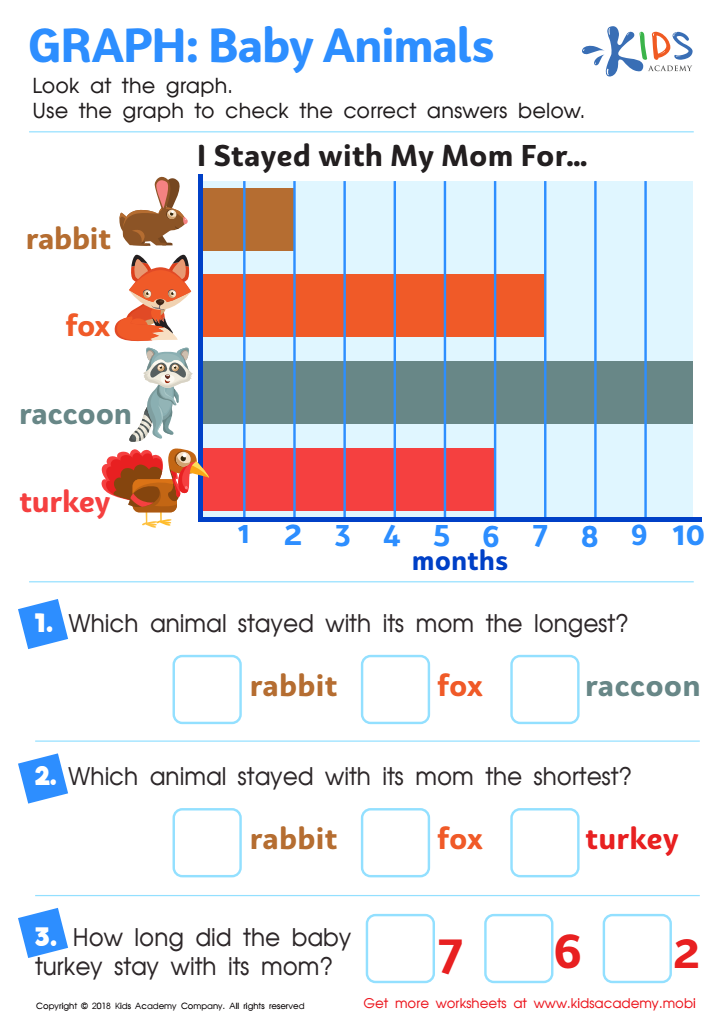
Graph: Baby Animals Worksheet
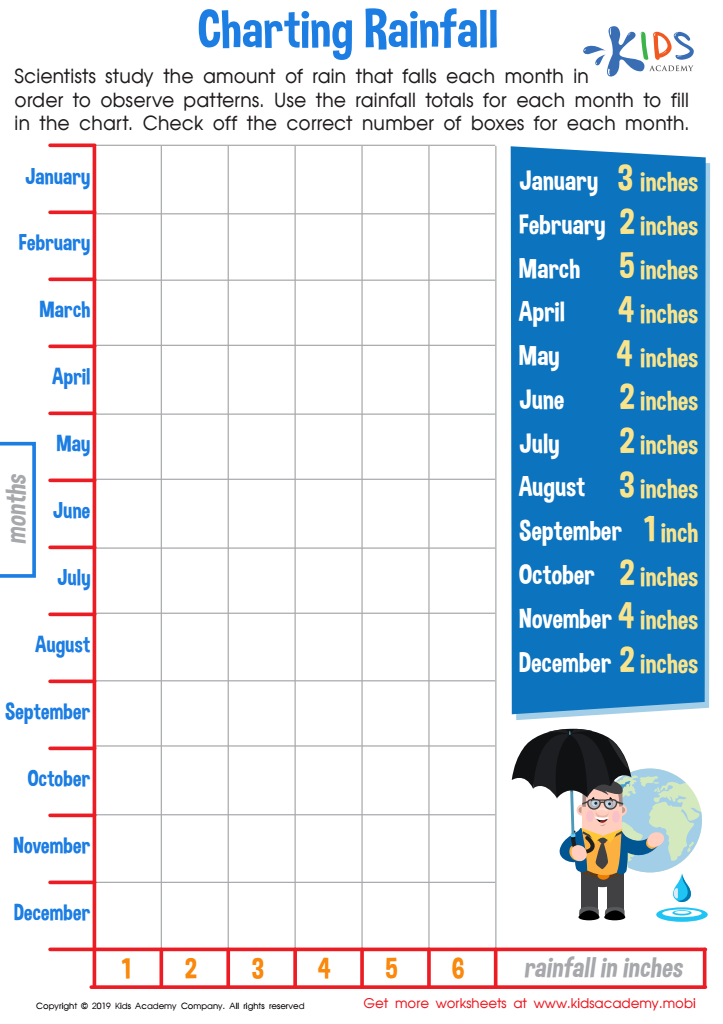
Charting Rainfall Worksheet
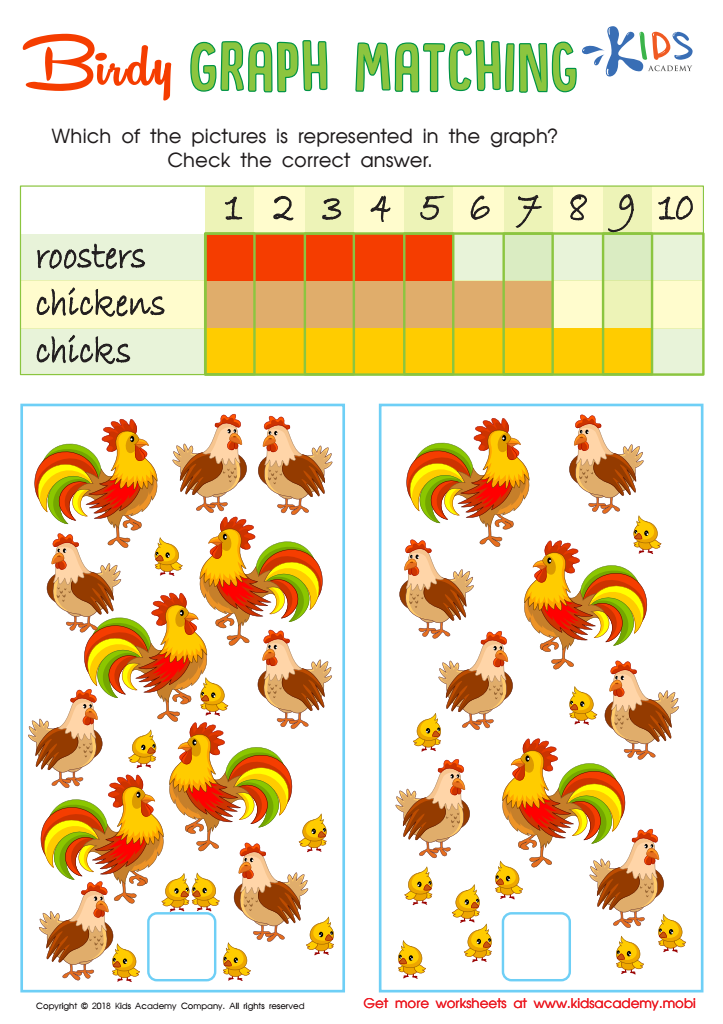
Birdy Graph Matching Worksheet







Understanding graph interpretation for children ages 6-9 is vitally important for their cognitive and academic development. Firstly, graphs are a fundamental tool for organizing information and visually representing data. Introducing young children to the concept of graphs helps them to interpret real-world information in a structured manner, fostering critical thinking. At this developmental stage, children are developing skills in numeracy and basic mathematical concepts, and graphs provide a hands-on, visual method to reinforce these understandings.
Moreover, interpreting graphs involves critical reading and analytical skills. Children learn to compare quantities, observe trends, and make conclusions based on visual data, all of which are key components in problem-solving and scientific inquiry. This early exposure cultivates an intuitive grasp of more complex data interpretation skills they will need in later grades for subjects such as science and social studies.
In addition, teaching graph interpretation can foster collaborative learning. When children work together to create or analyze graphs, they enhance their communication skills through discussion and explanation. This interaction boosts their confidence in expressing ideas and understanding peers' viewpoints.
Overall, prioritizing graph interpretation from an early age can lay a strong foundation for future academic success, enhance cognitive skills, and prepare children to face a data-driven world intelligently and responsibly.








