Filters

55 filtered results

Clear all filters
Favorites
With answer key
Interactive

55 filtered results

Difficulty Level

Grade


Check out this FREE "Logical Reasoning" Trial Lesson for age 6-9!

Fairness

Favorites
With answer key
Interactive
  • 6-9
  • Logical Reasoning
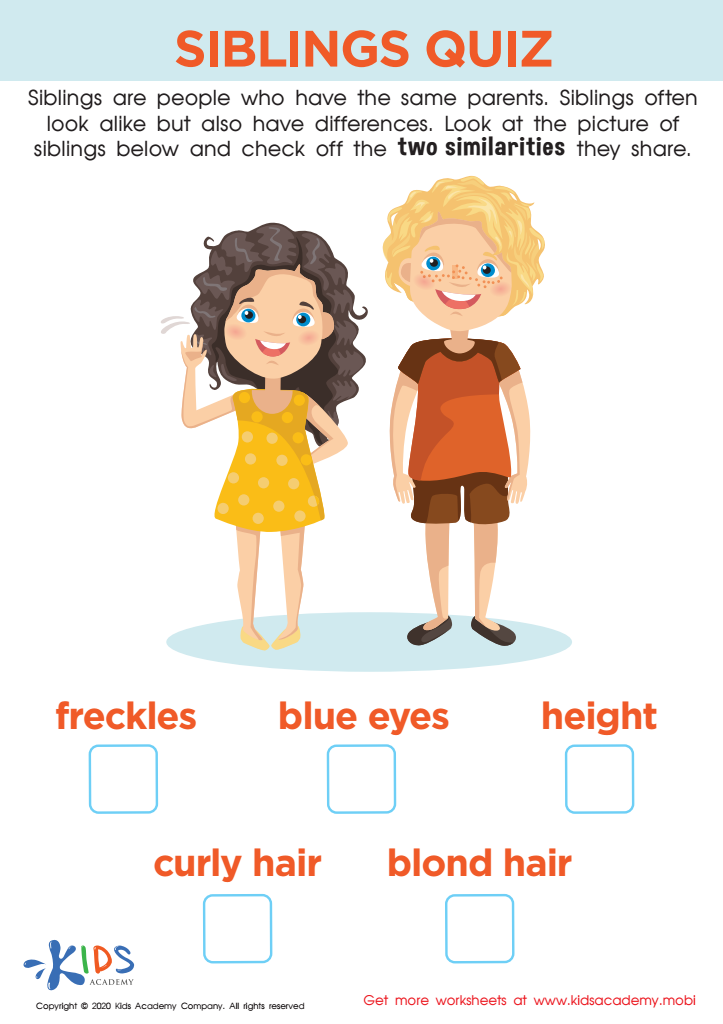
Siblings Quiz Worksheet

Siblings Quiz Worksheet

Your children may know a sibling is a sister or brother, but not realize what it means to be one. Siblings share the same parents, which means they share many genes. They are alike in many ways, but also have their own unique traits. Help your future scientist understand this early biology concept with this fun worksheet. They'll be tasked with finding similarities between two siblings on the page.
Siblings Quiz Worksheet
Worksheet
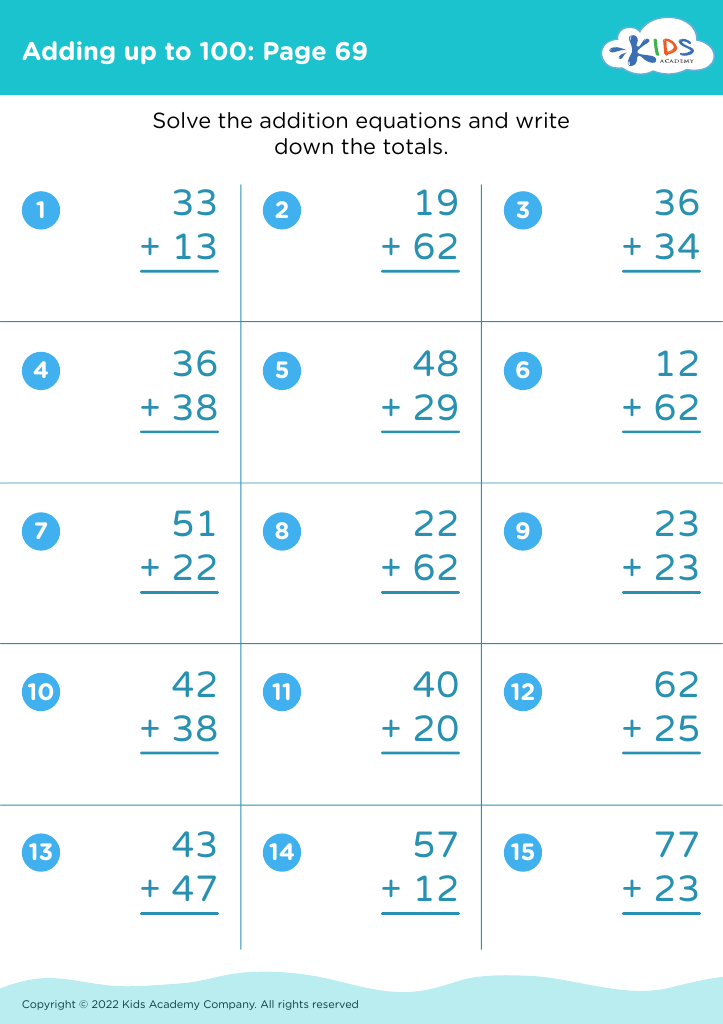
Adding up to 100: Page 69

Adding up to 100: Page 69

Adding up to 100: Page 69
Worksheet
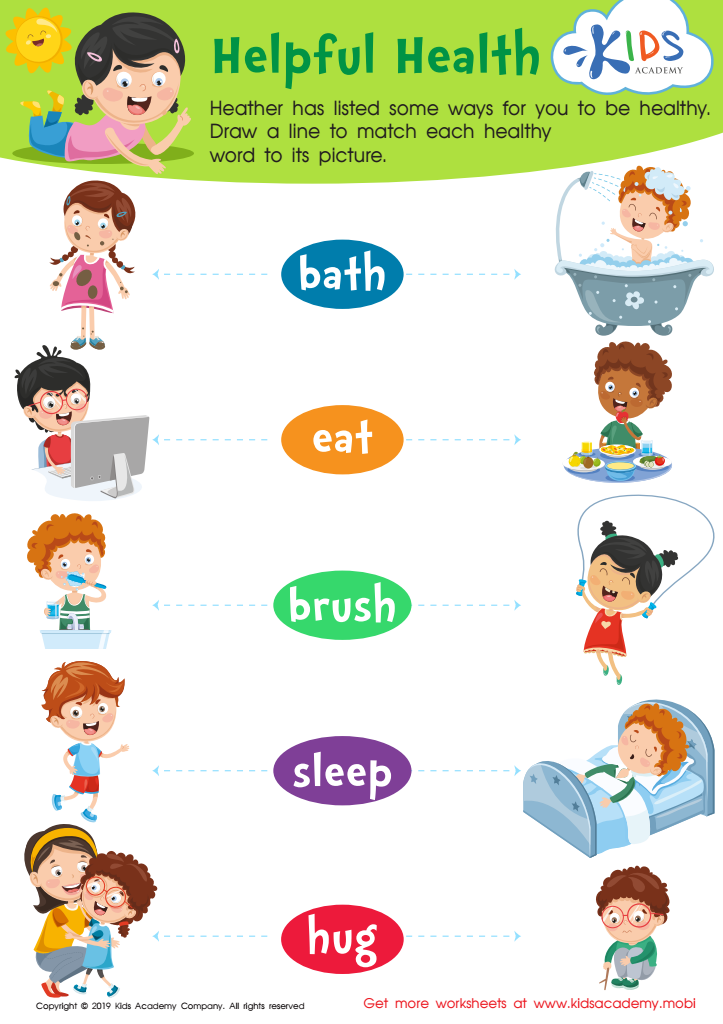
Helpful Health Worksheet

Helpful Health Worksheet

Kids can learn healthy habits with this free worksheet! With their pal Heather, they'll trace lines to connect health words with pictures like brushing teeth, hugging, and getting enough sleep. It's a great way to help young ones understand healthy activities.
Helpful Health Worksheet
Worksheet
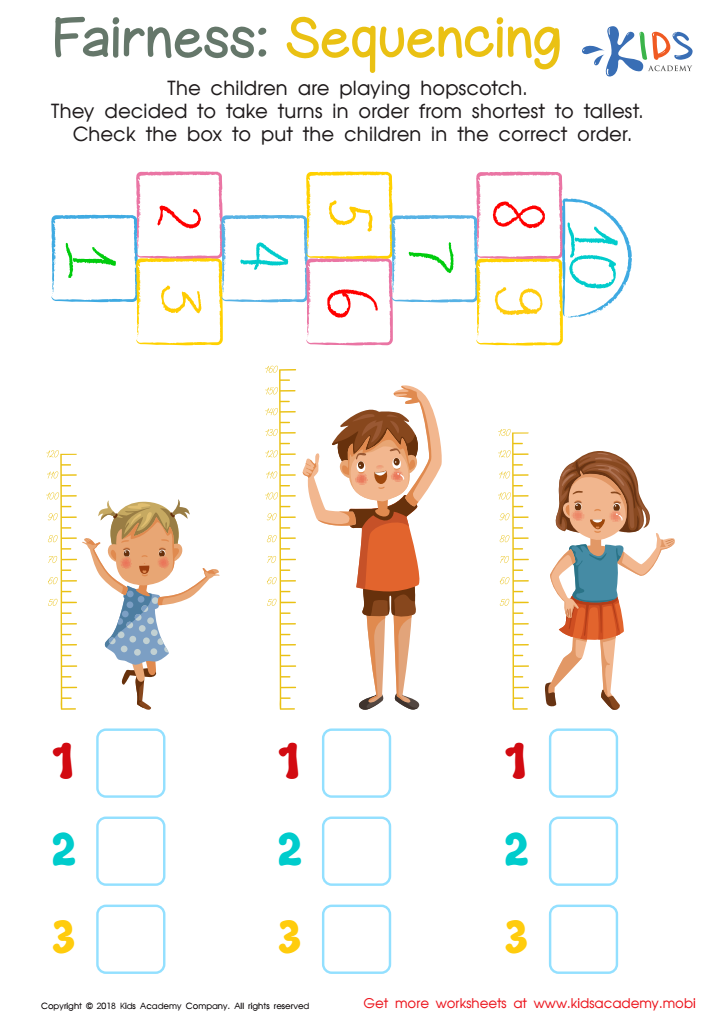
Fairness: Sequencing Worksheet

Fairness: Sequencing Worksheet

Kids likely already know how to play hopscotch. Ask them to show you the shortest, tallest and middle child in the worksheet. Then, help them order them from shortest to tallest by checking the boxes.
Fairness: Sequencing Worksheet
Worksheet
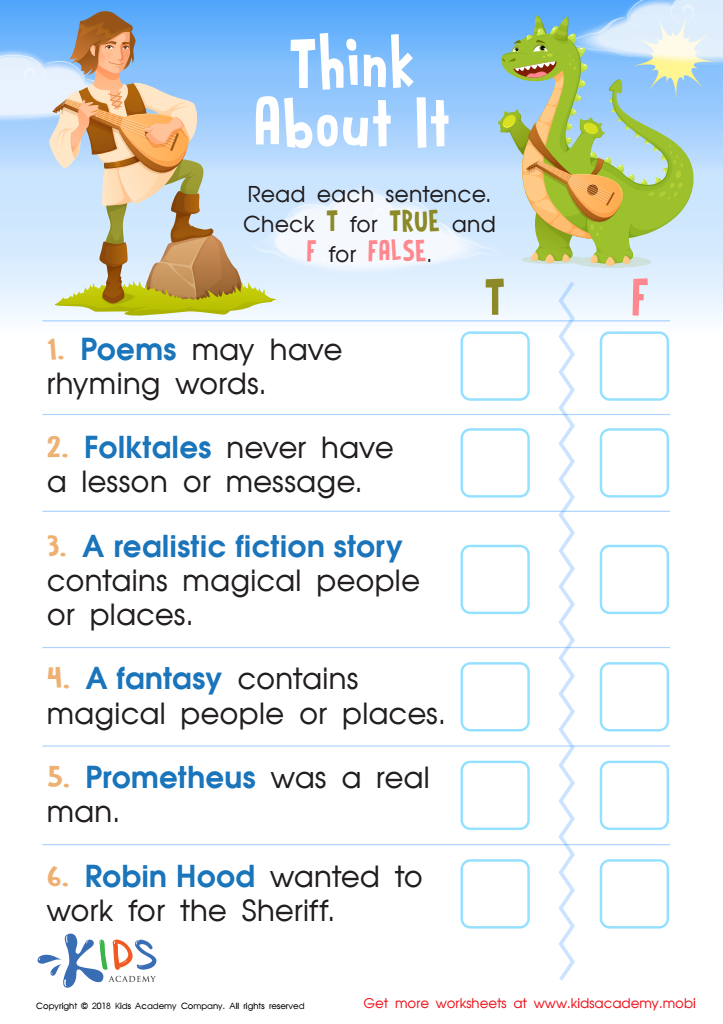
Think About It: Assessment Worksheet

Think About It: Assessment Worksheet

Reading is a fun and important way to learn. Help your students become better readers with this simple yet colorful worksheet. Read each sentence aloud, then have them read it by themselves. Ask them to check T for True and F for False. It's a great way to practice their reading skills!
Think About It: Assessment Worksheet
Worksheet
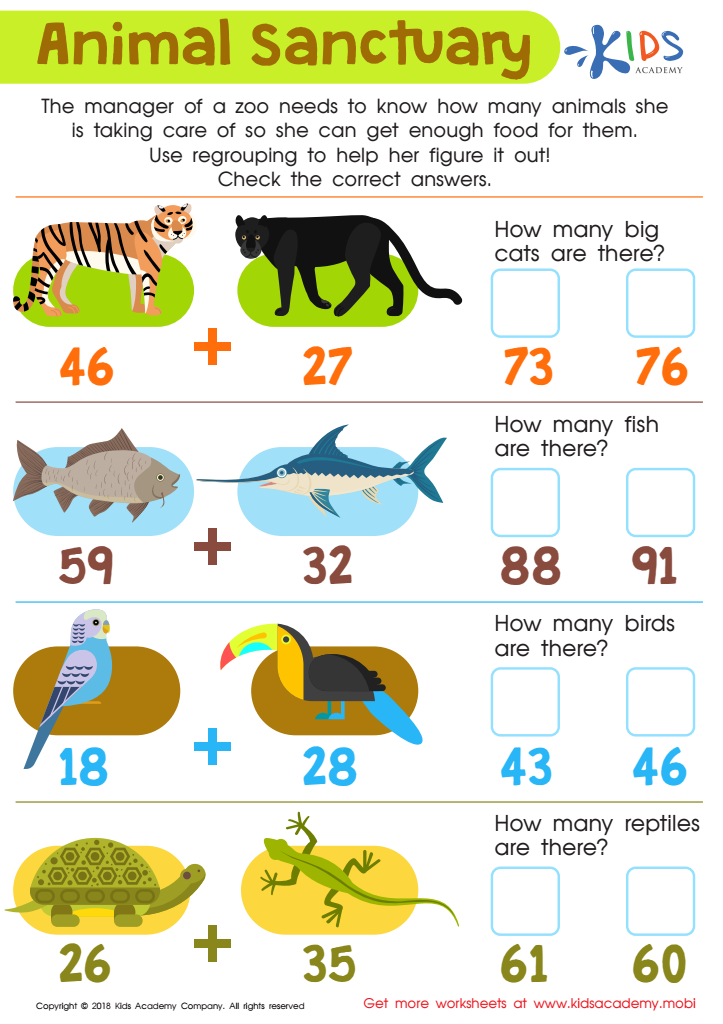
Animal Sanctuary Worksheet

Animal Sanctuary Worksheet

Do your kids love visiting the zoo? Ask which animals they remember & which ones they liked the most. The manager needs help to get enough food for all the animals. Help your child use regrouping to figure out how many animals there are. And ask them to check the answers.
Animal Sanctuary Worksheet
Worksheet
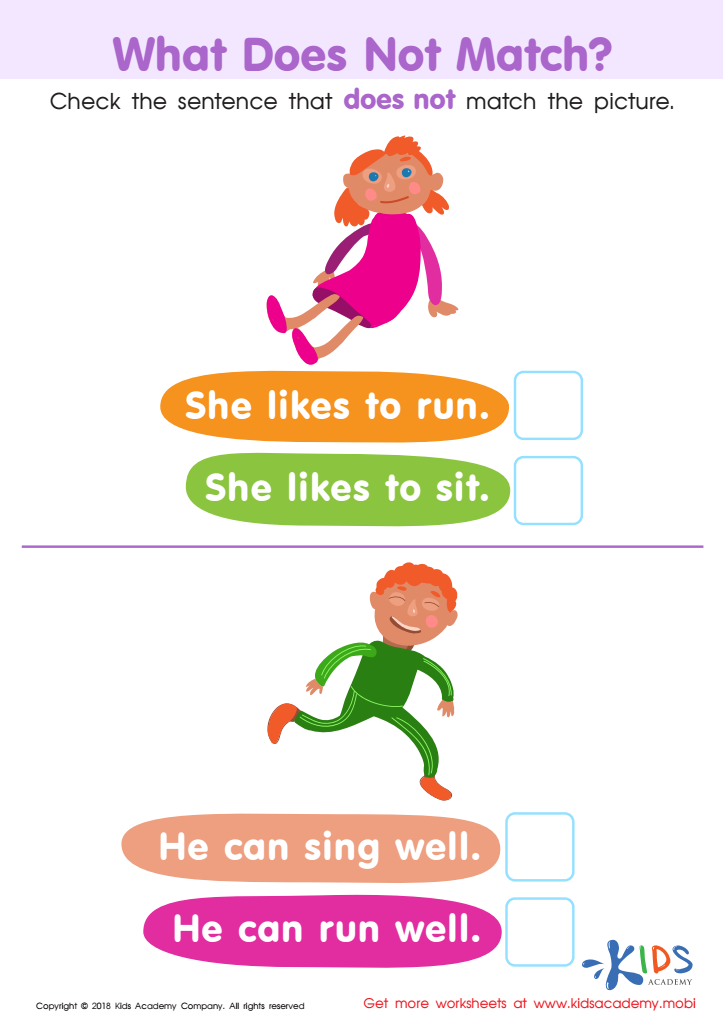
What Does Not Match? Worksheet


What Does Not Match? Worksheet

Emerging readers need to practice using visual cues and repetitive text. This colorful PDF provides them with an opportunity to look at pictures, use discrimination and discern which phrase does not match. It also enables them to gain familiarity with high-frequency words to aid decoding longer sentences.
What Does Not Match? Worksheet

Worksheet


... 2 3

Logical reasoning is a crucial skill for children aged 6-9 as it lays the foundation for critical thinking and problem-solving abilities. At this stage of development, children are naturally curious and eager to explore, making it an ideal time to foster their reasoning skills. Educators and parents should care about logical reasoning because it enhances children's ability to understand relationships, make connections, and evaluate outcomes—skills that are essential in academic settings and everyday life.

Proficiency in logical reasoning supports children's literacy and numeracy. For instance, it helps them comprehend reading materials by identifying cause and effect or predicting what might happen next. In math, logical reasoning is vital for understanding concepts such as patterns, sequences, and the rationale behind mathematical operations.

Moreover, strong logical reasoning skills encourage children to become more independent thinkers. They learn to approach problems methodically, evaluate different perspectives, and make informed decisions, providing them with tools to navigate challenges they may encounter. Fostering logical reasoning not only benefits academic performance but also prepares children for decision-making in personal and social contexts, making it an essential focus for parents and educators alike.