Multiplication practice Worksheets for Ages 6-9 - Page 4
80 filtered results
-
From - To
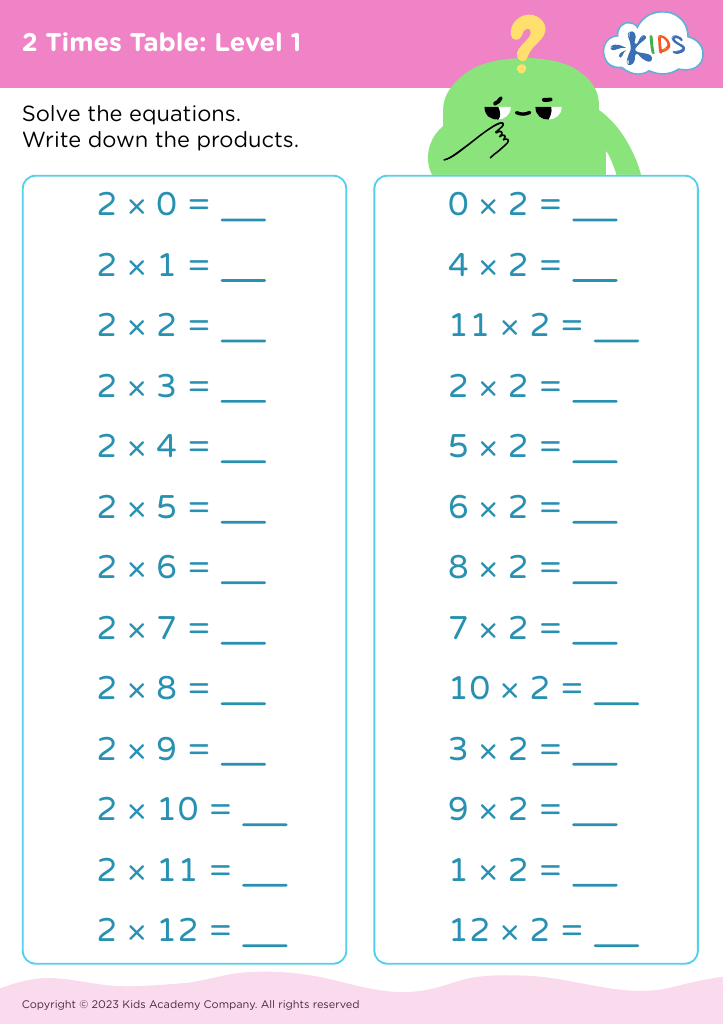
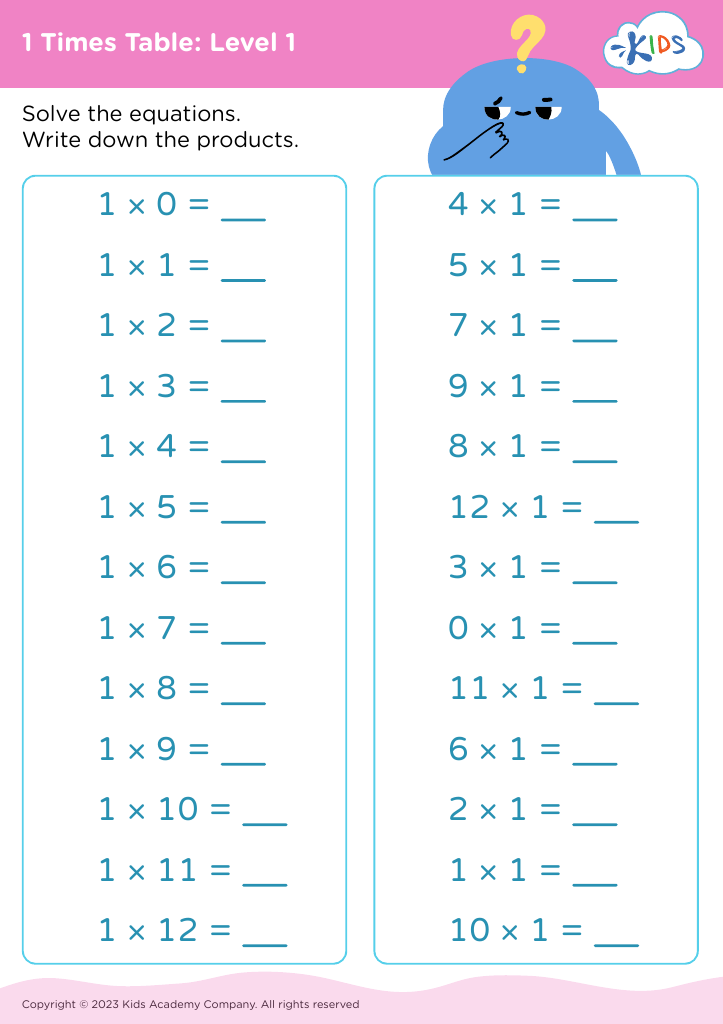
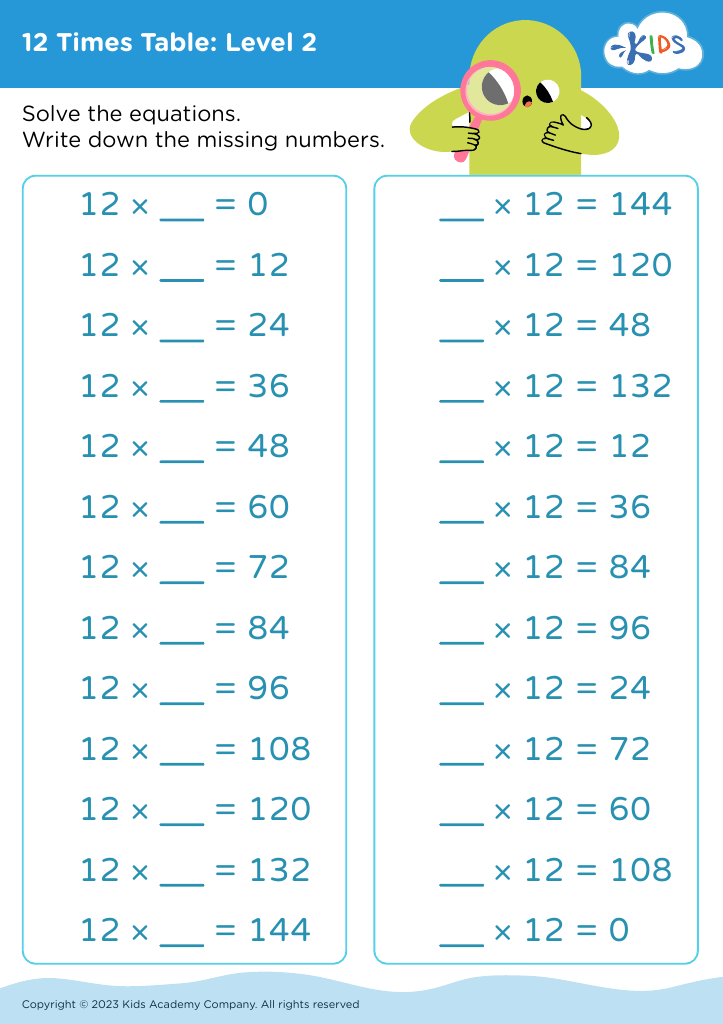
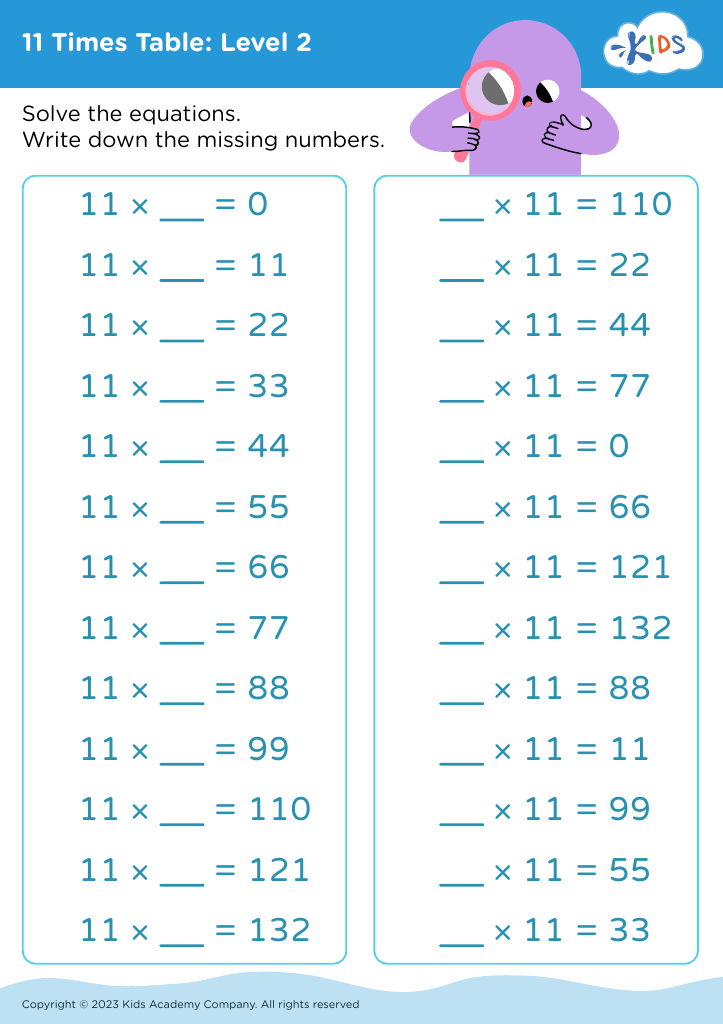
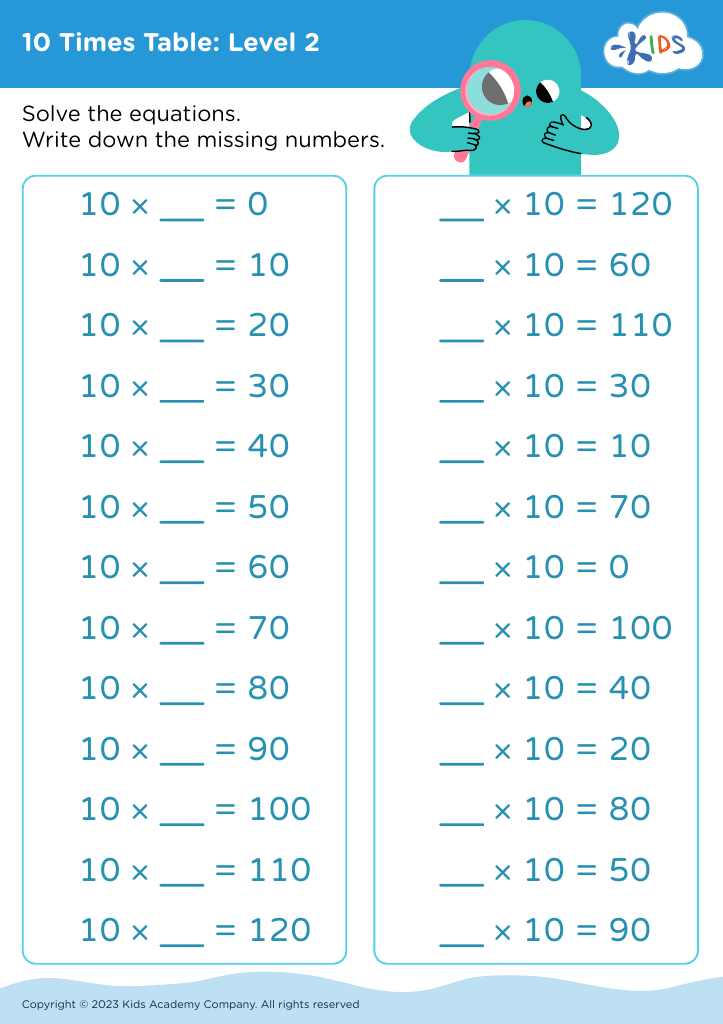
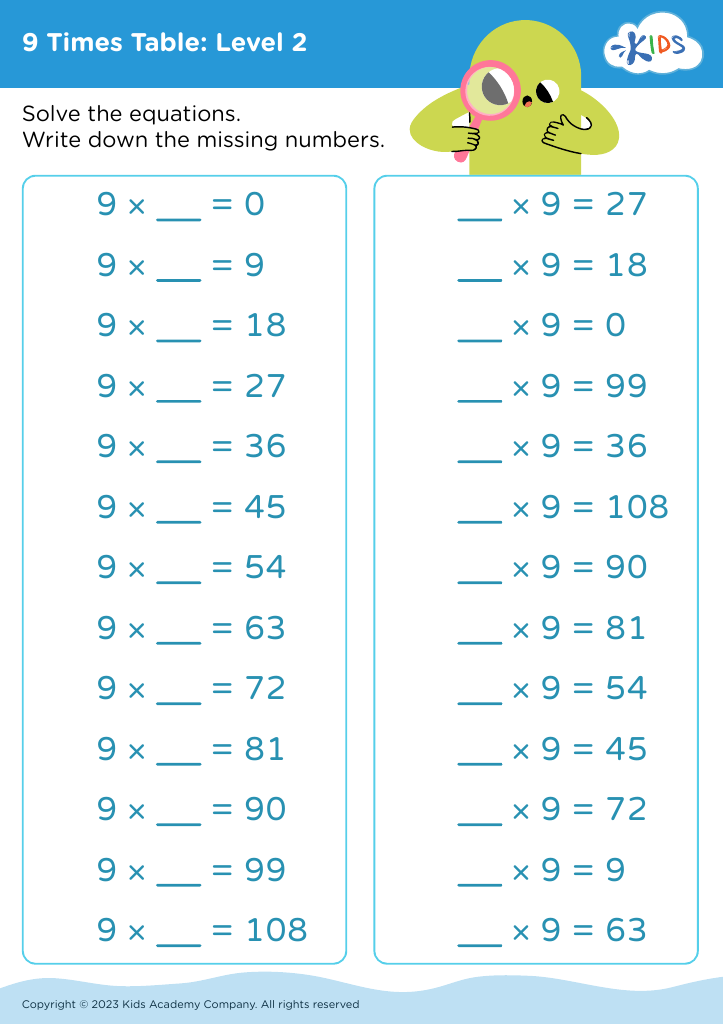
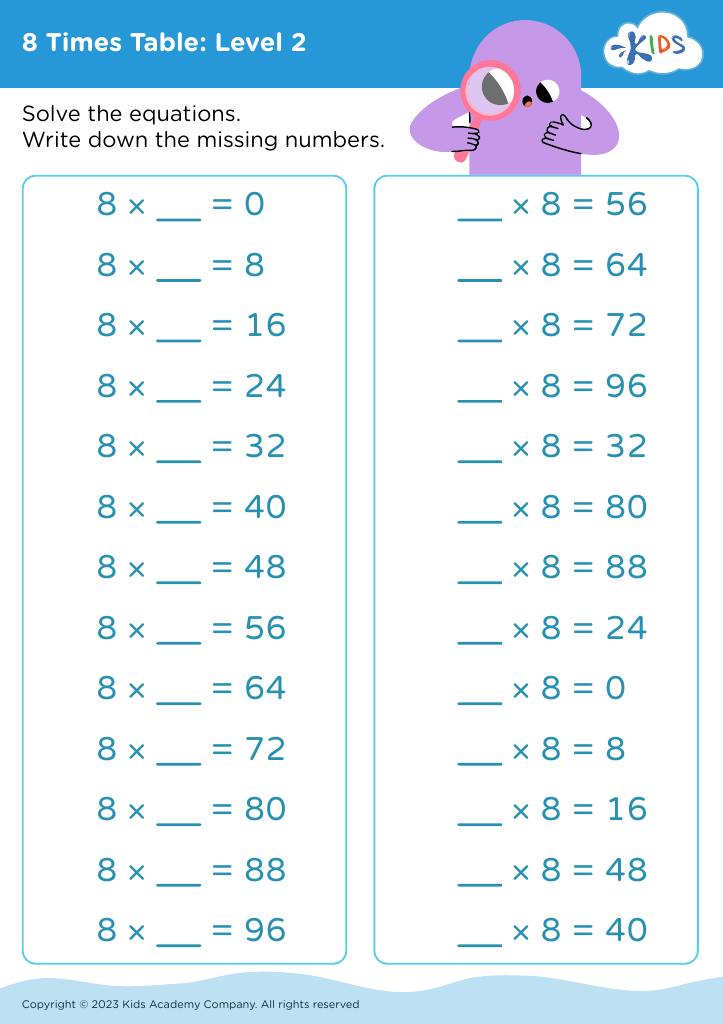
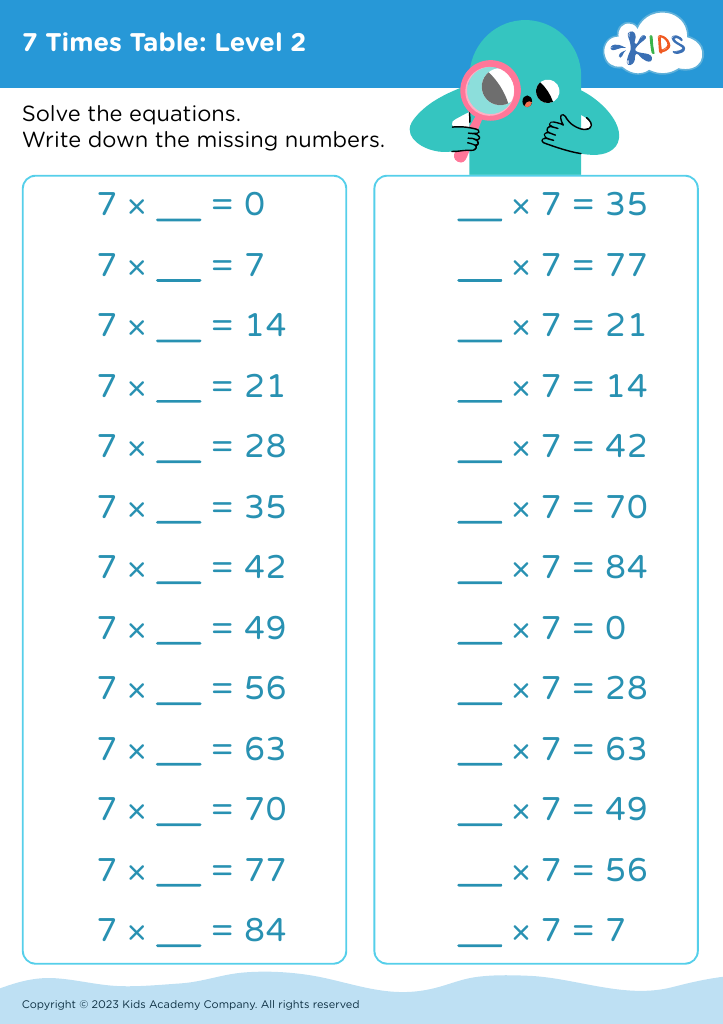








Multiplication practice for children aged 6-9 is crucial for several reasons, making it a key concern for both parents and teachers. Firstly, mastering multiplication at an early age builds a strong foundation for not only mathematical concepts but also for logical reasoning and problem-solving skills. Multiplication is a cornerstone for more advanced math, such as division, fractions, and algebra, which students will encounter as they progress in their education.
Secondly, early mastery of multiplication enhances cognitive development. It helps children improve their memory, concentration, and ability to process multiple pieces of information simultaneously. Practicing multiplication also encourages discipline and perseverance, as children learn the importance of practice to master a skill.
Furthermore, multiplication is embedded in daily life, and early mastery can make real-world applications, such as understanding time, money, and measurement, much easier for children. This practical aspect can boost a child's confidence, enable them to participate more fully in classroom activities, and improve their academic performance overall.
Finally, developing these skills within the optimal age range of 6-9 ensures children are not left behind in an essential area, fostering a more inclusive and equitable educational environment. Thus, caring about multiplication practice helps prepare children for future academic success and everyday life.








