
Number representation Worksheets for Ages 6-9
4 filtered results
Difficulty Level
Grade
Age
-
From - To
Subject
Activity
Standards
Our Number Representation Worksheets for ages 6-9 are specially designed to help young learners master the basics of identifying and writing numbers. These engaging and educational worksheets help children understand number concepts through various fun activities like counting, matching, and more. With vibrant illustrations and kid-friendly prompts, these worksheets make learning numbers enjoyable and effective. Perfect for both classroom and at-home practice, they support core math skills and build a strong foundation for future mathematical success. Start exploring our selection today to give your child the tools they need to excel in math confidently!
Favorites
With answer key
Interactive
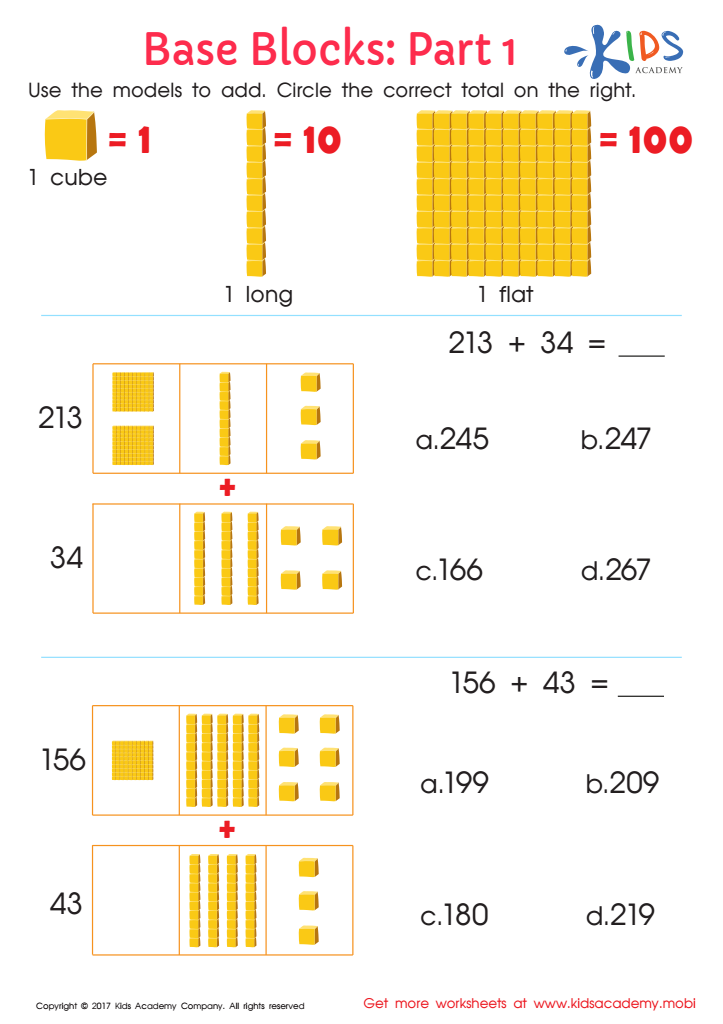
Base Ten Blocks Worksheet: Part 1
They promote numeracy and are a great substitute when kids don't have access to physical blocks.
 Assign to My Students
Base Ten Blocks Worksheet: Part 1
Worksheet
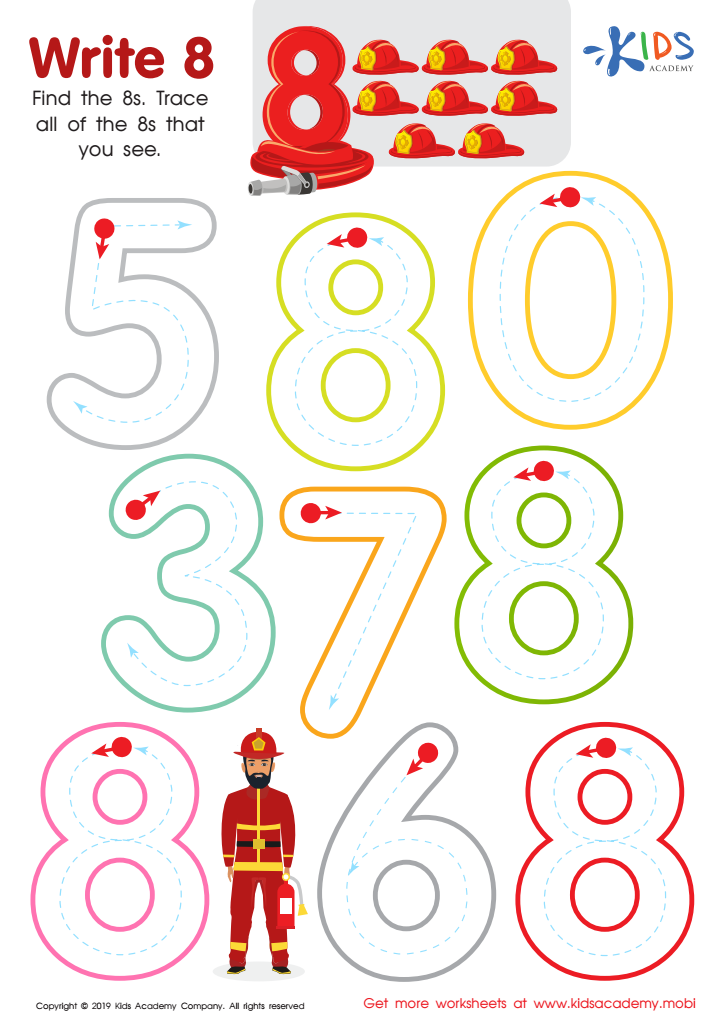
Write 8 Worksheet
Once your kids can count small numbers, it's time to learn how to write them. With your help and patience, they will soon be pros! This worksheet will make learning easier. Help them spot the 8s in the picture, then help them trace them.
Write 8 Worksheet
Worksheet
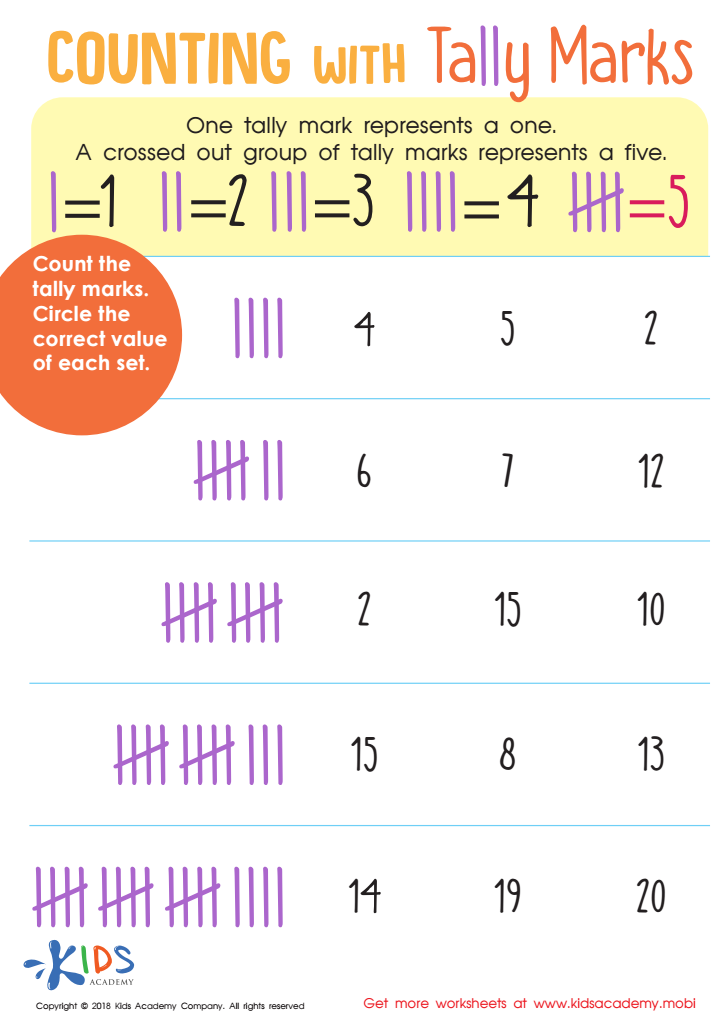
Counting with Tally Marks Worksheet
Young mathematicians can use tally marks to count on or back, and learn to give larger numbers value with efficiency. This PDF teaches them that each tally equals one and five can be grouped together to add/subtract quickly and accurately. They can then use tallies for math problems and scorekeeping during games with friends.
Counting with Tally Marks Worksheet
Worksheet
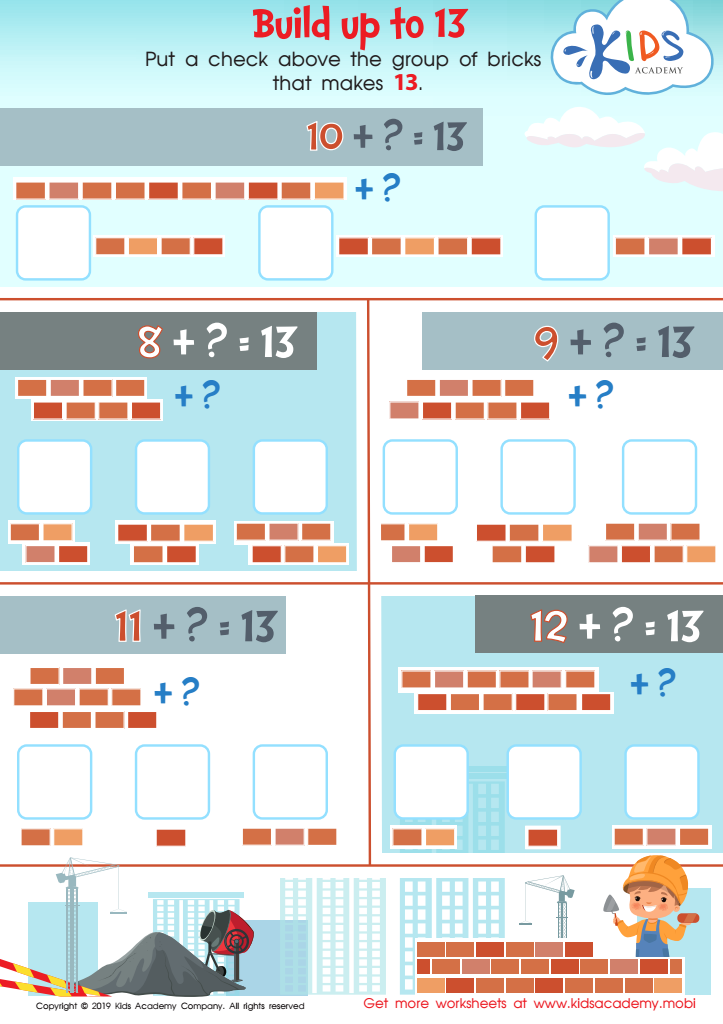
Build up to 13 Worksheet
Help your kids master addition and subtraction with this worksheet! It'll help clear up any confusion they may have with adding different numbers. Have them add up the simple equations and mark the group of bricks that makes 13. It's a great way for them to get familiar with the basics.
Build up to 13 Worksheet
Worksheet
Join Kids Academy for Free
Who is primarily going to use this learning content?





Number representation is crucial for children aged 6-9 because it forms the foundation for their mathematical understanding and future success in education. At this developmental stage, children transition from basic counting to more complex mathematical operations, including addition, subtraction, and early multiplication. Number representation helps them grasp these concepts more tangibly.
Firstly, understanding various representations of numbers—such as numerals, words, objects, and pictorial images—enhances a child's numerical fluency. This multi-faceted comprehension enables children to recognize numbers in different contexts, making abstract ideas more concrete and relatable. When children can visualize numbers and relate them to real-world scenarios, they develop better problem-solving skills.
Secondly, proficiency in number representation supports the development of logical thinking and reasoning abilities. It allows children to classify, compare, and sequence numbers effectively, which are critical skills not only in mathematics but in everyday life decisions.
Moreover, a strong foundation in number representation can boost a child's confidence. Success in early math experiences fosters a positive attitude towards the subject, essential for future learning.
In summary, caring about number representation equips children with crucial skills for understanding the world around them, building higher-level math skills, and developing a positive attitude towards learning. Consequently, it’s an indispensable focus for parents and teachers working with children in this age group.








