
Phonetic awareness Worksheets for Ages 6-9
4 filtered results
Difficulty Level
Grade
Age
-
From - To
Subject
Activity
Standards
Enhance your child’s reading skills with our engaging Phonetic Awareness Worksheets designed specifically for ages 6-9. These worksheets provide a fun and interactive way for young learners to build foundational skills in phonics and sound recognition. Your child will enjoy activities like identifying sounds, matching letters to sounds, and blending phonemes, all aimed at improving their literacy and boosting confidence. Each worksheet is crafted to cater to different learning styles, ensuring a comprehensive approach to phonetic learning. Start your child’s journey to becoming a proficient reader today with our easy-to-use, printable resources that make learning enjoyable and effective!
Favorites
With answer key
Interactive
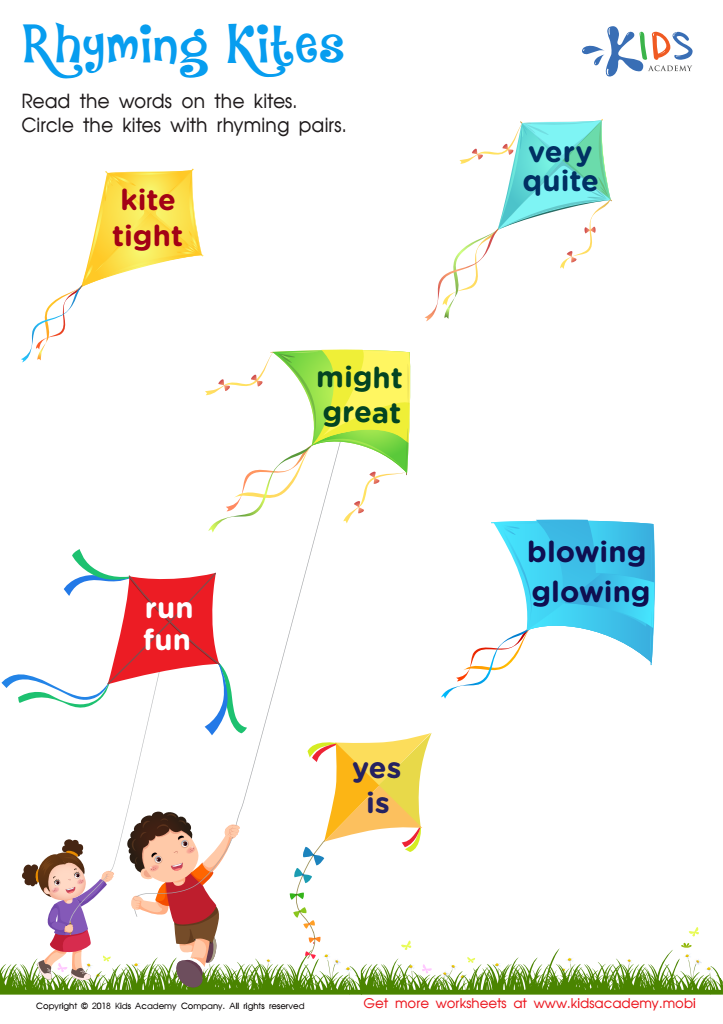
Rhyming Kites Worksheet
On a spring day, fly a kite! Kids Academy has a rhyming worksheet to boost your child's skills. Read the pairs of words aloud. Circle the kites if they rhyme, leave them blank if they don't. Listen carefully and find all the rhyming word pairs to complete this sheet!
 Assign to My Students
Rhyming Kites Worksheet
Worksheet
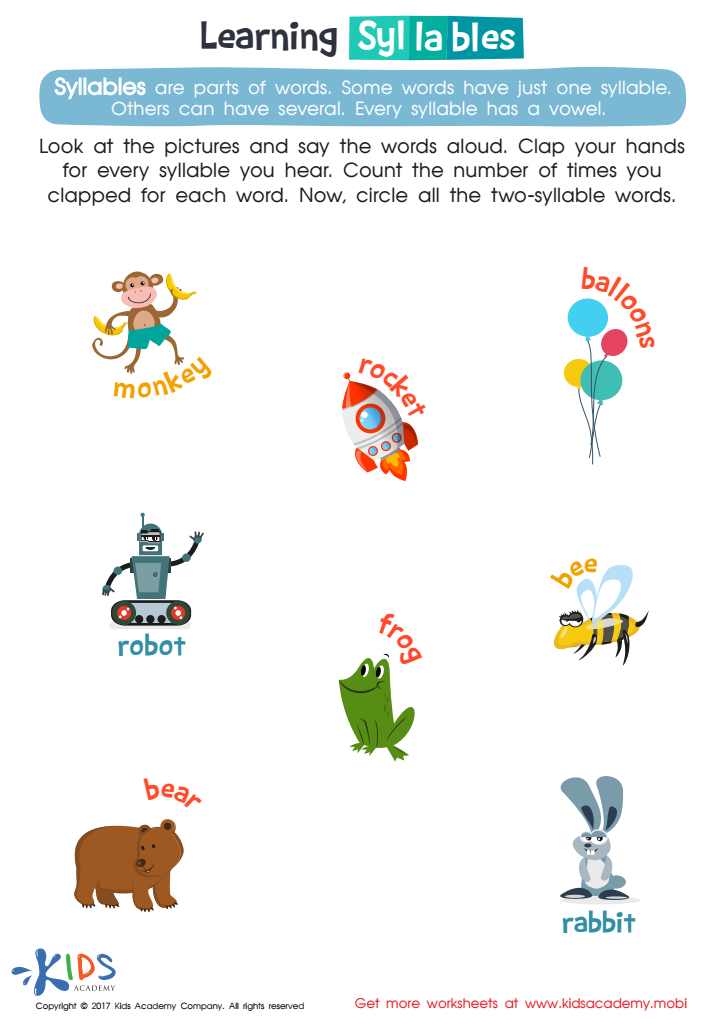
Learning Syllables Word Structure Worksheet
Teach kids to read and spell with our fun Learning Syllables worksheet. Kids will have a blast clapping and saying familiar words while counting syllables. Colorful and catchy, it's a great way to make learning enjoyable!
Learning Syllables Word Structure Worksheet
Worksheet
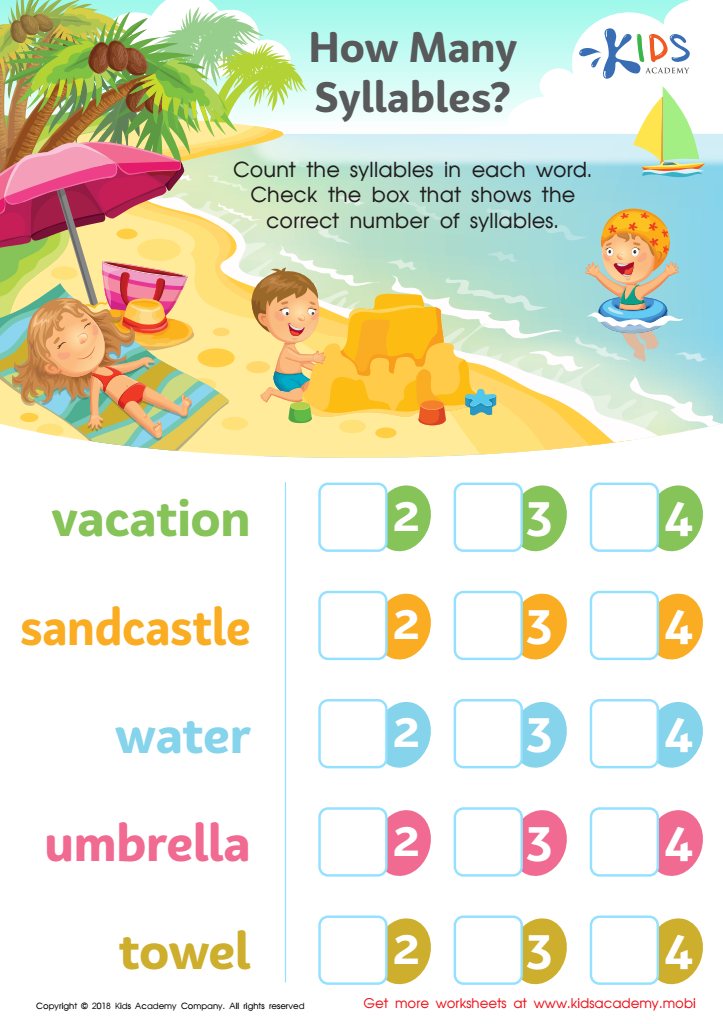
How Many Syllables Worksheet
Draw up memories of sunny beach days with your child. Ask them to tell you their favourite activities, objects seen. Read the words in the picture aloud and help them count the syllables. Then check the box with the right number of syllables.
How Many Syllables Worksheet
Worksheet
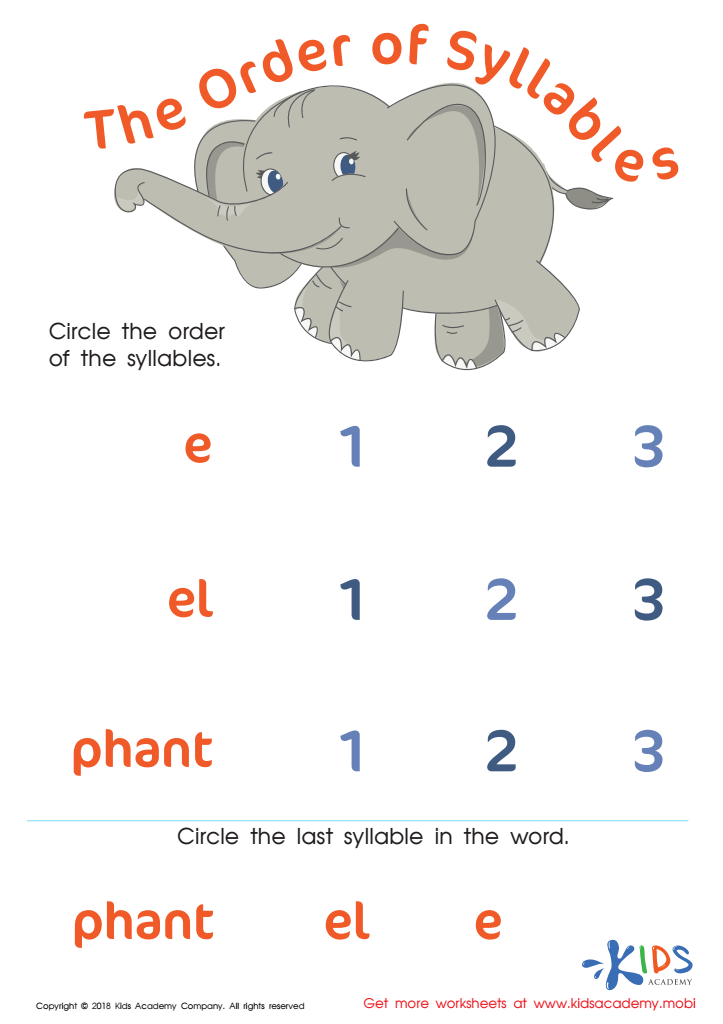
The Order of Syllables Worksheet
Syllabication is vital for prereading and decoding words. Download this fun, free worksheet to help your reader practice breaking words into syllables and arranging them for reading. It also strengthens fine motor skills as they trace the numbers for each syllable, guided by a cheerful elephant!
The Order of Syllables Worksheet
Worksheet
Join Kids Academy for Free
Who is primarily going to use this learning content?








Phonemic awareness is a crucial skill for children aged 6-9 as it lays the foundation for reading and writing. During these formative years, children are transitioning from learning to read to reading to learn. Phonemic awareness helps them understand that words are made up of individual sounds, which is vital for decoding unfamiliar words.
Parents and teachers should care about phonemic awareness because it directly impacts a child's literacy development. Strong phonemic awareness skills correlate to higher reading abilities, improved spelling, and overall academic success. Children who struggle with this skill are at a greater risk of developing reading difficulties, potentially leading to frustration and decreased self-esteem in their academic journey.
Moreover, engaging children in phonemic activities, such as rhymes, segmenting, and blending sounds, can be a fun and interactive process that fosters a love for language. Nurturing these skills through games and songs also boosts cognitive development, enhancing critical thinking and problem-solving abilities.
In summary, phonemic awareness is not just about learning sounds; it is a gateway to unlocking children's capabilities in reading, writing, and effective communication, which are essential skills for their lifelong learning. Therefore, parents and teachers should prioritize fostering these foundational skills in young learners.








