Phonics practice Worksheets for Ages 6-9 - Page 2
25 filtered results
-
From - To
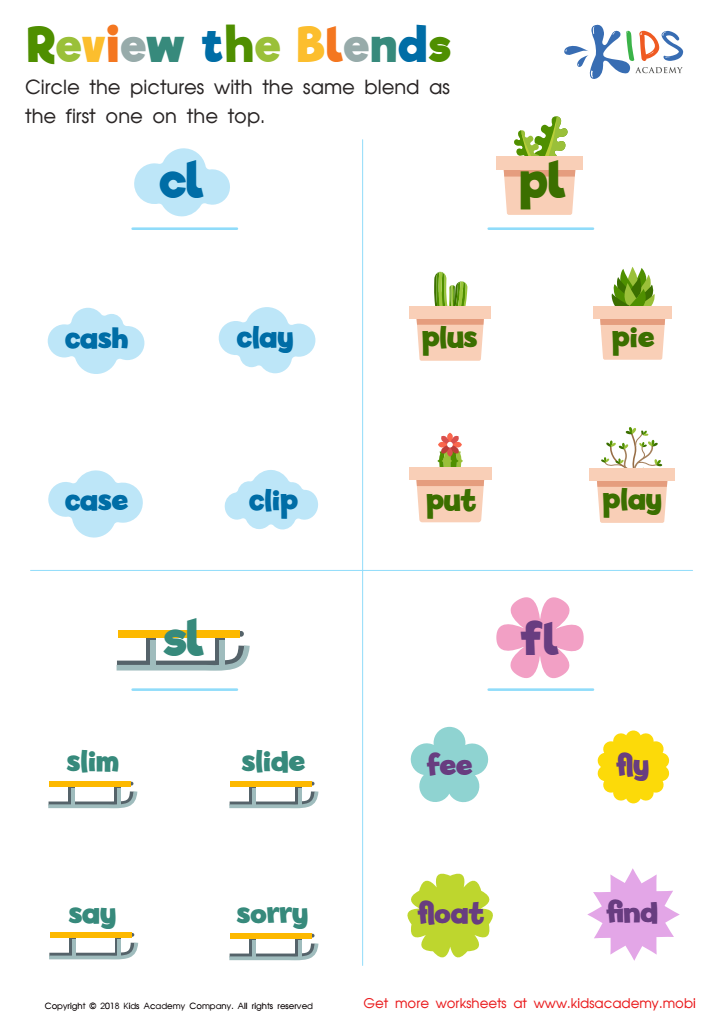
Review the Blends Worksheet
 Assign to My Students








Phonics practice is crucial for children aged 6-9 as it lays the foundation for their reading and spelling abilities. During these pivotal years, children are developing essential literacy skills that will serve them throughout their academic journey and beyond. Phonics instruction helps learners understand the relationship between letters and sounds, enabling them to decode new words independently.
With a strong phonics background, children gain confidence in their reading abilities, leading to increased motivation and a love for reading. This confidence translates to improved comprehension skills, allowing children to engage more deeply with texts across various subjects.
Moreover, effective phonics practice addresses different learning styles, making it inclusive for all students. It also plays a significant role in closing the achievement gap; children who struggle with reading can benefit immensely from targeted phonics strategies.
Parents and teachers should prioritize phonics to ensure that children can navigate the literacy demands of their education. Supporting phonics practice fosters not only academic success but also lifelong learners who can think critically and engage with the world around them. Ultimately, the ability to read proficiently opens up a world of opportunities for children, both in school and in their futures.








