Practice subtraction Worksheets for Ages 6-9
11 filtered results
-
From - To
Discover an exciting collection of subtraction practice worksheets designed specifically for children ages 6-9! These engaging resources help young learners master their subtraction skills through fun, interactive activities. Each worksheet is tailored to reinforce essential concepts, build confidence, and improve problem-solving abilities. From simple equations to word problems, our printable worksheets cater to various learning styles, ensuring every child has the support they need. Perfect for classroom use or at-home practice, these subtraction worksheets offer a wonderful way to make learning enjoyable and effective. Help your child develop a strong foundation in math with our comprehensive subtraction practice resources!
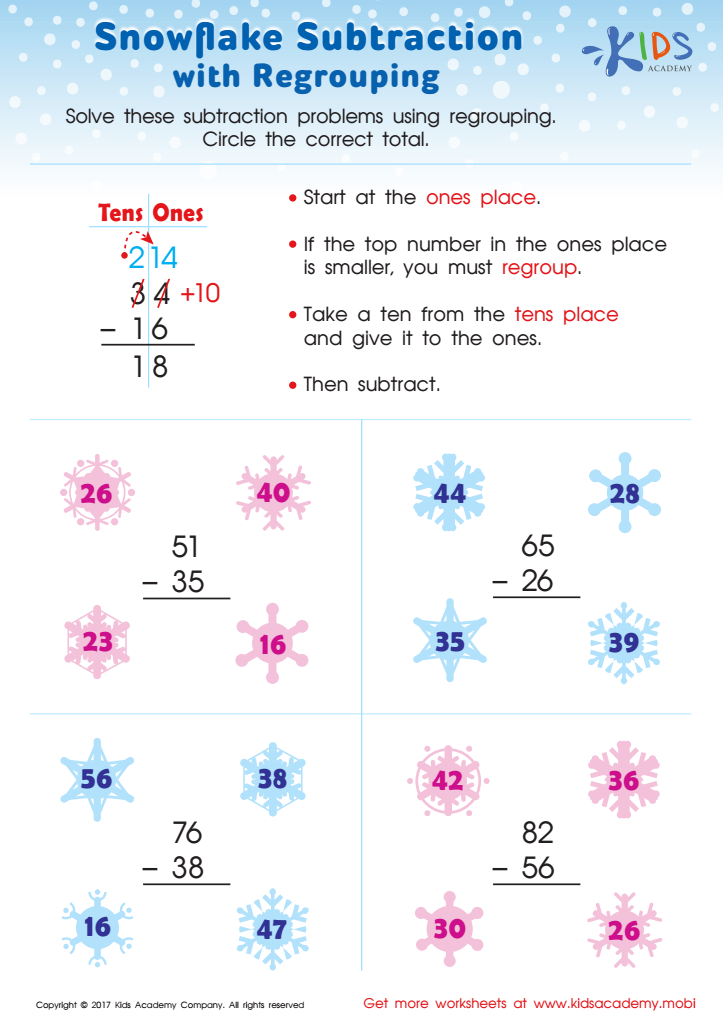
Subtraction With Regrouping Worksheet: Snowflake
 Assign to My Students
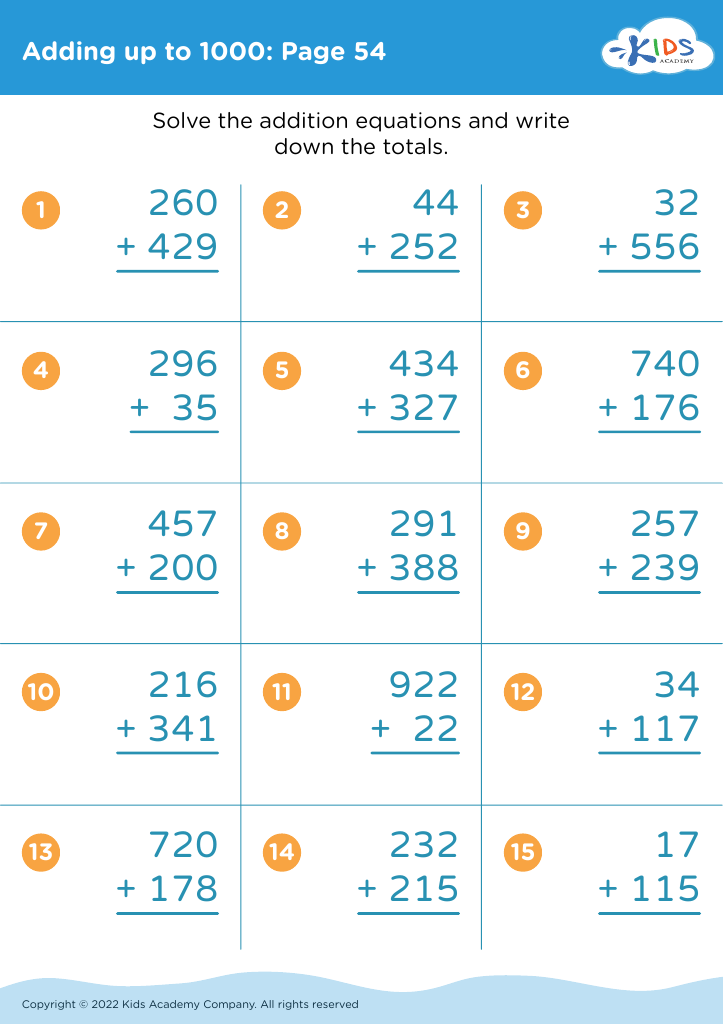
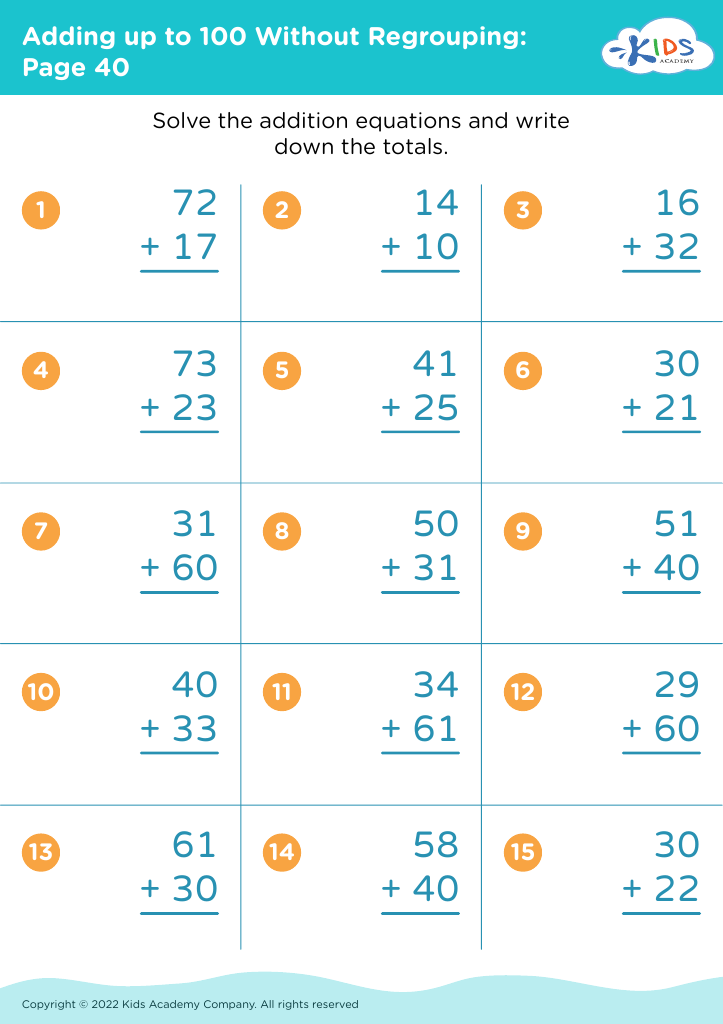
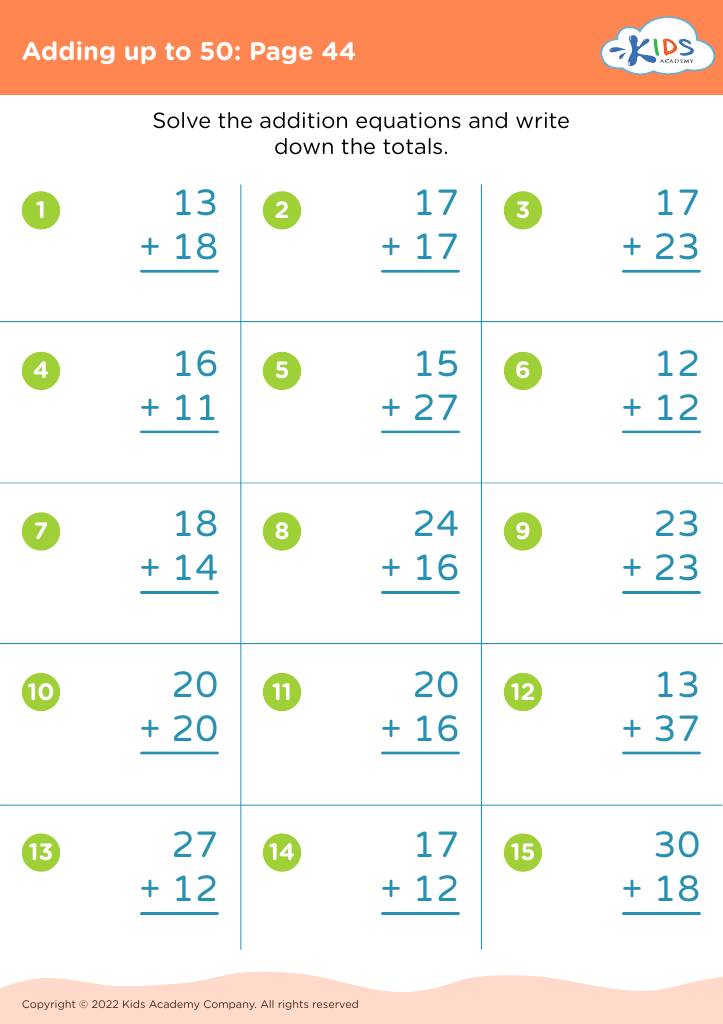
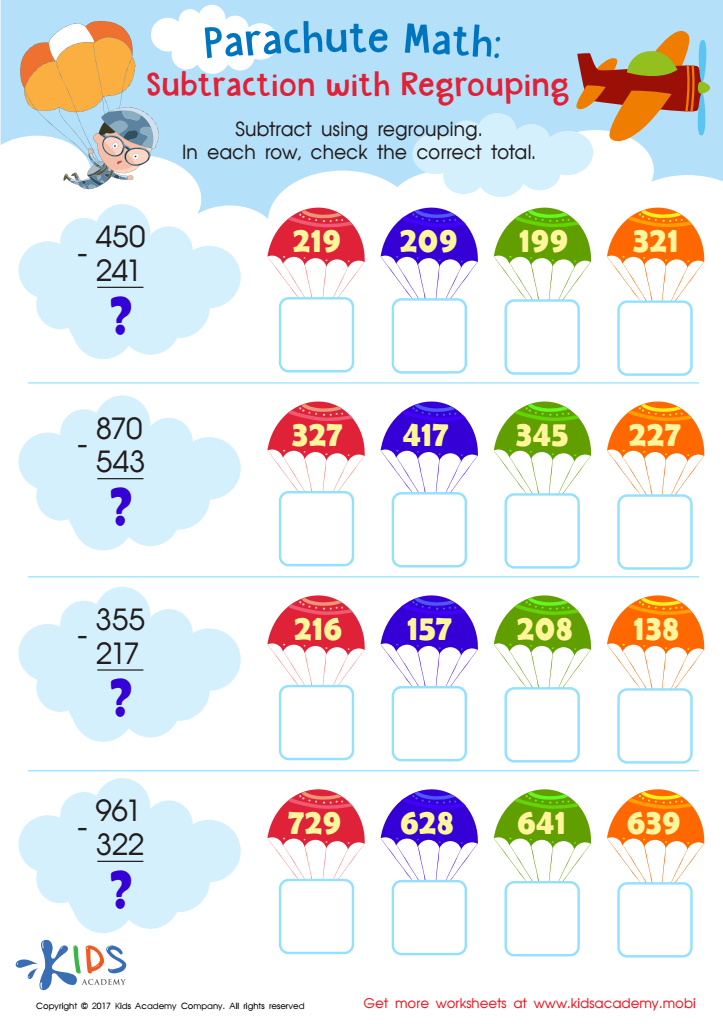
Subtraction with Regrouping for 3rd Grade Worksheet






Practice subtraction is crucial for children aged 6-9 as it lays the foundation for their mathematical understanding and problem-solving skills. During this developmental stage, children are transitioning from basic arithmetic to more complex mathematical concepts. Mastering subtraction allows them to grasp essential skills such as number sense, relationships between numbers, and the ability to manipulate and reason with quantities.
Subtraction, integral to everyday life, supports cognitive development by enhancing critical thinking and analytical skills. Whether calculating change during purchases, measuring ingredients in cooking, or managing time, subtraction is consistently applied in real-world contexts. Furthermore, a strong grasp of subtraction boosts self-confidence in children, encouraging them to engage with mathematics without fear.
For parents, engaging in subtraction practice provides valuable opportunities for bonding and learning together. It opens discussions about problem-solving strategies and encourages a positive attitude towards math. Teachers also benefit, as they can implement tailored methods to address the specific learning needs of their students.
Overall, regular subtraction practice not only cultivates a child’s mathematical skills but also supports their social and emotional development, making it a priority for both parents and educators alike.








