
Prefix understanding Worksheets for Ages 6-9
3 filtered results
Difficulty Level
Grade
Age
-
From - To
Subject
Activity
Standards
Boost your child's linguistic skills with our expertly designed Prefix Understanding Worksheets for ages 6-9! These engaging resources help young learners grasp the concept of prefixes, enhancing their vocabulary and reading comprehension. Our worksheets include fun activities and exercises that encourage students to identify and use common prefixes like "un-", "re-", and "pre-". Perfect for primary school students, these printable worksheets support classroom learning or homeschooling. By mastering prefixes, children can decode new words, improving their language skills and confidence. Make learning interactive and enjoyable with our comprehensive prefix resources!
Favorites
With answer key
Interactive
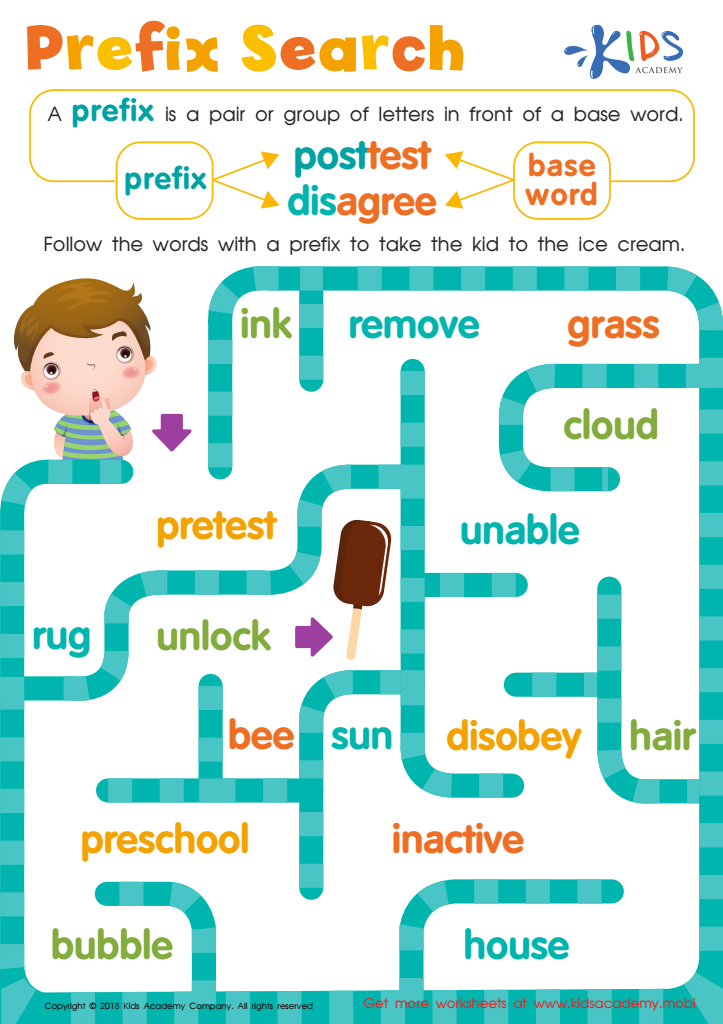
Reading: Prefix Search Worksheet
Maze your way through prefixes! This worksheet helps students practice reading new words with a prefix and figuring out the base word. An understanding of prefixes gives students the skills to comprehend new words. A fun and useful activity for the reading classroom!
 Assign to My Students
Reading: Prefix Search Worksheet
Worksheet
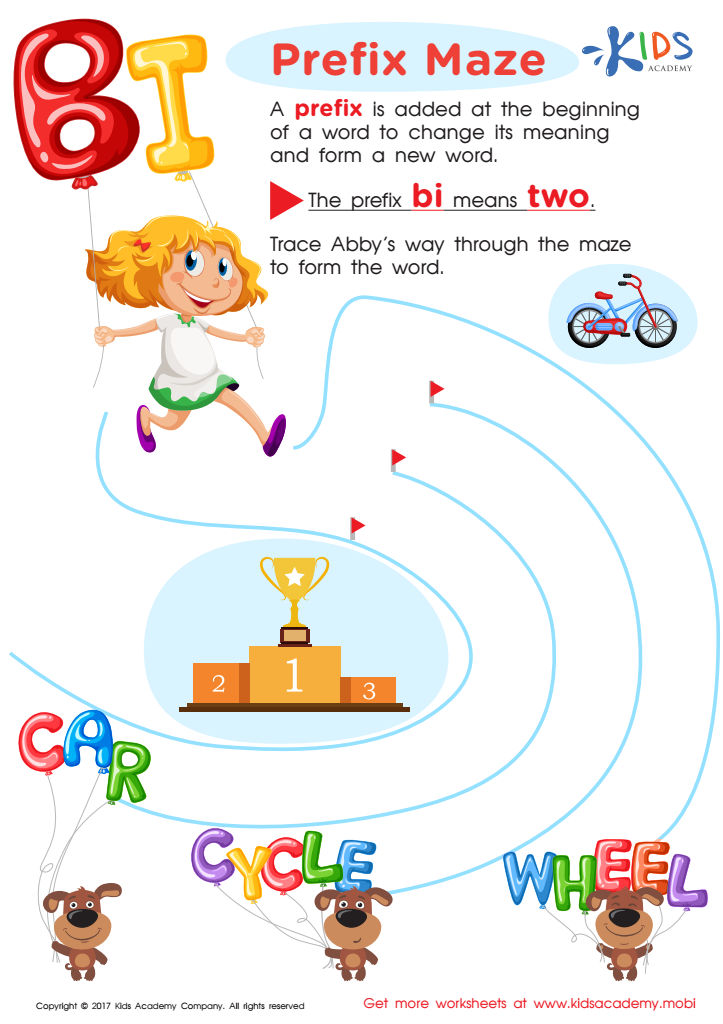
Prefix Bi Words Worksheet
Help "bi" find its root word in this fun and colorful prefix worksheet! Your child will learn how words are built while having a great time!
Prefix Bi Words Worksheet
Worksheet
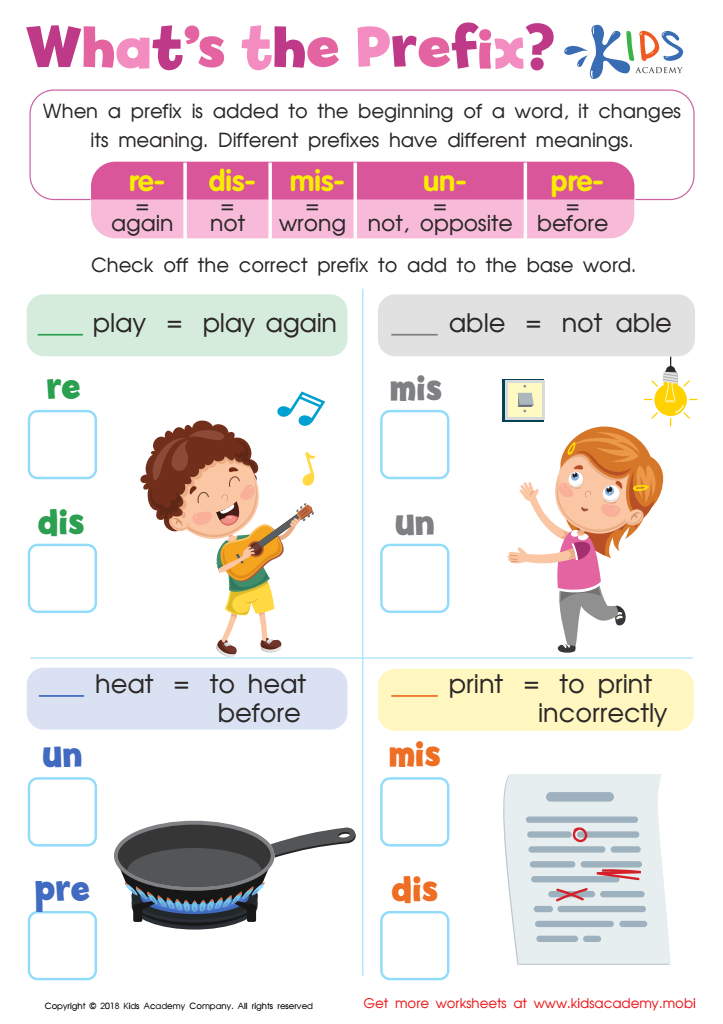
Reading: What Is the Prefix Worksheet
This worksheet helps children learn about prefixes by matching pictures and base words with the correct prefix. Learning these prefixes and their meanings is essential for reading and vocabulary comprehension. Use this free download to check your students' understanding.
Reading: What Is the Prefix Worksheet
Worksheet
Join Kids Academy for Free
Who is primarily going to use this learning content?






Understanding prefixes is crucial for children aged 6-9 as it lays a solid foundation for vocabulary development and reading comprehension. Prefixes are meaningful word parts added to the beginning of base words to alter their meanings, thus helping young learners decode new words more efficiently. For example, understanding that the prefix “un-” means “not” helps children recognize that “unhappy” means “not happy.”
By grasping the role of prefixes, children become better equipped to infer the meanings of unfamiliar words they encounter, fostering independent reading and a love for exploration. This skill not only enhances their vocabulary but also improves their fluency and comprehension, crucial for academic success across all subjects.
Moreover, knowledge of prefixes enhances spelling abilities. Children who recognize common prefixes are more likely to spell complex words correctly, improving their written communication skills. This understanding also strengthens their ability to analyze and understand more advanced texts as they progress through their educational journey.
Parents and teachers should prioritize teaching prefixes because it empowers children to become confident, self-sufficient readers and writers. This foundational skill supports broader educational milestones, setting the stage for future academic achievements and effective communication skills.








